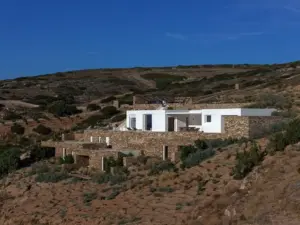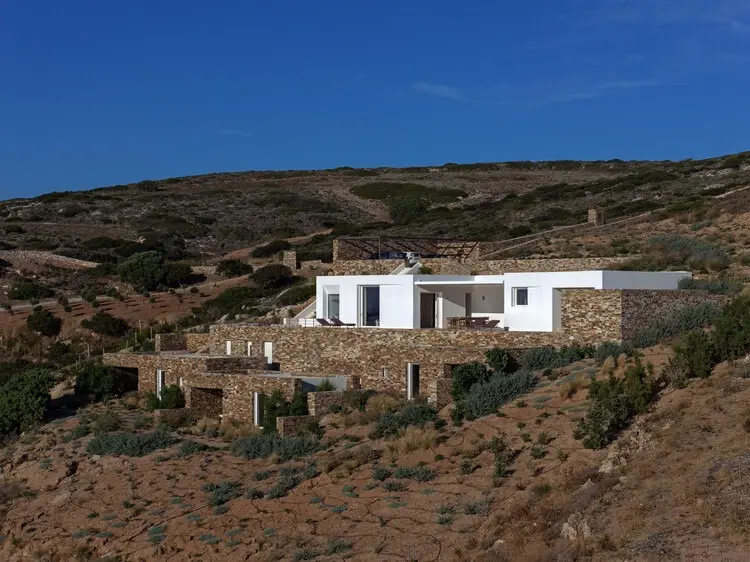
Nestled on a dramatic, steep west-facing slope on the island of Antiparos, the newly completed Alonakia House stands as a testament to thoughtful, site-sensitive architectural design. Photographed by Panagiotis Voumvakis, the project commands sweeping views of the open Aegean Sea while perfectly framing the long, golden horizon of the evening setting sun. Rather than imposing a foreign structure onto the landscape, the design team at React Architects has crafted a dwelling that emerges directly from the terrain, offering a masterclass in how contemporary architecture can harmonize with rugged, natural environments.
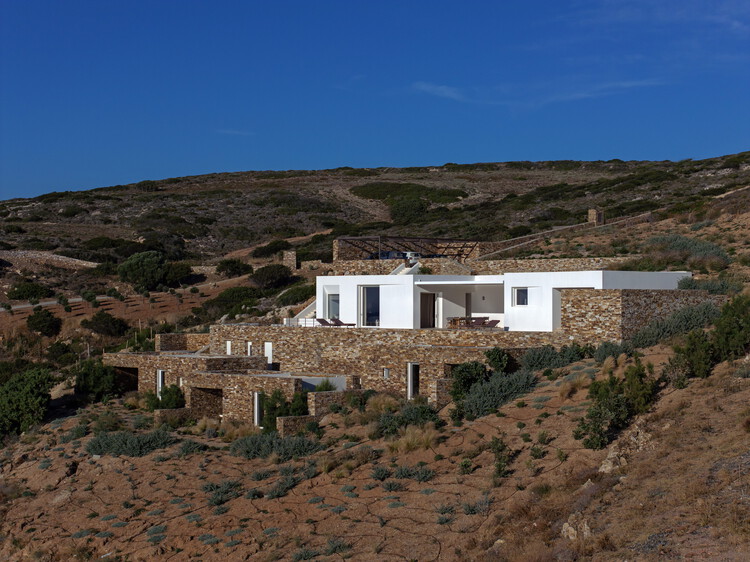
The conceptual foundation of Alonakia House begins entirely with the specific physical conditions of its site. The plot is characterized by an unforgiving, sloped, and rugged topography where the act of building is fundamentally intertwined with the deliberate shaping of the earth. Instead of introducing a singular, isolated object onto the hillside, the architects conceived the project as a direct continuation of the existing topography. This approach allows the residence to translate the timeless, organic characteristics of the traditional Cycladic landscape into a functional, contemporary dwelling suited for modern living.
The project reflects a deep understanding of regional vernacular architecture without falling into superficial imitation. In traditional Greek island architecture, buildings have historically responded to the contours of the land, utilizing stone and earth to create shelters that endure harsh winds and intense sunlight. React Architects builds upon this rich lineage, treating the terrain not as an obstacle to be leveled or conquered, but as an active participant in the architectural composition. By embedding parts of the structure into the slope and utilizing earth-sheltered principles, the design blurs the boundary between natural geology and human intervention.
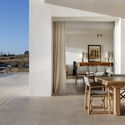
From the exterior, the volumes of Alonakia House appear to cascade down the rugged incline, echoing the natural terracing found throughout the Greek islands. The choice of materials reinforces this connection to the earth, creating a tactile dialogue between the built form and the surrounding environment. Expansive outdoor living spaces and terraces step down the slope, offering varying vantage points to experience the changing light of the Aegean throughout the day. These transitional zones bridge the gap between interior comfort and the raw exposure of the hillside, allowing residents to fully immerse themselves in the coastal climate.
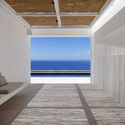
Inside, the residence maintains a seamless flow that prioritizes light, proportion, and connection to the surrounding views. The interior photography by Panagiotis Voumvakis reveals a refined material palette where natural wood, refined columns, and warm textures complement the stark beauty of the exterior landscape. Dining and living areas are oriented to maximize visual engagement with the sea, ensuring that the expansive horizon remains a constant backdrop to daily domestic life. The interplay of shadow and light, carefully calibrated through deep apertures and shaded recesses, provides a cool refuge from the Mediterranean sun while framing picturesque vignettes of the sea and sky.
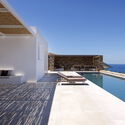
The completion of Alonakia House highlights the ongoing evolution of residential architecture in the Cyclades, where contemporary designers continue to find innovative ways to respect and engage with sensitive coastal ecosystems. By prioritizing topographic integration over monumental scale, React Architects has delivered a project that feels as though it has always belonged to the Antiparos hillside. The residence stands quietly in its environment, offering a profound meditation on place, materiality, and the enduring relationship between architecture and the natural world.