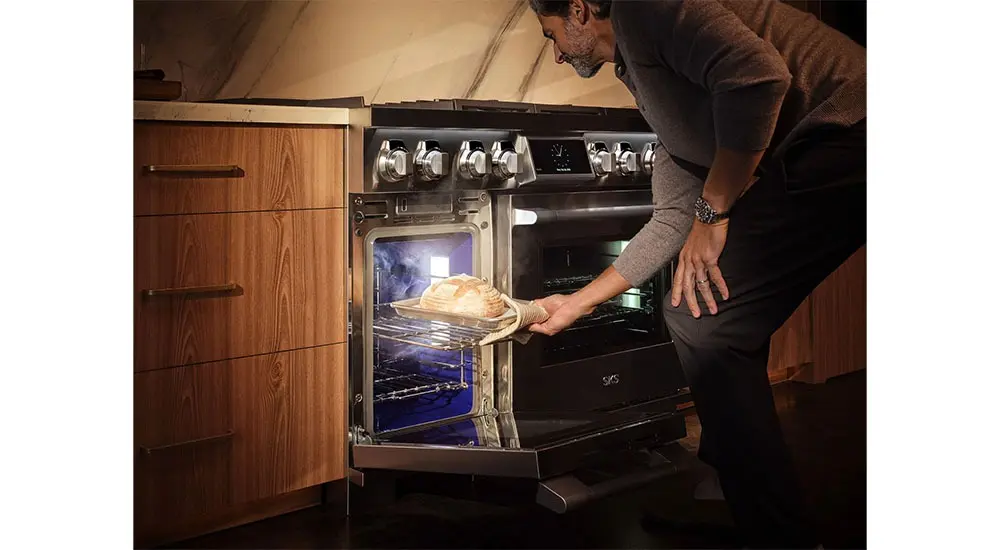
The custom kitchen has quietly become one of the most sophisticated rooms in the contemporary home, undergoing a profound evolution that extends far beyond surface-level choices in cabinetry, hardware, and decorative finishes. In modern residential architecture and interior design, it is increasingly high-performance appliance technology that dictates spatial layout, functional zoning, and the overarching design language of today’s cooking environments.
As professional-grade cooking appliances equipped with advanced capabilities—such as built-in sous vide precision and sophisticated intelligent connectivity—shift from high-end novelties to baseline consumer expectations, builders, architects, and interior designers are fundamentally rethinking the kitchen from the very first conceptual sketch. This modern design approach places a much greater emphasis on how contemporary homeowners actually live, cook, entertain, and connect within the space, treating the kitchen not merely as a utilitarian workspace, but as the emotional and architectural centerpiece of the house.
For years, a dominant aesthetic trend pushed heavily toward the fully concealed kitchen. This minimalist design philosophy favored panel-ready appliances that disappeared seamlessly behind matching cabinetry, keeping refrigerators, dishwashers, and even primary cooking surfaces out of sight until the room barely resembled a traditional kitchen at all. While this sleek, unified look has not completely vanished from the luxury design sector, the pendulum is swinging back. Visible cooking surfaces that signal clear culinary intention rather than hiding behind wood panels are rapidly gaining momentum, and advanced cooktop technology is central to that ongoing conversation.
Induction technology, in particular, is reshaping the modern kitchen by offering a compelling combination of aesthetic appeal and unmatched functional performance. Homeowners and designers are embracing induction for benefits such as significantly faster heating times, precise and responsive temperature control, remarkably easier cleanup, and a safer, cooler cooktop surface that eliminates open flames or glowing red coils. This shift is not merely anecdotal; it is strongly supported by industry data. According to the NKBA 2026 Kitchen Design Trends Research Report, an impressive 69% of industry professionals surveyed expect induction to be the most popular cooking type over the next three years. This finding signals that consumer preference for induction is officially crossing the threshold from a niche category into mainstream adoption.
Reshaping the Kitchen
Beyond the cooktop, steam-assisted and combi-style ovens are actively changing how the entire cooking space is planned, laid out, and utilized. Steam technology has successfully transitioned from a specialized, commercial-grade feature into a genuine, mainstream design consideration for residential spaces. It enables home cooks to achieve restaurant-caliber results—ranging from delicately prepared, nutrient-rich vegetables to perfectly crisped proteins and evenly reheated leftovers—all while occupying a smaller spatial footprint than a traditional double oven.
This spatial efficiency makes a profound difference to kitchen designers, who must constantly balance the competing demands of ample storage, effective ventilation, and optimal counter depth within kitchen footprints that are becoming more intentional and measured. Sizing trends reinforce this ongoing architectural recalibration. According to the same NKBA report, 62% of respondents anticipate that 36-inch-wide ovens will be the most popular size category over the next three years. This data suggests that designers are increasingly gravitating toward cooking configurations that intelligently balance high-level culinary capability with spatial efficiency, rather than reflexively defaulting to oversized, space-dominating units that disrupt the flow of the room.
Intelligence That Disappears Into Design
Smart connectivity is no longer treated as an afterthought or a tacked-on gadget in high-end kitchen design. Instead, it is increasingly integrated directly into the initial design brief and established as a top priority for homeowners planning their dream culinary spaces. Modern consumers expect their appliances to integrate smoothly into their daily routines without creating visual clutter or demanding a steep learning curve.
Advanced artificial intelligence-guided cooking systems now personalize settings and cooking profiles quietly in the background, while intelligent preservation features autonomously adjust to changing internal and ambient conditions to maintain food freshness. This overarching ethos of "invisible technology" extends seamlessly across the entire kitchen ecosystem. Modern appliances communicate directly with one another—such as a smart cooktop signaling an overhead ventilation hood to adjust its fan speed automatically based on heat and steam levels. Furthermore, individual tactile controls, including knobs with embedded digital timers, add functional intelligence in small, tactile ways that respect the physical experience of cooking. The ultimate goal of modern kitchen technology is not to showcase a showroom of blinking lights and visible tech, but rather to cultivate an environment where quiet intelligence elevates the everyday cooking experience.
Designers and builders are navigating this transformative shift firsthand by working with high-performing appliances that bridge the gap between form and function. From dual-fuel professional ranges and versatile steam-assist combi ovens to advanced refrigerators equipped with precise preservation technologies, today’s hardware must satisfy rigorous aesthetic and functional demands. High-end appliance manufacturers continue to engineer innovations designed to support the sophisticated requirements of modern custom kitchens, ensuring that technological advancement and timeless interior design go hand in hand.
—By Ryan Vitale, Sales Director, East Region, SKS, the kitchen appliance brand from LG Electronics