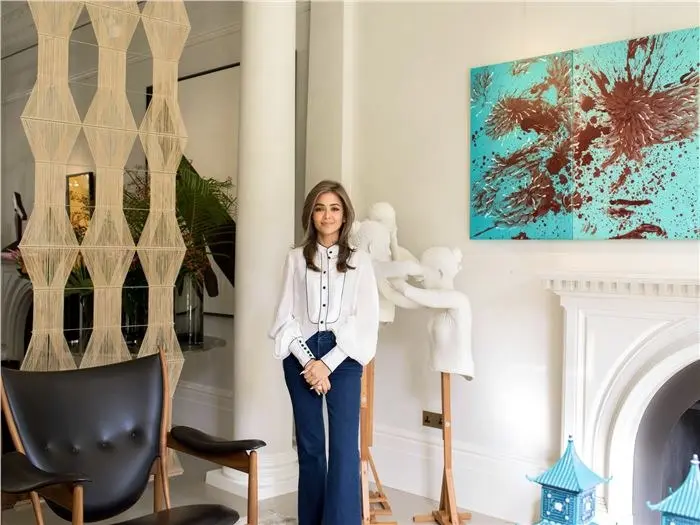
In the high-stakes world of contemporary art, where the market often rewards the swift, the loud, and the easily quantified, Aarti Lohia stands apart as a deliberate counter-force. As a London-based collector and philanthropist featured on the ARTnews Top 200 list, Lohia has cultivated a reputation for an approach that prizes long-term impact over the fleeting gratification of immediacy. Through the SP Lohia Foundation, her philanthropic footprint has expanded to encompass a diverse yet deeply connected triad: art, chess, and film. This deliberate integration of disciplines is currently exemplified by her support for Amar Kanwar’s major solo exhibition, which runs at Serpentine North from September 23, 2026, through January 31, 2027. In a recent conversation with Daria Borisova, Lohia articulated a philosophy of patronage that values the "long game," emphasizing that true cultural contribution requires not just capital, but a commitment to patience, strategy, and intellectual rigor.
The Interconnected Worlds of Culture, Chess, and Film
While art, chess, and film may seem to occupy disparate silos, for Lohia, they are unified by a singular purpose: the sharpening of human perception. Her journey into these areas has been a gradual, decades-long evolution. Chess, the oldest of her passions, became a foundational element of her life through her son, Sohum, who began playing at the age of five. This personal exposure revealed to her the transformative potential of the game—not merely as a hobby, but as a framework for cognitive development and emotional resilience.
Lohia’s engagement with the art world predates her move to the United Kingdom, reflecting a longstanding commitment to the creative process. Film, meanwhile, has emerged as a more recent, but no less significant, pillar of her foundation’s work. Driven by a desire to preserve authentic storytelling in an era often dominated by superficial content, she views the medium as a potent tool for empathy.
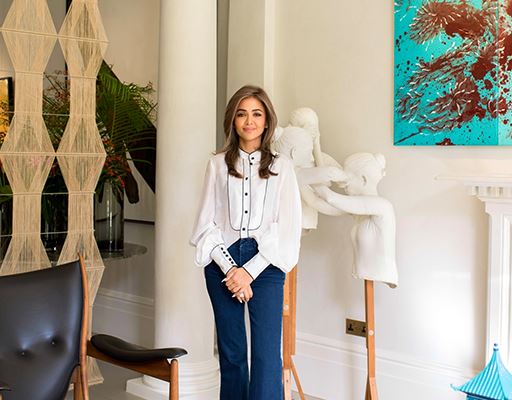
"What connects them is the opportunity to see another person or situation more clearly," Lohia explains. "An artist can change how we look at the world. Chess can give a child confidence in their own thinking. A film can bring us close to a life we might otherwise know only through a headline." For Lohia, these disciplines are exercises in attention. Where chess forces a confrontation with the direct consequences of one’s decisions, art and film invite a deeper interrogation of one’s own assumptions. In a cultural climate where public discourse often demands immediate, binary versions of the truth, Lohia finds these deliberate, reflective practices to be more essential than ever.
Defining the Foundation’s Mandate
When asked about the criteria for the Foundation’s support, Lohia is clear about the family-centric nature of her operation. As a family foundation, the vehicle serves to amplify values they hold deeply. Her selection process is not based on trends or market buzz, but on the integrity and vision of the leadership behind the work. "I look at the people behind a project or the leadership of an institution," she notes. "Are they leaders with integrity? Are they deeply committed to the work, and do they understand the people they hope to serve?"
This focus on human connection is central to her philosophy. Lohia is wary of vague promises and bureaucratic checklists, preferring instead to build honest, transparent relationships with the practitioners she supports. She is willing to take risks on unconventional ideas, provided there is a clear sense of purpose and a commitment to the process. Her approach is characterized by a demand for accountability—not necessarily through rigid KPIs, but through a shared understanding of what the support is meant to achieve and how the outcomes will eventually ripple through the community.
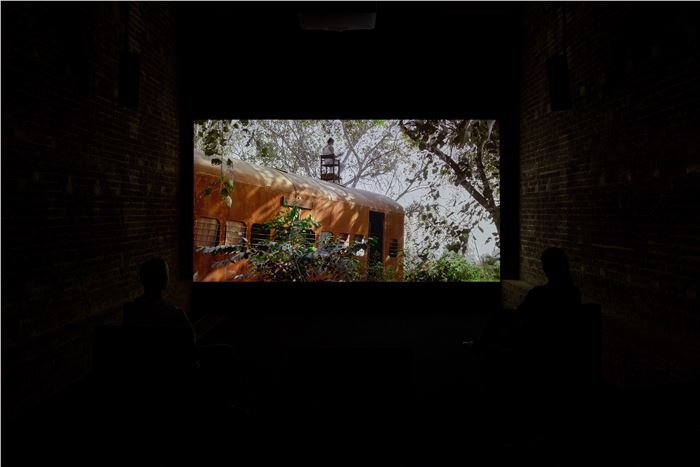
Supporting the Long Game: The Amar Kanwar Exhibition
Lohia’s current collaboration with the Serpentine Galleries to support the Amar Kanwar exhibition is a manifestation of these values. Having followed Kanwar’s practice for years, she is drawn to the profound seriousness of his work. Kanwar’s art is not designed for a quick glance; it requires the viewer to dwell on complex historical narratives and human experiences that are often sidelined in favor of "easy" explanations.
"I felt it mattered that an artist like Amar, from South Asia, could be encountered in the heart of London, on the scale and with the attention his practice deserves," she says. By facilitating this platform, Lohia hopes to foster the kinds of difficult, necessary conversations that Kanwar’s work so masterfully initiates. This support is a testament to her belief in the necessity of patience. Kanwar’s work, which often develops over several years, is a stark contrast to the rapid-fire production cycles of the contemporary art market. To support such an artist is to trust in a process that may involve doubt, research, and evolution—elements that would be erased by the constraints of a standard commercial timetable. As a patron, Lohia believes her role is to provide the necessary room for such work to breathe, trusting that its true value will reveal itself long after the exhibition has concluded.
Chess as a Strategic Lens
The influence of chess on Lohia’s life extends far beyond the board. Her initiative, SHIKHAR, which has launched a pilot program across six schools in Himachal Pradesh, India, seeks to democratize access to the game. Recognizing that the benefits of chess—independent thinking, decision-making, and the ability to recover from failure—are currently limited by unequal access to instruction, she is taking a measured, empirical approach.
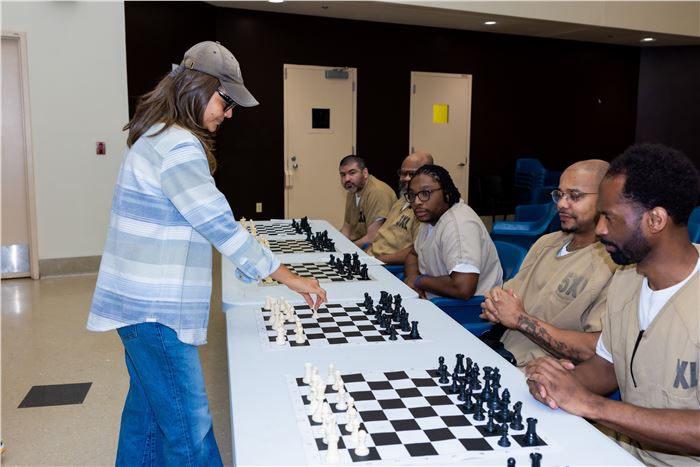
"We are starting with a pilot because I want to learn what works in the schools before making larger claims," she explains. The initiative is particularly focused on empowering girls, ensuring they have the space to develop their own judgment and confidence. This reflects a broader shift in her thinking as a philanthropist: chess has taught her to distinguish between a "good position" and a "good result." In philanthropy, as in a match, a compelling proposal is only the beginning. The real test is in the execution, the ability to adapt to changing circumstances, and the wisdom to know when a strategy is failing and requires a new move.
Addressing the Uneven Landscape of the Art World
When the conversation turns to the current state of the art world, Lohia expresses a mixture of hope and concern. She laments that while there is an abundance of extraordinary work being produced, the distribution of attention and resources remains profoundly unequal. "It can be easier to find support for an artist who is already visible than for someone whose work requires time, research or an unfamiliar form," she observes. She is particularly critical of the tendency for the social ecosystem surrounding art to become more prominent than the art itself, a trend she believes detracts from the gravity of the creative endeavor.
Lohia challenges her peers to be more curious and more engaged. She argues that true patronage is not merely about writing a check; it is about listening, making meaningful introductions, and staying the course when a project becomes difficult. She finds genuine optimism in a new generation of artists who move fluidly between disciplines and geographies, as well as in a new breed of patrons who prioritize understanding the substance of the work over the status of the event. Her primary worry, however, remains the mounting pressure for immediate visibility—a phenomenon that threatens to stifle the experimentation and failure necessary for truly significant art to emerge.
A Vision for the Future
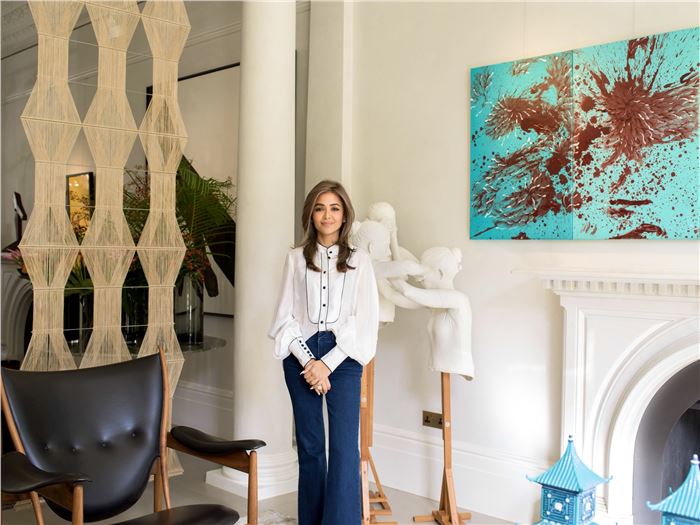
Looking twenty years ahead, Lohia envisions the Foundation as a legacy of care. She hopes it will be remembered not for its volume of transactions, but for the depth of its engagement with people and ideas. Projects like the ten-year archiving program at the India Foundation for the Arts (IFA) serve as models for the type of long-term commitment she values.
Whether it is a child discovering their potential through chess, an artist realizing an ambitious, difficult project, or a story finally receiving the attention it deserves, Lohia measures success by the longevity and depth of the impact. The Foundation, she acknowledges, will evolve. It will continue to be a space that is open to new ideas, disciplined enough to learn from its errors, and, most importantly, committed to the patient, deliberate work that may take a generation to reveal its full value. For Aarti Lohia, the "long game" is not just a strategy—it is the only way to ensure that the culture we support is one that lasts.