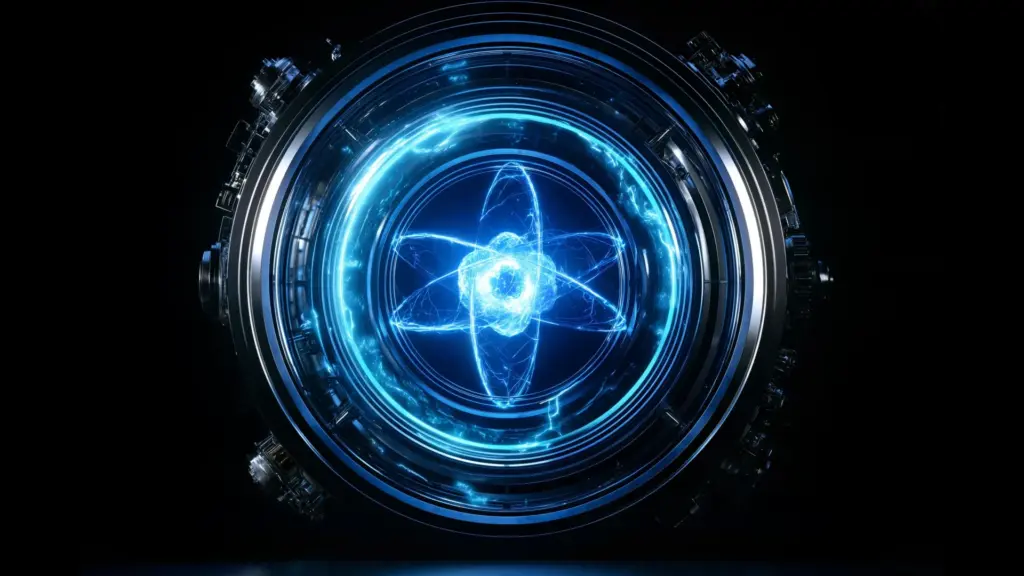
Scientists have achieved a monumental milestone in the global quest to develop an entirely new and revolutionary kind of timekeeping device. Following decades of intensive theoretical and experimental research, a pioneering team of researchers based in Vienna has successfully engineered and demonstrated the world’s first self-stabilizing nuclear clock. This breakthrough device harnesses the unique quantum properties of atomic nuclei rather than orbiting electrons, marking a significant leap forward that could eventually measure time with a degree of precision far surpassing today’s most advanced optical atomic clocks.
Unlike earlier experimental prototypes that required constant tethering and external support systems, the newly developed nuclear clock is entirely self-sufficient. Researchers have successfully demonstrated that this innovative instrument can maintain its own operational stability independently for more than 24 hours without any external human intervention or synchronization. This achievement represents a critical advance in the overarching field of precision measurement, scientifically known as metrology. By leveraging atomic nuclei as exceptionally stable and robust reference points, nuclear clocks could eventually allow scientists to measure time and a wide variety of other physical constants and quantities with unprecedented levels of accuracy that remain fundamentally unreachable by existing technologies.
Why Thorium Holds the Key to Nuclear Clocks
The foundation of this historic breakthrough relies upon an unusual and deeply fascinating property inherent to thorium atomic nuclei—a characteristic that physicists and metrologists have closely investigated and debated for decades.
In the subatomic realm, atomic nuclei can exist in various distinct energy states, but transitioning between these energy states typically demands an enormous input of energy, usually corresponding to the high-frequency ultraviolet or X-ray spectrum. Thorium serves as a rare and vital exception to this rule. Two of its specific nuclear energy states are separated by an unusually small energy gap. This remarkably narrow interval makes it feasible, under highly controlled laboratory conditions, to trigger a quantum transition between them using precisely tuned laser light.
This rare physical property is of paramount importance because it provides researchers with the unprecedented ability to directly control the energy state of a nucleus using a standard laser beam—a feat that is simply not possible in the same manner for the vast majority of other atomic nuclei. Once mastered, scientists can exploit this extremely narrow and precise transition as a rock-solid, ultra-reliable reference standard for measuring the passage of time.
A major historical turning point came in April 2024, when an experimental team led by Professor Thorsten Schumm at the Institute of Atomic and Subatomic Physics at TU Wien, working in close collaboration with a team led by Professor Ekkehard Peik at PTB Braunschweig, successfully identified this long-sought nuclear transition experimentally. For the very first time in history, they demonstrated conclusively that ultraviolet laser beams could be used to directly excite thorium nuclei.
Further rapid progress followed in the fall of 2024. Building directly upon their spring success, the researchers physically connected their thorium excitation apparatus to a conventional optical atomic clock. This crucial integration demonstrated that thorium nuclei could indeed serve as a highly precise, viable timekeeping reference. Yet, despite establishing the foundational proof of principle for a functional nuclear clock, one essential capability remained notably absent: the machine still lacked the capacity to maintain its own intrinsic accuracy independently without external assistance.
Scientists Build a Nuclear Clock That Stabilizes Itself
"What you really want is a self-stabilizing nuclear clock," explains Professor Thorsten Schumm, detailing the core philosophy behind the project’s next phase. "The basic idea is simple: you have a laser and you have thorium. The laser changes the energy state of the thorium nuclei, and the thorium nuclei are used to stabilize the frequency of the laser."
To translate this theoretical concept into physical reality, the research team engineered a sophisticated system built around a specially fabricated crystal containing embedded thorium atoms, manufactured directly in the laboratories at TU Wien. In this setup, a specialized laser shines continuously onto the crystal, interacting directly with the dense cluster of thorium nuclei housed safely within the crystal lattice.
The light emitted by the laser oscillates at a very specific frequency, providing a steady, regular rhythm that can theoretically be utilized to measure time. However, in practical engineering environments, even the most microscopic fluctuations in the surrounding environment—such as subtle shifts in room temperature, ambient acoustic vibrations, or minor electromagnetic interference—can disrupt that delicate rhythm.
"The oscillation of this laser light can be used for timekeeping, but the laser frequency can shift slightly from time to time, for example due to temperature fluctuations," explains Thorsten Schumm. "For high-precision measurements, you therefore need a mechanism to keep the laser frequency exactly stable, so that the clock continues to tick with precisely the same rhythm."
Traditional atomic clocks solve this persistent engineering problem by utilizing the energy transitions of electrons orbiting the outer shells of atoms as a stable, unchanging reference. The Vienna research team has now successfully demonstrated that the dense, heavily protected nuclei of thorium atoms can perform this exact same vital function, but with vastly superior intrinsic resistance to external interference.
The operational mechanism succeeds because thorium nuclei will exclusively absorb laser light when that light vibrates at the exact, correct resonance frequency. If the laser beam begins to drift or wander away from this precise frequency due to environmental disturbances, the physical amount of light absorbed by the embedded thorium nuclei immediately decreases.
The integrated system rapidly detects this subtle change in absorption and automatically triggers corrective feedback to adjust the laser, swiftly bringing it back into alignment with the correct frequency. This continuous, closed-loop feedback mechanism keeps the clock operating at a remarkably consistent rate, completely removing the historical requirement for a conventional atomic clock to maintain its operational stability. For the very first time, scientists have successfully demonstrated a self-regulating nuclear clock capable of functioning entirely on its own.
A Clock With an Error of Just One Second in 30 Million Years
The ultimate potential advantage of nuclear clocks stems directly from the extraordinary physical properties inherent to atomic nuclei compared to entire atoms.
"The great advantage of the new nuclear clock in Vienna is that, if you use atomic nuclei rather than atoms, much higher precision is possible in principle," notes Thorsten Schumm.
Atomic nuclei are astonishingly compact—more than 10,000 times smaller than the full atoms that house them. Because of their extremely diminutive physical size, they are vastly less susceptible to external environmental influences, such as stray electric and magnetic fields, which routinely disrupt and degrade the accuracy of conventional atomic precision measurements.
This inherent resistance to external environmental disturbances makes nuclear energy transitions exceptionally promising for the future of ultra-precise timekeeping.
To rigorously evaluate the real-world performance of their newly constructed prototype, the researchers measured its operational stability over the course of a full day. During these rigorous tests, the nuclear clock achieved an impressive relative precision of approximately 10 to the power of minus 15. In practical terms, this level of stability is mathematically equivalent to an operational error of roughly one second accumulated over a staggering span of 30 million years.
Naturally, this figure describes the calculated and measured short-term precision of the device during testing, rather than an actual physical experiment lasting millions of years. Nevertheless, it vividly illustrates the remarkable accuracy that the research team has already managed to extract from an early laboratory prototype.
While undeniably impressive, the new nuclear clock is not yet quite as precise as the world’s absolute leading optical atomic clocks, which currently stand firmly entrenched as the global benchmark for high-performance timekeeping.
"This is not yet at the level of the world’s best optical atomic clocks, but for a first prototype it is a fantastic result," acknowledges Thorsten Schumm.
The Next Step Toward Even More Precise Timekeeping
Looking toward the horizon, the researchers remain confident that their newly unveiled nuclear clock design possesses extensive room for substantial technical improvement. By integrating more powerful and stable lasers, alongside engineering higher-quality thorium-doped crystals with fewer structural impurities, the team hopes to dramatically increase the clock’s overall precision in the near future.
These planned technological upgrades could eventually allow nuclear clocks to decisively outperform existing atomic clocks, thereby establishing an entirely new global standard for the measurement of time.
Furthermore, the broader scientific implications extend well beyond simply building a better clock. More accurate timekeeping capabilities frequently translate directly into more refined measurements of other fundamental physical quantities, providing experimental researchers with increasingly sensitive tools to investigate the deepest physical properties and laws of nature.
For the present moment, the successful achievement by the Vienna research team demonstrates that a long-pursued, highly ambitious scientific concept can successfully operate as a self-sustaining, independent timekeeping system. With the world’s first self-stabilizing nuclear clock now successfully running on its own, the scientific community has taken a decisive, historic step toward a future where time can be measured with unprecedented precision.