Happy Friday, gardening enthusiasts! As another productive week comes to a close in the Midwest, the unmistakable transition from summer to autumn has officially arrived. The sweltering heat and long, hazy days of July and August have given way to crisp fall temperatures, and the region’s changing deciduous trees are putting on a magnificent display of rich color before winter settles back into the landscape.
While the traditional growing season is undoubtedly winding down for many horticulturists and home gardeners living in colder climates, the end of summer does not mean the end of garden color. There remain ample opportunities to inject vibrant hues, rich textures, and sculptural elements into outdoor spaces through thoughtful seasonal container gardening. Few professionals execute this craft quite like Howard, a seasoned, Chicago-based container designer who has spent nearly four decades perfecting the art of creating breathtaking seasonal displays for residential and commercial properties.
Over the years, Howard has generously shared his expertise and exceptional eye for design with the community, previously showcasing his innovative spring container creations and imaginative Halloween displays. Today, he returns to present a brand-new collection of autumn containers sourced from a recent high-end residential project located in Glencoe, Illinois, situated within USDA Hardiness Zone 6a. These arrangements offer a masterclass in elevating transitional outdoor spaces as the gardening year draws to a close.
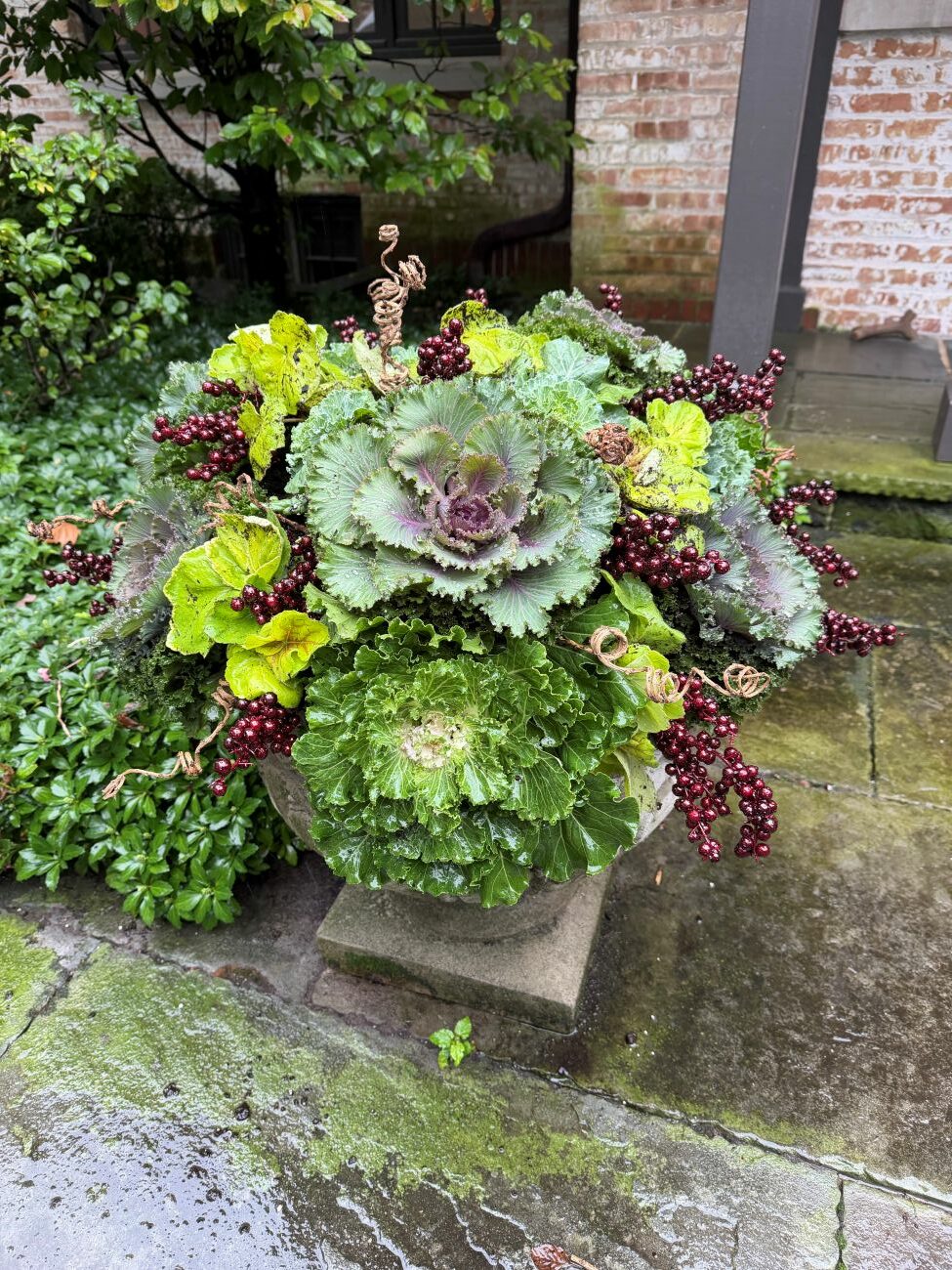
The foundation of the first large urn in the Glencoe collection relies heavily on ornamental cabbage and kale (Brassica oleracea cultivars), which function as reliable, cold-tolerant annuals capable of providing substantial mass and ruffled texture. However, the true focal point of the arrangement draws the eye upward through clusters of deep burgundy berries cascading from twisting, woody stems. These gnarled, sculptural elements introduce an element of organic whimsy that bridges the gap between the structured container and the wilder textures of autumn, successfully tying the entire visual composition together.
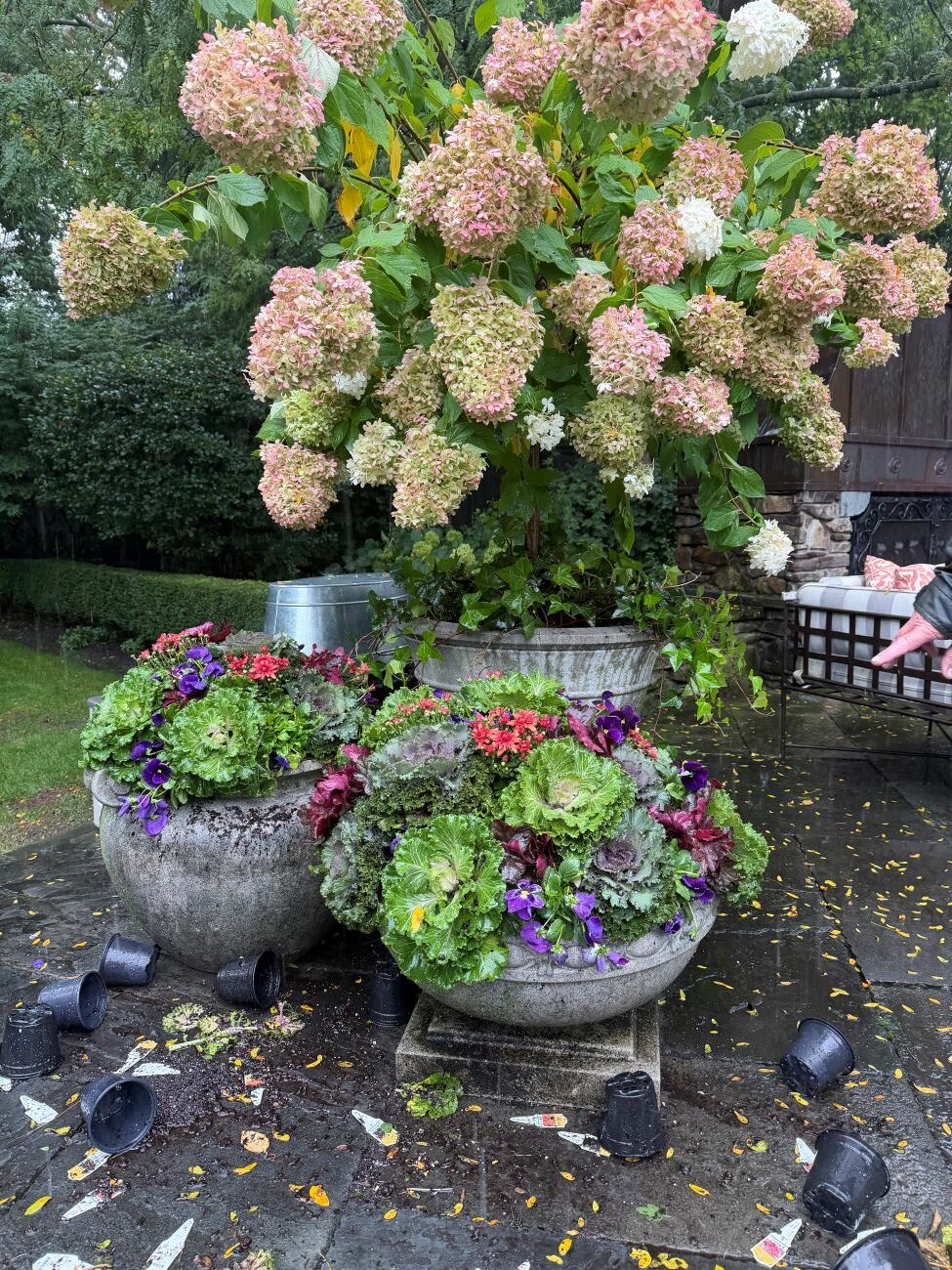
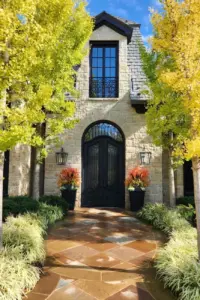
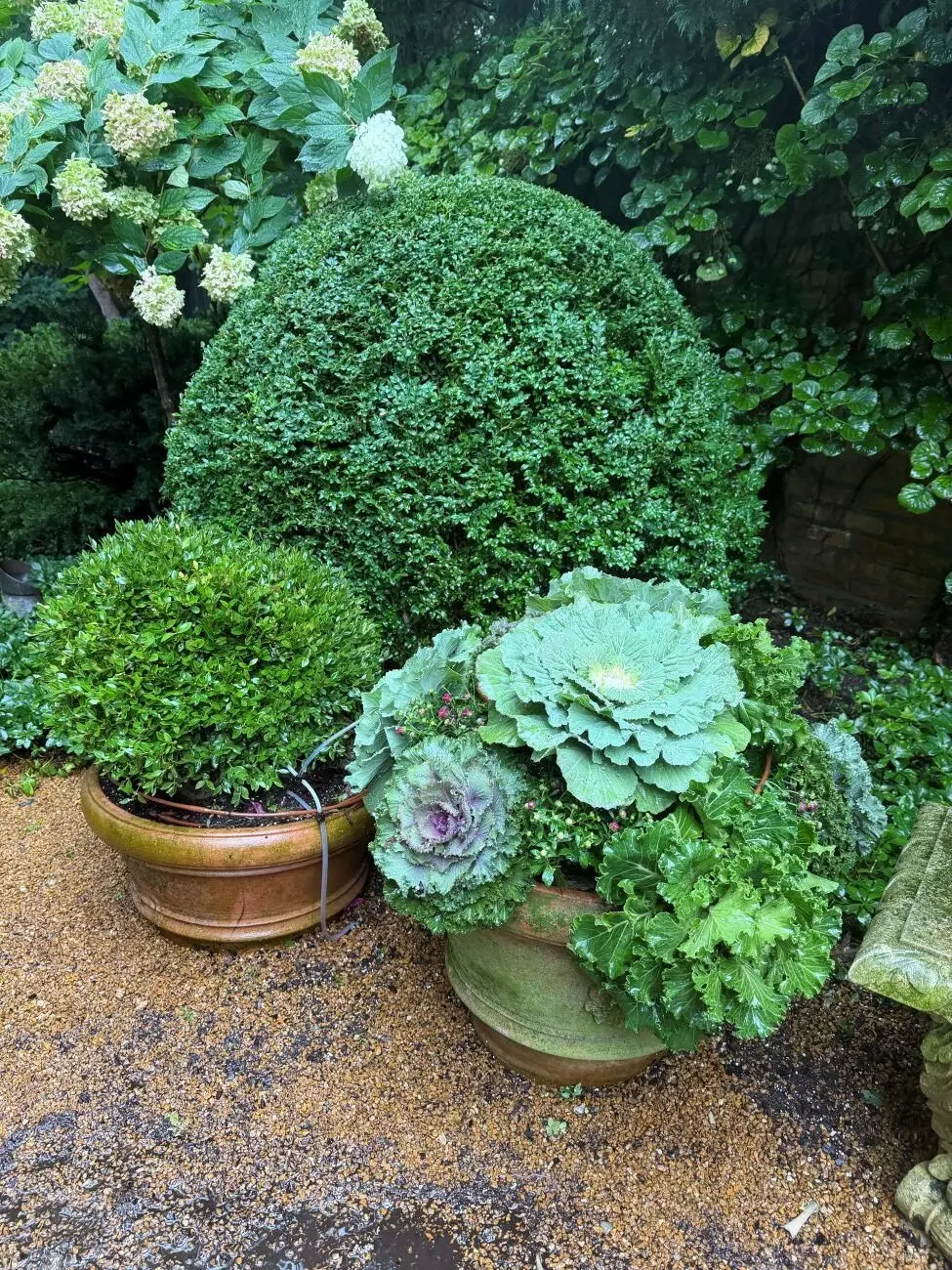
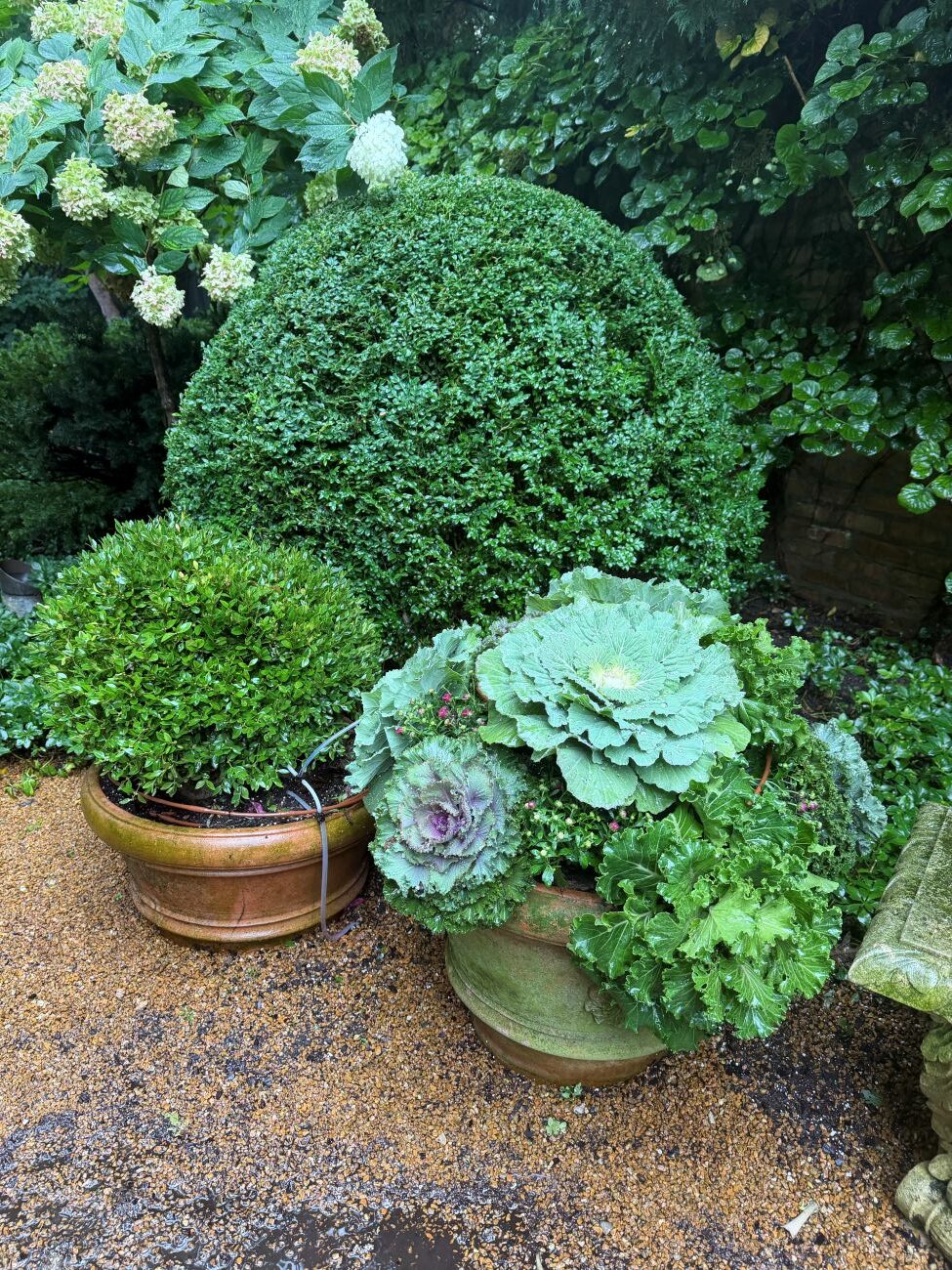
Nearby, a series of terracotta planters placed against formal stonework demonstrates the profound impact of integrating container arrangements with permanent landscape features. Clipped boxwood topiaries (Buxus sempervirens, Zones 5 through 8) frame the pots, providing a dense, dark green evergreen backdrop that makes the ruffled, variegated foliage of the ornamental cabbage and kale pop with striking contrast. This setup highlights how well-placed seasonal pots can seamlessly complement the surrounding permanent landscape architecture, instantly elevating a small, overlooked corner of a formal garden into a sophisticated focal point.
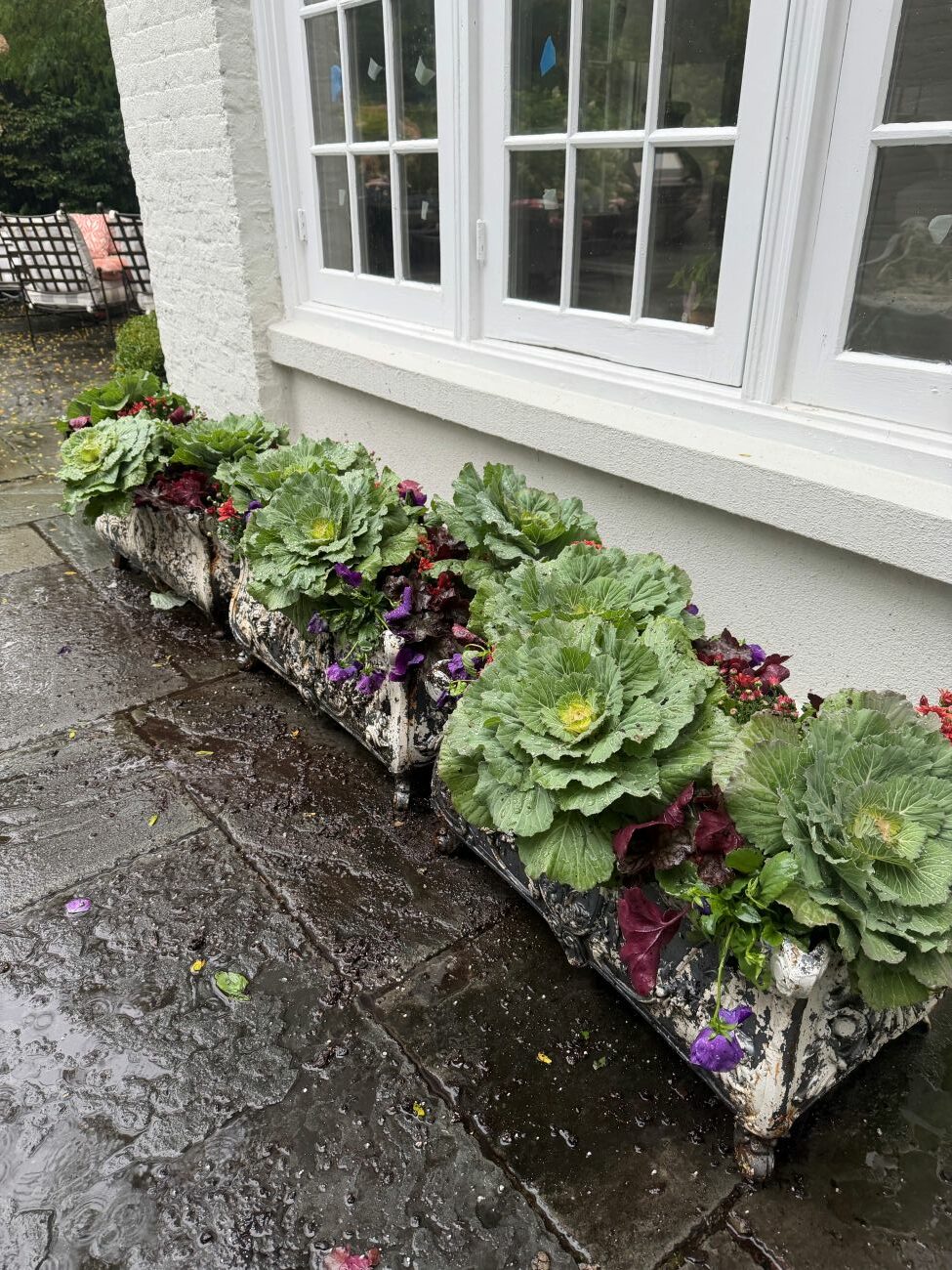
Moving toward the home’s primary patio and window areas, a collection of weathered rectangular containers initially creates the optical illusion of a single, continuous planter box. Rather than scattering individual pots haphazardly across the expansive hardscape, grouping them tightly together maximizes their visual impact. Ornamental cabbage and kale once again take center stage in these linear arrangements, supported by repeating accents of deep purple and rich burgundy. Whether introduced through the velvety petals of cool-weather pansies, dark foliage, or glossy berries, this deliberate repetition of color weaves a cohesive narrative throughout the entire property without making every individual arrangement look identical.

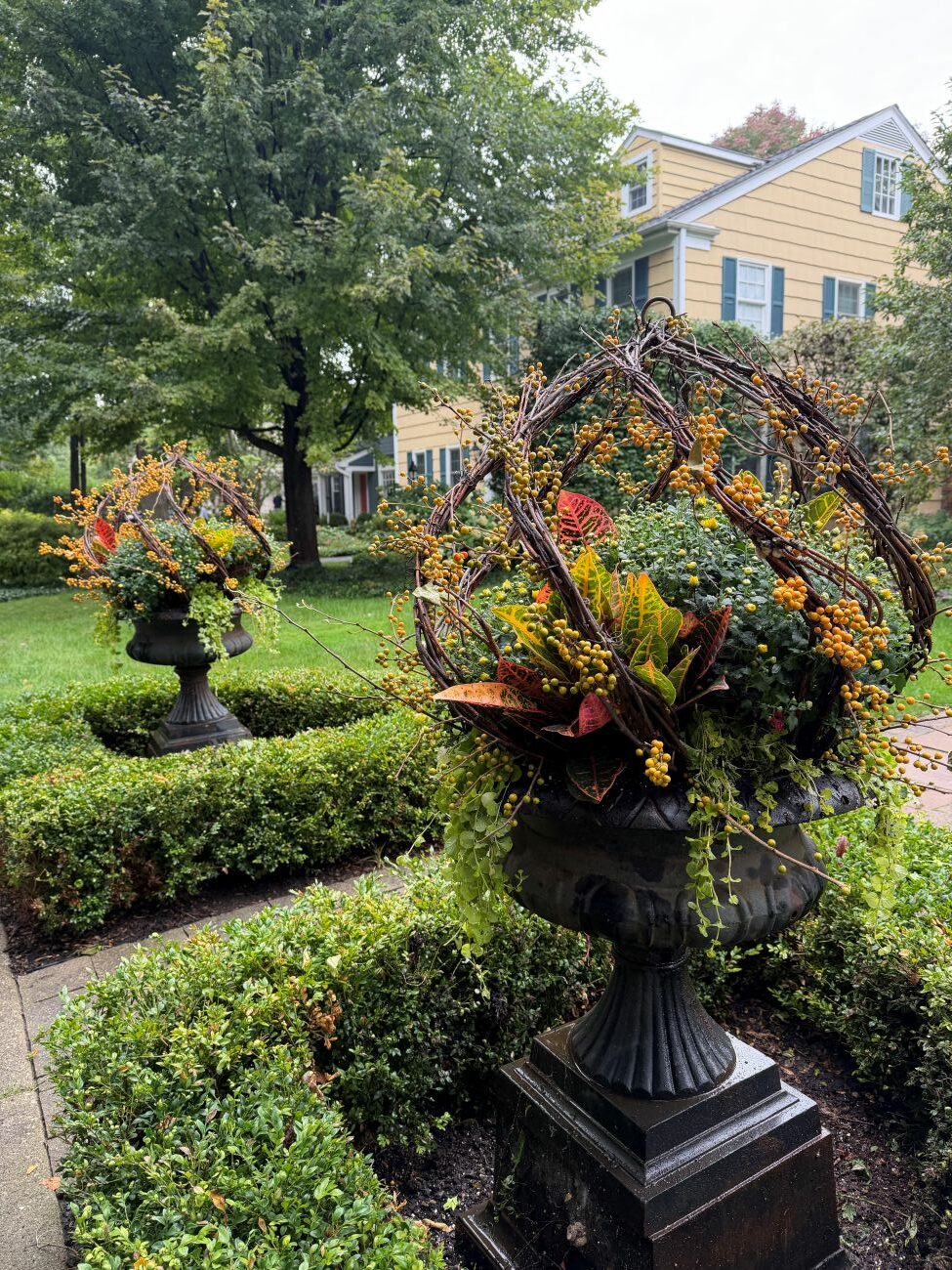
The design philosophy of balancing uniformity with variety becomes even more apparent in subsequent patio displays captured on a brisk, rainy afternoon. Amidst the scattered plant tags and soil remnants that inevitably accompany the messy, hands-on reality of professional installation work, the final compositions emerge as triumphs of autumn design. In one particularly striking urn, vibrant, multicolored croton foliage sits alongside golden berries threaded through arching, sculptural branches. The interplay of brilliant foliage, twisting woody vines, and hanging golden fruit produces an effect that feels both sophisticated and entirely welcoming, serving as a dramatic botanical greeting at the entrance of the home.
Howard’s latest work in Glencoe underscores the enduring value of professional container design as a tool for seasonal transition. By relying on cold-hardy annuals, architectural foliage, and dramatic, branching accents, these displays prove that the autumn garden can be just as captivating, colorful, and meticulously detailed as the height of the summer growing season.