
(Spoiler alert! The following review delves into plot elements and twists that unfold during the first half hour of Alejandro G. Iñárritu’s Digger. Readers who have not yet seen the film may wish to experience it firsthand before continuing.)
A Closer Look at the Scenography in Alejandro G. Iñárritu’s Digger
About thirty minutes into Alejandro G. Iñárritu’s highly anticipated film Digger, a model tree suddenly falls over, a section of what had convincing appeared to be a rugged hillside splits open, and a giant man steps out to pick it up. Instantly, the rest of the film crew floods the frame behind him. The director begins shouting instructions, Tom Cruise visibly drops his heavy Texas accent, and everything the audience has watched up to that exact moment reveals itself to be a technical rehearsal for the 25th-anniversary staging of a theatrical play titled Fossil Fools.
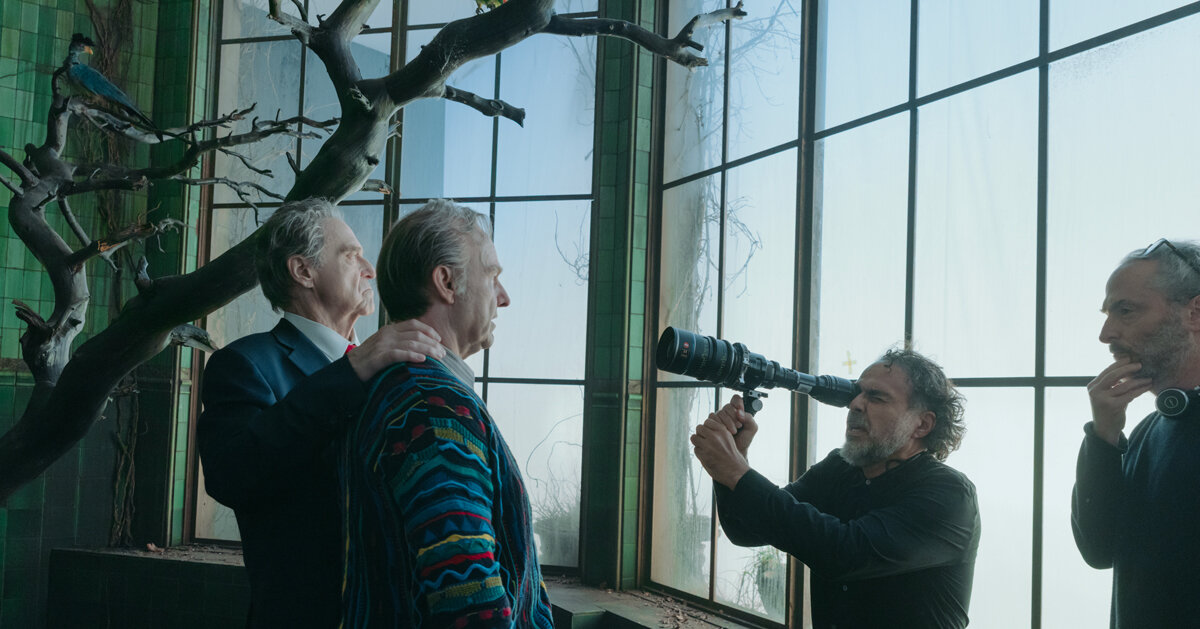
Up until this clever reveal, Cruise has been portraying Curtis Markson, an actor cast as the formidable oil baron Digger Rockwell. In the narrative framework of the play, Rockwell—reputed to be the most powerful man in the world—unleashes a massive global environmental catastrophe by orchestrating a high-stakes Greenland drilling operation. This reckless industrial venture ends up releasing an enormous ice shelf toward Europe, ultimately drowning the coastlines of the world in an unfolding planetary disaster.
It is a brilliant narrative twist, and fundamentally a designer’s twist, because it arrives not through heavy exposition or spoken dialogue, but rather through the mundane disruption of a stage technician casually walking into the shot to deal with a fallen prop. This sequence establishes the first of four distinct spatial positions that the film forces its audience to navigate. Each position is meticulously arranged through physical scenery and set architecture rather than announced outright by characters: a lavish mansion that initially holds the unfolding disaster at a safe distance; a theatrical play viewed by an audience sitting directly in front of it; a play that subsequently reveals itself to be a theatrical reconstruction of a historical reality; and finally, a terrifying scenario where all physical and psychological distance collapses entirely. The sets in Digger function not merely as background dressing or structural games, but as precise measuring instruments for the emotional and physical distance separating the spectator from the spectacle. Over the course of the film’s runtime, those sets systematically shrink that distance down to absolute zero.

Set Design as a Storytelling Device
The complex, multi-layered world of Digger was brought to life by acclaimed production designers Dennis Gassner and Richard Johnson. Gassner boasts an extraordinary career, having been nominated seven times for the Academy Award for Best Production Design and winning once for Bugsy. His legendary filmography spans iconic cinematic landscapes such as Barton Fink, Road to Perdition, Blade Runner 2049, and multiple entries in the Craig-era James Bond franchise. However, the credit in his extensive resume that bears the most direct relevance to Digger is Peter Weir’s The Truman Show, where Gassner constructed an entire suburban town designed to conceal the reality of a television set from its unknowable protagonist.
Digger reverses that dynamic entirely. In The Truman Show, the protagonist remains entirely in the dark while the cinematic audience is clued in from the very opening minutes. Digger inverts the trick: every single actor on screen knows precisely where they are standing and what artifice surrounds them, while the audience sitting in the theater is left completely in the dark, forced to piece together the reality of the environment through subtle visual clues.
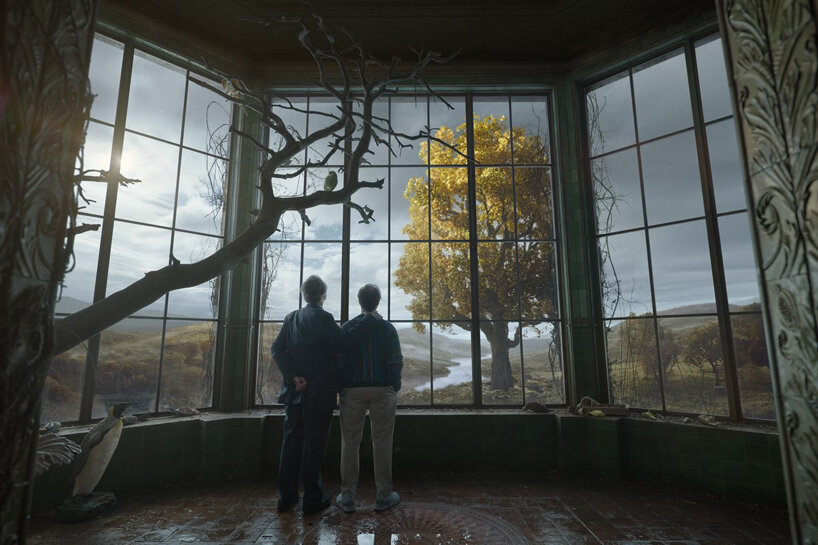
That initial world presents itself as Digger Rockwell’s lavish, imposing mansion. In these early scenes, Rockwell wakes beside a sprawling bedroom window framing a majestic, untouched landscape that could easily have been painted by Albert Bierstadt. Taxidermied alligators are pinned ominously to the ceiling, and full-body mirrors lined with natural antlers multiply his reflection into infinity. Every single design choice within that grand house builds a deliberate portrait of a monstrous man whose immense wealth and hubris place his actions at a safe, unapproachable remove from everyday life. It relies on the oldest arrangement known to cinema: a classic villain ensconced in his luxurious lair, a catastrophic environmental disaster unfolding quietly somewhere in the distant cold, and a sturdy fourth wall holding the entire horror at arm’s length. The set design here performs the traditional function of theatrical spectacle, making an unimaginable planetary catastrophe watchable simply by cordoning it off in a remote, aestheticized location.
Color Palette and Props Reinforce the Narrative
Then the model tree falls over, and for a brief transitional period, the film offers the audience a reassuring alibi. Once viewers understand they have been watching a theatrical stage production, the overt artifice of the previous half hour stops looking like a cinematic flaw and begins to read as a deliberate artistic signature. Maggie, Digger’s one-eyed geriatric cat, is revealed to be a conspicuously obvious animatronic puppet in a major motion picture that clearly possesses the financial resources to feature a real animal. Miniatures appear on screen with their visible seams showing, while artificial clouds and miniature aircraft mechanically cross the backdrop on visible sticks. None of these choices were careless oversights; they were intentionally engineered to remind the audience of the constructed nature of the narrative.

The film’s color palette reinforces this sophisticated thematic argument. In interviews discussing the production, Iñárritu pointed directly to historical painters to explain the visual language of the film, citing Johannes Vermeer and the Danish master Vilhelm Hammershøi for color reference, alongside Edward Hopper and Rembrandt for stark contrast. Hammershøi’s influence is unmistakable on screen, defined as it is by a career spent capturing near-empty grey interiors, permitting only two or three muted notes of color at most, and framing deep doorways that open onto further shadowy doorways.
Iñárritu describes that pervasive grey not merely as a mood-setting device, but as a working instrument. As Digger increasingly dominates the narrative, the color is systematically drained from the frame. Consequently, the theatrical play itself looks washed out and artificial, while the chaotic backstage areas appear vibrant and alive. This stark visual contrast provides a physical sense of reassurance: the grey world represents the safe confines of fiction, while the colorful backstage world represents reality—a reality that initially appears capable of holding firm against the narrative pressures.

A Movie Plot Twist in Stages
The third major reveal pulls that comforting alibi away from the audience entirely. Fossil Fools is not merely a fictional theatrical invention; Digger Rockwell was a real historical figure, the catastrophic environmental disaster genuinely occurred, and the mysterious character bankrolling the current stage production turns out to be Rockwell’s own nephew, who is publicly staging his family’s historical catastrophe for a paying audience. At this juncture, nothing in the physical set design changes, yet the underlying meaning of every single prop and backdrop undergoes a profound transformation.
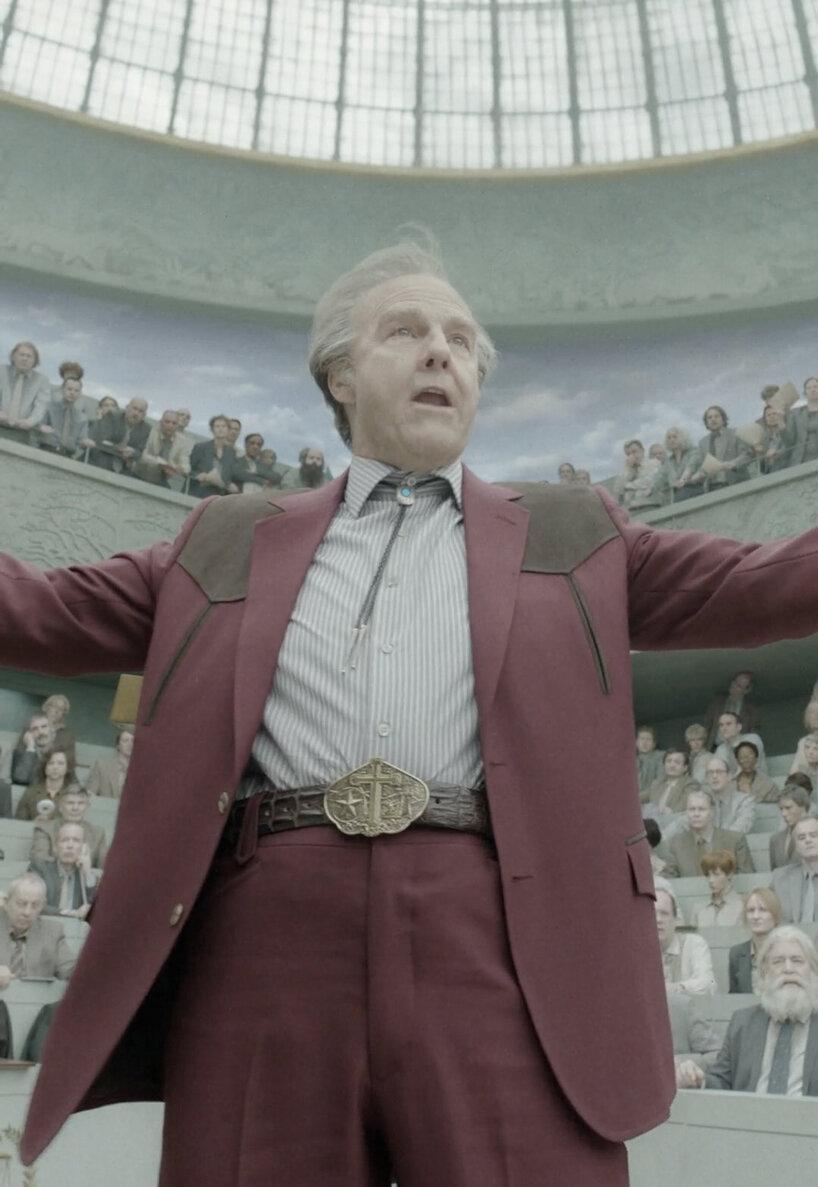
The austere grey chamber where Digger addresses a tribunal of European politicians—with council members dressed in garments that precisely match the neutral wall colors until they nearly blend into the architecture—stops reading as theatrical caricature and starts reading as grim historical testimony. The visible seams on the miniatures no longer signal a playful theatrical trick; instead, they communicate that the set is an open historical reconstruction, functioning much like a museum diorama designed to document a real tragedy that actually took place.
This narrative complexity explains why the film required nearly a decade to develop. During the lengthy period Iñárritu spent writing and refining the project, many of the seemingly exaggerated environmental threats he originally invented began manifesting in the real world. When the earliest drafts of the script were put to paper, massive ice shelves detaching and atmospheric methane spikes were largely technical terms discussed in scientific papers rather than daily headline news. As the director noted in interviews, reality was actively chasing fiction and ultimately surpassing it.
Fiction and Reality Collapse Into One
The play within the film eventually reaches its climax as Digger dives from his towering drilling rig to his death. The fictional theater audience assembled on screen rises to their feet in rapturous applause, a standard curtain call ensues, and suddenly an automated intercom echoes across the venue announcing a Level 4 emergency. Without warning, every person in that on-screen audience reaches for a breathing mask and files out into a flooded, militarized street littered with debris and the smoking remains of heavy machinery, stepping directly into the ruined world the play had spent the evening describing. As they exit, Melanie’s classic 1970 protest song What Have They Done to My Song, Ma plays over the soundtrack.
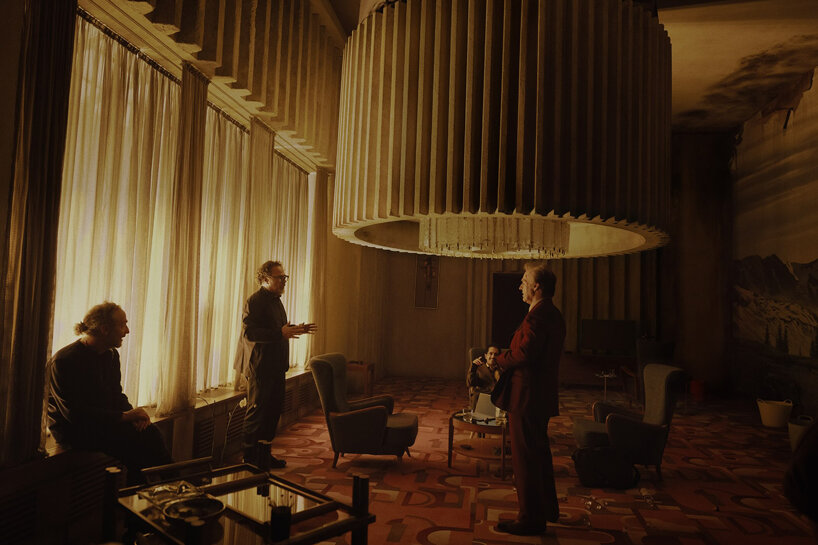
Viewers soon realize that the backstage color was never an anchor to actual reality; it was simply a slightly later, more insidious stage of the exact same planetary collapse. Then the film itself ends, and roughly ninety seconds into the scrolling credits, the jarring Level 4 emergency announcement sounds once more—this time echoing directly inside the commercial cinema where the real audience is sitting. Several audience members in real theaters have reportedly stood up to leave precisely on that chilling audio cue.
Stepping outside afterward into an ordinary sunny afternoon produces an immediate, unexpected sense of gratitude, followed instantly by the sobering realization of how thin the margin is between that pleasant afternoon and the devastated street the audience on screen was forced to navigate. That unsettling transition encapsulates the entire thesis of the film within a single sound cue, illustrating why the meticulous set designs are just as vital to the experience as the spoken story. Asked whether the overwhelming bleakness of the film reflects his personal outlook on the future, Iñárritu noted that Digger is a disaster movie in which the disaster is humanity itself. He added a note of cautious optimism: if humanity can manage to gather in the same room, share the same objective reality, and understand precisely where we stand within the historical narrative, there remains hope. That sentiment mirrors the precise journey the film’s production design accomplishes across its runtime, moving the spectator through four distinct sets and four shifting distances until everyone—characters, actors, and real-world audiences alike—occupies the exact same room, confronting the exact same reality, and recognizing the weight of their place in the story.

Project Info:
- Name: Digger
- Director: Alejandro G. Iñárritu
- Cast: Tom Cruise, Riz Ahmed, John Goodman, Sandra Hüller, Michael Stuhlbarg, Jesse Plemons, Sophie Wilde
- Screenplay: Alejandro G. Iñárritu, Alexander Dinelaris, Nicolás Giacobone, Sabina Berman
- Story: Sabina Berman, Alejandro G. Iñárritu, and Jez Butterworth
- Production Design: Dennis Gassner and Richard Johnson
- Costume Design: Jacqueline West
- Director of Photography: Emmanuel Lubezki
- Music: Cosmo Sheldrake
- Duration: 128 minutes
- Release: October 2026, Warner Bros. Pictures