In an era defined by mass production, convenience, and a disposable culture, the inevitability of a cherished ceramic mug or plate cracking or shattering usually signals the end of its useful life. For generations, the standard response to a broken household item has been straightforward: sweep up the shards and toss them into the garbage bin. However, a profound and ancient Japanese tradition offers a radically different perspective, transforming damage not into a failure, but into the very foundation of a new masterpiece. This traditional art form, known as kintsugi, emphasizes broken areas and polishes them meticulously until they form a striking, luminous object of high art.

Rooted in the philosophy of 15th-century Japan, kintsugi—which translates literally to "golden joinery"—teaches the art of making broken things beautiful. Rather than attempting to disguise the mending process or hide the flaws of a fractured item, traditional kintsugi uses a specialized lacquer dusted with precious metal powders, such as gold, silver, or platinum. The result is a brilliant, glowing seam that traces the path of the original fracture, celebrating the object’s history rather than concealing its trauma. It is a philosophy closely tied to wabi-sabi, an aesthetic centered on the acceptance of transience and imperfection, suggesting that an object becomes more beautiful for having been broken.

What began centuries ago as a specialized restoration technique practiced by master artisans has evolved into a vibrant contemporary fine art movement. Today, a growing community of makers, ceramicists, and DIY enthusiasts are embracing the craft, with some artists even intentionally fracturing ceramic bowls, plates, and vases so they can reassemble them in inventive, unconventional ways. This resurgence has sparked a significant commercial and cultural interest in accessible methods for practicing the craft at home, leading to a surge in specialized repair kits, instructional guides, and artistic resources designed to introduce novices to the meticulous world of ceramic restoration.

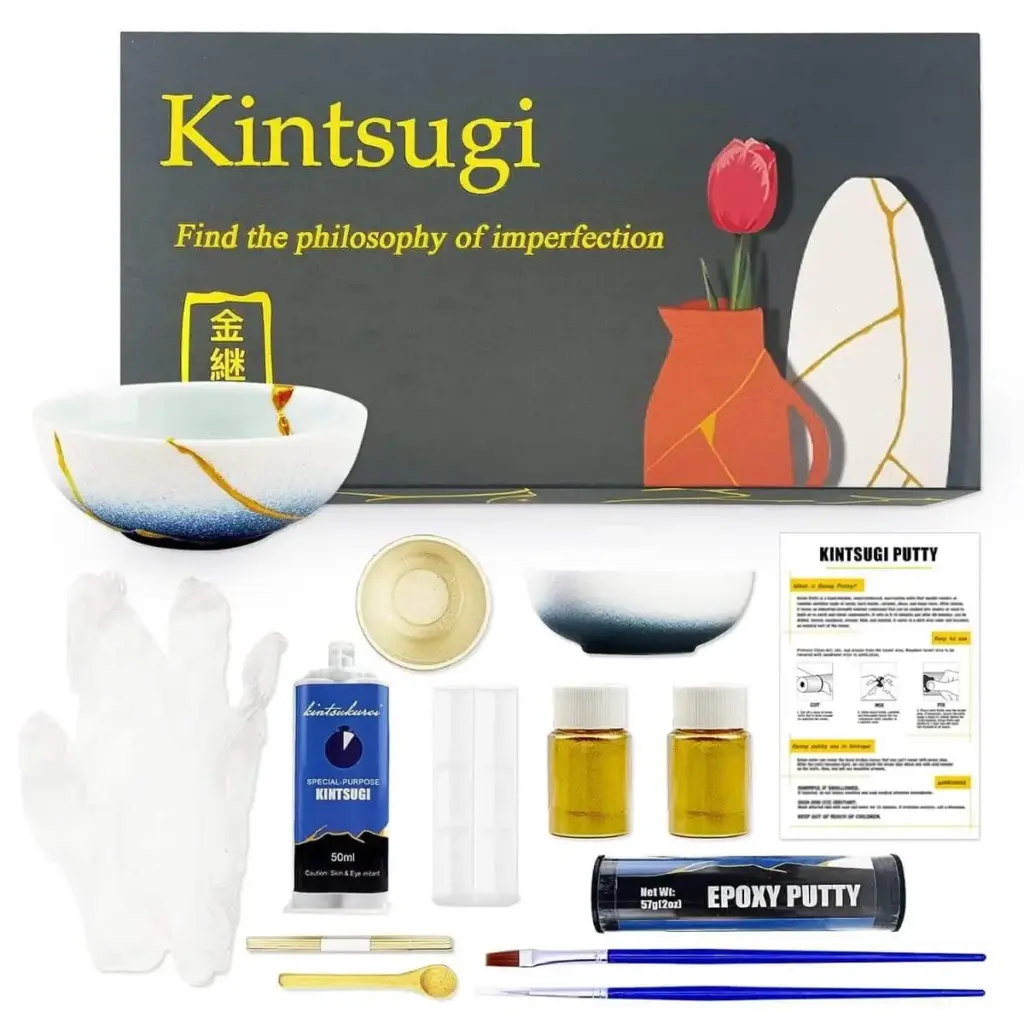
For those eager to try their hand at the practice without investing in professional-grade traditional materials, the market now offers a wide array of beginner-friendly options. Simple and affordable DIY kits have become widely available, often featuring non-toxic color powders that make the crafting process safe for families and accessible to younger participants. More upscale consumer kits cater to enthusiasts seeking a touch of luxury, offering premium packaging alongside high-grade epoxy glues that ensure strong, durable bonds for repaired ceramics.

The appeal of these kits lies largely in their ability to bridge the gap between ancient technique and modern convenience. Traditional kintsugi relies on natural urushiol lacquer derived from tree sap, a material that requires precise humidity conditions and extended curing times that can span weeks or even months. To accommodate modern schedules, many contemporary starter sets utilize quick-release epoxy adhesives combined with metallic powders or mica dust, allowing crafters to complete a restoration project and see results within a single day. Some beginner packages even include dedicated practice cups, sparing novices the heartbreak of having to intentionally smash a treasured family heirloom to learn the ropes.

Beyond commercial kits, a wealth of educational content has emerged across digital platforms, ranging from multi-step instructional articles and video tutorials to vibrant online communities where practitioners share their experiences and troubleshoot techniques. While some guides advocate for simplified three-step processes using basic resin and metallic pigments, others offer comprehensive instructions that delve into the nuances of traditional material preparation, surface sanding, and the finer points of aesthetic alignment. Certain tutorials even explore alternative mediums, demonstrating how oil-based enamels can achieve a refined, glossy finish, or showing how the principles of kintsugi can be applied beyond traditional ceramics to repair fractured glassware, decorative objects, and even broken gemstones.

This widespread cultural re-engagement with kintsugi points to a broader shift in consumer values. By encouraging individuals to slow down, invest time in repair, and find aesthetic value in the imperfections of daily life, the ancient Japanese craft offers a therapeutic antidote to modern consumerism. As more people discover the satisfaction of resurrecting a shattered teacup or a broken vase into a gleaming work of art, kintsugi continues to prove that destruction does not have to mean the end, but can instead mark the beginning of something uniquely resilient and profoundly beautiful.