The international art world has entered a period of intense activity, marked by scientific re-examinations of masterpieces, significant market shifts, and the somber reflection on the loss of several transformative figures in the field. As autumn 2026 unfolds, the industry is witnessing a unique convergence of historical scholarship and high-stakes commerce.
In the Spotlight: Scientific Inquiries and Market Titans
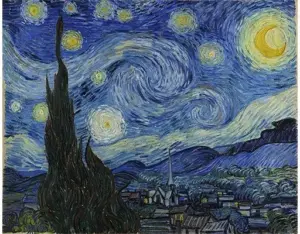
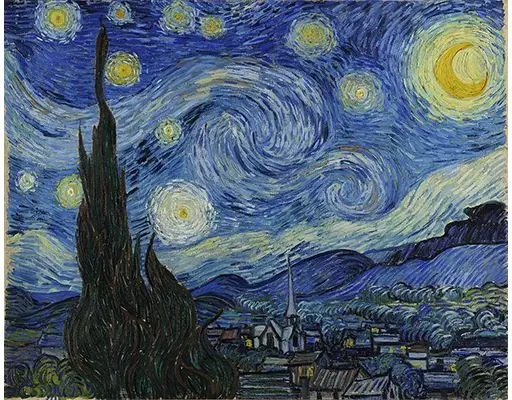
Art historians and scientists have long debated the origins of Vincent van Gogh’s The Starry Night, a painting that has become the quintessential expression of an artist’s internal emotional landscape. However, recent astronomical research is challenging the long-held assumption that the swirling, luminous sky was purely a product of the Dutch master’s imagination. A new study suggests that the work may be rooted in a specific, observable celestial event. Astronomers analyzing the painting’s composition alongside historical meteorological and astronomical data argue that the sky depicted aligns with a real dawn sky visible in July 1889. This finding suggests that while van Gogh’s brushwork remains deeply personal, his observation of the natural world was far more grounded in reality than critics previously suggested, adding a new layer of appreciation for his technical precision.
As scholars look to the past, the auction market remains fixated on the blue-chip names of the 20th century. Christie’s has officially signaled its intent to headline its upcoming 20th Century Evening Sale in New York with Gustav Klimt’s landscape painting Litzlbergkeller. Valued at approximately $60 million USD, the work represents the enduring demand for Austrian Symbolism and the specific, highly sought-after landscapes produced by Klimt. The inclusion of this piece in such a high-profile sale underscores the stability and continued appreciation of masterworks within the current global economy.
Recognition for contemporary practice also continues to evolve. The Prix Marcel Duchamp, widely considered the most prestigious contemporary art award in France, has been granted to the artist duo Brognon Rollin. Comprised of David Brognon and Stéphanie Rollin, the pair has been lauded for their diverse, multidisciplinary approach. Their body of work, which fluidly moves between installation, sculpture, video, performance, and photography, has resonated with the jury for its ability to address complex societal themes through varied mediums. This award solidifies their position at the forefront of the contemporary scene, highlighting the growing influence of collaborative artistic ventures.
Museums and Galleries: Expanding the Narrative
Institutional collections are undergoing significant diversification, with the Tate leading the way in broadening its historical scope. The museum has announced a major acquisition of 50 works by artists working in India during the 18th and 19th centuries. This collection of Anglo-Indian art offers a more comprehensive view of the cultural exchange and aesthetic development that occurred during this era. By integrating these pieces into the national collection, the Tate is taking a decisive step toward addressing historical gaps in representation and providing a richer context for the evolution of global art history.
In the Middle East, the market is preparing for a landmark series of events. Sotheby’s has expanded its offerings for the upcoming Abu Dhabi Collectors’ Week, integrating fine art into a schedule that is already highly anticipated. The December sale, featuring heavyweights such as Claude Monet and Andy Warhol alongside influential Emirati pioneers, is strategically timed. It will occur just prior to the much-anticipated opening of the Guggenheim Abu Dhabi and will closely follow the city’s inaugural edition of Frieze. This concentration of events signals Abu Dhabi’s rapid ascent as a critical hub in the international art market, attracting global collectors and institutional leaders alike.
Fairs, Biennials, and Hidden Histories
The global art fair circuit continues its expansion into new territories. Organizers of Art Basel Qatar have officially released the roster of eighty-two galleries participating in the fair’s sophomore edition. Scheduled to take place in the architectural landmark of Msheireb Downtown, Doha, from January 28–30, 2027—with preview days on January 26–27—the fair is expected to further cement the region’s role in the contemporary art ecosystem. The selection of participants reflects a curated mix of international galleries, emphasizing the fair’s commitment to bridging the gap between local cultural development and the global art market.
In a remarkable intersection of conservation and art history, specialists working at the 11th-century Abbaye de Fontfroide in France have uncovered a rare glimpse into the creative process of Odilon Redon. While removing three century-old murals, conservators discovered sketches that the French Symbolist artist had drawn directly onto the abbey walls. These preliminary drawings, long hidden beneath the murals, provide a "discovery for the history of art," offering fresh insight into how Redon approached his compositions before committing them to canvas. Such discoveries serve as a poignant reminder of the layers of history that remain waiting to be uncovered within historic structures.
A Time of Remembrance: Honoring Influential Legacies
The art community has also spent the recent weeks mourning the passing of several luminaries who shaped the landscape of curatorial practice, sculpture, and craftsmanship. Rudi Fuchs, the influential Dutch curator and former director of Amsterdam’s Stedelijk Museum, has died at the age of 84. A titan of the museum world, Fuchs served as the director of the Stedelijk from 1993 to 2003 and famously led Documenta 7. His legacy is defined by a deep intellectual rigor and an unwavering commitment to the role of the curator in shaping the public’s engagement with modern art.
The world of sculpture has lost a singular voice with the death of Ursula von Rydingsvard at 84. Renowned for her monumental works carved from cedar, von Rydingsvard was a force of nature whose practice was deeply personal and physically demanding. Her studio manager noted her unique ability to draw people into her orbit, describing her presence as "like the sun." Her large-scale, tactile sculptures continue to stand as testaments to her mastery of material and her profound vision.
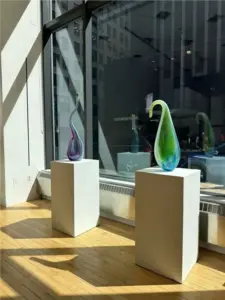
Finally, the art world mourns Paul Stankard, an artist who redefined the possibilities of glass. Passing at 83, Stankard was best known for his extraordinary paperweights—small, complex universes that sold for tens of thousands of dollars. By working over a 5,000-degree gas flame, he pushed the boundaries of his medium, creating intricate floral and organic forms that challenged the perception of the paperweight as merely a decorative object. His death marks the end of an era for a master who brought a scientific level of detail and a poetic sensibility to the craft of glassblowing.
These events, ranging from the technical analysis of a 19th-century masterpiece to the passing of contemporary masters, underscore the perpetual state of evolution within the art world. Whether through the preservation of hidden sketches in a French monastery or the record-breaking sales of landscapes in New York, the industry remains a dynamic reflection of how society values, studies, and honors its creative history.