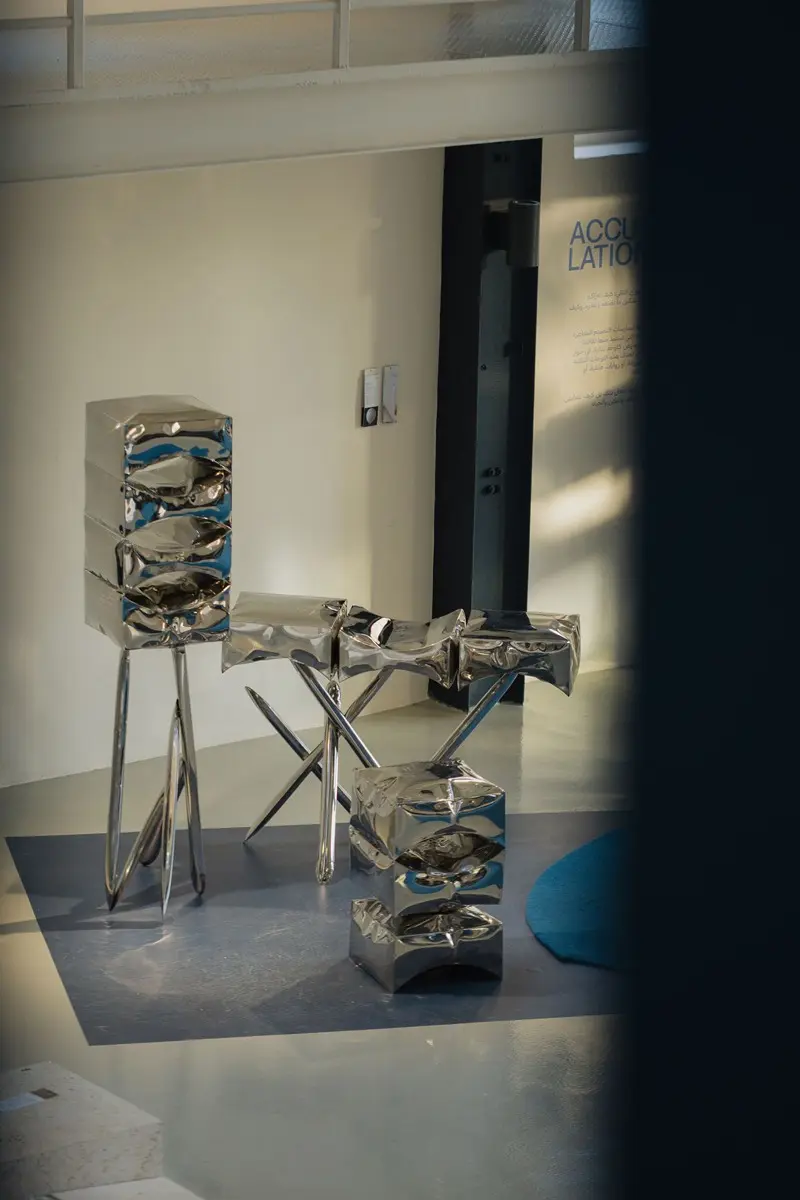
Presented at Amman Design Week 2026, JAWF is an experimental design collection by Jordanian designer Sarah Naghawi that investigates the plastic deformation of stainless steel through the advanced industrial process of hydromechanical forming. Marking a significant milestone as the initial application of this high-pressure fabrication technique within Jordan’s burgeoning design sector, the project manipulates sheet metal through the precise mechanics of positive and negative hydraulic pressure. By doing so, Naghawi tests the material limits of steel far beyond what can be achieved through conventional stamping, bending, or cold-rolling methods, unlocking entirely new sculptural vocabularies for rigid metals.
The exhibition of these works in Amman highlights a growing regional interest in material research and advanced manufacturing technologies. While hydromechanical forming is typically reserved for heavy automotive manufacturing, aerospace engineering, and large-scale industrial infrastructure, Naghawi’s adaptation brings these powerful industrial forces into the realm of experimental contemporary craft and object design. The resulting pieces bridge the gap between heavy engineering and delicate, poetic sculpture, showcasing an intimate understanding of how hard industrial metals can be coaxed into yielding, organic forms.
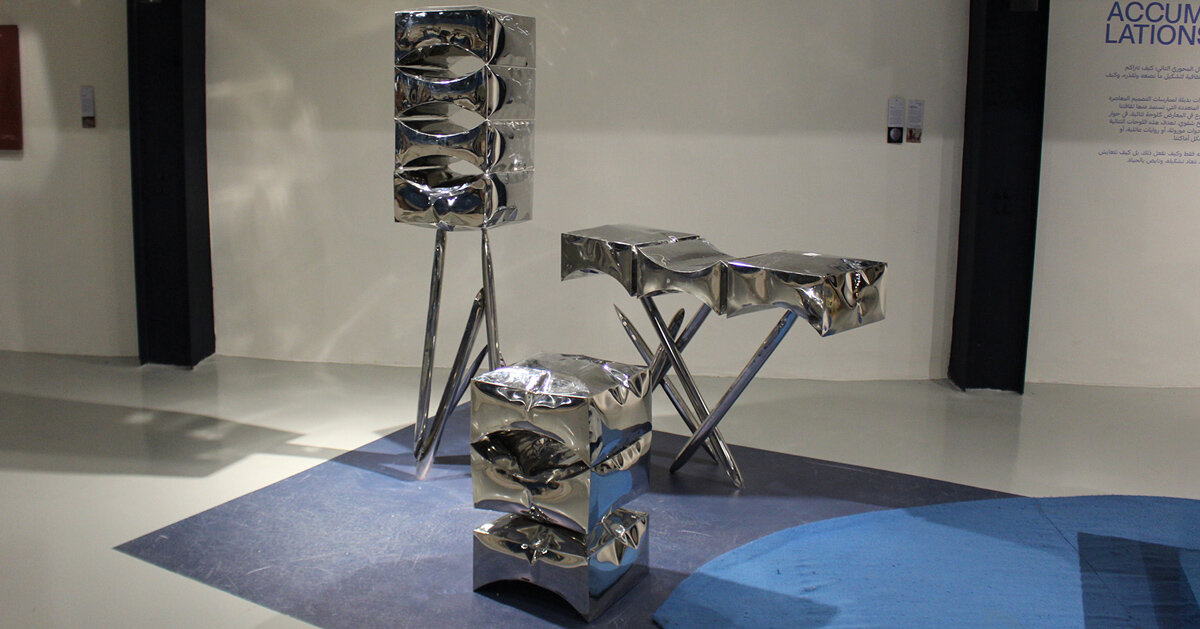
Hydraulic Pressure Redistributes Stainless-Steel Membranes
Derived from the Arabic word for an inner chamber or protected cavity, JAWF treats the internal void as a primary architectural condition defined by displaced matter and trapped volumes. The fabrication process itself is rigorous and demanding, introducing controlled hydraulic fluid pressure into hermetically welded sheet assemblies. As immense pressure builds within the enclosed metal skin, internal forces work to inflate, buckle, and stretch the stainless steel into complex geometries.
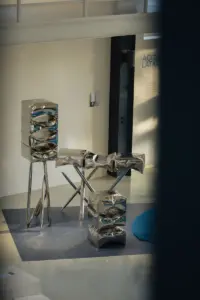
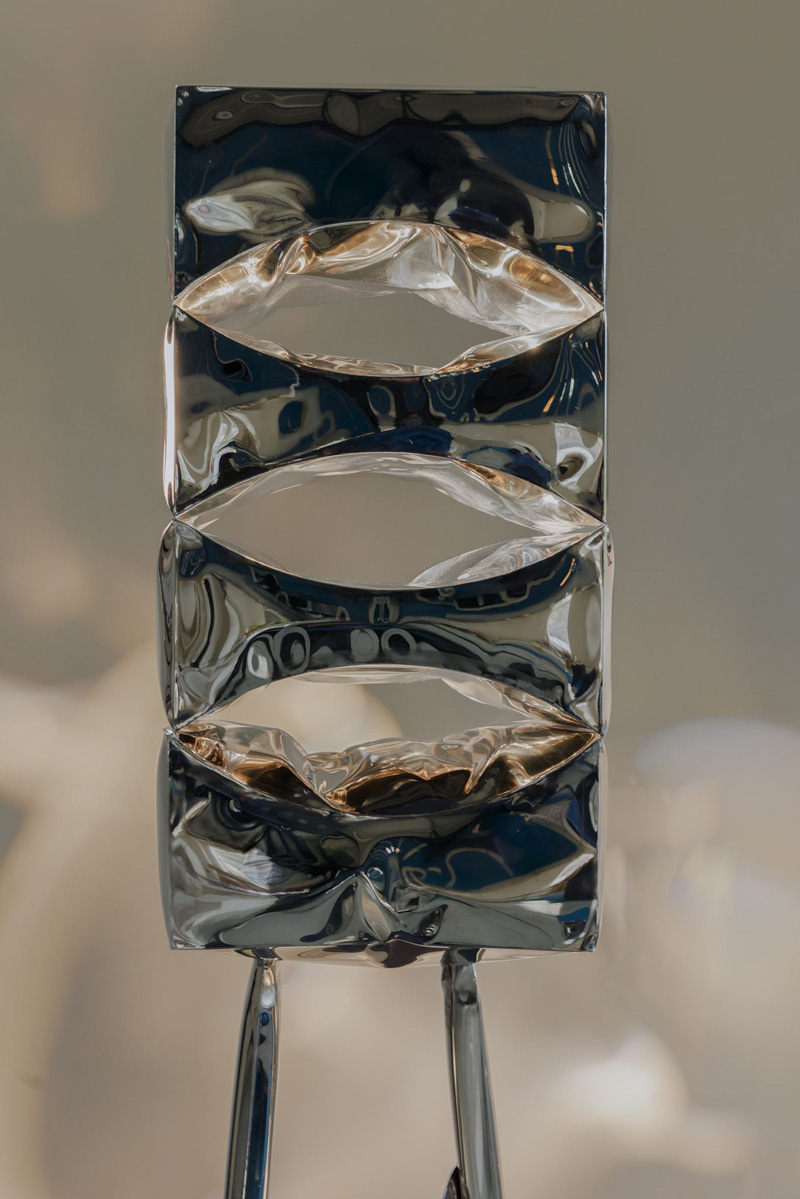
As the material yields to the overwhelming force of the fluid, concave and convex profiles develop organically as reciprocal structural conditions. The metal does not simply bend; it stretches, thins, and responds dynamically to the invisible pressures acting upon it from within. The resulting reflective steel volumes permanently retain the deformation traces and stress concentrations applied during this intense hydraulic expansion. This yields self-supporting enclosures where the deformed metallic skin functions simultaneously as a structural shell, an architectural envelope, and a functional interior.
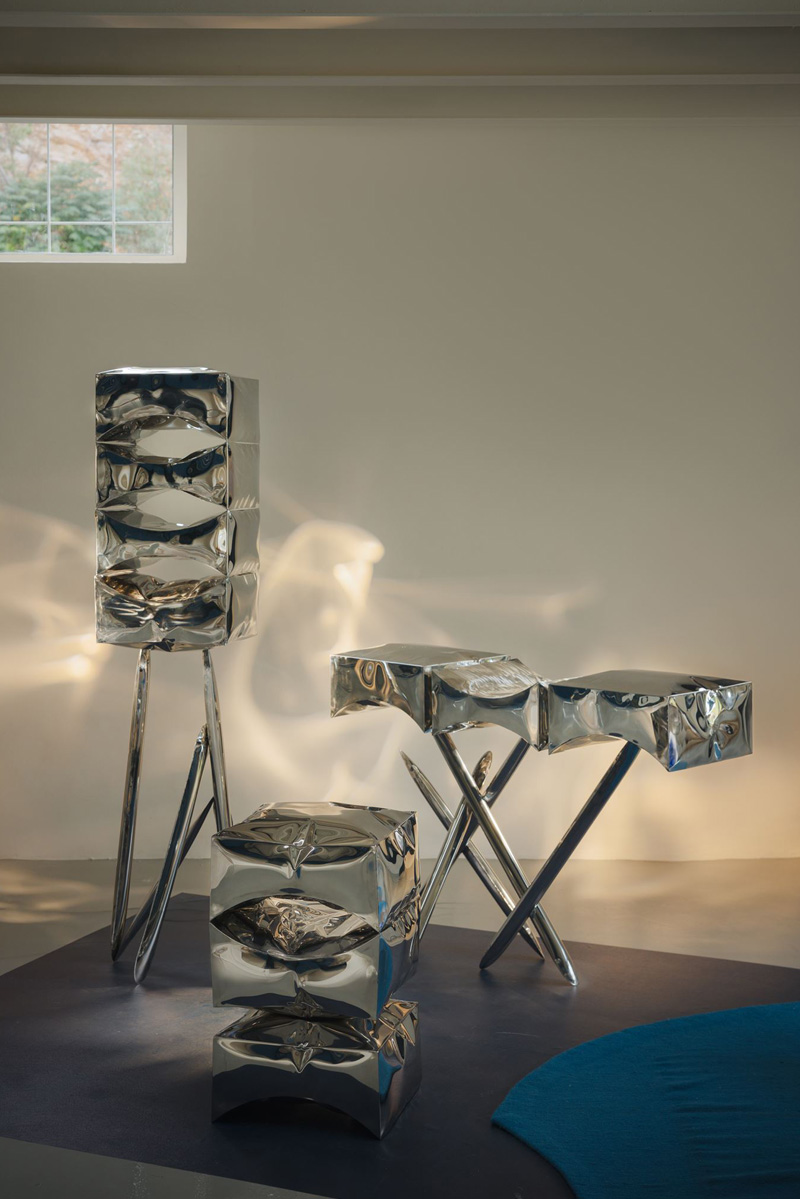
This interplay between external rigidity and internal fluidity gives the objects a powerful sense of tension. The polished surfaces act as mirrors, capturing and warping the surrounding spatial environments, lighting conditions, and moving bodies of viewers. Because the steel retains the exact memory of the forces that shaped it, every ripple, crease, and bulging contour tells the story of the kinetic energy released during its creation. The cold, industrial nature of stainless steel is thus subverted, transforming the material into a fluid membrane that appears caught mid-motion.
Exploring the Boundaries of Non-Elastic Metals
The research underlying JAWF delves deeply into the geometry of inflated membranes and how they translate when applied to non-elastic, high-strength metals. While fabric, rubber, and thermoplastics naturally stretch and balloon under pressure, stainless steel resists this transformation aggressively. Forcing a rigid sheet of metal to behave like a fluid-filled membrane requires meticulous control over welding seams, plate thickness, and the precise calibration of hydraulic pressures.
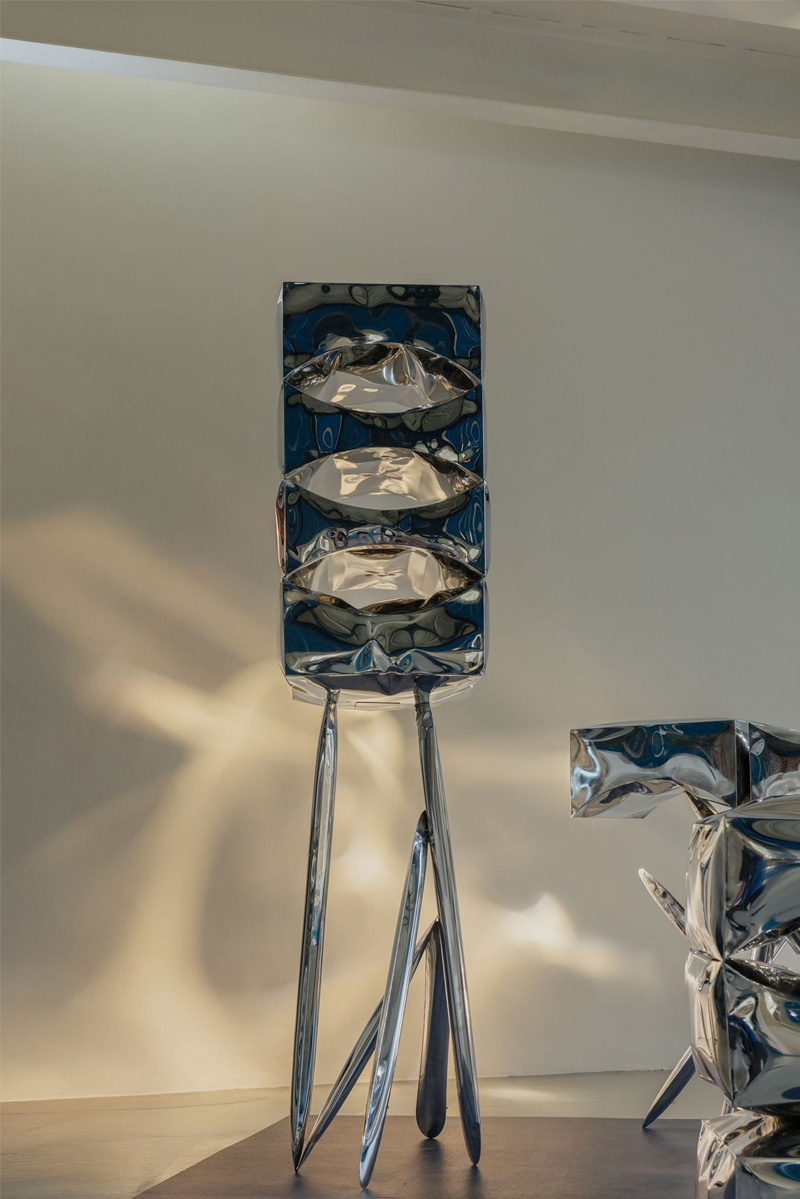
Through this process, Sarah Naghawi establishes a dialogue between control and unpredictability. While the general direction of the expansion can be guided through welded constraints and external molds or boundaries, the final contours of the metal are determined by the material’s own structural resistance. This means that every object in the collection is entirely unique, bearing the distinct fingerprints of the physical laws governing fluid dynamics and metal fatigue.
The highly reflective stainless-steel surfaces further enhance this illusion of fluidity. As light sweeps across the polished exteriors, the boundaries between the object and its environment dissolve. The concavity and convexity of the forms create complex optical distortions, turning the static gallery space of Amman Design Week into a dynamic component of the artwork itself.
By introducing hydromechanical forming to the Jordanian design landscape, JAWF expands the horizon of what local designers can achieve with industrial processes. Sarah Naghawi’s exploration demonstrates that advanced engineering techniques, when re-contextualized through a sculptural and conceptual lens, can yield deeply poetic objects that challenge our perception of rigidity, containment, and form.