For property owners navigating rising utility costs and seeking practical ways to enhance indoor living conditions, cavity wall insulation is increasingly emerging as a high-value home improvement investment.
Unlike traditional surface-level insulation methods, cavity wall insulation targets the hidden gap—known as the cavity—situated between a building’s interior and exterior walls. Typically measuring between 50mm and 100mm wide, this empty space can act as a major conduit for heat loss. By filling this structural gap with specialised insulating materials, homeowners can create a thermal barrier that traps heat indoors during the colder winter months while blocking excessive outdoor heat during the summer. Beyond immediate improvements in indoor thermal comfort, this energy-efficiency upgrade delivers substantial reductions in overall energy consumption, directly lowering household carbon footprints.
Recent industry studies highlight the financial advantages of the measure, showing that properly installed cavity wall insulation can trim up to 25% off a household’s annual heating bills. As families across the country look for reliable shields against market volatility in energy pricing, fortifying building envelopes has transitioned from a minor upgrade to a cornerstone of modern domestic financial planning.
What is Cavity Wall Insulation?
At its core, cavity wall insulation involves treating the structural void that exists in many standard masonry buildings. This 50mm to 100mm gap separates the inner blockwork from the outer brick or stone skin. Filling this space prevents thermal bridging and convective heat currents from bleeding warmth through the perimeter of the property.
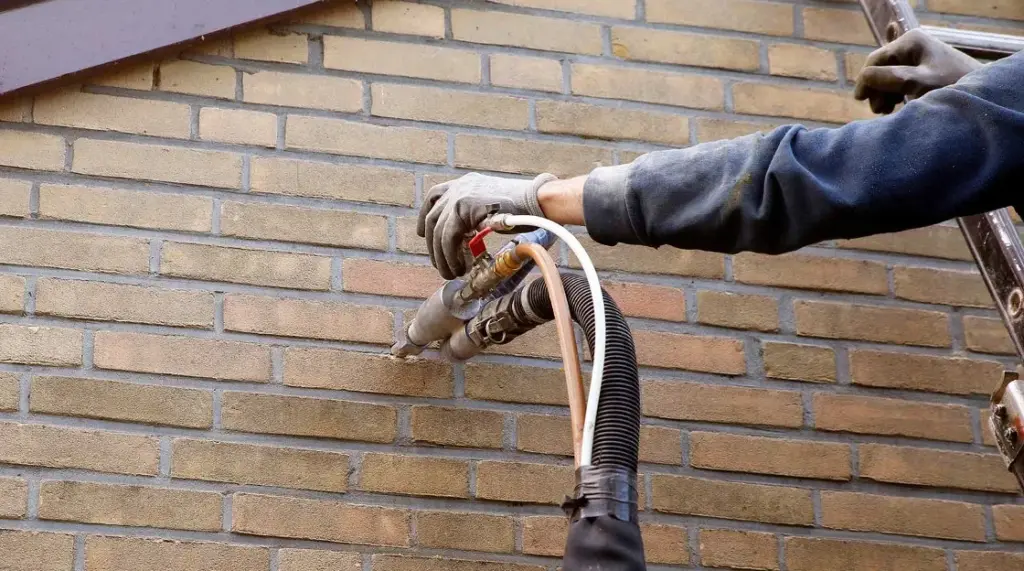
Industry professionals typically deploy one of two primary installation techniques depending on the property’s structural profile: blown insulation or injected insulation. The blown method relies on specialised pneumatic machinery to propel loose-fill materials—such as specially treated mineral wool or expanded polystyrene beads—into the cavity. Alternatively, the injected method requires technicians to drill a precise grid of small access holes through the exterior mortar joints, pumping liquid foam or binding agents directly into the void with professional dispensing pumps. Both methods have proven highly effective and can be adapted to suit a wide variety of architectural styles, provided the building meets specific structural criteria.
Benefits of Cavity Wall Insulation
The widespread popularity of cavity wall insulation stems from a multifaceted array of domestic, environmental, and financial benefits.
Reduced Energy Bills
The most immediate and tangible advantage for most homeowners is the substantial drop in monthly and annual heating expenses. By restricting the rate at which thermal energy escapes through exterior walls, homes retain warmth far longer. This drastically cuts the operational demand placed on central heating systems.
According to data compiled by the Energy Saving Trust, effective cavity wall insulation can save households between £180 and £690 annually on heating bills alone. When projected across the typical 25-year lifespan of modern insulation materials, these cumulative savings represent a significant financial return on the initial capital outlay.
Increased Comfort
Beyond purely financial metrics, insulated cavities dramatically alter the internal environment of a house. Drafts and cold perimeter walls are major contributors to occupant discomfort during chilly weather. Filling the wall cavity eliminates convective loops inside the wall, smoothing out internal surface temperatures, eradicating cold spots, and maintaining a more stable, comfortable ambient temperature year-round.
Reduced Carbon Footprint
In an era where environmental consciousness drives many consumer decisions, reducing domestic energy consumption plays a vital role in national emissions reduction targets. Because insulated homes require considerably less fossil fuel or electricity to maintain comfortable indoor temperatures, households directly lower their individual carbon footprints, making a measurable contribution to wider environmental protection efforts.
Increased Property Value
Energy efficiency has become a major selling point in the modern real estate market. Prospective homebuyers increasingly scrutinise Energy Performance Certificate (EPC) ratings and utility overheads before making purchase offers. A property equipped with professional cavity wall insulation presents itself as a modern, efficient, and economical asset, often commanding a stronger market valuation and attracting heightened interest.
The Cost of Cavity Wall Insulation
While the long-term financial returns are well-documented, homeowners must first weigh the upfront expenditure required for the installation. The total cost varies depending on several variables, including the physical footprint and height of the building, the chosen insulation medium, and the specific site access requirements.

For a standard three-bedroom semi-detached house, installation costs generally hover between £900 and £1,200. However, larger detached structures, complex architectural layouts, or properties requiring specialist scaffolding may see higher pricing, while smaller terraced homes or flats may benefit from reduced rates.
Industry analysts consistently emphasise that while the initial invoice requires capital commitment, it should be viewed as a capital investment rather than a standard household expense. The ongoing savings generated on energy bills, paired with potential uplifts in property equity, ensure the system eventually pays for itself.
How to Know if Your Home Needs Cavity Wall Insulation
Property suitability remains a critical prerequisite before undertaking any insulation project. Not all buildings feature hollow wall cavities. Historic properties constructed before the 1920s frequently feature solid brick walls with no internal air gap, while certain modern developments may already incorporate insulation installed during the original construction phase—particularly homes built after the 1990s. Furthermore, some cavity walls may be too narrow, structurally compromised, or exposed to severe wind-driven rain to safely accommodate certain types of fill.
To determine eligibility, homeowners are advised to consult certified insulation specialists. These professionals conduct comprehensive property surveys using borescoping equipment and moisture assessments to inspect the condition, width, and cleanliness of the cavity before recommending an appropriate treatment plan.
The Installation Process of Cavity Wall Insulation
Because the procedure requires industrial equipment, specialised safety gear, and precise technical knowledge, cavity wall insulation is rarely suited for do-it-yourself approaches. Correct execution is essential to avoid bridging moisture or leaving uninsulated gaps that could compromise the thermal envelope.
Reputable contractors follow strict industry protocols during installation, starting with external pre-installation checks, drilling accurate patterns through mortar joints, evenly distributing the insulating material throughout the cavity, and meticulously making good the exterior brickwork so that drill sites remain virtually unnoticeable. Entrusting this work to established firms—such as Dyson Energy Services, which has delivered residential energy solutions across the UK since 1982—ensures compliance with building regulations and trade standards.
How to Choose the Right Insulation Material
Selecting the correct insulating medium depends heavily on the specific exposure levels, construction materials, and microclimate of the property. Common materials include mineral wool, which offers excellent acoustic and fire-resistant properties; expanded polystyrene beads, known for high thermal resistance and free-flowing installation; and specialized polyurethane foams.
Environmental exposure also dictates material choice. For instance, properties situated in coastal regions or areas prone to high wind-driven rain may require water-repellent injection foams or treated bead systems that prevent moisture transference from the outer brick skin to the inner living space.
Maintenance and Upkeep of Cavity Wall Insulation
Once successfully installed, cavity wall insulation is largely maintenance-free, operating silently within the fabric of the building for decades. However, building envelopes require routine visual monitoring.
Homeowners should remain vigilant for warning signs such as persistent internal dampness, salt efflorescence on interior plaster, or stubborn mould growth. These symptoms can occasionally indicate a compromised damp-proof course, blocked ventilation, or bridging within the cavity. Should any moisture-related anomalies appear, scheduling a prompt inspection with a qualified damp or insulation specialist is vital to safeguard the structural integrity of the walls.
Potential Savings on Energy Bills with Cavity Wall Insulation
The financial calculus underpinning cavity wall insulation remains compelling against the backdrop of fluctuating energy markets. With estimates showing potential reductions of up to 25% on annual heating expenditures, the arithmetic scales directly with current consumption levels.
For example, a household spending £1,000 annually on space heating stands to save roughly £250 each year following a successful installation. Over an expected 25-year operational lifespan, those annual savings accumulate into thousands of pounds retained within the household budget, cementing the upgrade as one of the most economically sound thermal improvements available to modern property owners.