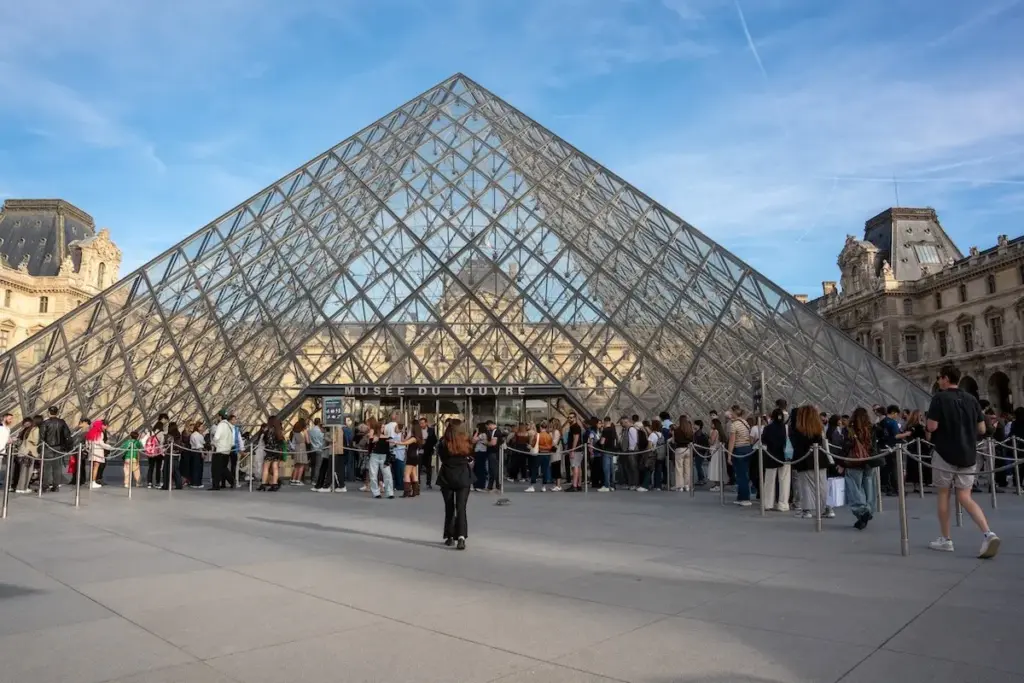
Christophe Leribault, who recently took the reins at the world-renowned Louvre in Paris, has issued a stark and unprecedented warning regarding the future of the historic institution. According to the newly appointed director, the museum could face complete closure if it fails to secure immediate and comprehensive renovations aimed at upgrading its aging infrastructure and drastically bolstering its security systems.
The warning, delivered during an interview with the French publication Le Figaro, places immense pressure on political leaders as the nation navigates a shifting governmental landscape. Leribault emphasized that the physical preservation and modernization of the museum are not merely aesthetic improvements, but existential necessities for the survival of the cultural landmark.
“Whoever forms the next government must keep in mind that if the Louvre is not repaired, updated and transformed, it will very quickly fall behind and will eventually have to close its doors to the public,” Leribault told Le Figaro. “That would be a disaster.”
The Louvre remains one of the premier cultural destinations on the planet, drawing an impressive 9 million visitors in 2025 alone. Globally celebrated for its masterpiece-laden collection, the museum houses timeless works by legendary creators such as Leonardo da Vinci, Jean-Auguste-Ingres, and Eugène Delacroix, alongside an invaluable array of ancient artifacts spanning thousands of years of human history. Yet, despite its enduring allure and cultural dominance, the institution has increasingly found itself making headlines for mounting vulnerabilities in its operational management and security infrastructure rather than its artistic acquisitions.
These vulnerabilities were thrust into the international spotlight following a brazen daytime heist that occurred almost exactly one year ago, in October 2025. During the robbery, thieves managed to make off with priceless French crown jewels collectively valued at an astonishing $102 million. To date, a portion of these historic artifacts has still not been recovered, leaving a permanent scar on the museum’s historical inventory.
The ensuing controversy and public outcry surrounding the security breach severely impacted leadership at the institution, ultimately prompting the museum’s former director, Laurence des Cars, to resign from her post. Her departure cleared the way for Leribault to step into the role earlier this year, inheriting a deeply complex institutional crisis alongside plans for a massive revitalization project that had already sparked considerable debate among staff, stakeholders, and the public.
Plans to update the Louvre, which must carefully account for complex crowd-flow dynamics and modern security requirements, have frequently been mired in controversy and administrative delays. In February, the museum abruptly postponed an architectural competition designed to select the lead firm in charge of a sweeping expansion project—a competition that had been announced less than a year prior.
At the time, the ambitious revitalization plan had been given a staggering $788 million price tag. However, it quickly encountered fierce pushback and protests from Louvre workers and staff unions. Critics argued that the proposed plans placed an inappropriate amount of focus and financial resources on relocating the Mona Lisa to a dedicated, standalone gallery, while allegedly neglecting critical, systemic infrastructure issues that required immediate attention across the entire sprawling complex.
The administrative landscape shifted again in May, with Leribault now firmly at the helm of the institution. Under his leadership, the museum officially resumed the stalled expansion project, ultimately naming Selldorf Architects and Studios Architecture Paris as the winning firms of the architectural competition.
The financial scope of the undertaking has expanded significantly under the new administration. In prior interviews, Leribault pegged the total cost of the comprehensive renovations project at a formidable $1.24 billion. He has repeatedly stressed that the overarching initiative, originally set into motion by des Cars prior to her departure, must fundamentally prioritize security at every level of the design process. Speaking previously with the Financial Times, Leribault underscored this core philosophy, stating, “Security must be integrated from the outset into all our choices.”
During his recent interview with Le Figaro, Leribault further clarified that any undertaking to fundamentally alter, modernize, and secure the Louvre will inevitably be exceptionally costly, logistically complicated, and demanding of prolonged institutional effort.
Reiterating the interconnected nature of the museum’s architectural challenges, Leribault dismissed the notion that simple fixes could resolve the institution’s deep-seated vulnerabilities. “There is no easy, miracle ‘surface’ solution,” he noted. “Everything is interconnected, everything is linked.”