Happy Friday, garden enthusiasts! Another week is officially in the books, and there is no more pretending that summer is lingering. Fall temperatures have officially arrived across the Midwest, and the changing leaves are putting on quite a magnificent show before winter inevitably returns to the region.
While the traditional growing season is winding down for many gardeners living in colder climates, there remains an abundance of opportunities to inject brilliant color, rich textures, and dramatic focal points into the landscape through seasonal containers. Few people execute this seasonal transition quite like Howard, a celebrated Chicago-based container designer who has been crafting breathtaking, professional-grade seasonal displays for nearly four decades.
Howard is no stranger to the community, having previously shared his magnificent spring container creations and delightfully creative Halloween displays with eager readers. Today, he is back with an entirely new collection of autumn containers sourced from a standout project located in Glencoe, Illinois, situated firmly in USDA Hardiness Zone 6a.
The Art of the Autumn Urn
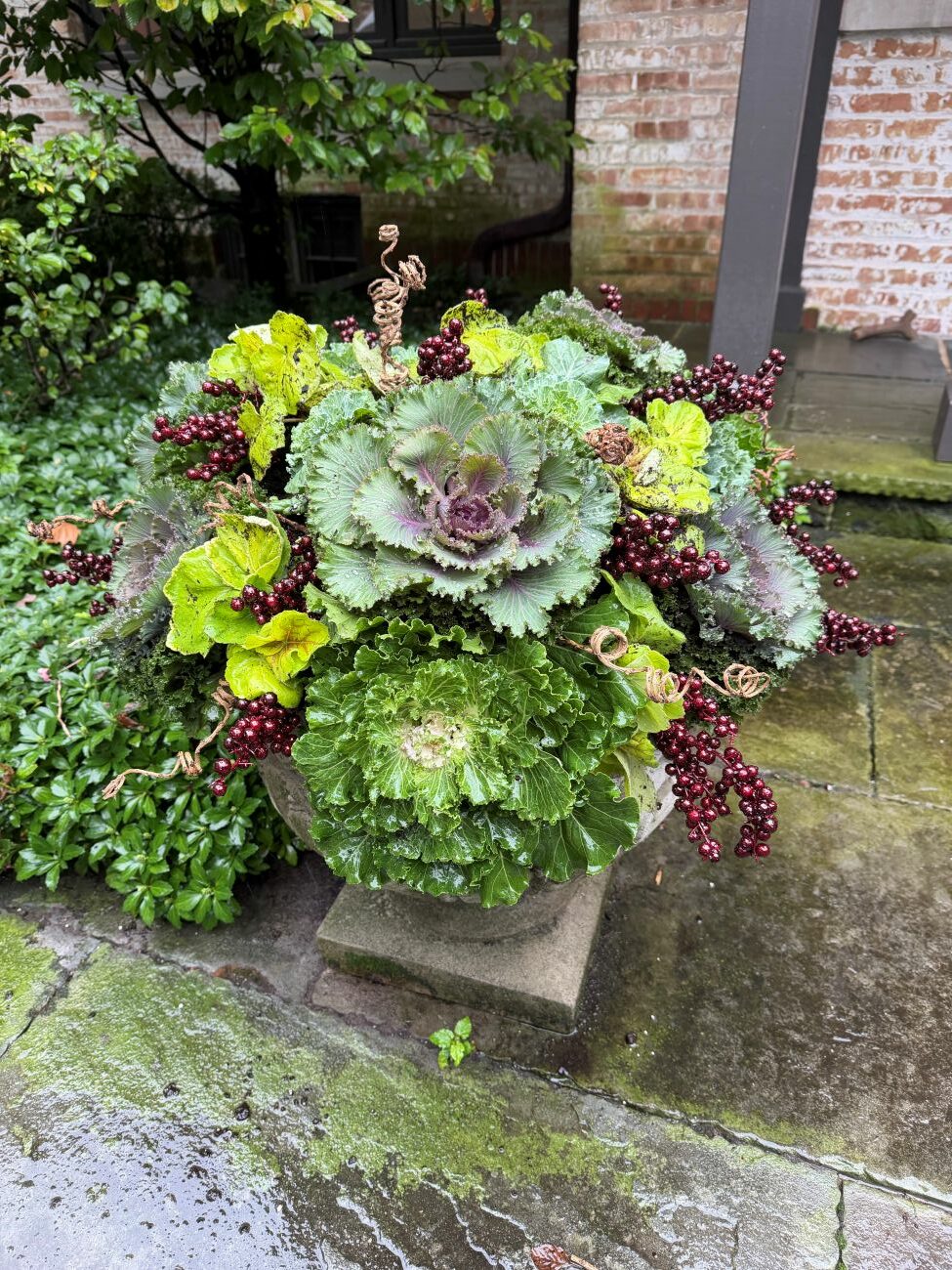
Looking closely at the initial installation, large fall urns are expertly packed and overflowing with ornamental cabbage and kale (Brassica oleracea cvs., grown as annuals), which make up the structural bulk of this stunning arrangement. Yet, for many design enthusiasts, the clusters of deep burgundy berries serve as the absolute stars of the show. These twisting, woody stems introduce a touch of organic whimsy and architectural interest that effortlessly ties the entire composition together, contrasting sharply with the chartreuse greenery nestled nearby.
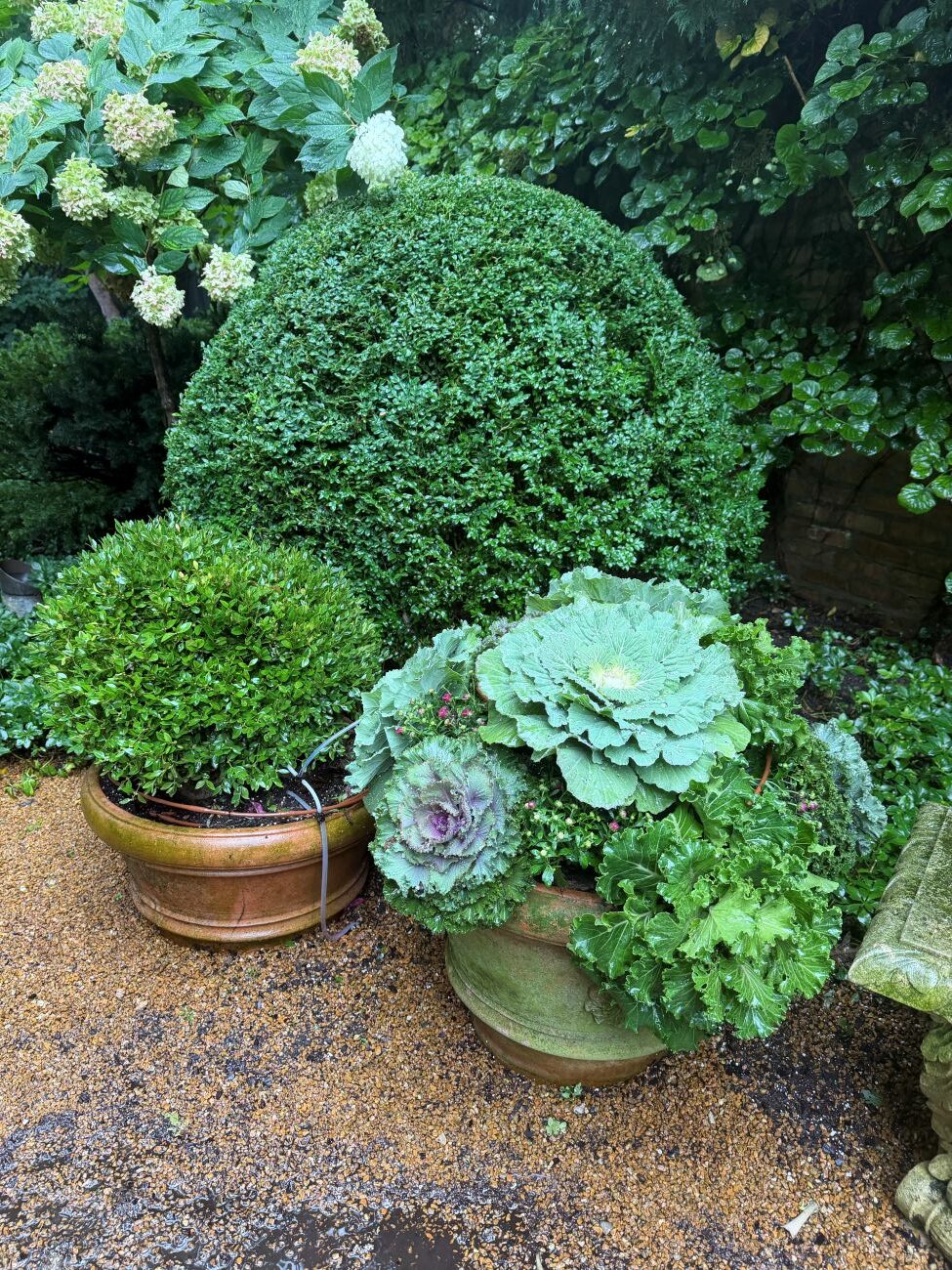
Moving through the property, the earthy, weathered tones of the terracotta planters complement the aged stonework sitting beneath them. Clipped boxwood topiaries (Buxus sempervirens, Zones 5–8) provide a formal, evergreen backdrop that makes the heavily ruffled, textured foliage of the ornamental cabbage and kale stand out with striking clarity. It serves as a masterclass in how carefully planned containers can seamlessly complement the surrounding permanent landscape, elevating even a small, overlooked corner of an outdoor living space into a high-end visual feature.
Grouping and Repetition in Seasonal Design
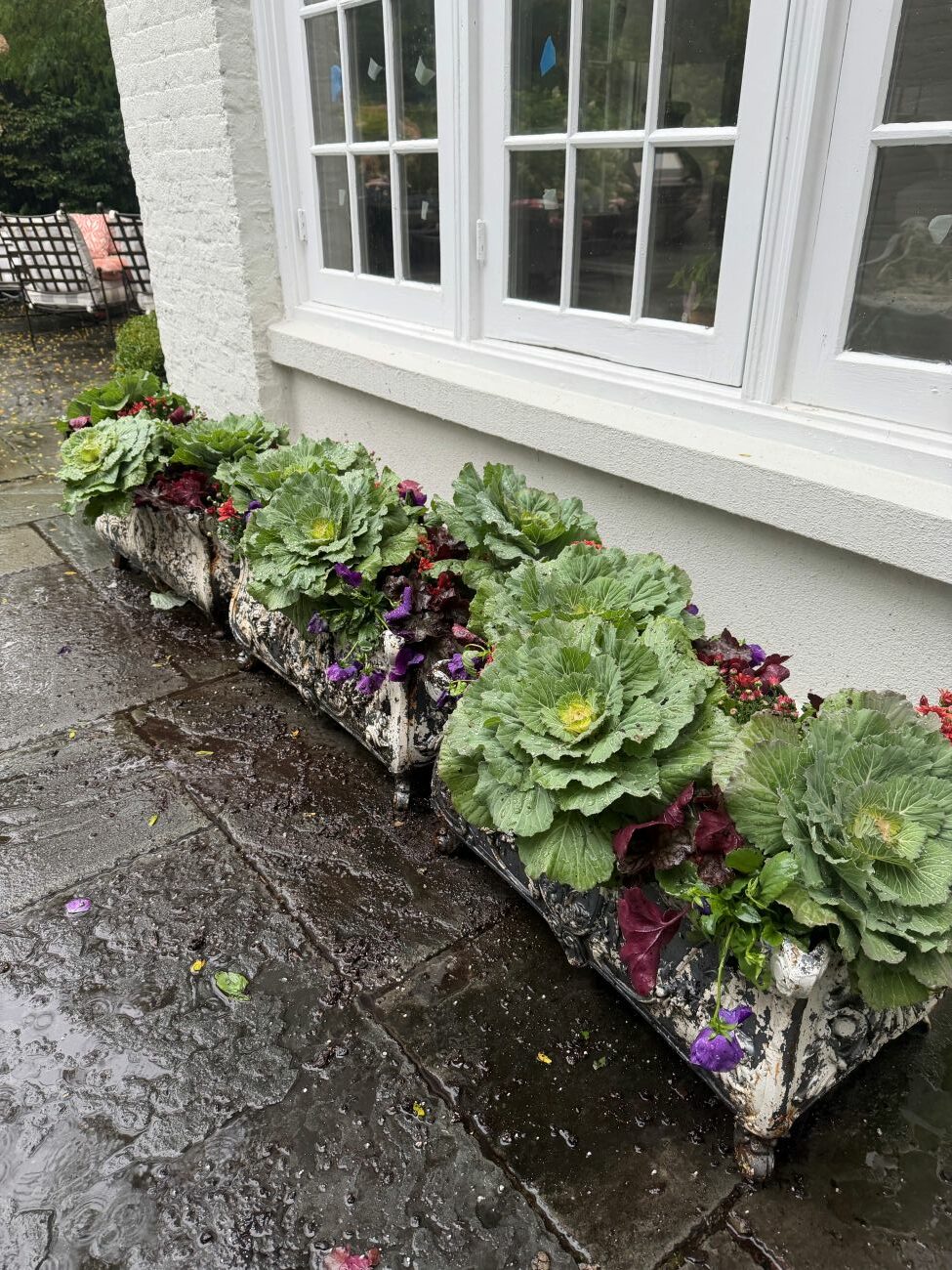
Further exploration of the property reveals a series of weathered rectangular containers positioned beneath windows. At first glance, the visual impact is so cohesive that the individual vessels appear to be one continuous, elongated planter box. Choosing to group these weathered containers tightly together rather than scattering them haphazardly throughout the landscape creates an undeniable, high-impact design statement.
Ornamental cabbage and kale once again take center stage in these arrangements, while subtle accents of deep purple and rich burgundy echo throughout the plantings. Whether introduced via ruffled foliage, delicate flower petals, or dark autumn berries, this intentional repetition proves how carrying specific colors and plant families through multiple installations can tie an entire estate’s design together without forcing every single arrangement to look identical.
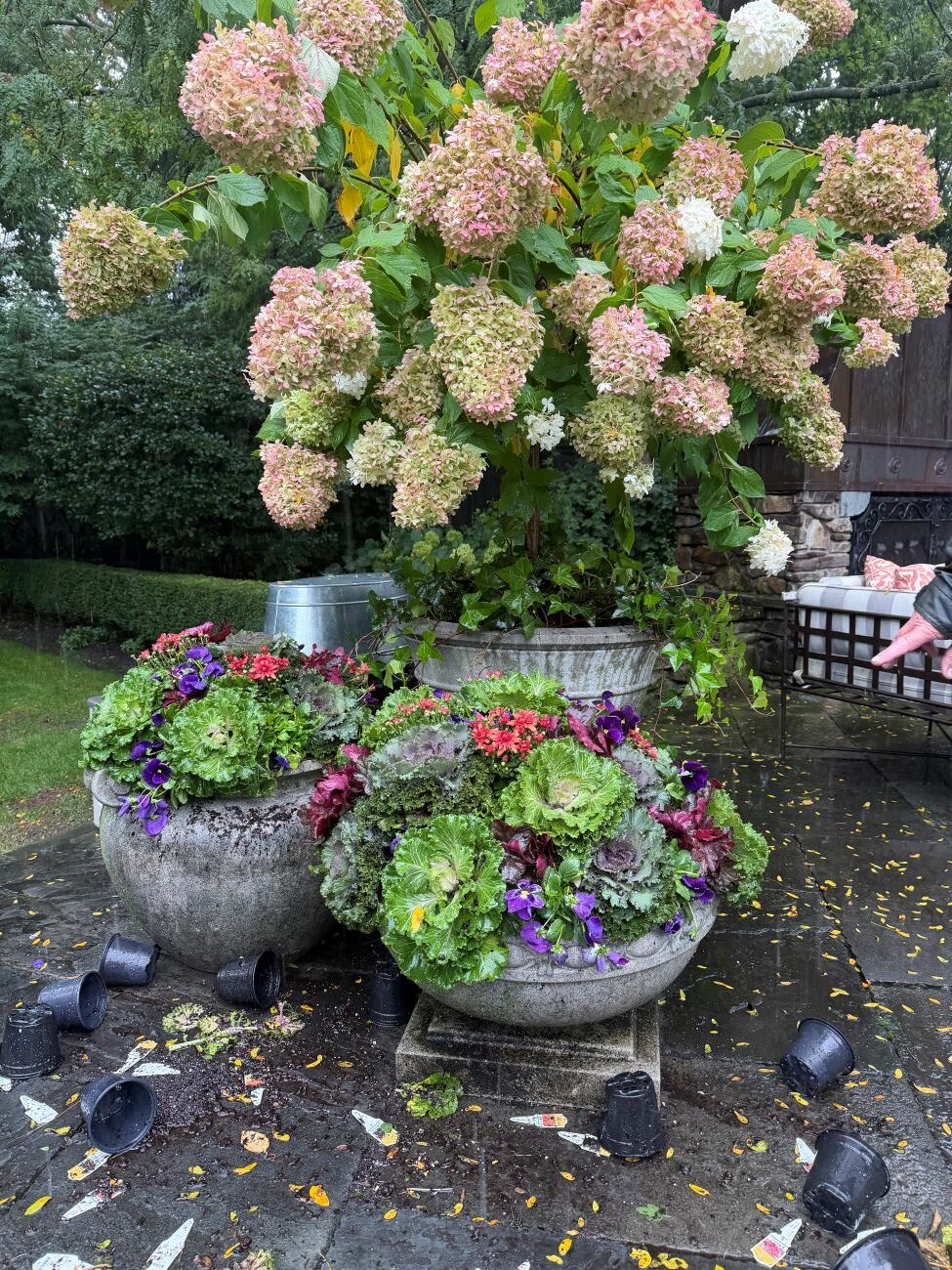
Another gorgeous patio combination demonstrates this exact philosophy, even if the messy reality of gardening is temporarily on display nearby, with stray pots and paper plant tags scattered casually across the ground. The work of seasonal container gardening is undeniably messy, labor-intensive, and demanding, but the final visual results speak volumes.
A Rainy Day Masterpiece
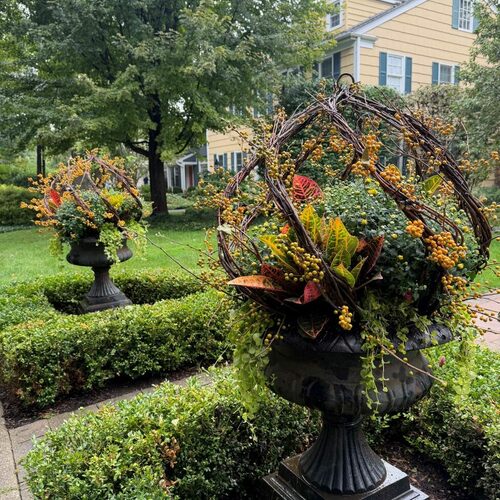
To cap off the seasonal showcase, one final installation by Howard at a neighboring home on the very same rainy afternoon offers an arrangement that is nothing short of exceptional. The sculptural effect of twisting woody vines interspersed with brilliant golden berries hanging throughout creates a breathtaking visual dynamic. The vivid, tropical-leaning foliage of colorful crotons complements the warm golden tones of the berries in a way that feels both unexpected and entirely appropriate for an elevated autumn palette.
It is a striking example of autumnal design that acts as a welcoming beacon for residents and visitors alike, beautifully capturing the essence of the harvest season right at the threshold of the home.
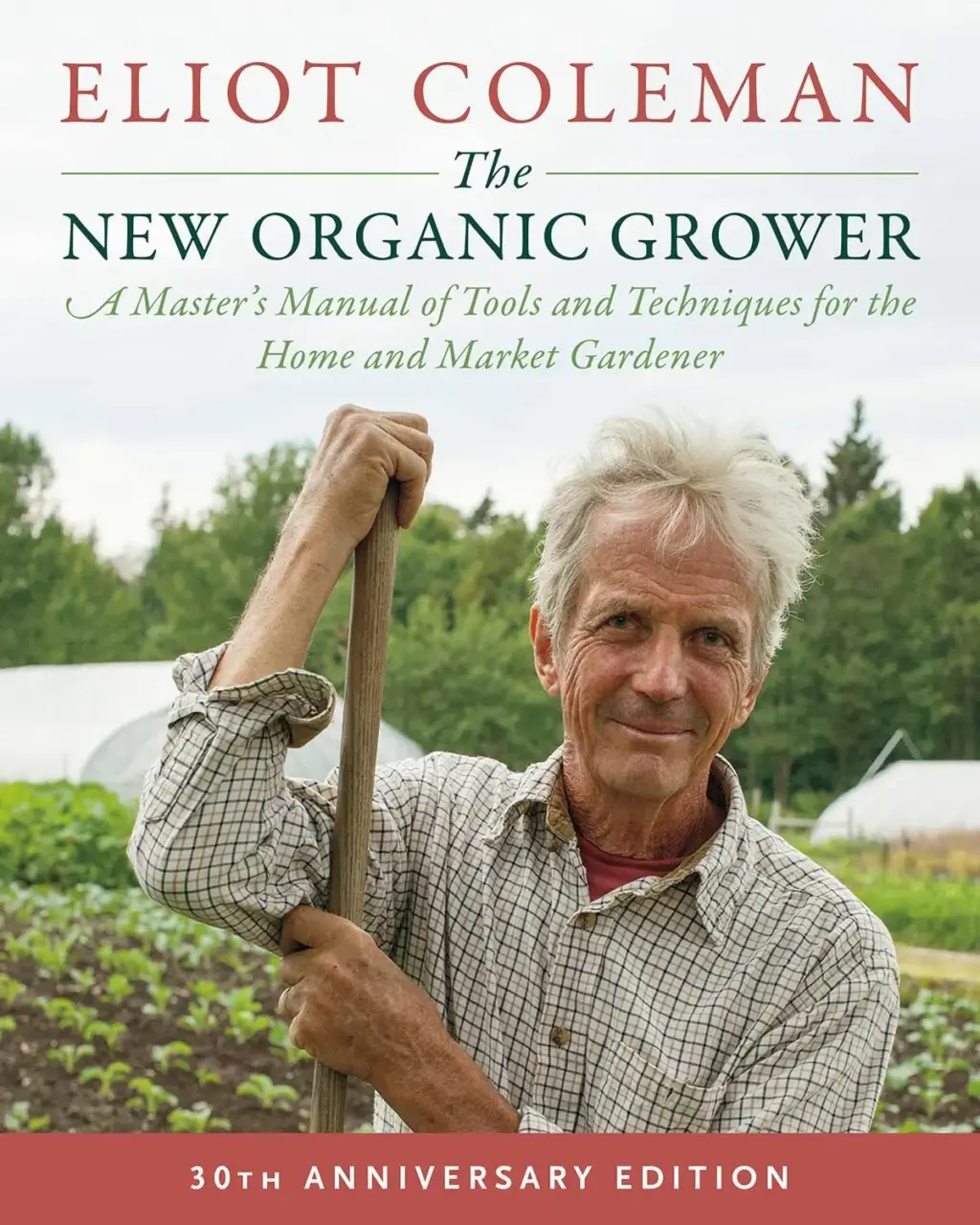
For gardeners looking to expand their horticultural library or dive deeper into advanced growing techniques, several foundational resources remain essential. Among them, The New Organic Grower, 3rd Edition: A Master’s Manual of Tools and Techniques for the Home and Market Gardener, celebrating its 30th-anniversary edition, continues to serve as an indispensable guide for sustainable cultivation. Originally published by organic pioneer Eliot Coleman in 1989, the fully illustrated and updated text remains a cornerstone of modern agricultural and horticultural libraries. Additionally, exploring specialized techniques like crevice gardening allows enthusiasts to replicate the unique environmental conditions of mountain tops, deserts, and coastal cliffs, bringing the cultivation of rare alpine and rocky-habitat plants directly into home landscapes.