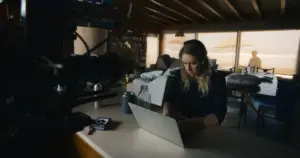
When filmmakers Jamie Courville and her husband, Chris Reynolds, relocated to Gowanus in 2009, they were drawn to an unexpected aesthetic. Just a year before the federal government designated the neighborhood’s notorious industrial waterway as a Superfund site, the area offered a raw, postindustrial charm. "You couldn’t take a bad photo of it," Courville recalls.
Beyond the striking visual landscape, the neighborhood’s defunct factories and decaying warehouses provided vast, affordable studio spaces. While other Brooklyn enclaves like Williamsburg and Long Island City were rapidly transforming into shinier, more generic versions of their former selves, Gowanus remained elusive, rough-edged, and full of creative potential. It was an environment that felt feral, gritty, and entirely free.
Yet, that distinct atmosphere existed precisely because of what was missing—or rather, what was lurking in the water. Running directly through the heart of the neighborhood was the Gowanus Canal, a toxic cesspool choked with sewage, heavy metals, industrial sludge, and a staggering array of pathogens. "I used to say I would never raise kids here," admits Karen Gibbons, an artist who moved to the neighborhood in the early 1980s. Even so, practical real estate concerns ultimately won out, granting her and her husband sprawling loft spaces that cemented their affection for the idiosyncratic locale.
In almost any other circumstance, a federal Superfund designation would have sent real estate investors running for the hills. In Gowanus, however, it signaled open season. The federal intervention served as a green light, assuring developers that the long-stymied cleanup of the century-old waterway would finally move forward.
Commercial pioneers quickly seized the momentum. Whole Foods opened a massive flagship store complete with a rooftop greenhouse on Third Avenue and 3rd Street. Trendy establishments followed in quick succession: the outdoor patio bar Lavender Lake in 2011, Dinosaur Bar-B-Q in 2013, and the Royal Palms Shuffleboard Club in 2014. Real estate investors, who had quietly accumulated parcels of land for decades, began applying for spot rezonings to make way for high-end residential housing.
Local leadership recognized that if the community failed to get ahead of the sweeping changes already underway, it would completely lose the power to shape its future. Brad Lander, then the local city councilmember, envisioned a different trajectory for Gowanus. A former community organizer and urban planner, Lander mapped out a future where the neighborhood could become economically diverse, featuring thousands of newly created affordable apartments, permanently stabilized artists’ studios, renovated public housing, and a public waterfront esplanade.
In 2016, Lander initiated a comprehensive five-year rezoning process designed to manage the impending development wave. The framework did not simply open the door for residential towers; it attached an unprecedented package of community benefits meant to ensure the neighborhood remained accessible to working-class New Yorkers rather than devolving entirely into an exclusive enclave for the ultra-wealthy.
Documenting the monumental shift, Courville and Reynolds began filming the neighborhood in 2013 following the demolition of a redbrick building on Douglas and Third streets. Over the course of a decade, they captured the relentless cycle of demolition, new construction, barges hauling toxic sludge, and heated public rallies leading up to the historic 2021 rezoning vote. Their archival efforts eventually culminated in more than 400 hours of footage and the documentary Gowanus Current.
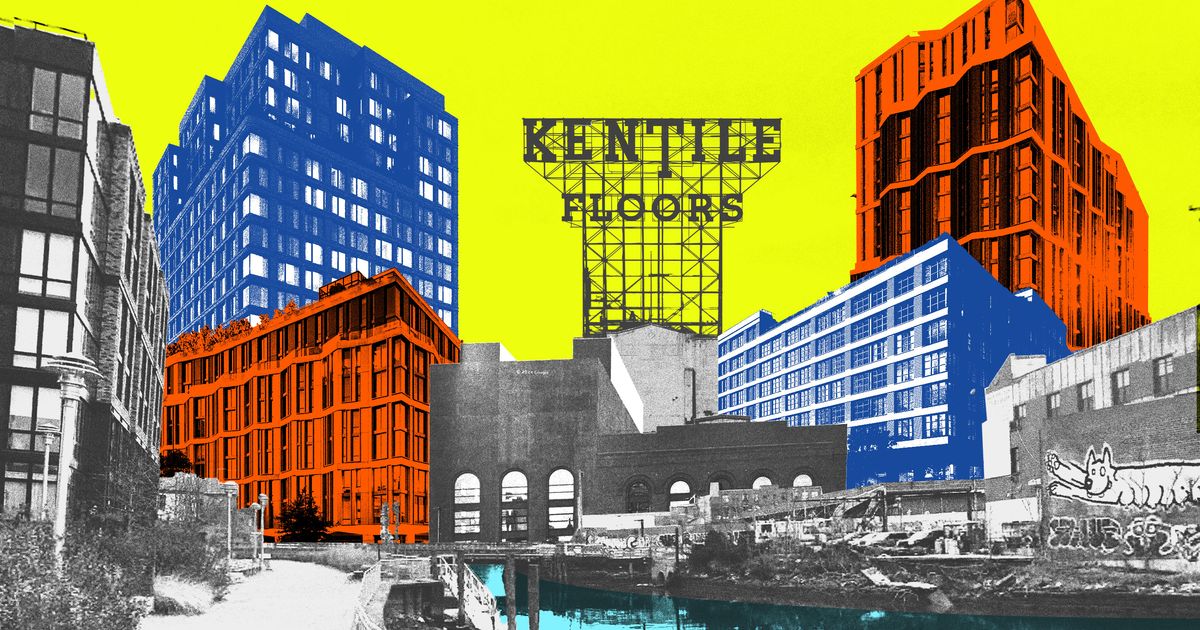
"What happened is such a complex thing. People call it gentrification, but it’s not," Courville reflects. "The neighborhood was knocked down and a new one was built."
The observation is hardly hyperbole. The Gowanus rezoning spans 82 blocks, nearly every one of which features a newly completed tower, an active construction site, or a lot slated for imminent development. By the end of the decade, the neighborhood is projected to inject roughly 9,000 new housing units into the local market.
While optimistic developers occasionally muse about Gowanus evolving into a mini-Copenhagen featuring a swimmable canal, seasoned observers remain skeptical. Unlike orderly Northern European urban transformations, New York City development is a messy, highly bureaucratic endeavor where public concessions are painstakingly extracted from private entities. Furthermore, the neighborhood remains a patchwork of brownfields saturated with legacy industrial pollutants like coal tar and chemical solvents. Digging up, hauling away, and capping toxic muck while tens of thousands of new residents flood the area presents a complex and unprecedented urban challenge.
The real estate rush materialized almost immediately after the City Council approved the rezoning in late 2021. The timing coincided with the fast-approaching expiration of 421-a, a lucrative affordable-housing tax exemption, which triggered an unprecedented construction scramble. Developers rushed to break ground before the June 2022 deadline, creating a building boom that dwarfed the early-aughts transformation of Williamsburg. According to market data analytics firm Marketproof, 46 projects comprising 5,000 units have either been completed or are actively under construction, with plans filed for at least 43 additional developments.
Yet, the monumental environmental cleanup required to support this influx has lagged significantly behind the pace of vertical construction. Only the first of three designated sections of the 1.8-mile canal has been successfully dredged and capped, while total remediation costs have ballooned from an initial estimate of $500 million to approximately $1.5 billion. Critical infrastructure projects, such as combined sewage overflow tanks designed to prevent raw sewage from spilling into the waterway, are not scheduled for completion until 2029—a staggering seven-year delay that experts warn may necessitate re-dredging parts of the canal to clear newly accumulated contamination.
Similarly, planned affordable housing anchors have faced prolonged administrative bottlenecks. Gowanus Green, a planned 957-unit, 100-percent affordable housing initiative slated for a former manufactured gas plant site at Fifth and Smith streets, has languished for years amid fierce disagreements over environmental cleanup standards among local stakeholders, developers, regulatory agencies, and National Grid. However, recent regulatory movement offers a glimmer of progress, as the Department of Environmental Conservation approved a phased remediation plan that could finally clear the path for construction to begin.
Despite the persistent environmental hurdles, developers are leaning heavily into their waterfront positioning. Marketing campaigns routinely highlight nautical proximity, conjuring up visions of waterfront living even for projects situated blocks away from the canal. This aggressive rebranding stands in stark contrast to the public ridicule faced by early developments a decade prior, when renderings of residents cavorting alongside the polluted industrial waterway were widely mocked. Today, the reality of landscaped public esplanades, native plantings, and dog-walkers lining the water’s edge has largely materialized, albeit in a manicured and sterile fashion.
Compounding the visual and infrastructural shifts, the rezoning has also brought to light legacy contamination that remained hidden for more than a century. In late 2023, public records obtained via freedom-of-information requests revealed that toxic trichloroethylene (TCE) vapors were migrating upward through the basements of several existing local buildings, including the popular Royal Palms Shuffleboard Club and a public school. State environmental testing detected odorless chemical vapors inside the shuffleboard club at levels vastly exceeding allowable guidelines, with concentrations beneath the structure measuring thousands of times higher.

TCE, a volatile solvent widely used throughout the 20th century for dry cleaning, metal degreasing, and oil extraction, is a known carcinogen linked to severe health risks, including birth defects and Parkinson’s disease. In open air, the chemical vapor dissipates harmlessly, but in enclosed basements, it can infiltrate structural cracks and accumulate to dangerous indoor concentrations. Subsequent testing revealed similar contamination at a former box factory converted into artist studios at 543 Union Street, signaling the terrifying possibility of an extensive underground vapor plume rather than isolated, easily manageable contamination spots.
While new developments are strictly required to conduct comprehensive environmental testing and install advanced vapor barriers and sub-slab depressurization systems, existing property owners maintain the legal right to opt out of testing. Between 2024 and 2025, state environmental agencies reached out to the owners of over 1,600 properties within the impact zone, but only a small fraction agreed to be sampled. Because property owners face no penalties for refusing tests and are legally required to disclose hazardous findings to tenants if contamination is discovered, many choose ignorance, leaving the true magnitude of the neighborhood’s subterranean pollution largely unquantified.
These lingering environmental anxieties have sparked intense friction between local activist groups, residents, and regulatory agencies during public safety forums. Yet, despite the ongoing battles over soil vapor intrusion and remediation transparency, the relentless demand for housing in brownstone Brooklyn continues to drive affluent renters into the neighborhood.
For many incoming residents, the calculus is simple. Faced with astronomical rents and virtually nonexistent inventory in adjacent neighborhoods like Park Slope, families are willing to overlook environmental remediation work and proximity to a flood zone in exchange for modern amenities, central air conditioning, in-building gym facilities, and access to top-tier local public schools. Newer developments offer thick, noise-canceling windows, advanced air filtration monitors, and secure concrete seals that effectively insulate high-floor tenants from the industrial realities humming directly outside their lobbies.
Even so, longtime residents grapple with a profound sense of cultural displacement. While the neighborhood’s master plan successfully negotiated unprecedented community benefits—including funding for public housing repairs, mandatory inclusionary zoning requirements, and the preservation of dozens of below-market artist studios managed by Arts Gowanus—the rapid erasure of the area’s idiosyncratic, unpolished character remains a painful loss for those who knew it before the cranes arrived.
As the luxury high-rises continue to pierce the skyline and the monumental cleanup of the canal slowly grinds forward, Gowanus stands as a striking testament to the high stakes of modern urban development. It is a place where cutting-edge sustainable architecture sits directly atop centuries of industrial neglect, and where the promise of a revitalized, economically diverse waterfront community is being built in real time, one complicated, contested block at a time.