As the vibrant energy of summer gives way to crisp autumn breezes and falling temperatures across the Midwest, gardeners everywhere are faced with the inevitable transition of the seasons. While the primary growing calendar winds down in colder hardiness zones, the shift in weather does not mean an end to color, creativity, and visual life in the landscape. Instead, the autumn shoulder season opens a unique window for artistic expression through seasonal container design—a craft mastered by few with the longevity and precision of Chicago-based container designer Howard.
With nearly four decades of professional design experience shaping urban and suburban outdoor spaces, Howard has built a renowned reputation for transforming ordinary planters into dynamic, multi-seasonal works of art. Following his previous showcases featuring vibrant spring containers and creative Halloween displays, Howard is turning his attention to a brand-new collection of autumn containers. Installed for a residential project in Glencoe, Illinois, situated firmly in USDA Hardiness Zone 6a, this latest portfolio demonstrates how professional container arrangements can bridge the gap between late-season weariness and winter’s stark dormancy.
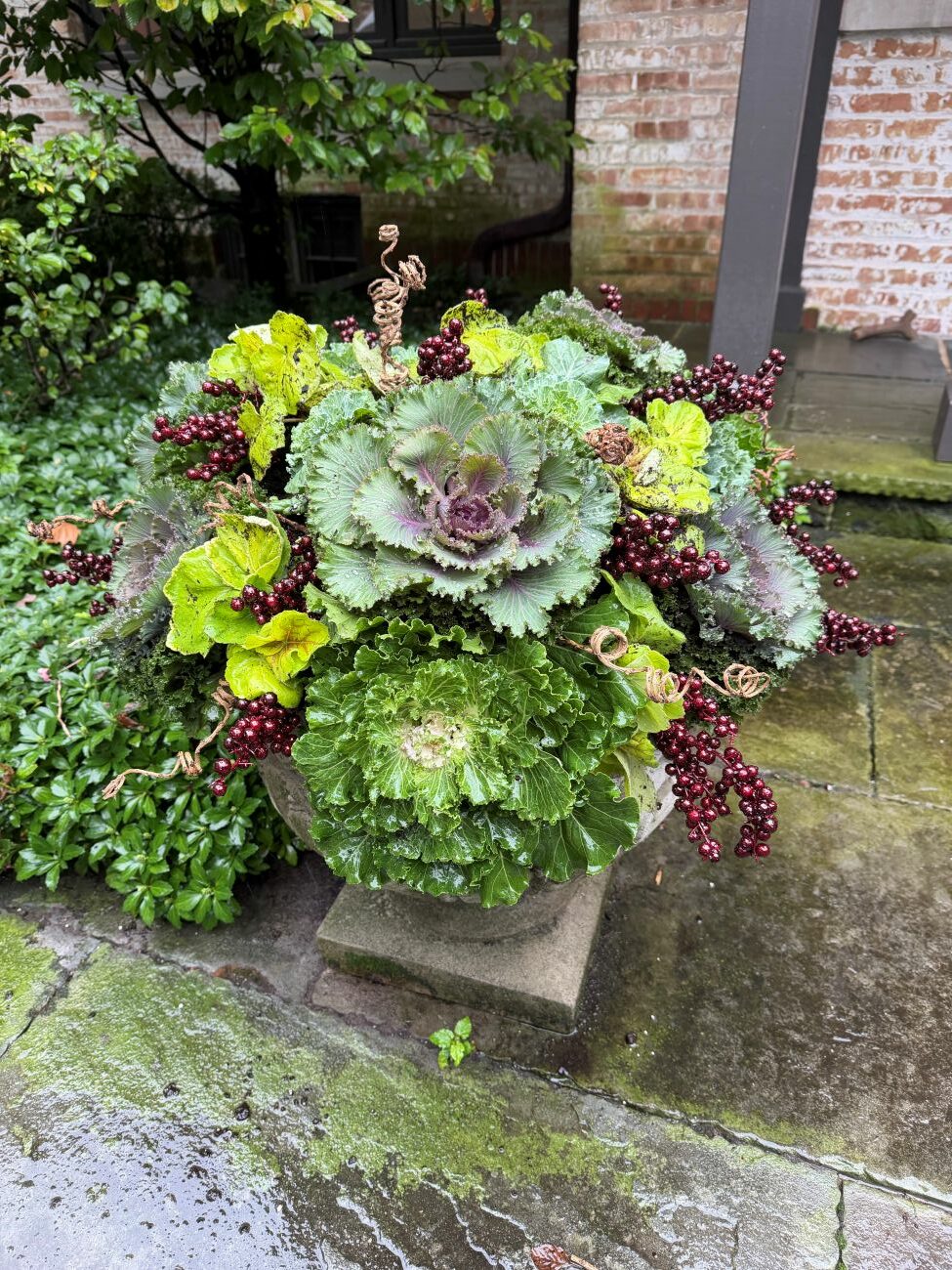
At first glance, the Glencoe project immediately establishes a commanding presence through the use of large, classic urns and weathered rectangular planters that integrate effortlessly with the existing hardscape and stonework. The foundation of these striking arrangements relies heavily on ornamental cabbage and kale (Brassica oleracea cultivars), which thrive in the cooler temperatures of autumn. The ruffled, substantial foliage of these cool-season annuals provides a sturdy visual backbone, anchoring the planters while offering an array of textures that contrast sharply with surrounding perennial features.
Yet, what elevates Howard’s designs from standard seasonal plantings to high-end landscape artistry is his meticulous attention to accent materials, layering, and structural rhythm. In the primary urn display, clusters of deep burgundy berries emerge as a clear focal point, introducing a rich, saturated jewel tone that captures the essence of the harvest season. These are paired with twisting, whimsical woody stems that weave upward and outward, adding an organic, architectural element that ties the diverse components of the arrangement into a cohesive whole. Chartreuse greenery weaves through the composition, offering a vibrant jolt of brightness that offsets the deeper burgundy tones and gives the urn an undeniable sense of depth.
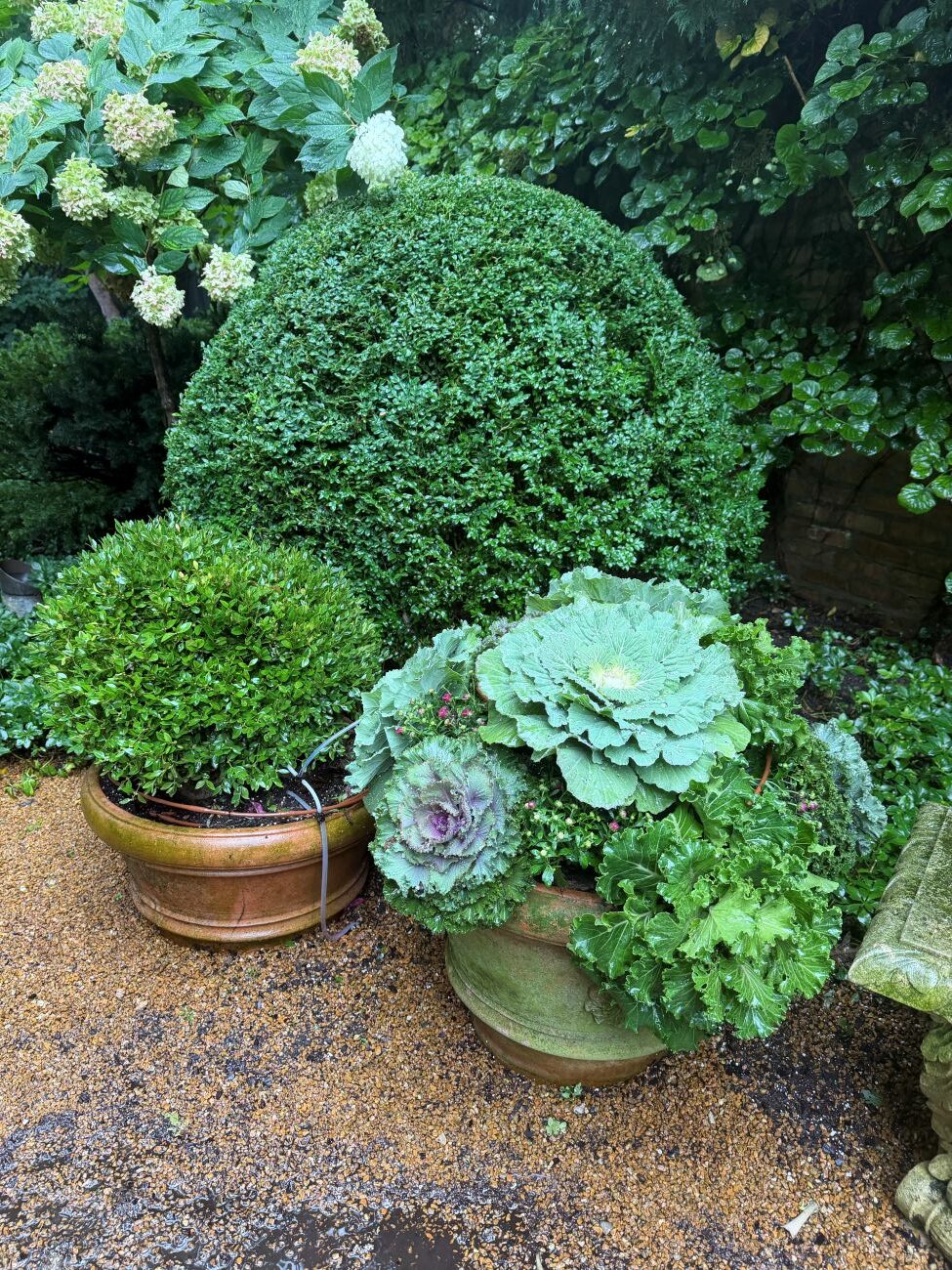
In adjacent areas of the Glencoe landscape, the design takes on a more formal yet equally sophisticated tone. Placed against the backdrop of a structured evergreen garden featuring meticulously clipped boxwood topiary (Buxus sempervirens, Zones 5–8), the terracotta and weathered containers establish a deliberate dialogue with the surrounding architecture. The earthy, weathered patinas of the pots complement the natural stonework beneath them, while the dense, dark green structure of the boxwoods makes the ruffled, colorful foliage of the ornamental cabbage and kale pop with exceptional clarity. This thoughtful integration highlights a core principle of advanced container design: the ability of well-placed pots to elevate and anchor small, otherwise overlooked corners of a larger garden landscape.
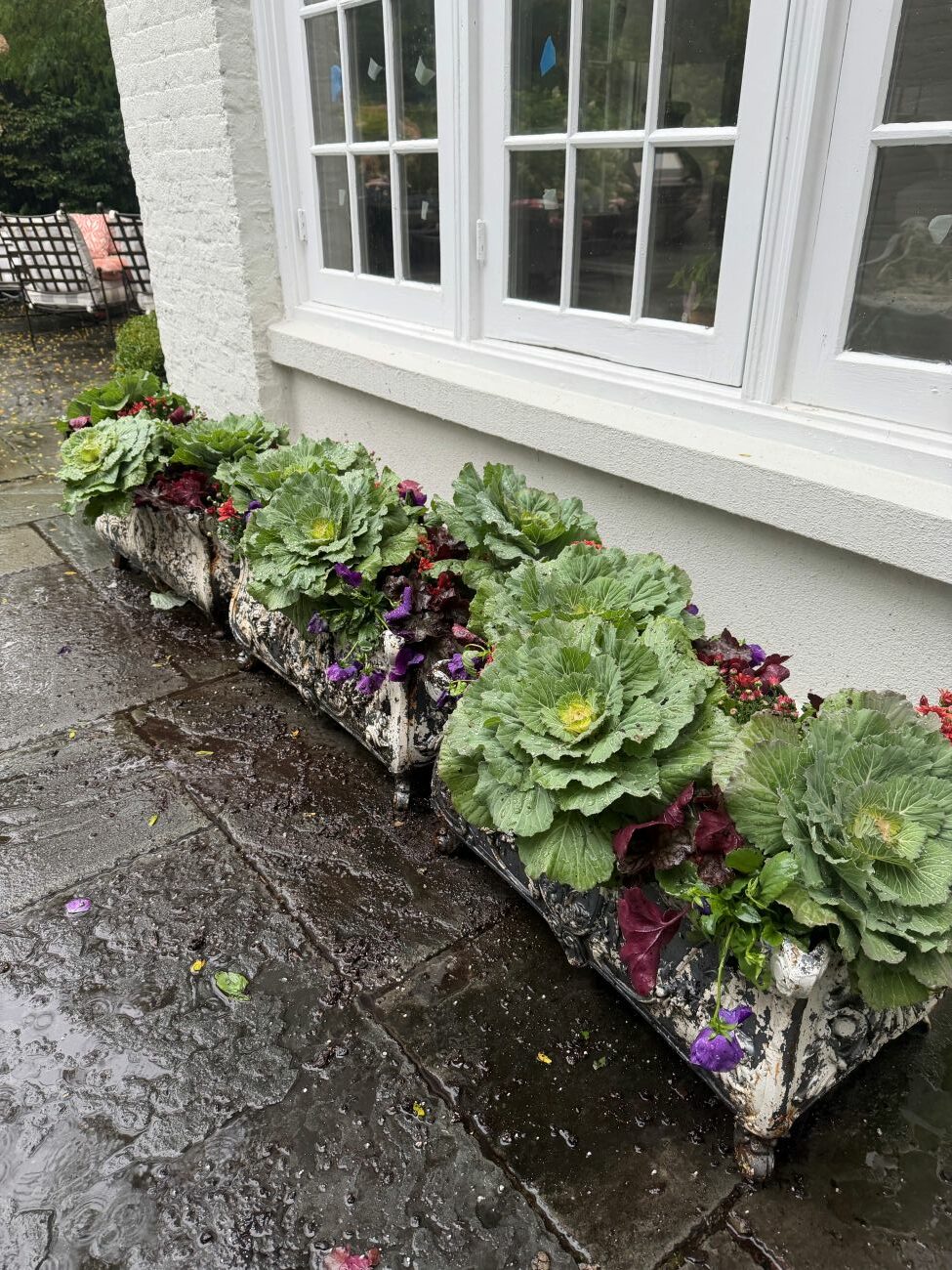
Further showcasing his mastery of proportion and repetition, Howard utilized a series of weathered rectangular containers grouped tightly together rather than scattered haphazardly across the patio. This deliberate clustering creates the illusion of one continuous, sweeping planter box, maximizing visual impact and drawing the eye smoothly across the space. Within these long-format displays, the ornamental cabbage and kale remain the undisputed stars, supported by recurring accents of purple and burgundy. Whether expressed through delicate purple pansies, rich foliage, or clusters of dark berries, this subtle repetition of color and plant material creates a unified design language without rendering every individual planter identical. It is a masterclass in how consistency can breed elegance in complex, multi-pot installations.
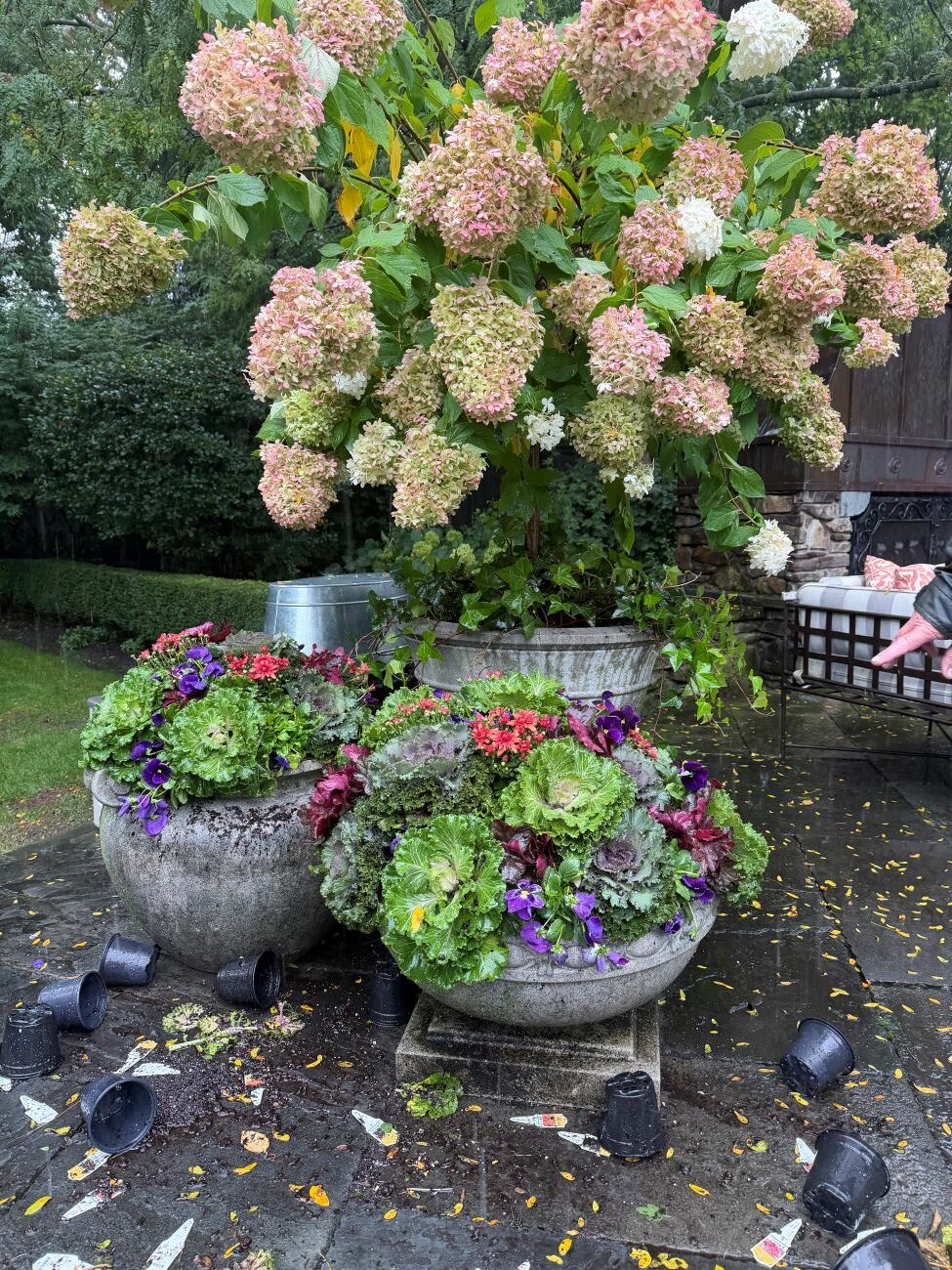
Even the messy realities of professional installation find a charming place in the documentation of the project. Amidst the polished final results, scattered pots and plant tags left on the ground during a rainy day installation serve as a relatable reminder of the physical labor required to achieve such effortless beauty. The work is undeniably demanding, but the payoff is reflected in every meticulously balanced arrangement.
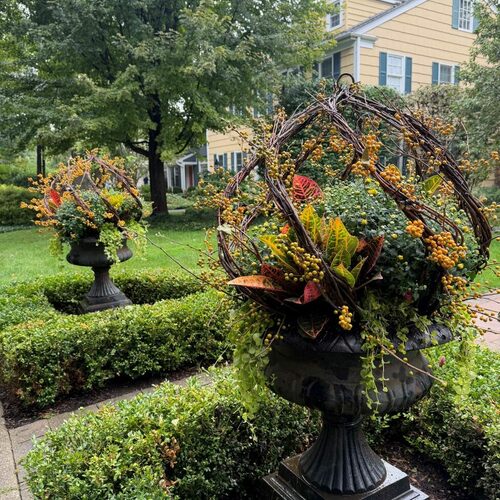
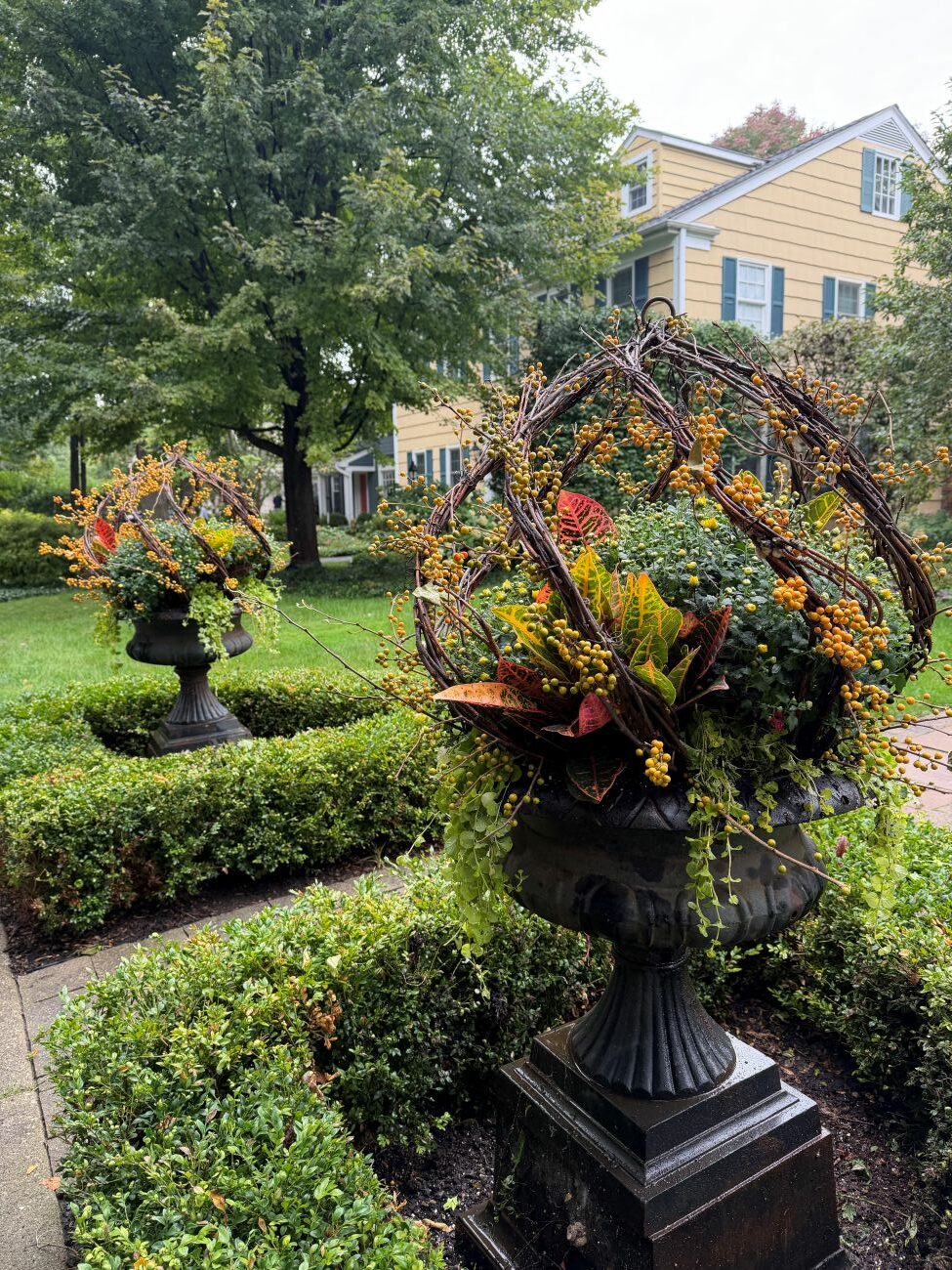
Another standout installation from the same rainy day in Glencoe pushes the envelope of autumnal design even further. Featuring cascading, arching decorative branches, glittering golden berries, and fiery croton foliage (Codiaeum variegatum), this particular container arrangement has drawn high praise for its dramatic, sculptural effect. The twisting woody vines allow the golden berries to hang suspended throughout the foliage, creating a sense of movement and natural abundance. Paired with the vivid, multicolored leaves of the crotons, the composition offers a warm, sophisticated welcome to the home, proving that container gardening in the colder months can be just as dynamic and captivating as the height of summer.
As the gardening community in the Midwest and beyond continues to embrace the transition toward winter, Howard’s latest work in Glencoe serves as a timely reminder of the potential waiting in the autumn garden. Through expert plant selection, thoughtful color repetition, and a fearless approach to texture and structure, seasonal containers can successfully redefine outdoor spaces long after the traditional growing season has faded.