November has officially settled into downtown Milwaukee, Wisconsin, bringing with it the crisp, unmistakable chill of Zone 6a. For most residents, the vibrant flush of summer flowers has long since faded, driveways and lawns are steadily piling up with fallen leaves, and plenty of perennial plants are safely heading into their deep winter dormancy. Yet, even as the landscape transitions into a more muted, monochromatic palette, there remains an abundance of seasonal beauty to appreciate for those willing to take a closer look.
For local dog walkers and neighborhood residents, these familiar streets offer a shifting gallery of urban horticulture. On a brisk November afternoon, a neighborhood walk reveals a handful of carefully tended gardens that continue to command attention, proving that a northern garden’s narrative does not end with the first frost.
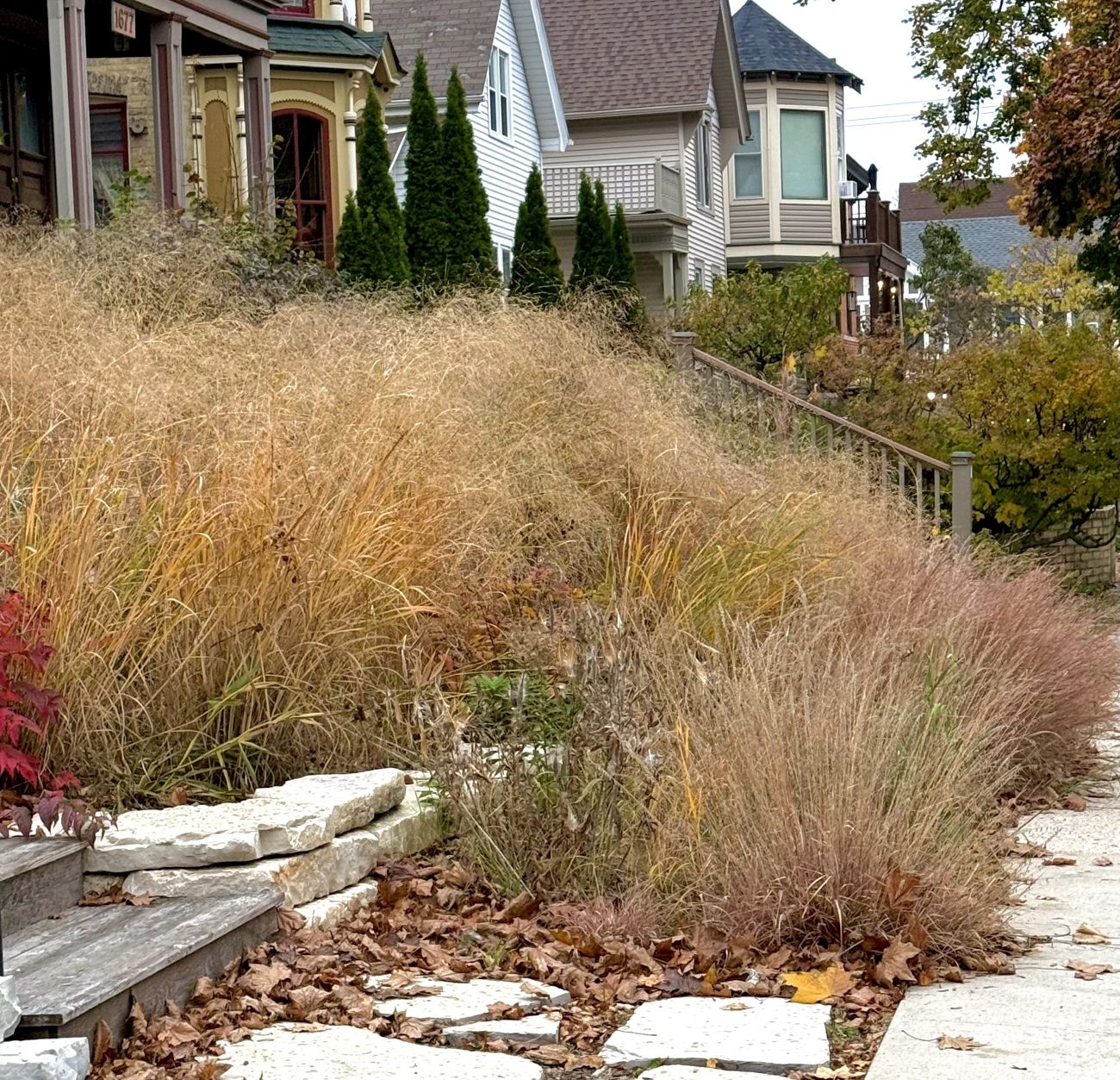
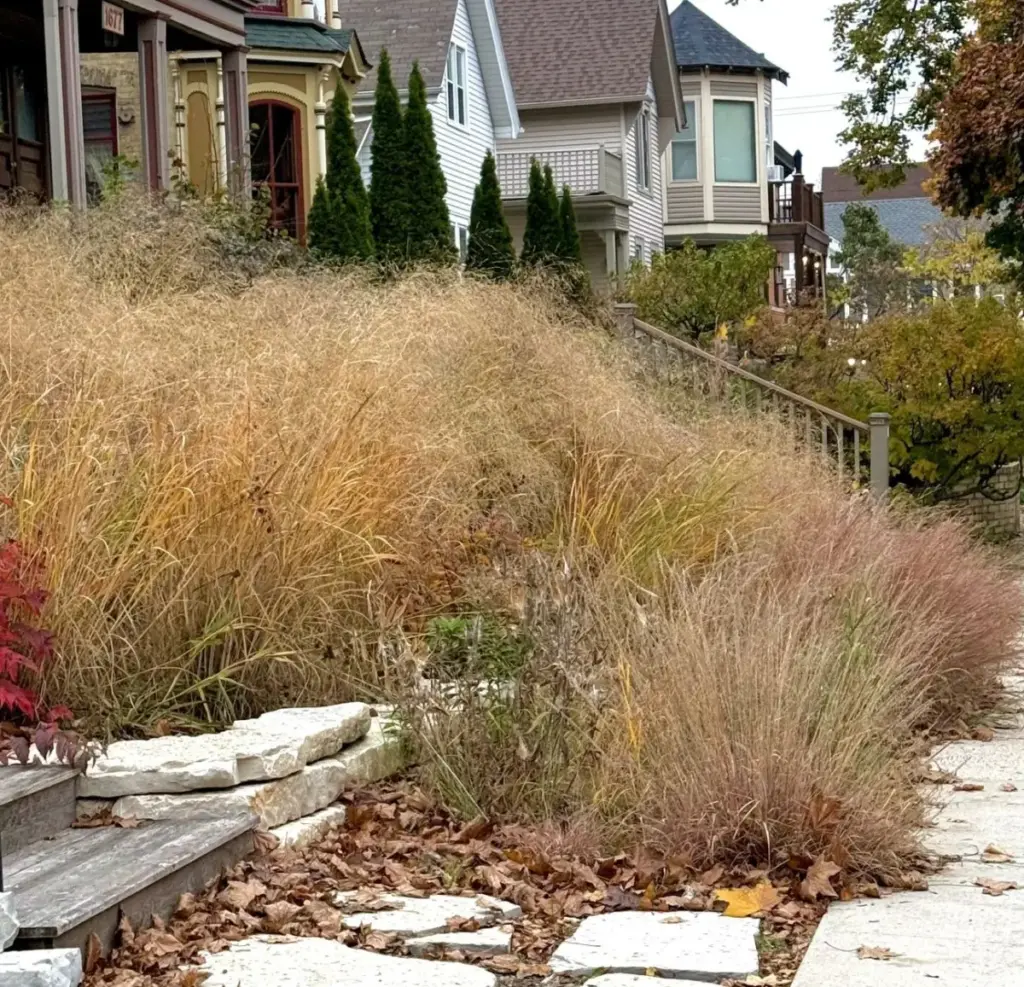
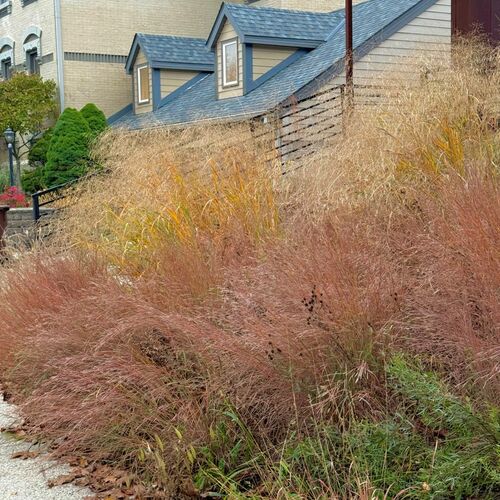
Starting off strong with a prairie-inspired front yard garden, the landscape remains a testament to thoughtful design. While this particular plot is constantly buzzing with a diverse array of pollinators throughout the sweltering heat of summer, its autumn transformation is equally striking. As the weather cools, large, sweeping stands of switchgrass (Panicum virgatum, Zones 4–9) and little bluestem (Schizachyrium scoparium, Zones 3–9) truly come forward to dominate the visual field. Planted en masse, the fluffy, towering plumes of the switchgrass make an undeniable design statement, swaying gently with every passing autumn breeze.
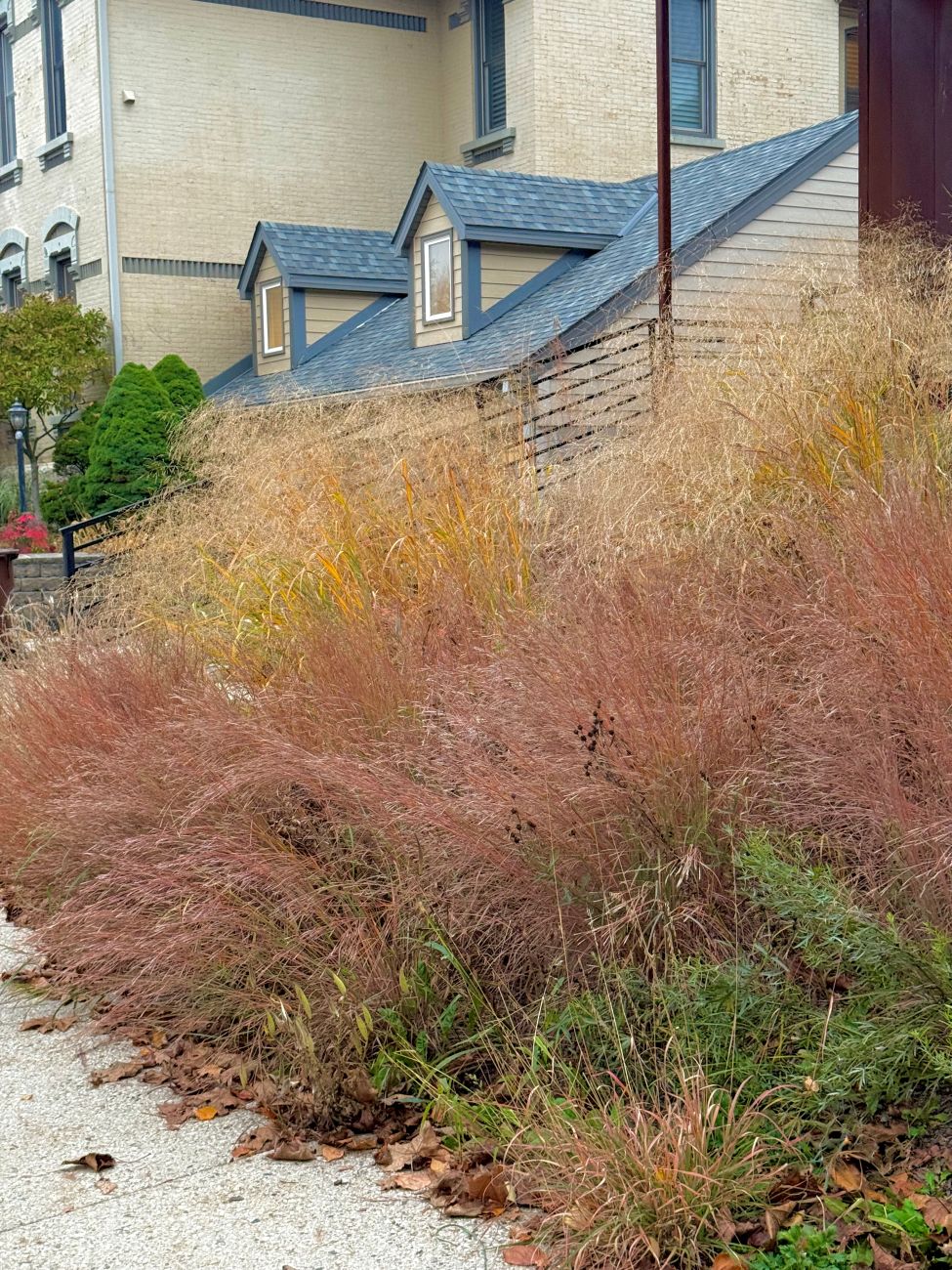
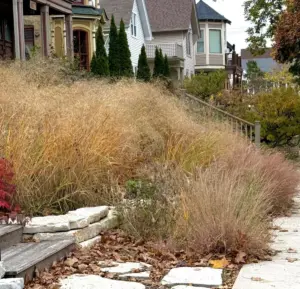
Moving around to view the property from a different angle, the subtle, shifting pinkish-copper tones of the little bluestem become much more prominent, catching the low-angled November sunlight. Demonstrating a masterclass in urban curb appeal, the planting does not stop at the property line; instead, it carries seamlessly across the concrete sidewalk and directly into the curb strip, ensuring this small, dynamic garden is virtually impossible for passersby to miss.
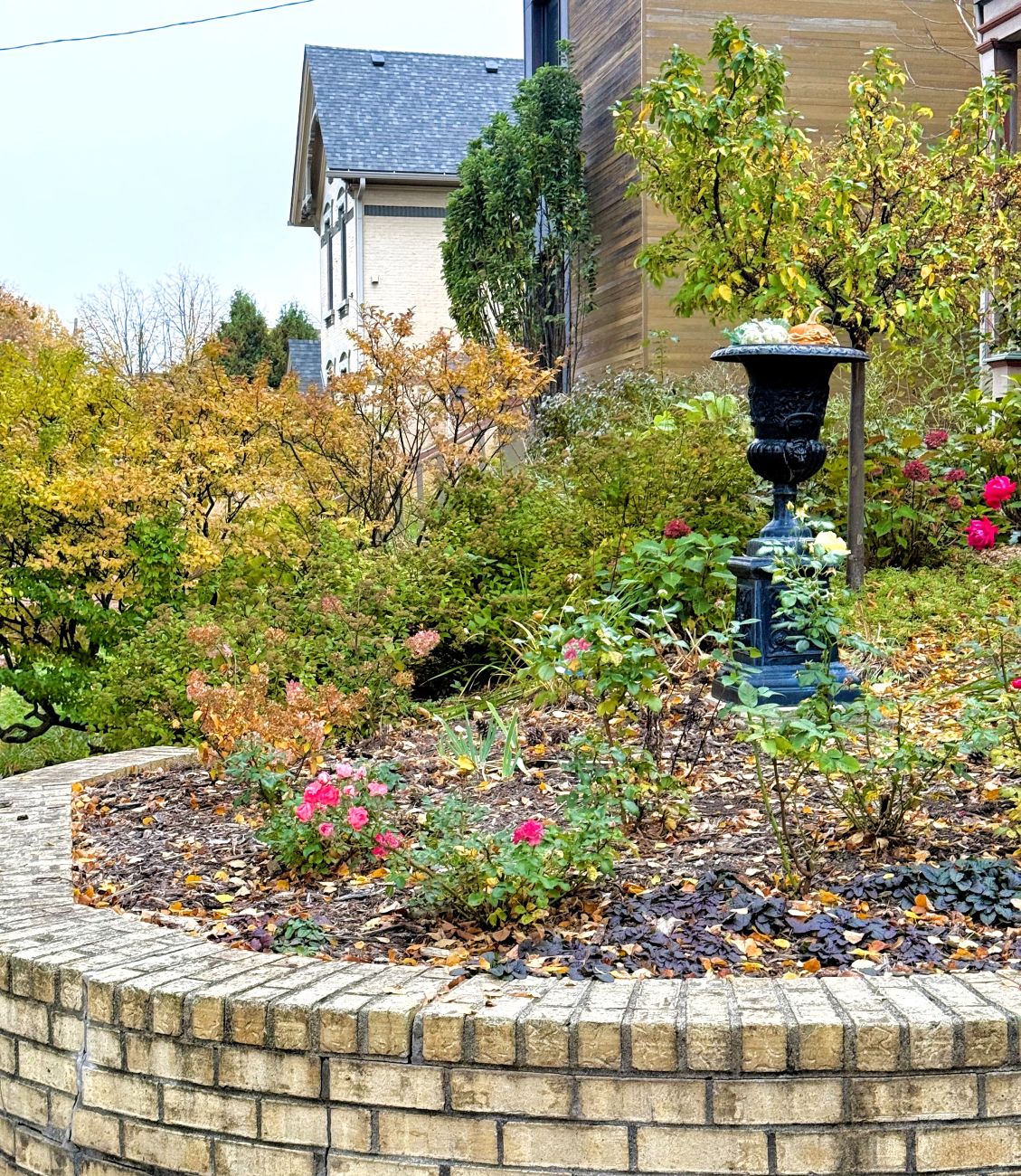
Just a few houses down the block, another residential landscape offers a masterclass in year-round horticultural interest. The entire yard is planted with an understated elegance designed to provide visual appeal no matter what month it happens to be. While bare patches of soil are typically filled in with colorful annuals during the warmer months, the late-season display remains remarkably resilient. Even deep into November, hardy roses continue to produce sporadic blooms, while steadfast hydrangeas give it their absolute all to remain relevant against a backdrop of declining foliage. A large decorative urn positioned in the background, artfully stuffed with a classic autumn pumpkin, provides a charming and timely seasonal touch.
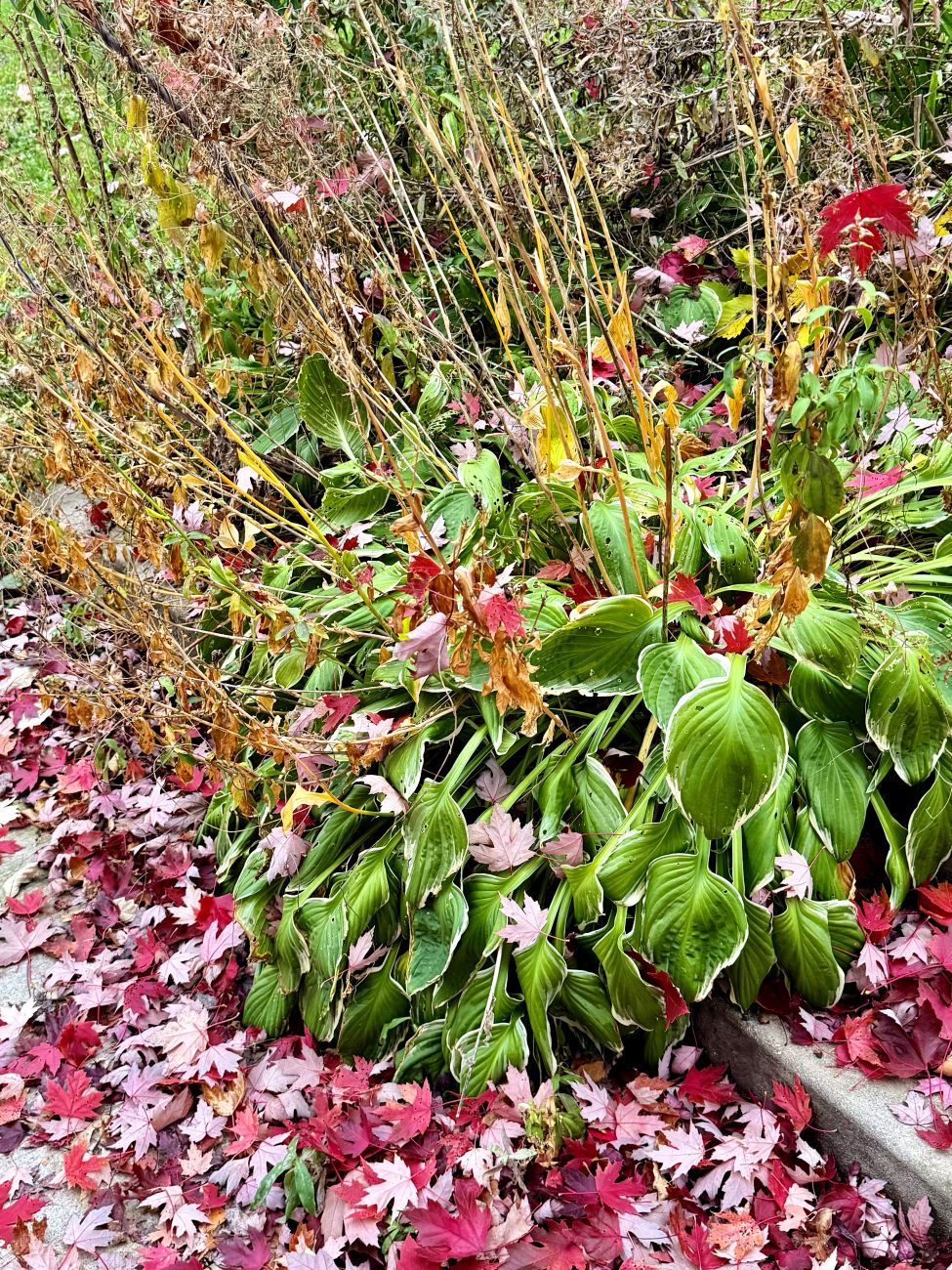
A short distance away lies a garden that challenges conventional notions of tidy landscaping. While some might view the scene as messy, it represents precisely the kind of artful fall untidiness that true garden enthusiasts celebrate. Lush hostas (Hosta cvs., Zones 3–9) spill dramatically over concrete front steps, their broad leaves half-buried and blanketed by a heavy layer of fallen red maple leaves. It is a naturalistic tableau that captures the authentic, unedited spirit of the season.
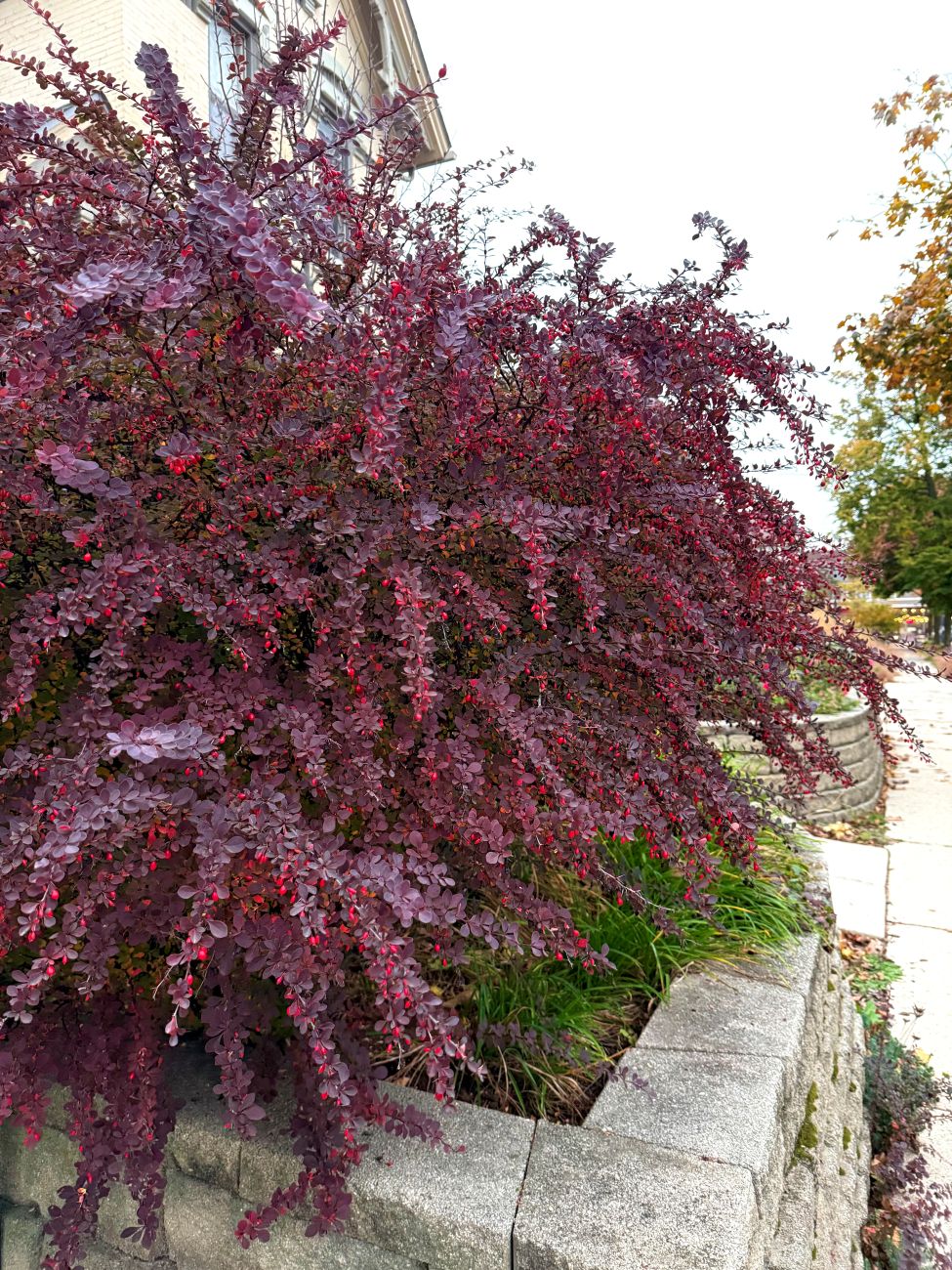
Amidst the decaying leaves and dormant perennials, however, other elements demand a more critical eye. A deep burgundy shrub covered in an abundance of bright red berries immediately catches the eye of any observant walker, yet its presence tells a cautionary ecological story. The plant is Japanese barberry (Berberis thunbergii, Zones 4–8), a notoriously invasive shrub that poses significant ecological concerns throughout Wisconsin and the broader upper Midwest. For gardeners who admire the striking visual impact of its autumn fruit and foliage, horticultural experts consistently recommend planting safer, non-invasive native alternatives. Options such as black chokeberry, fothergilla, Virginia sweetspire, summersweet, and inkberry offer similar aesthetic benefits without threatening local ecosystems.
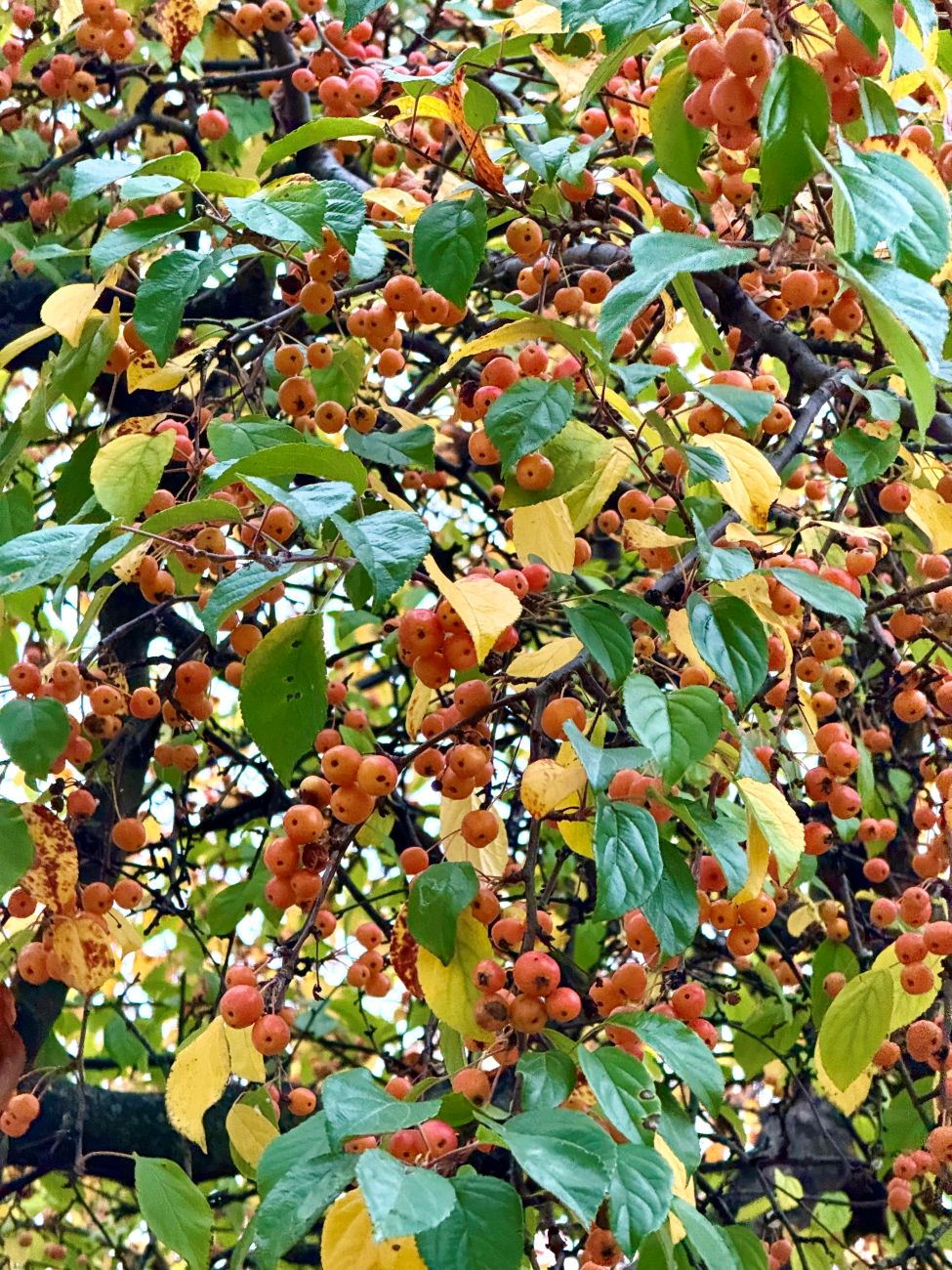
Further along the route, a magnificent Siberian crab apple (Malus baccata, Zones 2–7) stands out as a beacon of late-season color. The tree is heavily laden with dense clusters of warm orange fruit. At a time of year when the vast majority of summer flowers have vanished from the earth, heavily fruiting ornamental and functional trees step into the void, providing some of the strongest and most enduring blocks of color left in the urban landscape.
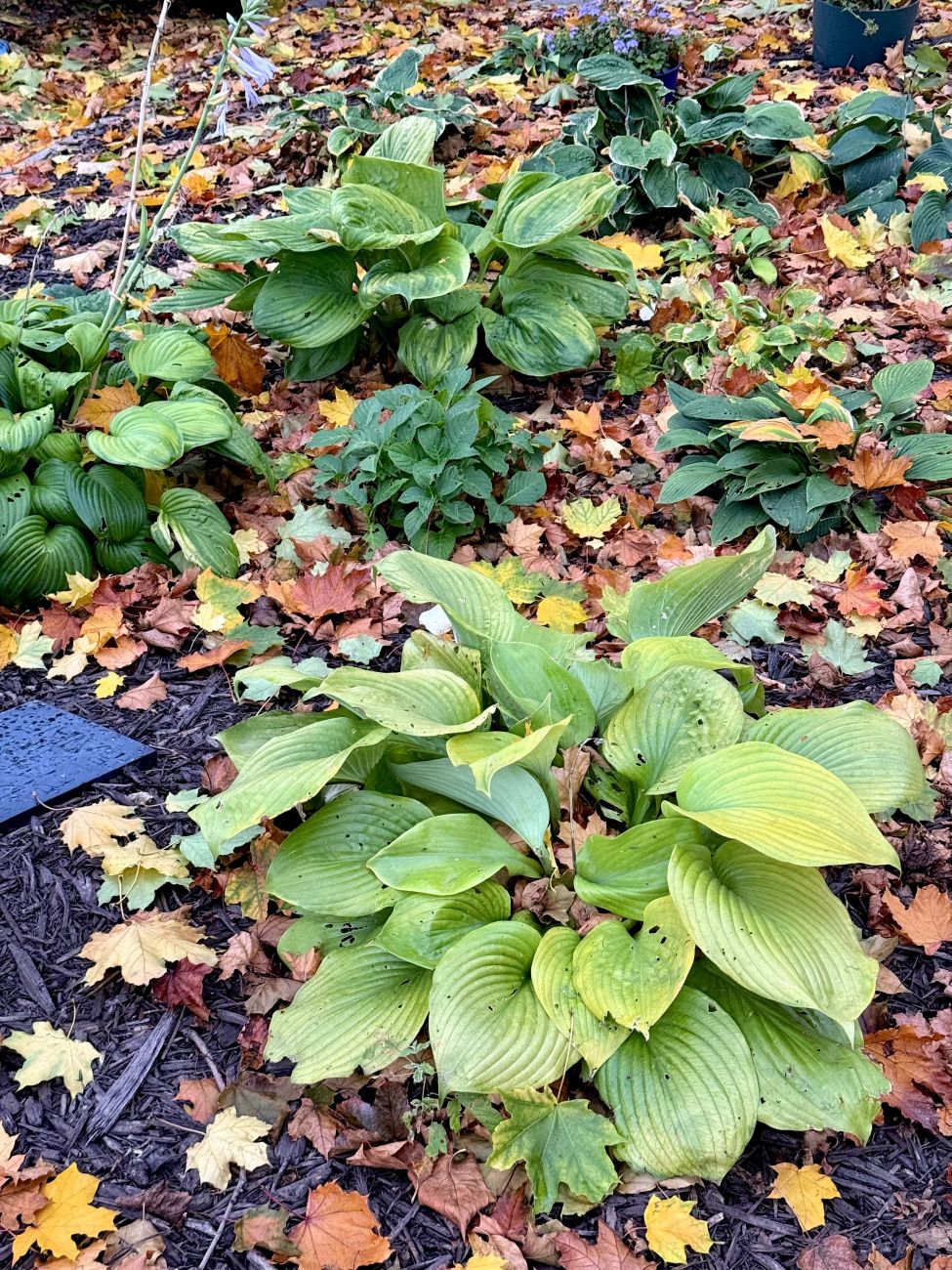
The walk also highlights the untapped potential of urban infrastructure, particularly the often-neglected space between the sidewalk and the street. Observing another garden that successfully extends its footprint into the curb strip serves as a reminder of how versatile these narrow patches of land can be. Whether transformed into a miniature perennial garden, a dedicated pollinator pit stop, or an ecological bee lawn, these spaces offer urban dwellers a valuable opportunity to expand their gardening ambitions.
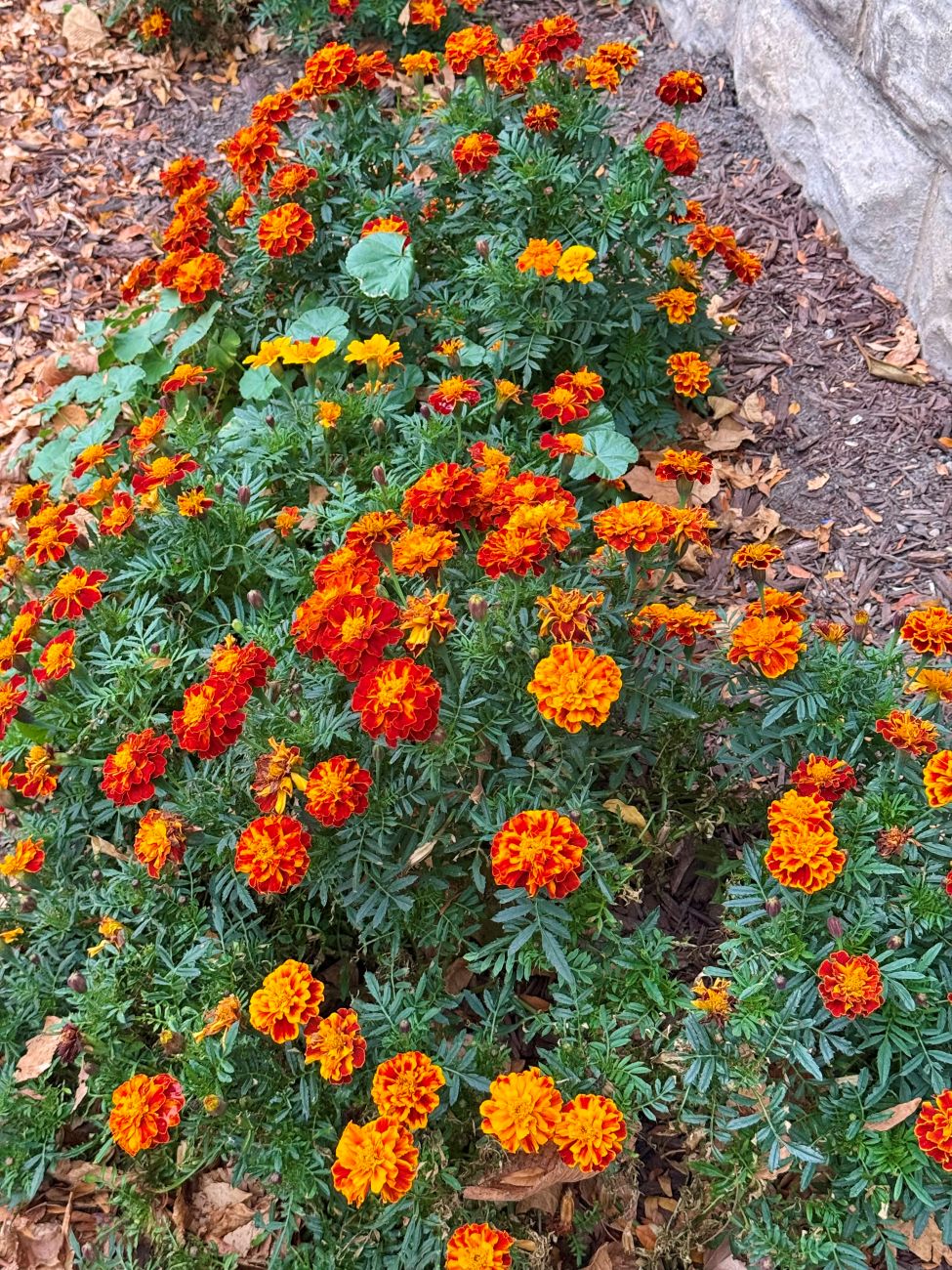
Adding to this strip of urban vibrancy, a hardy border of marigolds (Tagetes cvs., annual) continues to defy the dropping temperatures, looking remarkably fresh and cheerful despite the advanced calendar date.
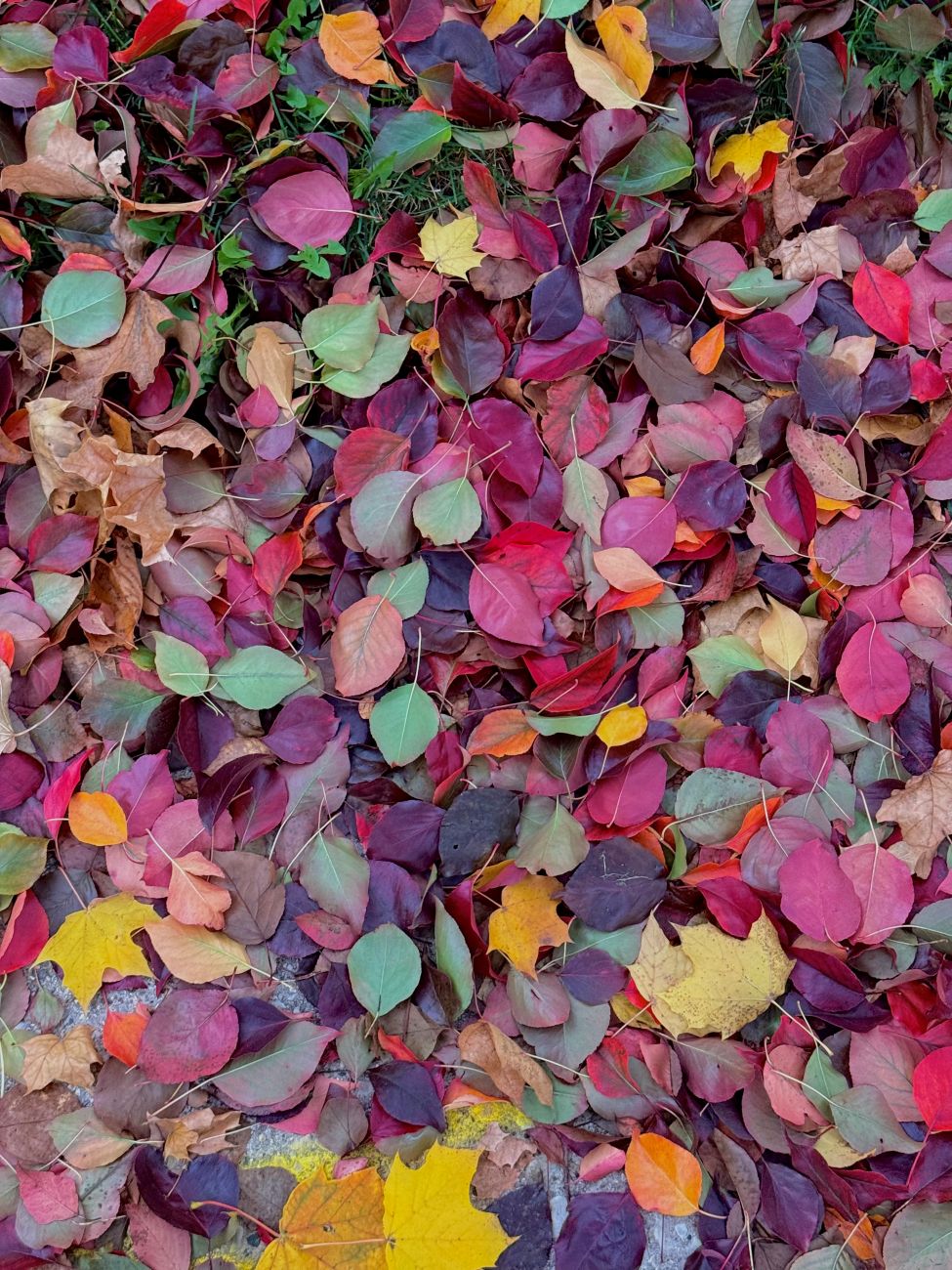
Bringing the afternoon stroll to a close, the landscape offers one final, essential reminder for northern gardeners: the importance of leaving the fallen leaves where they lie. As autumn progresses, raking and bagging leaves has become an ingrained cultural habit, but leaving a portion of the foliage on the ground provides critical overwintering habitat for native pollinators, beneficial insects, and other small urban wildlife. Leaving the leaves gives these creatures a safe, sheltered place to weather the harsh months ahead until spring finally arrives.

For this particular Milwaukee resident, however, this neighborhood walk carries a bittersweet note. While the afternoon journey celebrates the resilient beauty of a northern city in late autumn, the backyard at home is already entirely packed up and prepared for the winter. The reason is a major life transition: after years of tending to these Wisconsin plots, a move to Georgia is just a few short weeks away. While leaving behind these familiar historic homes, community gardens, and comforting Midwestern perennials will not be easy, there is a distinct sense of anticipation waiting down South, where a whole new palette of plants, southern gardens, and unfamiliar landscapes will soon catch the eye.