The autumn auction season in Paris, traditionally a pillar of the global art market calendar, unfolded this year against a backdrop of striking contrasts. While the city’s streets were gripped by widespread social unrest that brought daily life to a standstill and forced the early closure of Art Basel Paris, the major auction houses remained largely insulated, delivering a performance that significantly outpaced their results from the previous year.
Timed to coincide with the prestigious Art Basel fair, the marquee sales held by Sotheby’s and Christie’s on October 22 and 23 served as a powerful testament to the resilience of the blue-chip art market. Collectively, the major houses reported a 51.8 percent increase in revenue compared to the same period in 2025. This surge was anchored by two historic family collections—the late Jeanne Schlumberger’s Monet holdings at Sotheby’s and the vast, storied archive of the legendary dealer Paul Durand-Ruel’s descendants at Christie’s—which together accounted for nearly half of the week’s total auction proceeds.
Schlumberger’s Monets Lift Sotheby’s to Its Biggest Paris Sale
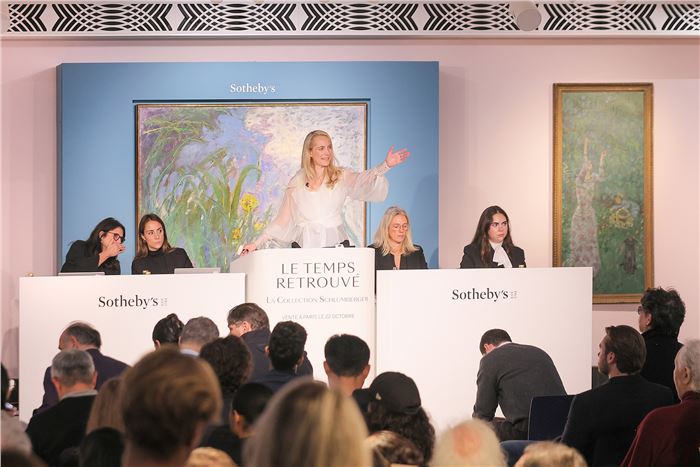
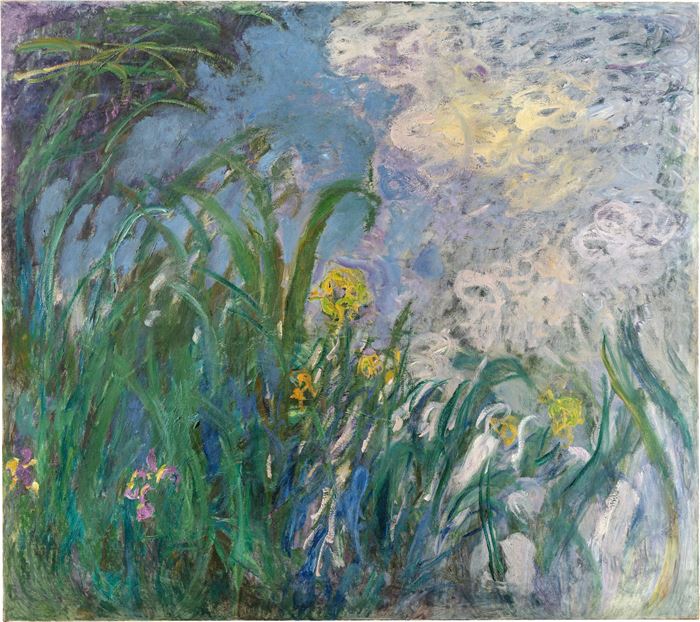
The undisputed centerpiece of the week was the sale of Claude Monet’s Iris (1924–1925), an ethereal late-period masterpiece that fetched €50 million ($56.1 million) at Sotheby’s on October 22. The sale of this work, which had never previously appeared at auction or been loaned for public exhibition, marked a watershed moment for the French market.
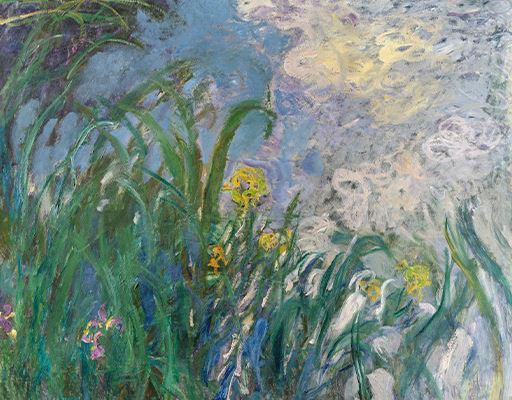
The painting was a highlight of La Collection Schlumberger: Le Temps retrouvé. Jeanne Schlumberger (1889–1983), who married the co-founder of the global oilfield services giant SLB, had an extraordinary eye for late Monet works during a period when such pieces were often overlooked by the French establishment. In the 1950s, she bolstered her collection by acquiring canvases directly from the studio of the artist’s son, Michel Monet.
The atmosphere in the saleroom was electric as six determined bidders engaged in a 45-minute standoff. Ultimately, the work was secured by Jen Hua, Sotheby’s Deputy Chairman for Asia, acting on behalf of a private collector in the region. The final price, which far exceeded the presale estimate of €22 million to €30 million, established a new record for a work of art sold at auction in France in nominal terms. It comfortably surpassed the previous record held by Amedeo Modigliani’s Tête, which sold for €43.2 million at Christie’s Paris in 2010.
While the total for the Schlumberger collection reached €74.4 million ($83.5 million)—the highest for any fine art sale in Sotheby’s Paris history—the success was not without its moments of intrigue. Hours before the gavel fell, three early Paul Cézanne panels were withdrawn from the auction, having been designated as national treasures so that the city of Aix-en-Provence could acquire them for the Musée Granet. Despite this, the remaining 23 lots performed exceptionally well, with no guarantees required to ensure their sale.
The success of the Schlumberger event was complemented by other notable results, including the sale of the artist’s Saule pleureur (Weeping Willow) for €9.7 million, and a record-setting performance for Pierre Bonnard’s La Cueillette des prunes (The Plum Harvest, ca. 1899), which achieved €2.5 million. Gustave Moreau also saw a new benchmark for his work on paper, as Rêve d’Orient (Dream of the Orient) commanded €1.4 million.
A Strong Showing in Modernist and Contemporary Lots
Following the success of the evening sales, Sotheby’s continued its momentum on October 23 with two distinct auctions: Surrealism and Its Legacy and Modernités. Together, these sessions realized €63.2 million ($70.9 million).
Surrealism and Its Legacy proved steady, with 26 of the 32 lots finding buyers, led by Joan Miró’s La Tige de la fleur rouge pousse vers la lune (1952), which brought in €5.7 million. Victor Brauner also enjoyed a career milestone when his TOT IN TOT et La grande Métamorphose (1942) achieved an artist record of €1 million. However, the market showed signs of selective appetite, as René Magritte’s Morceaux choisis, carrying the highest estimate of the session, failed to find a buyer and was bought in.
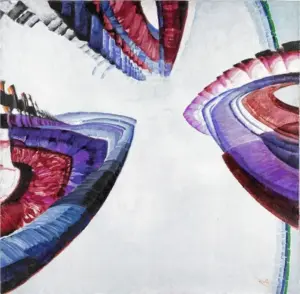
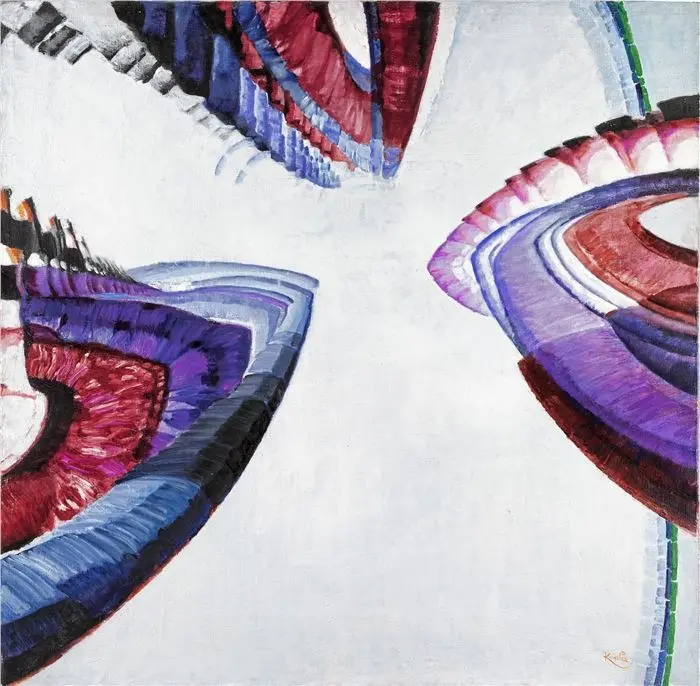
The Modernités sale, however, was a triumph, led by František Kupka’s Espace non-descriptif (1914–1922). The painting reached €9 million, marking a record for the artist in France and the second-highest price for his work globally. The sale also underscored the enduring demand for Alberto Giacometti, as his plaster sculpture Tête crâne (1934)—a piece that had never before appeared at auction—drew eight bidders, ultimately selling for €8.7 million.
By the end of the series, Sotheby’s had realized a total of €137.7 million across its Paris offerings, a figure representing a 53.5 percent increase over the previous year. Beyond the podium, the house also catered to the ultra-high-net-worth market with a private sales exhibition held in a Rue de Rivoli apartment, featuring approximately €134 million worth of art curated to provide an exclusive experience for private collectors.
Paul Durand-Ruel’s Family Collection Sells Out at Christie’s
While Sotheby’s captured headlines with the record-breaking Monet, Christie’s Paris was busy solidifying its own reputation for historical provenance. On the same day as the Iris sale, Christie’s hosted Durand-Ruel: Generations of Vision, a tribute to the legendary dealer who was the primary champion of the Impressionist movement during its most vulnerable years.

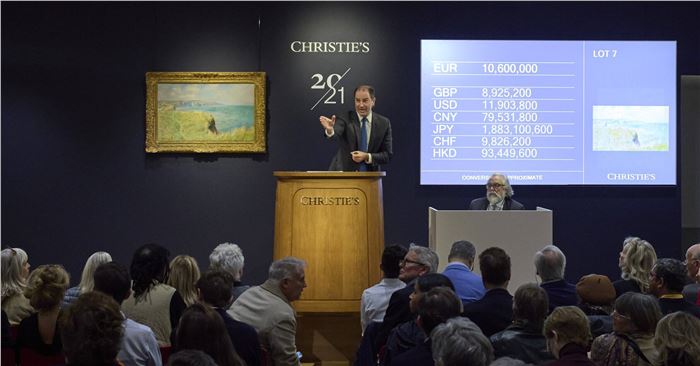
Claude Monet himself once credited Durand-Ruel as being the "only person to whom I owe anything." The collection offered a rare window into that history, as 62 works had remained with the dealer’s descendants for generations. All 27 lots offered in the afternoon session successfully sold, totaling €41.7 million against a high estimate of €42.3 million.
The auctioneer Adrien Meyer oversaw the sale of Monet’s Bord des falaises à Pourville (1882), which achieved €12.8 million. For a brief window, this work held the title of the most expensive Monet sold at auction in France, before the evening’s later events at Sotheby’s reset the benchmark. The session also saw a flurry of records, including two consecutive world records for coastal views by the French Post-Impressionist Gustave Loiseau, and a new record for Alfred Sisley’s Un Verger (1873), which sold for €3.7 million.
The evening concluded with the 20th/21st Century: Paris Evening Sale, which realized €66 million. The top lot was Lucio Fontana’s Concetto spaziale, Mezzogiorno in Piazza S. Marco (1961), which made its auction debut to the tune of €6.8 million. With these results, Christie’s finished the week with a total of €137.6 million, placing the two major houses in a dead heat for the season’s top honors.
A Shifting Landscape
The convergence of high-stakes auctions and urban instability highlighted the paradoxical nature of the current art market. While Art Basel Paris felt the immediate impact of the city’s protests—with galleries closing their doors early to ensure the safety of both staff and the high-value inventory—the auction houses had already successfully secured their primary objectives. The strength of the sales suggests that for the global collector base, provenance and rarity continue to outweigh the volatility of the immediate environment.
As the dust settles on the Parisian week, the spotlight shifts to New York for the next major installment of the global auction cycle. Christie’s is set to hold its 20th Century Evening Sale on November 17, followed by an even more ambitious event at Sotheby’s on November 18. That auction, titled Legendary: The Blaquier-Arrieta Collection, features works assembled by the renowned Argentine collectors Carlos Pedro Blaquier and Nelly Arrieta de Blaquier. With an estimated total of nearly $450 million, the sale will be anchored by Vincent van Gogh’s 1890 masterpiece, Châtaigniers en fleurs, which carries an estimate of $180 million—a clear sign that the momentum established in Paris is expected to carry forward into the final stretch of the year.