As November approaches, the West African art calendar reaches its annual crescendo in Lagos. The city, which has long served as a vibrant nerve center for contemporary African creativity, is preparing to host the 11th edition of ART X Lagos. Returning to the iconic Federal Palace Hotel from November 5 to 8, the fair marks a pivotal moment for the regional art scene, signaling the start of a new decade for the event following its milestone tenth-anniversary celebrations last year. This year’s edition promises a focused, high-caliber experience, featuring a primary list of twelve galleries—nine of which are Nigerian—complemented by a spotlight section dedicated to three emerging Nigerian spaces.
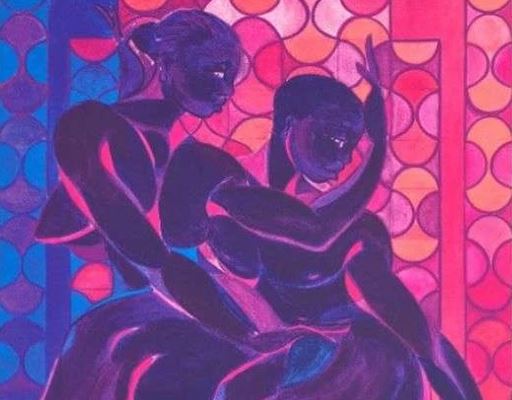
The significance of this year’s fair extends beyond the commercial stalls. Central to the program is the ART X Icon exhibition, Ladi Kwali: Beyond the Vessel, curated by Dr. Jareh Das. This exhibition offers a profound re-examination of the legacy of Ladi Kwali, the pioneering Gbari potter whose work between 1925 and 1984 reshaped the trajectory of ceramics in Nigeria. By weaving together rare archival materials from the National Museum, Lagos, with a curated selection of her seminal vessels, the exhibition invites a contemporary audience to engage with Kwali not just as a traditional craftsperson, but as an avant-garde artist whose influence transcends the medium of clay.
This cultural spotlight arrives at a particularly resonant moment, occurring mid-way through the fifth edition of the Lagos Biennial. Titled "The Museum of Things Unseen" and curated by Folakunle Oshun, the Biennial has been running since October 17 and is scheduled to continue through December 18. The overlap between these two major events creates a sustained period of intellectual and creative intensity in the city, drawing international curators, collectors, and critics into a dense, interconnected dialogue about the role of the museum, the archive, and the reclamation of cultural narratives. Meanwhile, in London, the global conversation regarding the African art market continues to evolve, with the 14th edition of 1-54 Contemporary African Art Fair at Somerset House having just concluded, setting a tone of global interconnectedness for the Lagos proceedings.
The Commercial Landscape and Market Realities
Beneath the surface of this creative exuberance lies a selective and evolving commercial backdrop. The institutional support structure for African art has undergone a notable shift; in April 2025, Sotheby’s made the strategic decision to dissolve its dedicated African art department. This move has left Bonhams as the primary standalone auction house maintaining a sustained, dedicated program for the region. The results from the March 19, 2026, auction reflected a market in a state of recalibration: the sale totaled $2.35 million, falling short of the low estimate, with a sell-through rate of 66%.
However, looking at the auction house results as a singular metric of the market’s health would be reductive. The data reveals a significant divergence in performance at the individual level. For instance, Obiora Udechukwu’s Delicate burden dramatically outperformed expectations, fetching $37,600—a figure well above its low estimate of approximately $2,700. According to the 2026 outlook from MoMAA, the market for African art remains bifurcated. The mid-market, specifically works priced between $1,000 and $50,000, is currently described as "strong," characterized by steady demand and active primary-market interest. Conversely, the high-end sector—ranging from $500,000 to $5 million—is viewed as "mixed," with headline-grabbing records remaining concentrated at the very top, exemplified by Njideka Akunyili Crosby and Amoako Boafo, both of whom hold auction records in the $3.4 million range.
For the serious collector, this reality highlights the mid-market primary tier as the most accessible and sustainable point of entry. It is a space where the relationship between the artist and the gallery is paramount, and where long-term value is cultivated through exhibitions and institutional validation rather than the volatility of the auction block.
Five Artists Shaping the Contemporary Narrative
In the wake of these broader market trends, a group of artists is emerging as particularly significant, demonstrating the breadth of material and conceptual concerns currently defining the West African contemporary aesthetic.
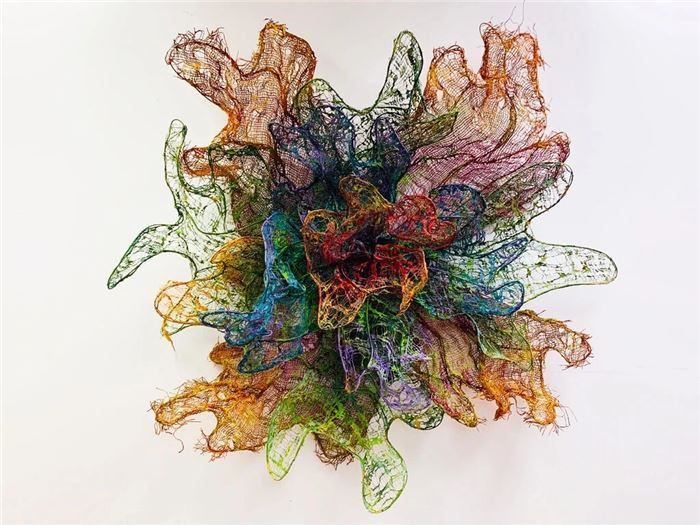
Nnenna Okore, a Nigerian-born artist raised in Nsukka and now based in Chicago, is a prime example of an artist whose practice bridges the gap between traditional materiality and contemporary installation. Working with a tactile vocabulary of cheesecloth, burlap, jute, paper, and wire, Okore constructs complex, organic forms that evoke the patterns of roots, veins, and the process of natural decay. Her work, represented by Rome’s Black Liquid Art, is deeply rooted in Igbo material culture while addressing global concerns of ecology and renewal. With a resume that includes the 29th São Paulo Bienal and solo shows at the Stanley Museum of Art, Okore’s practice exemplifies how regional tradition can inform a global contemporary language.
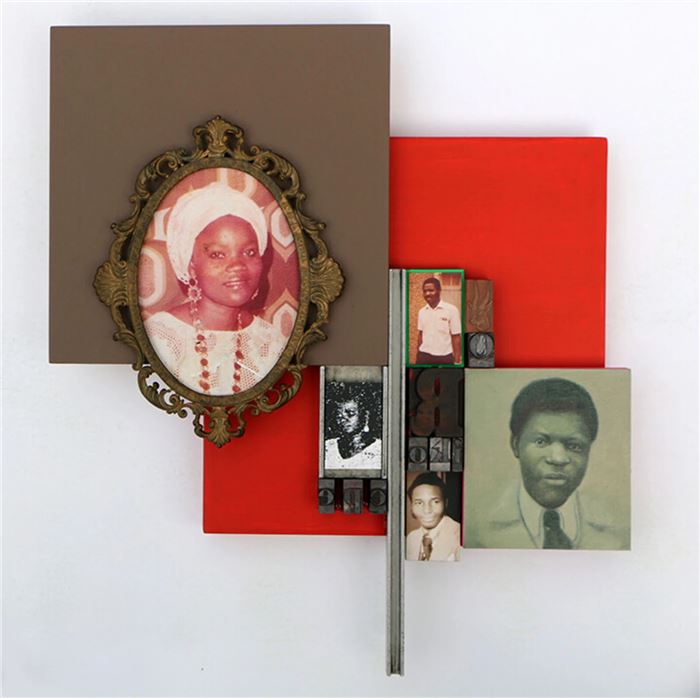
Equally compelling is the work of Kelani Abass. Based in Lagos, Abass has spent his career investigating the nature of memory and the historical weight of Nigeria’s independence era. Represented by Dubai’s Efié Gallery, his process involves a meticulous layering of archival photography, painting, and printmaking. His 2024 work, Scrap of Evidence (Ori ko Epe), underscores his ability to turn historical artifacts into poignant sculptural statements. His work is already held in institutional collections, including the Princeton University Art Museum, and he represents the sophisticated, research-led approach that is increasingly characteristic of the Lagos art scene.
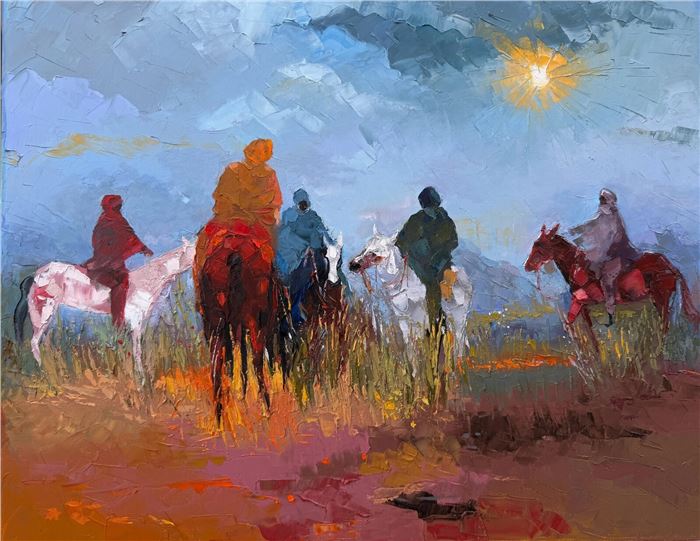
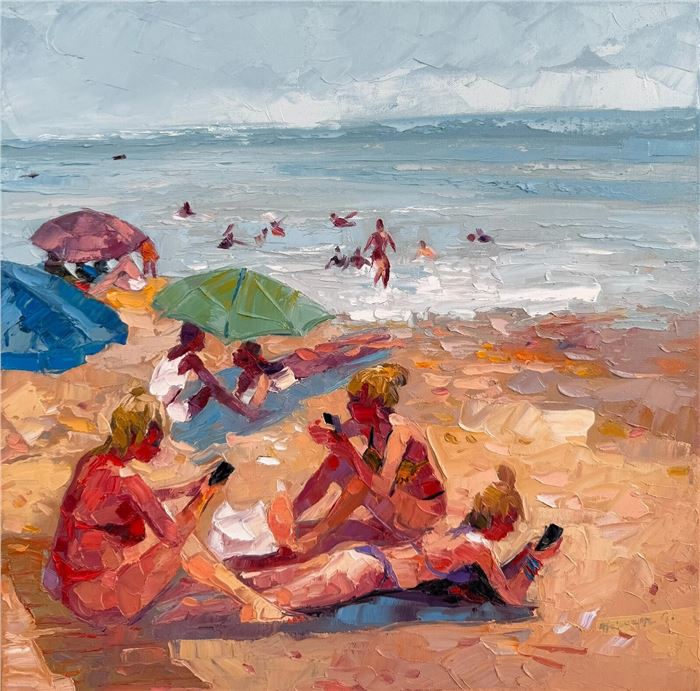
The dialogue between regional roots and global mobility is also evident in the work of Godfrey Afebuame. Represented by EAA Gallery—a space with a unique dual base in Niagara Falls and Lagos—Afebuame is known for his expressive, impasto-heavy oil paintings. His subjects often explore themes of sustainability, peace, and the human condition, with a particular focus on the female form. By operating through a gallery that actively bridges the distance between Nigeria and Canada, Afebuame’s work provides a direct connection for collectors who are interested in the authentic, lived experience of an artist deeply embedded in both his home and adopted environments.
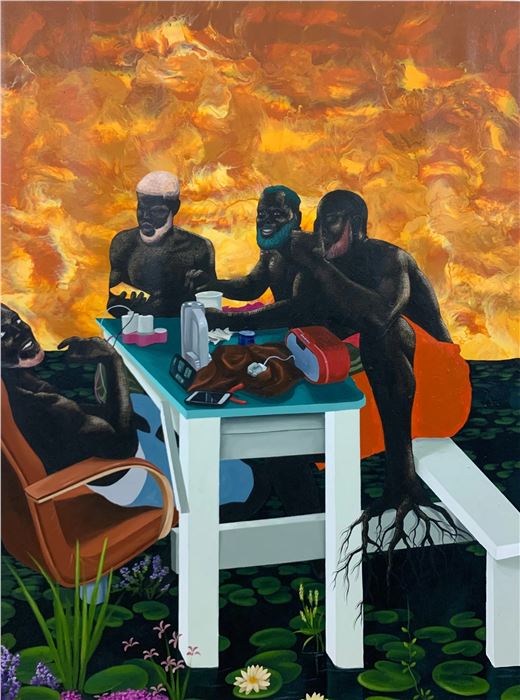
Ebuka Pascal Agudiegwu, a self-taught artist whose practice is categorized as "Figurative Surrealism," brings a different energy to the fore. Represented by the nomadic gallery RIANA RAOUNA, Agudiegwu’s acrylic and charcoal works are rich with Igbo proverbs and surrealist interpretations of nature and identity. His rise, signaled by his successful 2023 solo exhibition in Abuja, demonstrates the agility of the younger generation of Nigerian artists who are finding new ways to circulate their work through digital-first galleries and nomadic exhibition models, making high-quality contemporary art accessible at price points between $1,700 and $4,850.
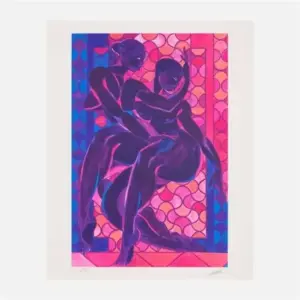
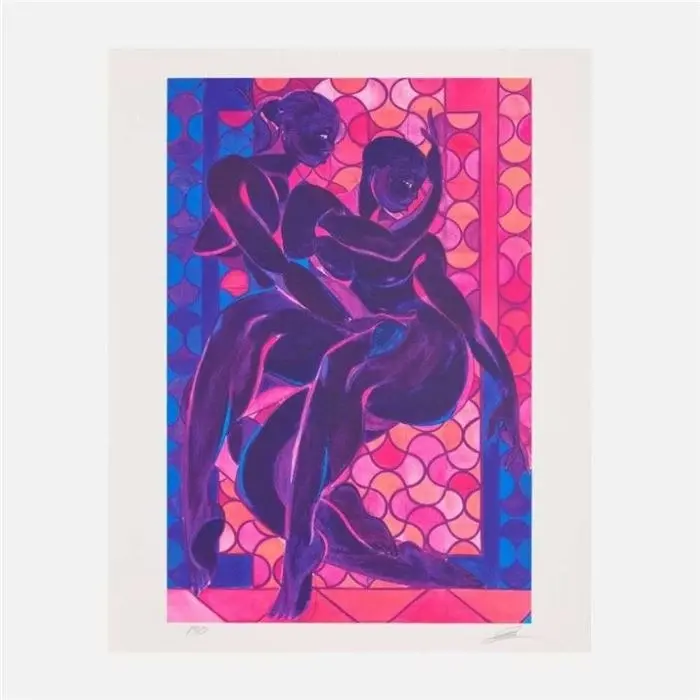
Finally, Tunji Adeniyi-Jones represents the diaspora’s influence on the home market. Born in London and now based in the United States, his vibrant, fluid paintings draw on a synthesis of West African mythology, Yoruba heritage, and the structural legacy of Cubism and Matisse. While his larger paintings are championed by White Cube, his editions—offered through galleries like Lougher Contemporary in Bristol—provide collectors with an entry point into the work of an artist whose star continues to rise on the international stage.
The practices of these five artists, while stylistically diverse, share a pattern of circulation that mirrors the modern art world’s fluidity. Their works begin in studios from Nsukka to Lagos and are eventually acquired by collectors in Rome, Dubai, and beyond. While ART X Lagos will undoubtedly serve as the focal point for the regional market during its four-day run this November, it is important for collectors to recognize that the most significant opportunities often lie outside the fair’s exhibitor list. For those looking to build a collection, the most valuable insights are found in direct dialogue with the representing galleries, where the nuances of an artist’s trajectory and the availability of their work can be discussed in detail. As the Lagos art scene continues to mature, it is this bridge between the local studio and the global marketplace that will define the next decade of success.