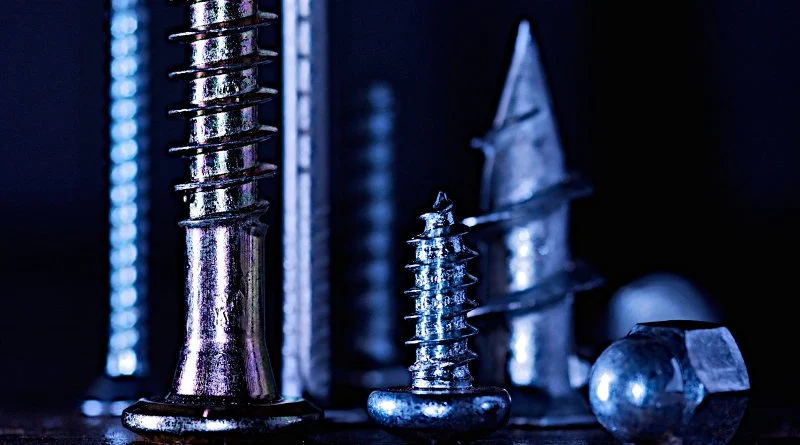
Choosing the correct screw size and type for any particular DIY project can make a big difference to its success or failure, yet working out exactly which fastener is needed often presents a confusing hurdle for those unaccustomed to hardware specifications. Navigating the vast aisles of a home improvement store requires more than a basic understanding of tools; it demands an appreciation for how different fasteners interact with various materials. From simple wood screws to more specialized self-tapping and machine fasteners, each variety is engineered to solve specific structural challenges, manage distinct load requirements, and accommodate the physical properties of the materials they join.
How to Choose the Right Screw for the Job
The hardware market offers dozens of different screw sizes and types, each tailored for specific applications. While some general-purpose screws accommodate multiple materials and varied tasks, others are strictly engineered for specific building, construction, or home improvement jobs. Selecting the correct fasteners for home projects heavily influences both the structural integrity and the aesthetic finish of the final product. Using an incorrect fastener can lead to stripped threads, split timber, loose joints, or premature structural failure, making proper identification an essential first step for any builder or renovator.
Wood Screws
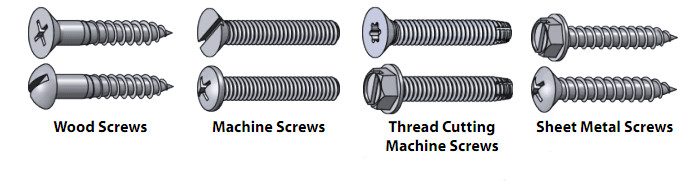
Designed specifically to attach pieces of wood together, wood screws are generally thinner and more flexible than their metal or masonry counterparts. This flexibility is a vital engineering feature, allowing the screw to bend slightly as timber naturally expands and contracts with changes in humidity and temperature. Furthermore, wood screws commonly feature deep, aggressive threads that grip the natural fibers of timber, preventing the fastener from being easily ripped out under load. For projects involving hardwoods, which resist penetration and can easily split, screws often utilize a double or twin thread design. This configuration helps the fastener cut cleanly into the denser material without requiring excessive torque.
Metal Screws
Fasteners engineered for metal applications typically feature a tighter, smaller thread profile than wood screws. This fine pitch allows them to cut into metal substrates more slowly and precisely, ensuring a secure and rigid connection. For sheet metal applications—such as roofing materials or corrugated iron—fasteners are almost always self-tapping. These specialized components feature blade-like cutting threads at the tip that carve their own mating hole directly into the metal, eliminating the need to pre-drill pilot holes. While self-tapping screws are frequently manufactured with hex washer heads for high-torque socket driver applications, they are also readily available with standard slot and Phillips heads for lighter-duty tasks.

Masonry Screws
Standard masonry screws share a general silhouette with wood screws, but they are distinguished by a significantly thicker shaft and a slightly tighter thread pitch. When fasteners must be driven directly into challenging materials like concrete, specialized solutions such as frame fixings or anchor bolts are employed. These heavy-duty items feature exceptionally thick shafts relative to their small, widely-spaced threads, enabling them to withstand the immense compressive forces and shear loads found in masonry construction without shearing or pulling loose.
Security Screws
Security screws, frequently referred to as clutch or one-way screws, are deliberately engineered to be difficult or impossible to remove with a standard screwdriver. The unique geometry of a security screw head allows the driving tool to apply torque in only one direction—tightening the fastener down—while slipping or failing to catch when reversed. This one-way operation makes security screws ideal for securing high-value external fixtures, such as security cameras mounted to exterior walls. They are also widely deployed to affix window security grills, preventing intruders from easily dismantling them to gain unauthorized entry into a property.
Coach Screws
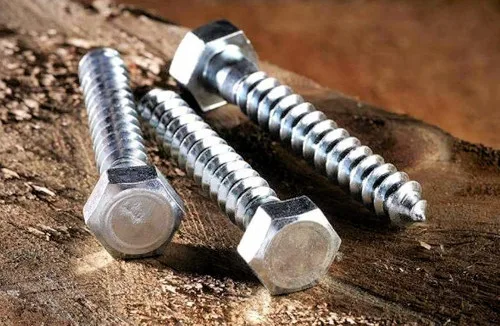
Heavy-duty construction and landscaping projects frequently rely on coach screws, which are also commonly known as lag screws or coach bolts. These robust fixings are characterized by their considerable strength and relatively wide, thick threads, making them exceptionally well-suited for joining heavy structural timbers together. For instance, professional guidance on building retaining walls with railway sleepers consistently recommends the use of heavy coach bolts to handle the immense lateral pressure of soil. Because of the high torque required to drive them, coach screws almost exclusively feature large hexagonal heads designed to be turned with a spanner or a heavy-duty socket driver.
Machine Screws
Machine screws bear a strong visual resemblance to bolts, featuring narrow, straight shafts that generally lack the tapered tip found on wood or sheet metal screws. Rather than cutting their own path into raw material, machine screws are designed to be paired with a matching nut or driven directly into a pre-tapped hole—a hole featuring internal threads cut to match the screw pitch. These fasteners are frequently employed to fasten metal components together securely. For example, toggle fixings utilized for plasterboard installations commonly incorporate a machine screw as the central tensioning member. Where specific corrosion resistance is required, builders can also procure self-tapping machine screws, which are typically manufactured from stainless steel.
The Difference Between Twin and Single Threaded Screws
Wood screws and several other categories of fasteners are frequently classified by whether they feature a single thread or a twin thread design. Understanding the mechanical differences between these configurations helps builders select the most efficient fastener for specific substrate densities and project timelines.
Single Thread Screws
The thread on a single-thread fastener features one continuous spiral running the length of the shaft from the tip to the underside of the head. Because of their simpler manufacturing process, single-threaded screws are generally more cost-effective than their twin-threaded counterparts. Their thread geometry and pitch make them particularly well-suited for use in softwoods, where they can bite deeply and hold securely without requiring excessive driving torque.
Twin Thread Screws
In contrast, twin thread screws incorporate two separate thread spirals that wrap around the shaft in parallel opposition to one another. Because each individual thread spiral is spaced more widely along the shaft compared to a single-thread design, twin-threaded screws advance and tighten up much faster when driven into material. This rapid advancement reduces installation time significantly, and the dual-spiral configuration tends to provide a remarkably secure, vibration-resistant hold once fully seated in the substrate.
Types of Screw Head
The hardware market features a remarkably diverse range of screw head styles, each tailored to specific functional requirements and aesthetic standards. While some highly specialized heads are rarely needed for general domestic DIY, several common profiles form the backbone of everyday home improvement projects.
The countersunk head is the standard choice for general joinery and cabinetry, ideal for situations where the top of the screw must sit completely flush with or slightly below the surface of the material. A variation of this is the raised countersunk head, which is normally utilized in decorative ironmongery or when screw finishing caps are applied to achieve a cleaner, more polished visual appearance.
For applications involving fragile or thin materials, alternative head geometries are required. Dome heads are frequently selected for mounting mirrors and plastic sheets or panels, often paired with a decorative colored dome or a plastic clip-on cover to conceal the metal underneath. Similarly, round or button heads are generally chosen for fixing sheet materials that are simply too thin to accommodate a countersunk recess.
Specialized sheet materials also demand purpose-built fasteners, such as the bugle head screw. Designed specifically for use with plasterboard and various fiberboard panels, the bugle head features an extended, smooth taper that transitions seamlessly into the shaft. This gradual flare helps spread the clamping load over a significantly larger surface area, preventing the screw from tearing through the paper face of the plasterboard during installation.
Types of Drive
Beyond the exterior shape of the screw head, fasteners are categorized by the drive style—the specific geometry of the recess or slot where the driving tool engages the screw. Choosing the correct drive type is critical for applying adequate torque without damaging the fastener.
The traditional slotted drive features a simple linear groove across the head, representing one of the oldest and most common designs. The standard cross head, or Phillips drive, introduced a self-centering multi-point slot that largely superseded the slotted drive in high-speed manufacturing by reducing the tendency of the tool to slip. A very similar profile, the Frearson drive, features a sharper recess angle and requires a dedicated Frearson driver for proper installation.
To accommodate varied manufacturing needs, combination drives merge both slotted and Phillips profiles into a single head, allowing installation with either tool type. For applications requiring high torque application in tight spaces, socket or hex drives provide a clean hexagonal internal recess driven by an Allen key or hex bit. Conversely, square drives—also known as Robertson drives—utilize a simple square-shaped hole that locks securely onto a matching square driver bit to virtually eliminate tool slippage.
For modern construction and heavy-duty carpentry, the star drive, commonly referred to as Torx, has gained immense popularity. Featuring a distinctive six-pointed star pattern, the Torx drive is specifically engineered to prevent cam-out—the tendency of a driving bit to slip out of the screw head under high torque—thereby protecting the fastener head from stripping. Finally, specialized security drives utilize asymmetrical or one-way geometries that permit initial installation using standard tools while preventing subsequent removal without specialized extraction equipment.