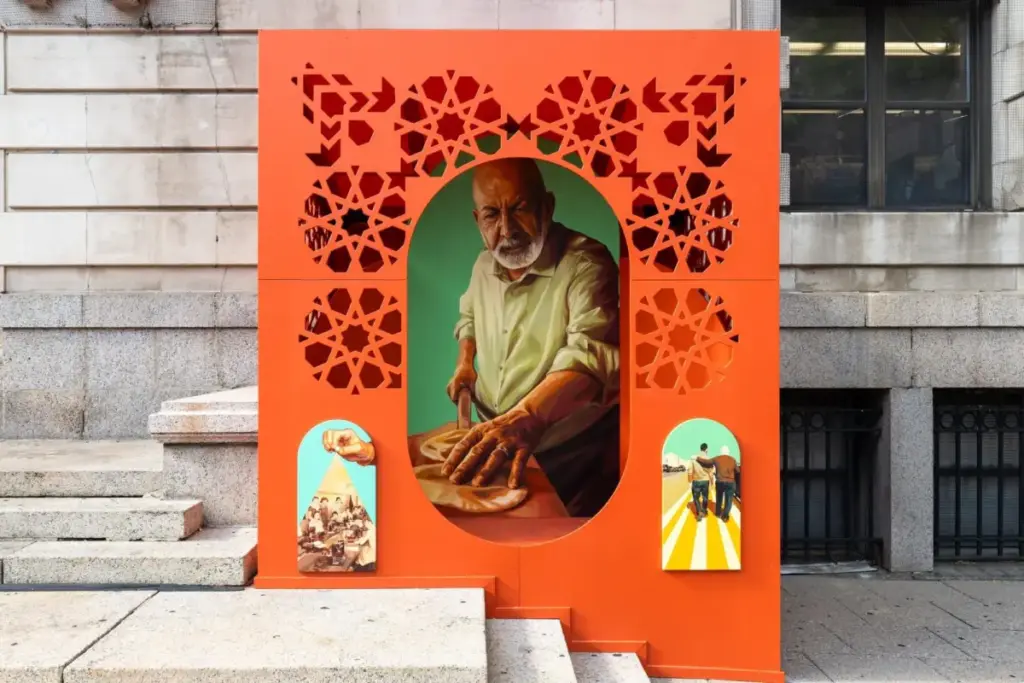
Amid a current sociopolitical landscape marked by the vilification, exploitation, and brutalization directed at immigrants across the United States, a prominent public art initiative in New Jersey is actively carving out physical and cultural space to celebrate the rich diversity, resilience, and foundational contributions of the state’s immigrant communities.
The New Jersey Monuments to Migration and Labor (NJMML) project has brought forth a series of monumental outdoor commissions created by artists Michelle Angela Ortiz, Chat Travieso, and Immanuel Oni. Inaugurated across the state, these publicly integrated works represent more than mere aesthetic additions to the urban and suburban landscape; they are the tangible outcomes of extensive consultations with over 1,000 community stakeholders. Strategically positioned across North, Central, and South Jersey, the installations are thoughtfully designed to channel the culturally specific histories, struggles, and triumphs of the prominent demographic groups that define each respective region.
To further contextualize the initiative and foster broader public dialogue, the NJMML installations are being accompanied by an upcoming academic and community symposium scheduled at Rutgers University’s Zimmerli Art Museum on Friday, October 16. The gathering aims to bring together artists, scholars, activists, and community members to discuss the intersections of migration, labor, public memory, and monumentality in contemporary American society.

The urgency and philosophical grounding of the project were underscored by NJMML Project Director Andrew Urban in a press statement accompanying the summer inaugurations. Reflecting on the role of art during periods of heightened social tension, Urban noted that the three monuments are distinguished by a vital awareness of what public memory requires.
"I think the three monuments are distinguished by an awareness that celebration and reflection, which the pieces encourage, are not just secondary pursuits that can be sacrificed during times of crisis," Urban stated. He also expressed deep gratitude toward the hundreds of local stakeholders who contributed their time, diverse perspectives, and deeply personal narratives to shape the final artistic outputs. These community members shared stories related to the complex realities of being migrants and laborers, ensuring that the resulting monuments reflect genuine lived experiences rather than generalized abstractions.
Among the cornerstone installations is Michelle Angela Ortiz’s Carriers of Light and Labor, which was officially unveiled outside of Paterson City Hall. Captured in striking photographs at dusk by Steve Weinik, Ortiz’s pavilion-style installation immediately asserts itself as a beacon of civic presence and community heritage. The structure serves as a dedicated tribute to specific figures within the local economy, notably honoring the Nouri brothers and the Fattal family. These two immigrant families have become enduring staple retail grocers and small business owners in Paterson, representing the generational hard work, economic grit, and community-building efforts that sustain urban centers throughout New Jersey.

Paterson, historically known as the Silk City and a historic destination for generations of textile workers, immigrants, and industrial laborers, provides a fitting backdrop for Ortiz’s exploration of labor and visibility. By anchoring the artwork directly outside City Hall, the project challenges traditional notions of civic monuments—which have historically tended to commemorate political elites or military figures—and instead redirects public reverence toward the everyday laborers and immigrant entrepreneurs who form the lifeblood of the municipality.
The strategic placement of the works by Chat Travieso and Immanuel Oni across other regions of the Garden State ensures that the dialogue surrounding migration and labor captures the multifaceted geography of New Jersey. From industrial northern hubs to the diverse communities of Central and South Jersey, the initiative maps a statewide geography of immigrant resilience. Each artist has approached their respective commission through collaborative community engagement, ensuring that the final structures resonate deeply with the populations living alongside them every day.
As the state prepares for the upcoming symposium at the Zimmerli Art Museum, the monuments already standing in public plazas serve as enduring physical reminders of the humanity, history, and ongoing contributions of New Jersey’s immigrants. Through these artistic interventions, the NJMML project demonstrates how public art can actively counter narratives of exclusion by anchoring immigrant stories permanently into the architectural and cultural fabric of the state.






