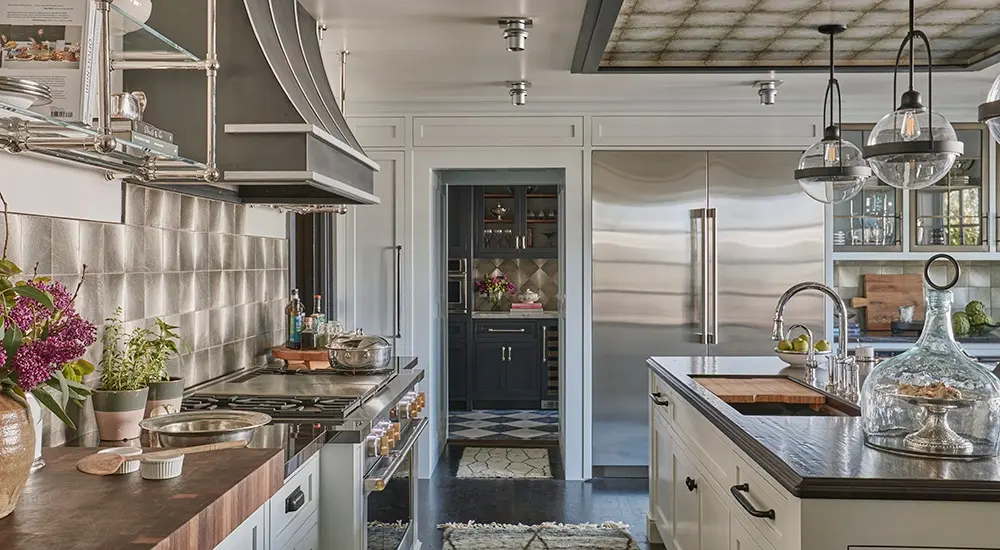
The National Kitchen & Bath Association (NKBA), representing nearly 55,000 North American professionals as the leading trade association for the industry, has officially released its comprehensive 2027 Kitchen Trends Report. Compiled from an extensive survey of industry designers, manufacturers, remodelers, and architects, the newly published findings portray a kitchen in the midst of a significant structural and functional transition. According to the report, interior layouts are moving away from expansive open concepts in favor of more deliberate, zoned spaces. At the same time, wellness considerations and climate resilience are rapidly shifting from optional afterthoughts to core design priorities, while technological integration is advancing much more selectively than broader market hype surrounding artificial intelligence might imply.
Among the most pronounced developments highlighted in the research is the retreat of the fully open floor plan. Defined zones, partial walls, and operable partitions are staging a notable comeback, with partially concealed kitchens and semi-enclosed configurations emerging as prominent design directions for the coming years. This shift marks a distinct reversal from the NKBA’s 2026 report, which had identified open layouts as a trend still experiencing active growth. Underlying this spatial rebalancing is a kitchen environment that continues to expand in physical size, albeit at a more measured pace than in previous years. Approximately 52 percent of surveyed designers now anticipate that overall kitchen footprints will increase over the next three years, representing a noticeable decline from the 76 percent who held that view in the 2026 findings.
While smart technology continues to establish a firmer foothold throughout the culinary space, design professionals are tempering their expectations specifically regarding artificial intelligence. Only 27 percent of respondents agree that ovens equipped with integrated AI will achieve widespread popularity, suggesting that actual adoption rates among consumers are far more pragmatic than headline-driven tech narratives suggest. Concurrently, designers are actively optimizing interior environments to support human wellness through enhanced natural light, superior air quality, and advanced water filtration, effectively repositioning kitchen ventilation as a vital health feature rather than a mere building code requirement. Furthermore, professionals are spearheading important conversations surrounding climate resilience by offering practical, protective solutions such as advanced leak detection systems, automatic shut-off valves, and reliable home backup power solutions.
Bill Darcy, global president and CEO of the NKBA, emphasized the broader implications of these evolving design philosophies during the release of the findings. For the past several years, the industry has witnessed a steady expansion in the physical dimensions of the kitchen. However, the 2027 Kitchen Trends Report demonstrates that this evolution is continuing in a new direction, with the kitchen extending its influence into previously separate areas of the home. Although the kitchen has traditionally held the title of the heart of the home, that concept has officially taken on new meaning. From mudrooms and dedicated laundry rooms to hidden back pantries and highly personalized work zones, the report illustrates that homeowners have entered a brand-new era of what the kitchen can accomplish—solving tangible daily problems, adding substantial home value, and fundamentally elevating the way people live.
The complete research document is currently available at NKBA.org, offering complimentary access to registered association members. The findings span several core categories that define the trajectory of modern home architecture and interior design.
The Great Rebalancing of Space
The fundamental architecture of the domestic kitchen is undergoing a profound reassessment. Interior designers are systematically moving away from sprawling, uninterrupted open-concept layouts in favor of highly defined zones, partial structural walls, and flexible operable partitions. Intentional zoning has been rated as a permanent fixture by an overwhelming 81 percent of designers, while semi-enclosed layouts, favored by 46 percent of professionals, and partially concealed kitchens, cited by 41 percent, are rapidly gaining traction as up-and-coming architectural elements.
Complementing this renewed preference for spatial definition is the resurgence of the back kitchen. Dedicated auxiliary prep spaces and secondary kitchen areas are recognized as rising layout trends, noted by 47 percent of design experts. As a result, layout reconfiguration has firmly established itself as a primary luxury upgrade. Function is driving significant homeowner investment, with strategic layout changes ranking as the second-highest return on investment for kitchen renovations at 49 percent, trailing only behind comprehensive cabinet upgrades at 54 percent.
Furthermore, utility and service rooms are becoming increasingly integrated into the broader ecosystem of the kitchen. Mudrooms and dedicated laundry spaces are experiencing heightened demand, with 94 percent of designers agreeing that attached mudrooms will remain popular over the next three years. Expectations for physical expansion within these support spaces remain strong, with 45 percent of professionals anticipating larger mudroom footprints and 43 percent predicting the same for laundry areas.
Despite these expansions, the overarching goal of modern kitchen design is not simply to create more open space for its own sake. In fact, 86 percent of designers agree that the layout itself is actually simplifying, yielding reduced visual clutter and a more expansive overall feel. This is achieved by carefully reallocating square footage into the thoughtfully defined zones, concealed back kitchens, and integrated storage solutions mentioned previously.
Colors and Materials: Quiet Remains the Favorite
In the realm of aesthetics, understated palettes and natural finishes continue to dominate consumer preferences. Neutral colors remain the definitive choice for the vast majority of projects at 96 percent, while greens at 83 percent and blues at 75 percent follow closely behind, though both experienced a slight tick downward from the 2026 figures of 86 percent and 78 percent, respectively. At the same time, warmer hues are carving out a distinct space in contemporary design. Yellow was selected by 43 percent of designers, down slightly from 47 percent in the previous year, while red tones, encompassing sophisticated burgundies and vibrant bright reds, held steady at 47 percent. This sustained presence hints at an ongoing consumer appetite for richer, more expressive color accents within otherwise neutral environments.
When it comes to horizontal work surfaces, quartzite has successfully stolen the spotlight. Approximately 78 percent of designers agree that quartzite will be widely popular for countertops, narrowly edging out engineered quartz, which stands at 74 percent. This preference underscores a growing desire for authentic, natural geological materials with unique veining and high durability.
Concealment remains a dominant theme in cabinetry design as well. Fully 85 percent of designers agree that cabinetry is increasingly engineered to completely hide appliances and functional mechanical elements from plain sight. Conversely, open shelving is widely considered to be on its way out, with 64 percent of professionals agreeing that it is rapidly losing favor in exchange for streamlined, enclosed storage solutions.
Natural wood finishes are also decisively outperforming painted alternatives. Approximately 34 percent of designers expect natural material cabinets featuring minimal or no artificial finish to be highly popular. Meanwhile, 32 percent favor light-toned cabinetry and an additional 32 percent lean toward medium tones. Among specific timber species, white oak emerges as the definitive material of choice, preferred by 49 percent of designers. Adding further visual interest to the space, 54 percent of professionals agree that the kitchen island will prominently feature a distinct color or finish separate from the rest of the surrounding perimeter cabinetry.
Wellness and Climate Resilience Move to the Forefront
Health and safety considerations have profoundly influenced the trajectory of contemporary interior design. In the category of human wellness, advanced ventilation systems are now routinely cited alongside high-performance water filtration setups, touchless faucets, and specialized sound-absorbing materials. Together, these elements are intentionally deployed to foster calmer, healthier, and more restorative kitchen environments.
Simultaneously, climate resilience has firmly established itself as an urgent priority for homeowners and designers alike. A significant majority of professionals are incorporating protective infrastructure into their architectural plans. Approximately 65 percent of designers agree on the critical importance of sophisticated leak detection systems and automatic water shut-off valves. Furthermore, 62 percent point to the integration of reliable home backup power solutions to mitigate the risks associated with grid instability, while 53 percent emphasize the necessity of advanced ventilation and comprehensive air filtration systems to safeguard indoor air quality during environmental emergencies.
A Kitchen Tailored for Functional Living
Modern lifestyles demand spaces that are meticulously organized around specific daily habits. Design professionals overwhelmingly agree that dedicated beverage preparation areas are continuing to rise in prominence. Fully 90 percent of surveyed experts name beverage stations as a popular feature for the upcoming three-year period, representing an increase from 85 percent in the 2026 report. This trend parallels the strong demand for mudrooms and attached flexible utility spaces at 94 percent. Specialized pet feeding stations, cited by 64 percent of designers, and traditional eat-in kitchen arrangements, favored by 63 percent, round out the primary lifestyle features expected to see continued growth.
The central kitchen island is rapidly evolving into the ultimate custom-crafted architectural feature within the home. Roughly 82 percent of designers report that island sizing and structural configurations are becoming increasingly tailored to the specific dimensions of the room. Technology integration leads all expected areas of island modification at 74 percent, surpassing both specialized storage capabilities at 60 percent and functional task zoning at 58 percent.
Pantries are undergoing a similarly dramatic transformation. A substantial 88 percent of designers agree that these spaces are evolving far beyond simple dry-goods storage into multi-functional operational extensions of the primary kitchen. Furthermore, 73 percent predict that dedicated small-appliance stations will be in high demand, while 67 percent expect spacious walk-in pantries to dominate future home layouts.
Lighting as Design, Not Just Function
Illumination has emerged as one of the most expressive and dynamic elements in modern kitchen architecture. An overwhelming 84 percent of designers agree that contemporary kitchens will incorporate multiple, overlapping layers of lighting to cultivate a flexible, mood-enhancing environment. Additionally, 78 percent agree that lighting is increasingly utilized as a principal design statement in its own right, rather than serving as a purely functional necessity. Technological connectivity is following this exact trajectory, with 50 percent of designers anticipating that domestic lighting controls will be seamlessly integrated with mobile devices in the coming years.
Professionals point to specific lighting fixtures and applications leading this aesthetic shift over the next three years. Under-cabinet lighting captures the highest level of enthusiasm, with 87 percent of designers expecting it to remain popular, closely followed by interior-cabinet illumination at 76 percent. Practical lighting applications such as recessed ceiling fixtures at 57 percent and discreet floor or pathway lighting for safe nighttime navigation at 52 percent round out the functional end of the spectrum. Meanwhile, decorative fixtures such as wall sconces at 48 percent and statement pendant lights at 46 percent lead the more ornate categories.
Niche lighting applications are also showing steady, notable interest among high-end clients. Specialized art lights intended for picture and display illumination are cited by 30 percent of designers, soffit lighting accounts for 28 percent, and traditional chandeliers represent 23 percent. Notably, hydroponic lighting designed to support indoor kitchen greenery and fresh herbs is noted by 18 percent of respondents, highlighting lighting’s expanding role in supporting sustainable indoor gardening practices.
A Measured Approach to AI and Technology
While smart home innovations continue to enter the domestic sphere, the integration of artificial intelligence is proceeding with notable caution. Only 27 percent of designers expect ovens equipped with advanced food-recognition artificial intelligence to be heavily desired by consumers in 2027, and just 24 percent anticipate demand for AI systems that actively learn and automatically adjust to individual cooking preferences.
Instead, consumer demand is favoring practical, proven appliance configurations. Air fryers are currently outpacing traditional convection ovens in projected consumer demand, standing at 57 percent compared to 46 percent. At the same time, the kitchen continues to merge directly with the personal smartphone, with mobile alerts for potential power failures or gas leaks cited by 57 percent of professionals. App-controlled appliances at 40 percent, WiFi-connected refrigerators at 37 percent, and connected dishwashers at 36 percent are all steadily gaining traction as reliable, everyday conveniences for modern homeowners.