If the opening sequence of Reading Rainbow—specifically the Y2K-techno-optimistic Chaka Khan rendition—could manifest as a physical destination, it would undoubtedly resemble the outdoor zine tent at the New York Art Book Fair. There is a distinct thrill in never quite knowing what to expect from this annual gathering organized by Printed Matter. Marking its milestone 20th anniversary edition this weekend at MoMA PS1 in Queens, the fair continues to bring together more than 300 international exhibitors, transforming the museum spaces and courtyards into a giant, chimeric bookstore that feels unmistakably and vibrantly alive.
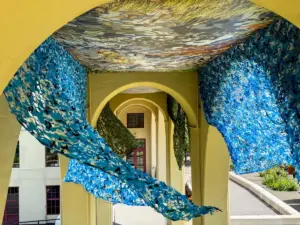
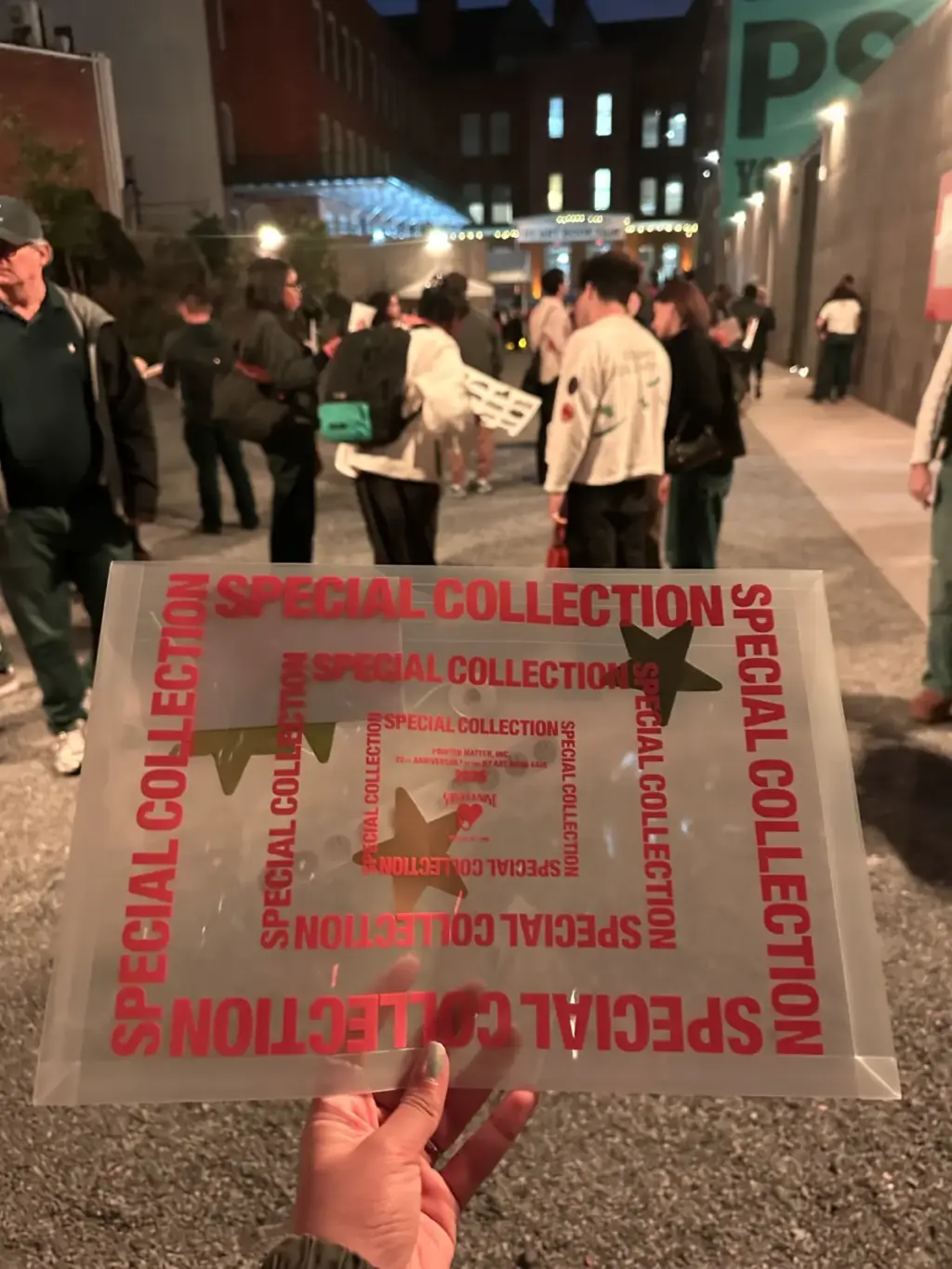
On the opening night of the landmark edition, visitors were greeted with a playful nod to the fair’s history and culture. Staffers handed out plastic string-closure folders, complete with nostalgic lenticular Tweety Bird prints, designed specifically for storing the countless zines, flyers, and uncategorizable artworks that attendees inevitably encounter inside. Positioned just across from artist Precious Okoyomon’s striking sculpture in the courtyard, the bustling zine tent felt like a pocket-sized universe where marginalia becomes the primary text. Here, the overlooked, subversive, and playful currents of contemporary politics and queer culture flowed freely, setting the tone for a weekend dedicated to independent publishing, radical thought, and artistic experimentation.
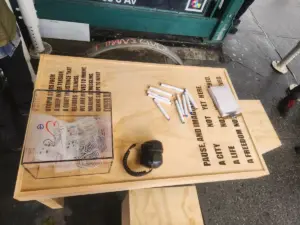
Among the vibrant community of creators populating the fair were art workers Jenna Hamed, Aya Krisht, and Rhonda Khalifeh, representing the Book Arts Solidarity Network. True to the spirit of grassroots organizing, they handed out flyers for a post-fair publishers’ meet-up, carving out a vital space for connection and solidarity far beyond the traditional confines of the museum’s walls. The organization first coalesced around a shared imperative: to challenge major book institutions over their silence regarding the ongoing humanitarian crisis and genocide in Palestine.
Building on that foundational advocacy, the network is now launching the third annual edition of its publication, MAKEREADY. For this latest risograph-printed booklet, the collective gathered powerful paintings, photographs, and written reflections from four distinct artists currently living and working in Gaza and South Lebanon. During the editorial and assembly process, the creators realized that a striking visual and emotional thread connected all the diverse works: the color yellow. Hamed explained that the process of assembling the poetic publication was deeply "cathartic," serving as a tangible way to process an era defined by bald imperialism and dispossession by firmly centering the artists who are bearing witness to it on the ground.
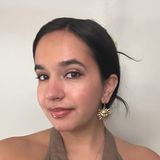
Reflecting on the collaborative effort required to bring such a project to life amidst immense geopolitical strife, Hamed noted that the initiative’s success stems from deep-rooted community capability. "It really came out of skill," Hamed said of the organization’s ability to coordinate and collaborate seamlessly across international borders. "We know what we’re doing."
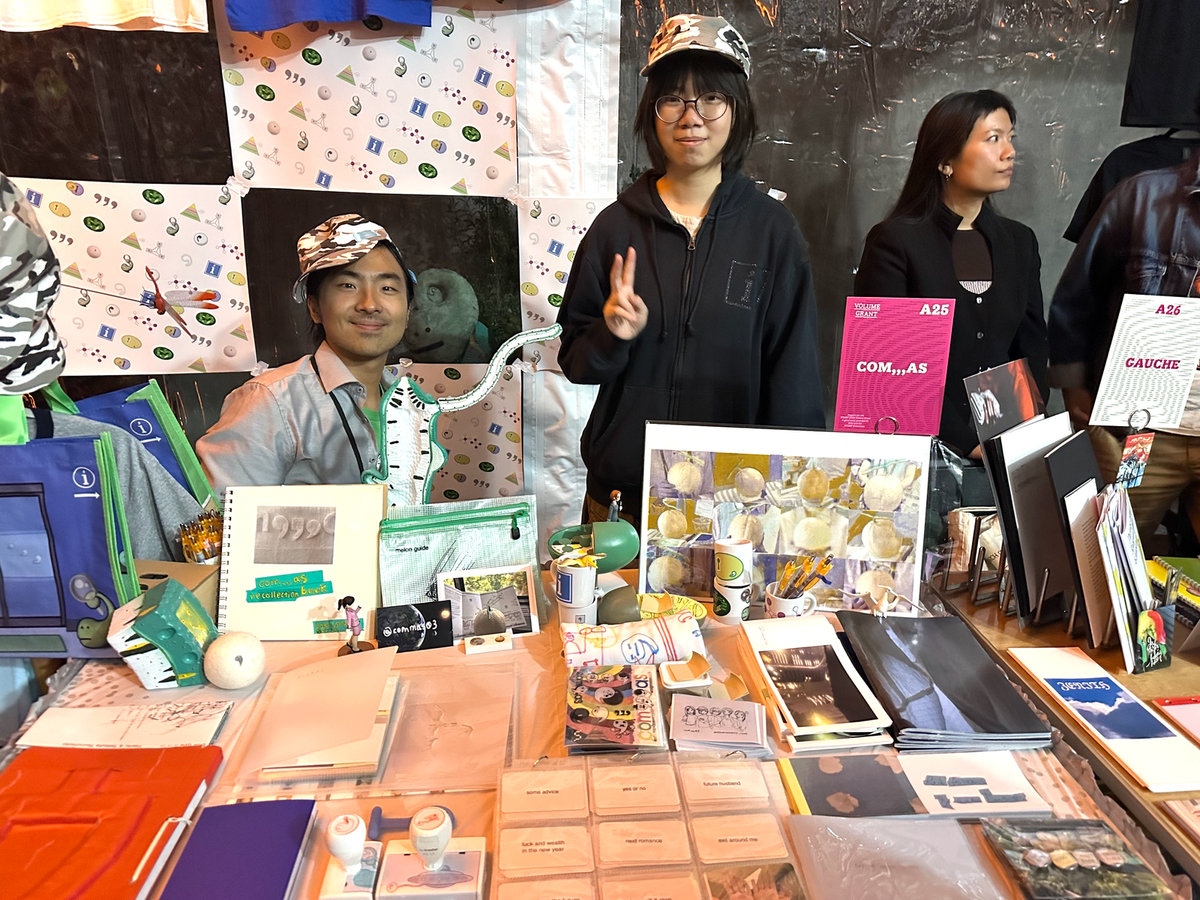
This blend of rigorous artistic skill, political urgency, and independent spirit has defined the New York Art Book Fair over the past two decades. As the weekend events continue to unfold across MoMA PS1, exhibitors like com,,,as—featuring creators such as Ruiqi Ma and Nathan Nam—alongside hundreds of other independent publishers, zine-makers, and radical artists, demonstrate that printed matter remains a vital medium for community-building. Through risograph prints, handmade books, and ephemeral flyers tucked safely into nostalgic plastic folders, the fair proves that independent publishing is not just surviving, but thriving as a space for uncensored expression and collective imagination.