Good Morning and Welcome to the Daily Cultural Digest
As cultural institutions navigate an increasingly complex intersection of public safety, political unrest, and artistic innovation, museums across major global capitals are finding themselves on the front lines of societal shifts. From emergency closures in France to prestigious contemporary art awards, heritage debates, architectural unveilings, and new scientific breakthroughs regarding masterworks of the nineteenth century, the art world continues to reflect the pressing anxieties and historical inquiries of our time.
The Headlines: Paris Museums Go Mum Amid Civil Unrest
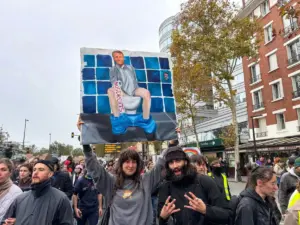
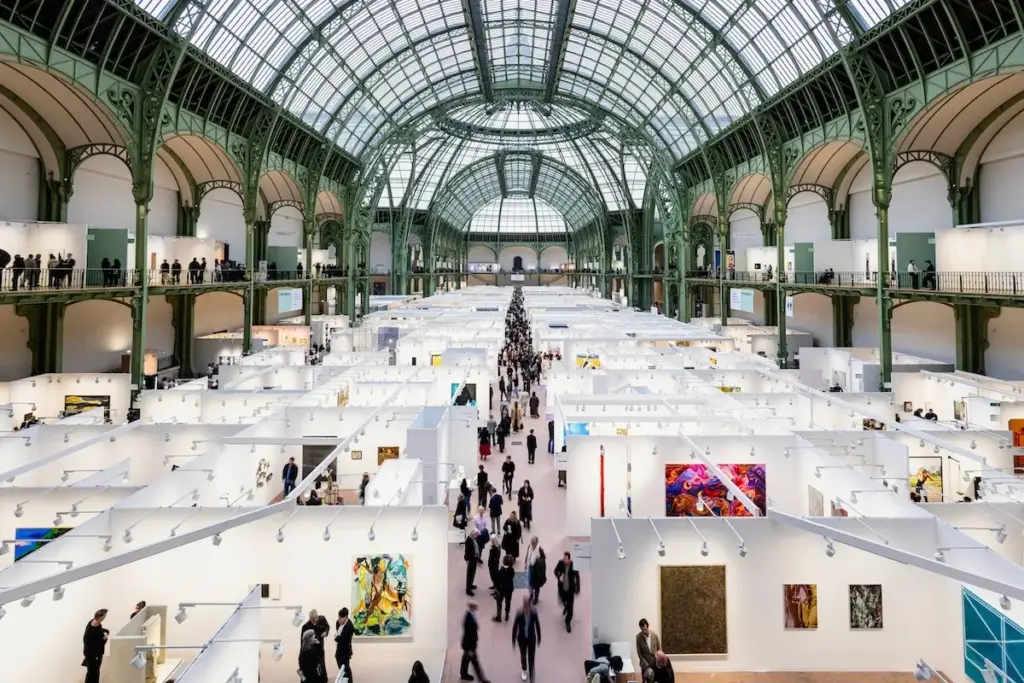
In the heart of the French capital, some of the world’s most celebrated cultural institutions are shuttering their doors in response to escalating civil tensions. The Louvre, the Musée d’Orsay, the Picasso Museum, and the expansive exhibition spaces of the Grand Palais announced that they will close their doors on Saturday in anticipation of planned protests sweeping across Paris.
The decision follows an urgent directive from the French Ministry of Culture, which strongly urged all national and public museums to take every necessary precaution to guarantee the safety and security of visitors, staff members, and priceless works of art. The precautionary closures are part of a broader, tense security response throughout the city. Following a weekend of widespread civil unrest driven by mostly peaceful protests concerning social and economic inequality amid a rising cost of living across France, local businesses and storefronts have begun hastily boarding up their windows. Merchants and authorities are bracing themselves for potential secondary rounds of looting and public disorder.
In an official effort to maintain public order and prevent further escalation, French President Emmanuel Macron announced strict new limitations on weekend demonstrations. Under the newly implemented regulations, only protests formally organized and led by recognized labor unions are authorized to take place on Saturday. Furthermore, partial curfews are slated to be put into effect across several major French cities. President Macron publicly placed the blame for the previous weekend’s violent outbreaks squarely on what he described as "political and seditious acts by the ultra-far-left groups who aimed to bring down the republic."
This latest round of closures underscores the profound vulnerability of public cultural infrastructure during times of intense political and economic friction. As museums draw their curtains and secure their perimeters, the broader cultural sector watches closely to see how the French government balances the constitutional right to public assembly with the absolute necessity of preserving national heritage and public safety.
The Duchamp Prize is (Al)Readymade
While public spaces in Paris grapple with security concerns, the city’s contemporary art scene celebrated one of its highest accolades. The prestigious Marcel Duchamp Prize has been awarded to the artist duo Brognon Rollin, comprising David Brognon and Stéphanie Rollin, for their haunting and deeply contemplative project titled "5,376 years, 1892 months, 1110 days, 1201 hours." The victory was officially announced by the Musée d’Art Moderne de Paris (MAM).
Living and working between Paris and Luxembourg, the artistic duo formulated their winning installation by gathering sobriety tokens from members of various abstinence support groups. These tokens, which physically represent the duration of an individual’s sobriety, were aggregated to calculate a collective, staggering sum of time. The artists then displayed these objects within an immersive installation specifically designed to evoke the aesthetic and spatial experience of arcade or fairground games.
Fabrice Hergott, the director of the Musée d’Art Moderne de Paris, praised the selection, noting the profound conceptual weight of the work. "With Brognon Rollin, the Marcel Duchamp Prize recognizes a demanding body of work that is committed to materializing what usually escapes the eye: the time of waiting, of addiction, and of intimate resistance," Hergott said.
The recognition highlights the jury’s appreciation for art that engages with psychological endurance and the quiet, persistent struggles of everyday human existence, transforming private milestones into a collective monumental archive.
The Digest: Heritage Debates, Architectural Expansions, and International Appointments
Beyond the headlines in Paris, developments across the global art and heritage landscape continue to generate significant discussion among historians, architects, and institutions.
In Spain, everyday items and personal mementos originating from the family of the late dictator Francisco Franco have witnessed an extraordinary surge in market value ahead of an upcoming auction hosted by Magna Art Auctions later this month. However, the commercial bonanza has drawn sharp criticism from historic preservationist groups. These organizations argue that many of the designated lots comprise items of crucial national heritage and have formally demanded the immediate suspension of the sale to keep the artifacts within public hands and historical contexts.
In the United States, an act of vandalism has struck a monument of historical significance. A man was arrested in Quantico, Virginia, after allegedly using a sledgehammer to violently sever the head of the Marine figure depicted in the prominent Iwo Jima statue. The attack resulted in structural damage estimated at hundreds of thousands of dollars, shocking veterans’ groups and local communities alike.
Legislative changes are also brewing in Europe. A legislative bill introduced earlier in March could significantly expand the legal definition employed by the French government regarding art classified as a "national treasure." Such a classification subjects privately owned artworks to strict export certificate requirements, which authorities retain the power to refuse. The proposal has ignited intense debates among art market participants, dealers, and collectors regarding private ownership rights versus state oversight of cultural assets.
In architectural news, Los Angeles-based architecture firm Johnston Marklee has released their comprehensive design plans for the upcoming expansion of the Bass Museum of Art located in Miami Beach. The ambitious project aims to modernize and enlarge the institution’s facilities, enhancing its capacity to host major exhibitions and engage with its growing community.
Further afield, the anticipated Róng Museum of Art (RMoA) in Shenzhen, China, has made strategic additions to its leadership team ahead of its scheduled opening in 2027. The institution announced the appointment of three new members to its curatorial team: Freya Chou, Li Jia, and Susanna Zhu. The newly formed team will help shape the museum’s inaugural program and establish its curatorial vision on the international stage.
The Kicker: Unlocking the Real Sky Behind Van Gogh’s The Starry Night
For decades, art historians and scientists alike have debated the precise origins of Vincent van Gogh’s iconic 1889 masterwork, The Starry Night. Was the swirling, luminescent sky a product of pure psychological fantasy, a symbolic representation of inner turmoil, or a literal, realistic astronomical observation? Now, researchers believe they have finally cracked the science behind the legendary canvas.
According to findings reported by the Times of London, scientists suggest that the famous cosmic swirls painted by the Dutch artist actually depict the Taurus constellation. The celestial composition is prominently marked by a waning crescent moon, the planet Venus, and the adjacent Hyades star cluster.
Given historical documentation confirming that Van Gogh frequently looked out from the eastern window of his room while staying at an asylum in the village of Saint-Rémy-de-Provence, researchers applied a specialized digital technique. By superimposing accurate astronomical maps of the night sky over the composition of the painting, scientists determined that the canvas was directly inspired by the exact landscape and sky visible on July 22, 1889.
This newly calculated date places the creation of the scene precisely a month later than previous estimates had suggested. More importantly, the findings offer compelling evidence of Van Gogh’s steadfast commitment to painting directly from observation, even during periods of profound personal and mental distress.
"It has been debated whether the night sky in question was the painter’s fantasy, a symbolic representation, or a realistic astronomical observation," noted a representative for the Springer Nature group, which publishes the findings in the journal Scientific Reports. With science now lending weight to the observation theory, one of art history’s most mesmerizing mysteries gains a grounded, terrestrial anchor in the actual night sky that looked down upon the artist over a century ago.