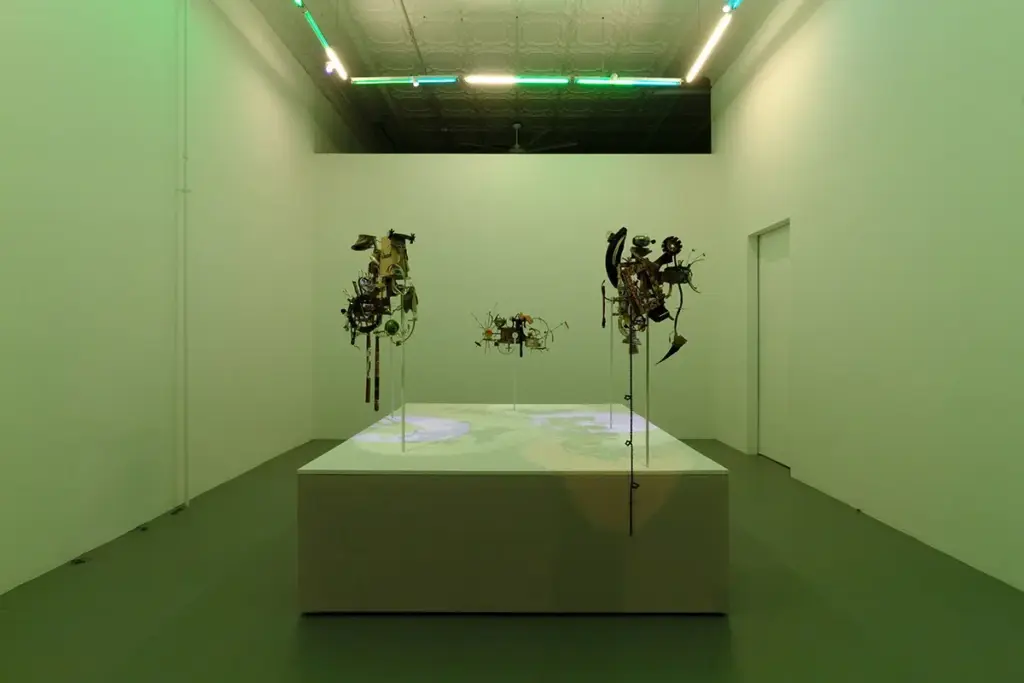
The gallery made the announcement public on Friday through its official social media channels, revealing that its upcoming group exhibition, aptly titled “Retrospective,” will serve as its final project. “This will be our last show,” the gallery wrote in an Instagram post, marking the end of an era for one of the city’s most fiercely independent and creatively daring art spaces.
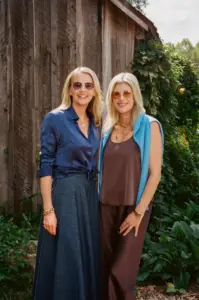
Founded in 2017 by artists and organizers Tim Mann and Jack Schneider, Prairie began as an artist-run space deeply rooted in the local cultural landscape. The gallery’s name was chosen as a deliberate reference to the indigenous ecosystem that thrived in and around Chicago long before the region underwent heavy industrialization and colonization. According to a description written for a previous edition of Chicago Exhibition Week, the founders sought to create a physical setting for contemporary art that remained completely free from the standard pressures and constraints of commercial viability.
While the contemporary art world has seen a steady wave of gallery closures in recent years driven largely by soaring overhead costs and the intense financial pressures of the global art market, Schneider emphasized that Prairie’s decision to shutter had little to do with money or economic failure.
“We were never a market-oriented space,” Schneider said. Drawing on a description used by an artist peer, he added, “I think an artist friend of ours, Mira Dayal, recently used the phrase ‘commercially irreverent’ to describe her practice, and I think that pretty perfectly describes our program and approach. We never expected to turn a profit, and we never did. We only ever, through occasional sales, fundraising, and occasional grants, raised just enough money to run the program itself.”
The closure is not a sudden reaction to financial distress, but rather a deliberate and long-contemplated milestone. Mann noted that the winding down of the space had actually been planned for a full year, framing the conclusion not as a somber defeat, but as a celebratory moment to close the chapter on their own terms.
Throughout its nearly decade-long existence, Prairie earned a sterling reputation within the international art community for its uncanny ability to pinpoint noteworthy talents during the earliest, most formative stages of their professional careers. The gallery frequently functioned as an incubator for emerging artists whose daring and unconventional practices required a patient, supportive environment rather than immediate commercial validation.
Among those early-career breakouts is Isabelle Frances McGuire, whose haunting, beguiling sculptures of witches struck a powerful chord with critics and audiences alike at the recent Whitney Biennial. McGuire actually mounted her very first solo exhibition at Prairie back in 2017, marking a crucial early stepping stone in her trajectory. Similarly, André Magaña, who emerged as a standout talent in the 2026 edition of MoMA PS1’s prestigious Greater New York quinquennial, held his second-ever one-person exhibition with the gallery in 2019.
Over the years, Prairie’s roster expanded to include a diverse group of visionary artists whose rigorous and often experimental works helped define the gallery’s distinct curatorial voice. The space hosted exhibitions for Kira Scerbin, Craig Jun Li, Max Guy, Katz Tepper, ASMA, ektor garcia, and Amina Ross, among others. These artists benefited from a platform that prioritized conceptual depth, material experimentation, and aesthetic risk over commercial market trends.
Reflecting on the origins of the project, Mann explained that Prairie was originally established inside his and Schneider’s shared studio, drawing direct inspiration from Chicago’s rich, edgy tradition of alternative art spaces. The founders looked to legendary local predecessors such as New Capital and Queer Thoughts—the latter of which eventually relocated to New York City, where it developed into a massively influential institution—as guiding lights. By showcasing a wide range of artists whose work frequently resisted being shoehorned into the traditional commercial gallery ecosystem, Prairie carved out a crucial niche. Mann also pointed out that Chicago’s relatively low cost of real estate compared to coastal art capitals provided a vital foundation, allowing experimental spaces the breathing room necessary to sustain themselves without immediate commercial returns.
As for what lies ahead, Schneider confirmed that his creative and professional partnership with Mann is far from over. The duo plans to continue collaborating on future projects, albeit in a different capacity. “We want to do curatorial work, just outside the guise of an artist-run space,” he noted.