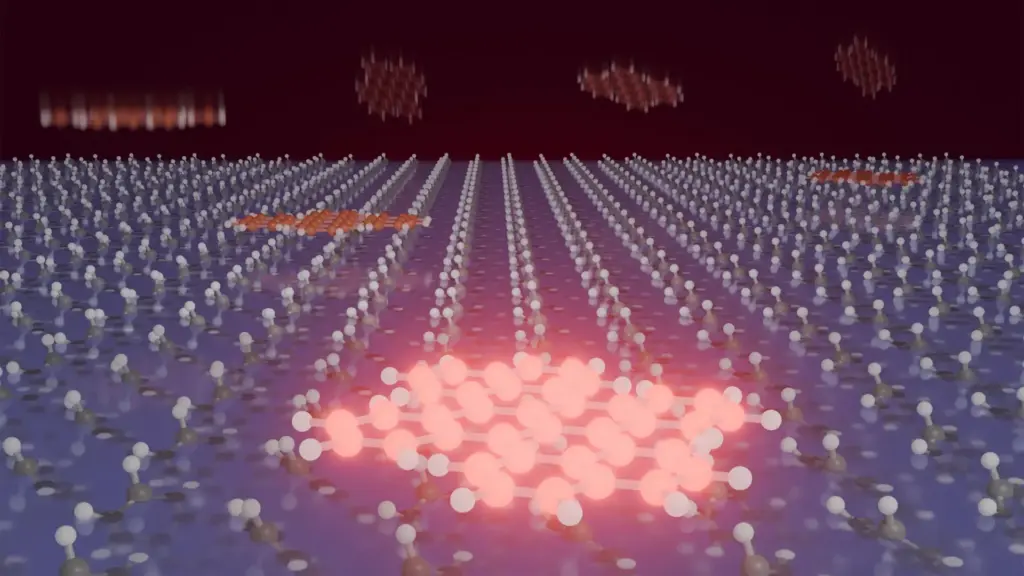
In a milestone achievement for the field of quantum physics, researchers at the Max Planck Institute for the Science of Light (MPL) in Germany have successfully developed a groundbreaking methodology to study individual molecules on a solid surface with unprecedented precision. For the very first time in scientific history, a research team has demonstrated that molecules attached directly to a surface can achieve the ultimate quantum limit of optical coherence. This development effectively overcomes a major, long-standing technological obstacle that has restricted the advancement of molecular quantum research for decades.
The findings, which represent a significant leap forward in our ability to probe and manipulate matter at the most fundamental scales, were recently published in the prestigious scientific journal Science. By bridging the gap between delicate quantum states and tangible physical surfaces, this breakthrough could unlock entirely new possibilities for investigating how complex molecules interact with their immediate physical environments and accelerate the practical development of advanced quantum technologies.
Why Surfaces Have Been a Major Obstacle in Quantum Physics
At the heart of many emerging and future quantum technologies are extremely small physical systems, such as individual atoms and molecules, that possess the unique ability to interact directly with light. In the specialized terminology of physics, these tiny systems are known as quantum emitters. Under the right conditions, these emitters can produce single particles of light—commonly referred to as photons—store intricate quantum information, and help establish reliable quantum connections between otherwise distant physical systems. These core capabilities are widely considered vital for the realization of next-generation applications, including ultra-fast quantum computing and secure, unhackable quantum communication networks.
To properly study, analyze, and harness the behavior of a single quantum emitter, experimental scientists must keep the system remarkably stable and precisely confined to one specific location for extended periods of time. Traditionally, researchers have achieved this level of stability by trapping individual atoms or molecules within the pristine vacuum of an experimental chamber or by embedding them deeply inside solid, highly transparent host materials.
However, placing quantum emitters directly on an exposed surface offers an intriguing and highly desirable advantage for researchers. If successful, scientists could theoretically manipulate individual molecules directly by "touching" them with an extremely sharp physical probe. Advanced microscopy techniques, such as scanning tunneling microscopy (STM) and atomic force microscopy (AFM), already utilize specialized tips with atomic-scale precision to investigate matter at astonishingly small scales. Combining these powerful microscopy tools with quantum emitters on a surface would open up remarkable new avenues of research.
The fundamental difficulty, however, has always been that real-world surfaces are rarely as clean, uniform, and stable as delicate quantum experiments strictly require. Over time, invisible contaminants from the surrounding laboratory environment inevitably accumulate on exposed surfaces, creating microscopic disturbances and environmental "noise" that actively interfere with the fragile quantum behavior of nearby atoms and molecules. Until now, researchers around the globe had struggled immensely to preserve the pristine quantum optical properties of individual emitters once they were attached to solid surfaces.
Now, scientists working within the Nano-Optics Division at the Max Planck Institute for the Science of Light have successfully devised an innovative way around this persistent problem.
A Clever Crystal Cleaning Method Solves the Problem
The dedicated research team, led by Professor Vahid Sandoghdar—a director at MPL and the head of the Nano-Optics Division—developed an unusual and highly effective cleaning method that cleverly exploits a natural physical property inherent to organic crystals.
At standard room temperature, the specific crystal material utilized by the researchers gradually evaporates through a well-known thermodynamic process called sublimation, in which a solid substance transforms directly into a gaseous state without ever passing through an intermediate liquid phase. The research team capitalized on this natural shedding mechanism by placing a small, carefully prepared crystal inside a specialized vacuum chamber specifically equipped for extremely low temperatures, known scientifically as a cryostat. As the uppermost molecular layers of the crystal slowly and continuously evaporated away over time, they conveniently carried away all unwanted surface contaminants, leaving behind a remarkably pristine and clean underlying surface.
Once the natural sublimation process had successfully cleansed the surface, the team rapidly cooled the entire crystal down to just a few degrees Kelvin—merely fractions above absolute zero, which is the lowest theoretically possible temperature in the universe. This extreme cryogenic cooling instantly halted any further sublimation of the crystal and helped maintain the newly achieved, ultra-clean surface state with absolute stability.
Finally, with the stage set, the scientists utilized a tiny, specially fabricated micro-oven to gently evaporate organic molecules onto the intensely cold crystal. This allowed the molecules to settle gracefully and uniformly onto the meticulously cleaned surface without introducing external contaminants.
Molecules Reach the Ultimate Quantum Limit
With this exceptionally stable and pristine experimental environment successfully established, the researchers could finally investigate whether the delicate molecules managed to retain their fragile quantum properties after landing on the surface.
Dr. Alexey Shkarin, a researcher within the Nano-Optics Division at MPL who worked closely on the project, explained the significance of the measurements: "The quality of quantum emitters can be evaluated by their coherence times, which indicate how long they keep their quantumness."
Coherence time is a critical metric in quantum physics; it describes the precise duration that a quantum system can successfully maintain the complex superposition properties required for genuine quantum mechanical behavior. The longer this coherence can persist without disruption, the better the quantum emitter can perform in demanding applications that rely on precise, uninterrupted interactions with light.
However, fundamental laws of physics impose a strict restriction on how long this coherence can possibly last. Known universally as the Fourier limit, this absolute boundary is fundamentally determined by the time required for a quantum emitter to spontaneously release its stored energy back into its surrounding environment.
In a typical, unstable, or "noisy" laboratory environment, environmental disturbances and thermal fluctuations can cause quantum coherence to degrade and disappear hundreds or even thousands of times faster than this theoretical limit allows, rendering the system useless for advanced quantum applications.
To their astonishment, the scientists discovered that the molecules deposited onto their exceptionally clean crystal surface consistently and reliably reached the Fourier limit. This clear result demonstrated unequivocally that the surrounding surface environment was sufficiently quiet, clean, and stable to preserve the molecules’ delicate quantum coherence for the maximum physically permitted duration.
It marks the very first time in scientific history that researchers have successfully achieved this fundamental physical limit using molecules attached directly to a solid surface.
New Possibilities for Controlling Individual Molecules
The historic breakthrough did more than just establish a new benchmark for coherence; it also provided the research team with a powerful new platform to investigate in deep detail how a crystalline surface actively influences the individual molecules resting upon it.
Further experimental investigations revealed that direct interactions with the underlying surface can cause molecules to align themselves in particular, predictable directions and can noticeably alter their internal energy levels. Furthermore, the researchers uncovered intriguing initial indications that the surface might even influence the physical shapes of the molecules or subtly modify the ways in which they vibrate under light excitation.
These newly observed effects could provide invaluable clues regarding how matter fundamentally behaves at the isolated molecular scale, while simultaneously offering unprecedented opportunities to control complex quantum systems with high fidelity.
Looking ahead, the research group is already planning the next steps for their pioneering work. "Our future work will focus on combining this method with AFM and STM to gain local nanometer control over individual quantum emitters," notes Vahid Sandoghdar.
By successfully combining their innovative ultra-clean surface technique with powerful, high-resolution microscopy methods, the researchers hope to ultimately manipulate individual quantum emitters with spatial precision measured in billionths of a meter. Such advanced capabilities could soon reveal previously inaccessible physical details concerning the complex interactions between individual molecules and solid surfaces, while laying a robust groundwork for engineering novel quantum states of matter and advancing future molecular quantum technologies.