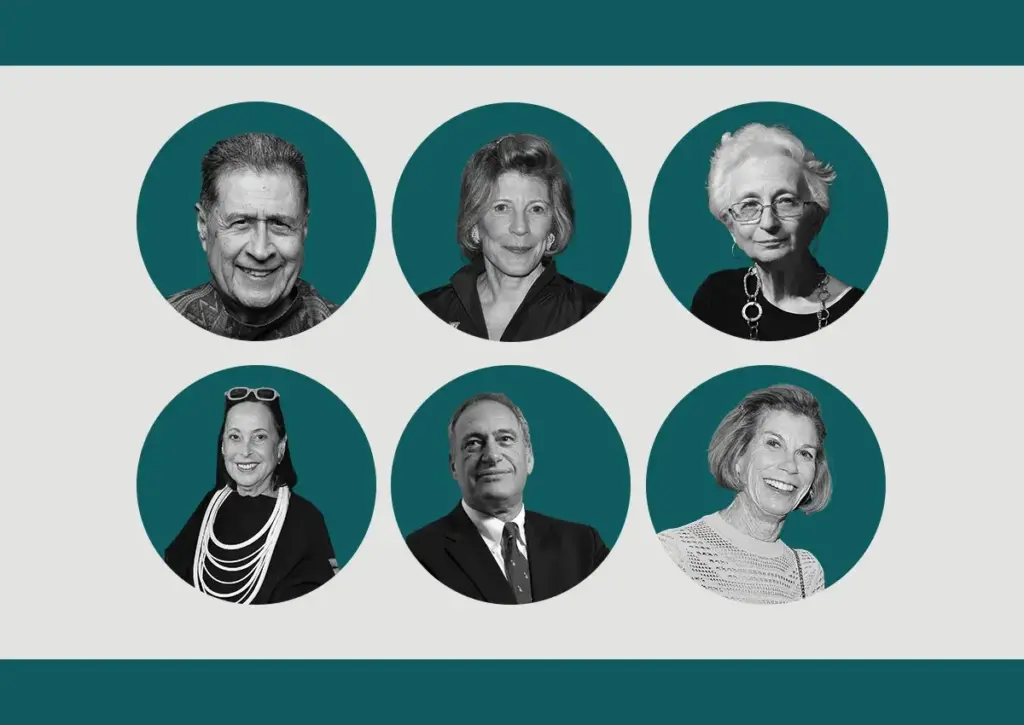
Over the past twelve tumultuous months, the international art world has been forced to reckon with the passing of an extraordinary generation of cultural benefactors. These were not merely individuals who accumulated vast private wealth and used it to acquire blue-chip canvases or avant-garde installations; they were deeply dedicated patrons whose commitment to the arts shaped the public consciousness, built institutions from the ground up, and preserved cultural heritage for generations to come. Known both for the staggering scale of their private holdings and for their unwavering, lifelong patronage of public museums and cultural institutions, these collectors left an indelible mark on the global arts ecosystem. Many of the world’s most prestigious galleries and community-focused museums now stand as testaments to their vision, generosity, and tireless advocacy.

To better understand the monumental impact that these individuals had not only on the architectural and curatorial scope of the institutions they supported, but also on the curators, artists, and fellow collectors they encountered along the way, ARTnews recently spoke with museum professionals and peers who shared memories of their time spent together. Through these reflections, a vivid portrait emerges of collectors whose relationships with art transcended simple ownership, evolving instead into deep partnerships with the public sphere.
Among those whose absence is most keenly felt are Agnes Gund and Barbara Jakobsen, two figures whose names are virtually synonymous with the institutional bedrock of modern art in New York City. As longtime trustees of the Museum of Modern Art (MoMA), Gund and Jakobsen guided the institution through decades of profound social, aesthetic, and structural change. Their dedication to MoMA was characterized by a rare combination of civic duty and passionate connoisseurship. They understood that a museum of modern art cannot simply function as a static warehouse for historical masterpieces; rather, it must serve as a living, breathing laboratory for contemporary thought and expression. Their influence extended far beyond boardroom votes and fundraising campaigns. Both women cultivated deep, meaningful relationships with the artists whose works filled their homes and eventually entered the museum’s permanent collection, bridging the sometimes-fraught gap between private wealth and public accessibility.

The ripple effect of such dedication is likewise visible in the nation’s capital, where the National Gallery of Art in Washington, D.C., was fundamentally transformed by the visionary eye of Dorothy Vogel. Unlike many prominent collectors born into vast fortunes or high-finance dynasties, Vogel lived a remarkably unassuming life as a public librarian. Alongside her husband, Herbert Vogel, she built an astonishing collection of Minimalist and Conceptual art on a modest civil servant salary. Operating within strict financial limitations, the Vogels relied entirely on intuition, intellectual rigor, and profound personal relationships with artists such as Sol LeWitt, Richard Tuttle, and Christo. Their holdings, which eventually numbered in the thousands, completely redefined the National Gallery’s postwar art holdings. Vogel’s journey stands as a powerful reminder that true patronage is defined by passion, discipline, and vision rather than sheer monetary expenditure, proving that a single dedicated individual can alter the trajectory of a national institution.
Further west, the landscape of contemporary art was similarly shaped by the tireless efforts of Susan Marx. In communities where cultural institutions often struggle to gain a foothold far from traditional metropolitan centers, Marx lent her energy, prestige, and resources to help make the Aspen Art Museum the vibrant cultural hub it is today. Her involvement went far beyond financial contributions; she was a driving force behind the museum’s community engagement, artistic ambition, and institutional growth. In places like Aspen, where the seasonal influx of visitors requires a dynamic and responsive cultural infrastructure, patrons like Marx provided the stability and vision necessary to anchor world-class contemporary art in a regional mountain setting. Her legacy lives on in every exhibition space, educational program, and visitor who encounters challenging contemporary works in the heart of the Rocky Mountains.

The generosity of private collectors also serves as the primary lifeblood for encyclopedic institutions, which rely on donations to fill historical gaps and expand their curatorial narratives. The Museum of Fine Arts, Boston, would be markedly diminished—precisely seven hundred artworks less rich—were it not for the extraordinary generosity of John P. Axelrod. Axelrod’s gifts to the Boston institution span diverse eras and movements, bringing a distinctive curatorial perspective to a museum with deep historical roots. His holdings, donated over many years, allowed the museum to acquire works that might otherwise have slipped beyond its financial reach, enriching its permanent galleries and offering visitors a more nuanced and expansive view of artistic production. Collectors like Axelrod often function as specialized scouts for public museums, identifying under-appreciated movements or emerging talents and ensuring that these works eventually find a permanent home where they can be studied and enjoyed by the public.
Equally transformative is the immense contribution made by Gilberto Cárdenas to the Blanton Museum of Art. Thanks to a monumental donation of five thousand works from Cárdenas’s personal collection, the Blanton is now equipped to tell a much fuller, more comprehensive story of Latinx art. In a museum landscape that has historically struggled with geographic and cultural representation, gifts of this scale are genuinely paradigm-shifting. Cárdenas’s collection provides scholars, curators, and the general public with an invaluable resource for exploring the rich, complex tapestry of Latinx artistic expression across decades. This donation does not simply add numbers to an inventory; it fundamentally rewrites the institutional narrative, ensuring that the voices, histories, and aesthetic innovations of Latinx artists are permanently woven into the cultural fabric of the museum and the broader art historical canon.

As curators, artists, and fellow collectors continue to process the loss of these six extraordinary figures over the past year, their legacies offer a compelling reminder of the symbiotic relationship between private passion and public stewardship. Without the tireless advocacy, visionary collecting habits, and profound generosity of individuals like Agnes Gund, Barbara Jakobsen, Dorothy Vogel, Susan Marx, John P. Axelrod, and Gilberto Cárdenas, the global museum landscape would be infinitely poorer. Through their enduring gifts to institutions large and small, these collectors have ensured that their love for art will continue to inspire, educate, and challenge the public for generations to come.