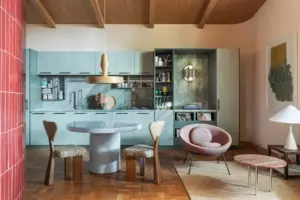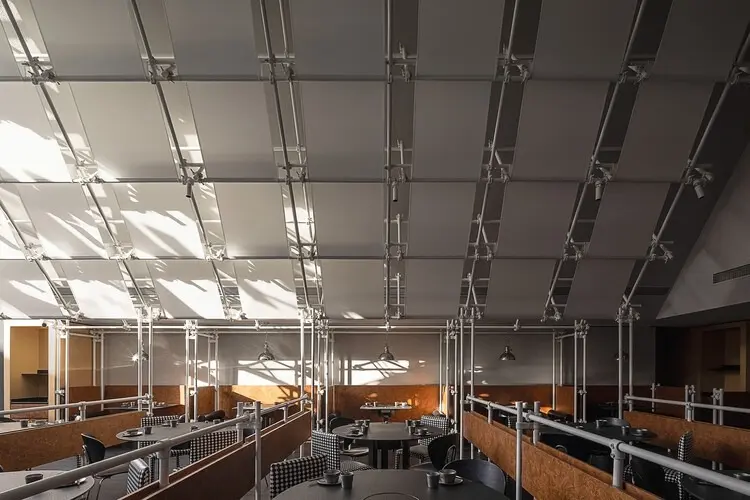
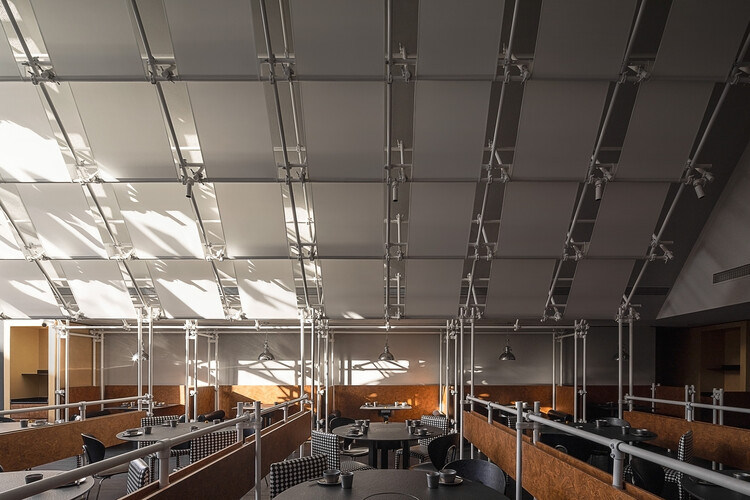
Scaffolding remains one of the built environment’s most universally recognized temporary structures. Traditionally deployed to accompany buildings through phases of construction, exterior maintenance, and intricate structural renovation, scaffolding is expected to serve its purpose and vanish once the work is complete. Yet, this apparent impermanence often conceals a different kind of architectural longevity. Modern scaffolding systems are engineered precisely to be assembled, dismantled, transported, and repeatedly reused across vastly different sites. Composed of standardized, heavy-duty components robust enough to withstand the rigors of repeated handling and fluctuating environmental conditions, scaffolding derives its temporary character less from the vulnerability of its materials and more from the short duration of each specific assembly.
This architectural logic is not entirely unfamiliar when viewed through the broader lens of industrial and furniture design. Decades ago, industrial design philosophy established clear precedents for modularity that mirrors the mechanics of scaffolding. Dieter Rams’s renowned 606 Universal Shelving System, designed for Vitsœ in 1960, pioneered an adaptable approach in which shelves, cabinets, and structural uprights could be seamlessly rearranged, expanded, or transported as user circumstances and spatial needs evolved. Similarly, mass-market modular storage systems popularized the concept that furniture and interior fixtures do not need to be understood as singular, static, finished objects, but rather as collections of interchangeable, interchangeable parts. Although furniture and construction scaffolding operate in vastly different material domains and serve distinct functional lifespans, both share a fundamental design principle: true longevity can be successfully achieved through systemic adaptability rather than the physical permanence of a fixed arrangement.
In contemporary interior architecture, this philosophy has transcended theoretical design discourse and manifested physically in commercial, retail, and hospitality spaces worldwide. Projects such as the atmos BLUE Omotesando Store designed by SAKUMAESHIMA, the Jinhui Restaurant at Livat Shanghai by Atelier Alittle, the 90 Houhaihui Pop-up Store by Ruhaus Studio, and the Food Market Part-Dieu designed by BOMAN + forme demonstrate an innovative shift in material application. By recontextualizing industrial scaffolding as primary interior architecture, these designers challenge traditional notions of permanence and material value within the built environment. Rather than concealing structural frames behind decorative drywall and finished surfaces, these interventions celebrate the raw, industrial aesthetic of standardized metal tubes, couplers, and planks.
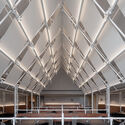
The integration of scaffolding into permanent or semi-permanent interiors highlights a growing awareness of material circularity and resource efficiency within the design community. As the architecture and interior design sectors grapple with the environmental toll of demolition and waste, adopting systems that are inherently designed for disassembly offers a compelling alternative. Scaffolding components do not require specialized cutting, custom fabrication, or permanent bonding agents like mortar and heavy adhesives during installation. They are bolted, clamped, and wedged together, meaning they can be uninstalled with absolute pristine reversibility. Once a retail pop-up closes, a restaurant undergoes a brand refresh, or a market hall shifts its layout, the scaffolding framework can be completely disassembled and returned to an industrial rental pool or reconfigured into an entirely new spatial configuration elsewhere.
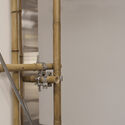
This adaptive reuse model directly addresses the rapid turnover typical of commercial interiors. Retail environments, restaurants, and exhibition spaces are notoriously ephemeral, frequently experiencing complete interior overhauls every few years to stay relevant to market trends. Utilizing industrial scaffolding as the core skeletal framework of these spaces reduces the demand for bespoke millwork and single-use construction materials that typically end up in landfills during a renovation cycle. Instead, the raw structure acts as a flexible armature capable of supporting lighting, display shelves, seating platforms, and spatial partitions that can shift and evolve alongside the programmatic needs of the tenant.
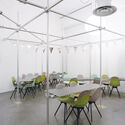
Furthermore, the aesthetic presentation of scaffolding within high-end interior spaces introduces a deliberate tension between the rough and the refined. In projects like the Jinhui Restaurant in Shanghai or the atmos BLUE store in Tokyo, the utilitarian, industrial nature of galvanized steel tubing is juxtaposed against sophisticated lighting, polished merchandise, or refined dining environments. This architectural dialogue elevates a material typically associated with urban grit and industrial labor into a deliberate design statement. It calls attention to the underlying mechanics of construction and spatial organization, laying bare the joints, fasteners, and modular grids that usually remain hidden behind architectural finishes.

Ultimately, the exploration of scaffolding as interior architecture prompts a broader re-evaluation of how the built environment measures durability. By shifting the focus away from permanent materials that resist change through sheer mass and rigidity, designers are embracing systems that endure precisely because they are built to be dismantled, reconfigured, and continually reimagined. Through this lens, the temporary nature of scaffolding ceases to be a limitation and instead becomes a blueprint for a more adaptable, circular, and resource-conscious approach to interior design.