In a development that could significantly accelerate the advancement of next-generation quantum technologies, researchers at the Max Planck Institute for the Science of Light (MPL) in Germany have achieved a major breakthrough in quantum physics. For the first time, a scientific team has successfully demonstrated that individual molecules attached directly to a solid surface can reach the ultimate quantum limit of optical coherence. This milestone overcomes a formidable experimental obstacle that has restricted molecular quantum research for decades, opening up entirely new pathways for investigating nanoscale interactions and designing advanced quantum hardware.
The groundbreaking findings, which represent the culmination of meticulous experimental design and deep theoretical understanding, have been published in the prestigious scientific journal Science. By solving the persistent problem of surface-induced noise and instability, the MPL researchers have unlocked fresh possibilities for exploring how individual molecules interact with their immediate physical environments and how those interactions can be harnessed for quantum computing and secure communication systems.
Why Surfaces Have Been a Major Obstacle in Quantum Physics
To appreciate the significance of the MPL team’s achievement, it is necessary to examine the foundational requirements of modern quantum technologies. Many emerging applications in this rapidly expanding field rely on extremely small physical systems, such as individual atoms and molecules, that are capable of interacting strongly with light. Frequently referred to as quantum emitters, these tiny systems possess unique capabilities: they can produce single particles of light, known as photons, store delicate packets of quantum information, and help establish robust quantum connections between otherwise distant physical systems. These core capabilities are widely regarded as indispensable prerequisites for the realization of scalable quantum computers and ultra-secure quantum communication networks.
However, studying and utilizing a single quantum emitter is an extraordinarily delicate task. To observe and harness quantum behavior, scientists must keep the emitter exceptionally stable and confined precisely to one location for extended periods. Historically, researchers have accomplished this challenging feat by isolating atoms or molecules either by trapping them in a high vacuum or by embedding them deeply inside solid-state host materials. While these traditional methods provide the necessary isolation, they also introduce severe limitations regarding accessibility and manipulation.
Placing quantum emitters directly on an exposed surface, by contrast, offers a deeply intriguing advantage for experimentalists. If molecules could be maintained in a pristine quantum state on a surface, scientists could potentially manipulate individual molecules directly by "touching" them with an extremely sharp physical probe. Advanced microscopy techniques, such as scanning tunneling microscopy (STM) and atomic force microscopy (AFM), already utilize specialized tips with atomic-level precision to investigate matter at astonishingly small scales. Combining these powerful microscopy tools with stable quantum emitters would give researchers unprecedented local control over quantum states.
The fundamental difficulty, however, has always been that real-world surfaces are rarely as clean, uniform, and stable as delicate quantum experiments demand. Contaminants, dust particles, and chemical residues from the surrounding environment inevitably accumulate on surfaces over time, creating local electrical and mechanical disturbances. These environmental fluctuations interfere severely with the fragile quantum behavior of nearby atoms and molecules, causing their quantum states to degrade almost instantly. Until now, researchers around the world had struggled continuously to preserve the sensitive quantum optical properties of individual emitters when those emitters were attached directly to surfaces.
Scientists in the Nano-Optics Division at the Max Planck Institute for the Science of Light have now found an ingenious way around this long-standing bottleneck.
A Clever Crystal Cleaning Method Solves the Problem
The successful resolution of this environmental instability came from an unexpected direction. The research team, led by Professor Vahid Sandoghdar, director at MPL and head of the Institute’s Nano-Optics Division, developed an unconventional cleaning method that cleverly exploits a natural physical property characteristic of organic crystals.
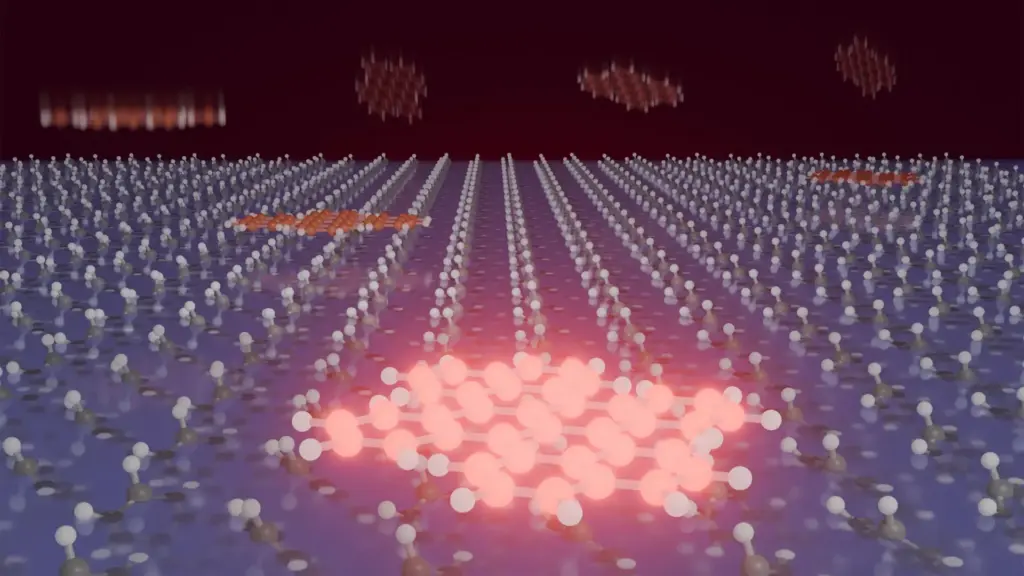
At room temperature, the specific crystal material chosen by the team gradually evaporates through a well-known thermodynamic process called sublimation, in which a solid transforms directly into a gaseous state without first passing through an intermediate liquid phase. The researchers harnessed this natural evaporation process by placing a small, carefully prepared crystal inside a specialized ultra-high vacuum chamber equipped for extreme low-temperature conditions, known as a cryostat. As the uppermost molecular layers of the crystal slowly and continuously evaporated away into the vacuum, they carried along with them any unwanted surface contaminants and impurities, effectively self-cleaning the crystal and leaving behind a remarkably pristine surface.
To halt this continuous evaporation once the surface had attained the desired level of cleanliness, the team rapidly cooled the crystal down to just a few degrees Kelvin above absolute zero, representing the lowest temperature theoretically possible in the universe. This extreme cryogenic cooling instantly halted further sublimation and locked the crystal in a state of absolute structural stability, thereby preserving the newly created, ultra-clean surface over extended periods.
With the pristine surface successfully stabilized within the cryogenic environment, the scientists utilized a tiny, specially fabricated micro-oven to gently evaporate target molecules onto the cold crystal. This precision deposition process allowed the molecules to settle softly onto the immaculate surface without introducing thermal shocks or structural defects, setting the stage for the crucial optical measurements.
Molecules Reach the Ultimate Quantum Limit
With this exceptionally quiet and stable experimental environment successfully established, the researchers set out to investigate whether the newly deposited molecules successfully retained their fragile quantum properties. The primary metric for evaluating this capability involves examining the coherence times of the emitters.
As Dr. Alexey Shkarin, a researcher in the Nano-Optics Division at MPL, explained during a discussion of the findings, the quality of quantum emitters can be evaluated directly by their coherence times, which indicate precisely how long they manage to keep their quantumness. Coherence time describes the duration for which a quantum system can maintain the delicate phase relationships and superposition properties essential for quantum behavior. The longer this coherence persists without disruption, the better the emitter can perform in demanding applications that depend on precise, controlled interactions with light.
However, fundamental laws of physics impose a strict restriction on how long quantum coherence can possibly last. Known universally as the Fourier limit, this absolute physical boundary is strictly determined by the natural time required for a quantum emitter to release its stored energy into its surrounding environment. In a typical, unstable, or "noisy" experimental environment, environmental disturbances and stray electromagnetic fields cause quantum coherence to decay hundreds or even thousands of times faster than this theoretical Fourier limit permits, rendering the quantum information useless.
When the MPL scientists analyzed the molecules deposited on their exceptionally clean crystal surface, they made a thrilling discovery: the molecules consistently reached the absolute Fourier limit. This empirical result demonstrated conclusively that the surrounding cryogenic environment was sufficiently quiet, clean, and stable to preserve the molecules’ quantum coherence for the maximum physically permitted duration. It marks the first time in the history of physics that researchers have successfully achieved this fundamental limit with molecules attached directly to a solid surface.
New Possibilities for Controlling Individual Molecules
Beyond validating a new experimental technique, the breakthrough also provided the research team with an unprecedented opportunity to investigate in detail how a crystalline surface influences the individual molecules resting upon it. By analyzing the optical and spectroscopic data gathered during their experiments, the team discovered that interactions with the underlying surface can cause molecules to align themselves in particular, predictable directions and can noticeably alter their internal energy levels. Furthermore, the researchers uncovered intriguing indications that the surface might actively influence the physical shapes of the molecules or subtly modify the ways in which they vibrate.
These profound insights could provide valuable clues regarding how matter behaves fundamentally at the molecular scale, while simultaneously offering novel opportunities for engineering and controlling complex quantum systems. The implications extend far beyond basic physics, pointing toward practical applications in nanotechnology and quantum engineering.
Looking ahead, the research group is already preparing the next steps in their experimental program. According to Professor Vahid Sandoghdar, future work will focus heavily on combining this innovative ultra-clean surface technique with advanced scanning probe methods such as atomic force microscopy and scanning tunneling microscopy. By uniting these disciplines, the team hopes to gain local nanometer-scale control over individual quantum emitters, allowing researchers to manipulate molecular quantum systems with a precision measured in billionths of a meter.
Such advanced capabilities could soon reveal previously inaccessible microscopic details concerning the fundamental interactions between individual molecules and solid surfaces. At the same time, this powerful combination of techniques lays a solid foundational groundwork for engineering entirely new quantum states of matter and advancing the development of future molecular quantum technologies.