Scientists have uncovered a groundbreaking mechanism that allows certain experimental metal alloys to withstand extreme cold without becoming dangerously brittle. Published in the prestigious journal Nature, the discovery challenges decades of established metallurgical theory regarding how metals behave under cryogenic conditions and provides engineers with a vital roadmap for designing ultra-tough materials capable of surviving the harshest environments imaginable.
The international research team behind the discovery brought together experts from the University of California, Berkeley, the Lawrence Berkeley National Laboratory, and the University of Oxford, alongside collaborators from several other global institutions. Their findings center on a previously unknown microscopic process that enables two specific niobium-titanium metal alloys to remain remarkably damage-tolerant at a punishing 20 kelvin, which translates to -253 degrees Celsius or -424 degrees Fahrenheit—a temperature approaching absolute zero.
Why Extreme Cold Makes Some Metals Brittle
Under ordinary circumstances, cooling a metallic material tends to increase its overall strength. However, this mechanical enhancement frequently introduces a severe drawback: many structural metals experience a sharp ductile-to-brittle transition as temperatures plummet. Instead of bending, flexing, or absorbing physical shocks under heavy pressure, these compromised materials become fragile and prone to catastrophic fracturing.
This vulnerability is particularly pronounced in a vital family of structural substances known as body-centered cubic metals, which include industrial workhorses like iron, tungsten, and chromium. These materials derive their name from their atomic architecture, where atoms are arranged in a specific crystal lattice pattern that leaves them highly susceptible to brittle failure when exposed to extreme cold. As ambient temperatures drop toward absolute zero, tiny localized micro-cracks that would normally be safely accommodated by the metal changing its shape instead propagate rapidly across the structure, triggering sudden and complete fractures.
However, the research team observed that two experimental alloys composed of niobium and titanium bucked this traditional metallurgical trend entirely. Even when thoroughly chilled to -253 degrees Celsius, both materials retained an extraordinary capacity to withstand physical damage without fracturing. Crucially, neither alloy exhibited any measurable shift toward brittle behavior, even at the lowest test temperatures. The secret to this resilience lay in a surprising adaptation in how the materials reacted to mechanical stress, opting for an entirely unconventional microscopic response rather than relying on standard deformation pathways.
A Hidden Mechanism Helps Metals Resist Cracking
To understand why these niobium-titanium alloys performed so exceptionally well, researchers had to look deep into the microscopic realm. Under normal operating conditions, body-centered cubic metals bend and alter their shape through the movement of minute structural imperfections within their crystal lattices. These tiny defects, known technically as dislocations, allow distinct layers of atoms to glide relative to one another. This sliding motion absorbs incoming mechanical stress and prevents the material from cracking under load.
As temperatures approach cryogenic extremes, however, these dislocations become increasingly immobile, locking the atomic layers into rigid positions. With fewer internal mechanisms available to accommodate the intense forces concentrated around a developing micro-crack, the metal loses its flexibility and breaks.
The newly studied alloys bypass this limitation by employing an alternative defense strategy. When subjected to stress at cryogenic temperatures, the researchers observed a phenomenon called nanoscale twinning. During this process, microscopic sections of the metal’s crystal structure spontaneously rearrange themselves into precise mirror-image patterns. This structural shifting occurs simultaneously with a localized phase transformation, altering the fundamental arrangement of the crystal structure itself.
As these newly formed microscopic regions expand and collide with the internal boundaries separating neighboring crystals, they generate localized zones of high stress. Rather than causing structural failure, these concentrated stress areas stimulate the creation of brand-new dislocations. This unexpected cascade provides the metal with fresh, alternative opportunities to deform and absorb energy rather than succumbing to brittle fracture.
The research team compares this dynamic behavior to a complex road network finding alternative routes when its primary highways are abruptly blocked by ice. Just as extreme cold renders conventional dislocation movement nearly impossible, these newly induced crystal structures and fresh deformation pathways allow the material to successfully route and dissipate mechanical stress, preventing catastrophic structural failure.
A Breakthrough for Metals Used in Extreme Environments
The implications of this discovery extend far beyond the laboratory, offering a fundamentally new paradigm for developing structural metals capable of operating reliably in exceptionally cold settings. Such robust materials hold immense value for advanced energy systems, specialized transportation networks, and aerospace engineering, where critical components frequently face extreme thermal fluctuations and harsh environmental conditions.
Professor Dong Liu, the corresponding author from the Department of Engineering Science at the University of Oxford, highlighted the significance of the findings for future alloy design. For decades, the ductile-to-brittle transition has been regarded as an immutable physical limitation inherent to body-centered cubic metals. The realization that specific alloys can maintain damage tolerance at 20 kelvin through a synchronized combination of twinning and phase transformation opens an entirely new pathway for structural engineering. This class of materials is expected to prove invaluable for components that must endure both extreme heat and extreme cold within a single application.
The discovery also forces a reassessment of the underlying factors that dictate brittleness in metals. Historically, metallurgical research has focused primarily on how easily existing defects can travel across a material’s internal structure. The new data indicate that the capacity to generate entirely fresh defects at internal boundaries may be just as critical to maintaining structural integrity.
Dr. David Cook, the lead author of the study who conducted the research while at the University of California, Berkeley and is now at the University of Cambridge, noted that the results challenge traditional assumptions governing brittleness. While past efforts concentrated heavily on the mobility of pre-existing dislocations, the new findings show that the ability to synthesize new dislocations at interfaces is equally vital. By leveraging these insights, engineers may soon be able to engineer underlying microstructural conditions that empower a material to forge its own pathways to ductility under extreme thermal duress.
How Scientists Tested Metals at -253°C
Investigating the mechanical properties of these experimental alloys under such punishing conditions required highly specialized equipment and experimental techniques. The international team conducted their primary tests using the Engin-X instrument, located at the ISIS Neutron and Muon Source facility in Oxfordshire, United Kingdom.
To recreate the deep-freeze conditions of outer space, the researchers utilized controlled streams of gaseous helium to chill the metal samples down to approximately -253 degrees Celsius. While maintaining these cryogenic temperatures, the team directed a focused beam of neutrons through the interior of the materials while simultaneously employing a specialized testing apparatus to stretch the samples from opposing ends.
This sophisticated experimental setup enabled the team to precisely measure the mechanical loads the alloys could sustain and determine their exact elongation limits prior to failure. Furthermore, the neutron measurements provided real-time data regarding the internal atomic adjustments occurring within the metals as they underwent mechanical deformation.
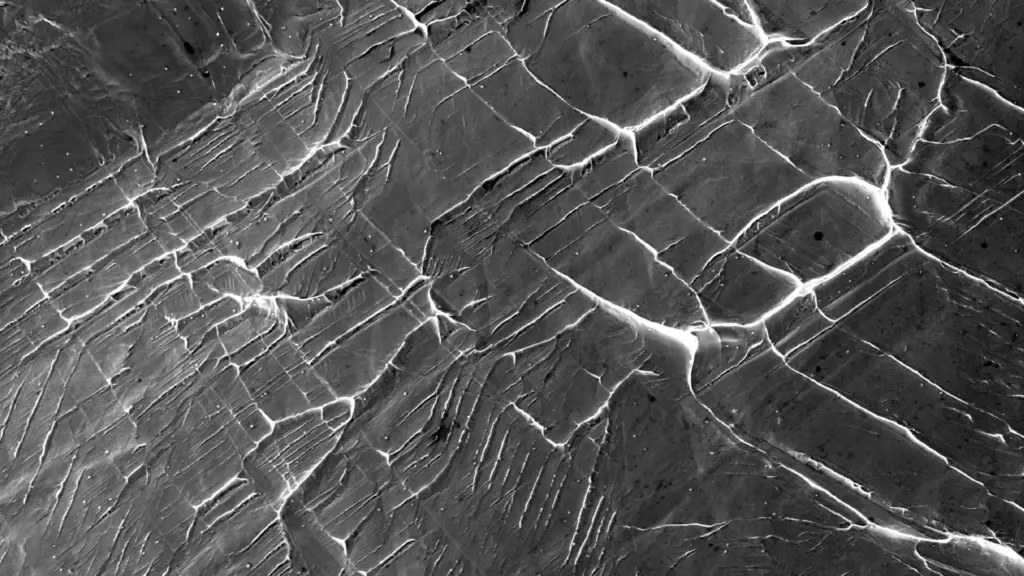
Following the physical stress tests, the scientists subjected the fractured and deformed samples to rigorous examination using advanced electron microscopes. These powerful imaging instruments exposed minute structural shifts occurring deep within the metal, particularly around microscopic crack tips, shedding light on the precise mechanisms driving the alloys’ exceptional damage resistance.
To gain a complete picture, the research team also utilized atom-probe tomography to map the exact distribution of individual chemical elements throughout the alloy structures. When combined with comprehensive computer modeling, these high-resolution measurements allowed the scientists to construct a clear model of how multiple microscopic processes cooperate to preempt brittle failure.
Ultimately, the findings deliver much more than a scientific explanation for the unique performance of two experimental alloys. They establish a viable, highly promising strategy for engineering structural metals that remain tough and ductile long after conventional deformation mechanisms have failed, thereby expanding the technological horizons for industries operating at the absolute extremes of temperature.
The international research collaboration included scientists and specialists from the University of California, Berkeley; Lawrence Berkeley National Laboratory; the University of Oxford; the University of Bristol; the ISIS Neutron and Muon Source within the Science and Technology Facilities Council; the University of California, Irvine; Pacific Northwest National Laboratory; Texas A&M University; and Nanyang Technological University in Singapore.