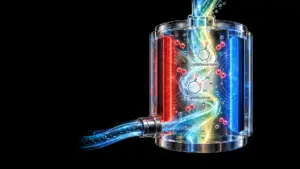
Imagine a universe where stars still shine with brilliant light, planets still form around distant suns, and vast oceans of water exist in abundance. Yet, despite holding all the correct chemical ingredients necessary for life, this hypothetical cosmos remains entirely sterile. The reason has nothing to do with chemistry, but rather with physics: the liquids in this universe are so thick and viscous that living cells can barely function, rendering biological processes impossible before they even begin.
This striking scenario is at the center of a remarkable new connection uncovered by scientists, bridging the gap between the fundamental laws of physics and the absolute biological limits required for life to exist. Their findings suggest that even remarkably small, seemingly insignificant changes to some of the universe’s most basic physical constants could dramatically alter how liquids flow throughout space and within organisms. Such shifts could easily prevent the essential biological processes required for survival from ever taking place.
The discovery, detailed in a study published in the scientific journal Science Advances, was spearheaded by physicist Kostya Trachenko at Queen Mary University of London. Through rigorous theoretical analysis, Trachenko identified an additional and crucial constraint on the values of fundamental physical constants: they must permit liquids to move in specific, regulated ways that actively support life both within and between biological cells.
This profound work raises an enduring, deeply philosophical question about the nature of our universe: Why do the fundamental laws of nature possess values that appear so remarkably well-suited to the existence of life?
The Fundamental Constants That Shape Our Universe
Fundamental physical constants are the fixed numbers that govern how the universe operates at its most microscopic and macroscopic levels. Prominent examples include the mass and electric charge of an electron, as well as the Planck constant, which plays a central role in quantum mechanics—the branch of physics that describes matter and energy at extremely small scales.
These quantities are generally considered universal, stable, and unchanging over the span of cosmic time. Their values influence nearly everything in the physical world, from the behavior of atoms and chemical bonds to the fierce nuclear reactions that power stars and forge the heavy elements essential for life.
Despite their critical importance to reality, scientists still do not fully understand why these constants possess the particular values we observe in our universe. However, an important clue emerged in 2020, when Trachenko and his research colleagues demonstrated that fundamental physical constants place a strict lower limit on the viscosity of liquids.
Viscosity describes how strongly a fluid resists flowing. Water, for instance, has a relatively low viscosity and pours easily out of a container, whereas honey and tar are much more viscous and move sluggishly. The researchers showed that there is a fundamental limit to how freely any fluid can flow, with that absolute limit ultimately connected to the basic constants of nature.
Subsequent work took this physical connection much further by examining its direct implications for biology.
Why Tiny Changes to Physics Could Make Life Impossible
Every living cell depends heavily on the continuous movement of molecules. Vital nutrients must reach the exact places where they are needed, waste products must be efficiently transported away, and countless chemical reactions must occur seamlessly within a liquid environment.
Another vital biological process is diffusion, which is the natural, random spreading of particles through a fluid. Diffusion helps molecules navigate inside cells and enables many of the complex chemical interactions required to sustain life.
If the viscosity of those biological fluids were to change even slightly, these essential processes could become severely disrupted. Liquids that were overly thick might prevent vital materials from moving efficiently, while excessively low viscosity could also interfere with the controlled, orderly flow necessary for delicate biological functions.
Trachenko explained the surprising connection in stark terms, noting that understanding how water flows in an ordinary cup turns out to be intimately related to the grand challenge of figuring out fundamental constants. Life processes in and between living cells require motion, and it is viscosity that ultimately sets the physical properties of this motion.
If fundamental constants were to change, viscosity would change as well, directly impacting life as we know it. For example, if water were suddenly as viscous as tar, life could not exist in its current form, or perhaps might not exist at all. This physical reality applies far beyond water, meaning all conceivable life forms utilizing the liquid state to function would be profoundly affected.
The implications easily extend beyond water. Although all known life on Earth depends entirely on water, hypothetical organisms evolving elsewhere in the universe might theoretically rely on entirely different liquids. Nevertheless, the same fundamental physical constraints would still dictate how those alien liquids behave.
Trachenko suggested that the range of constants compatible with cellular life could be surprisingly narrow. Any change in fundamental constants—including an increase or a decrease—would be equally detrimental to fluid flow and to liquid-based life. Researchers expect this viable window to be quite narrow; for instance, the viscosity of human blood would become far too thick or far too thin for normal body functioning with just a few percent change in some fundamental constants, such as the Planck constant or the electron charge.
These sweeping predictions currently stem from theoretical models rather than laboratory experiments in which scientists actively manipulated fundamental constants. Consequently, the precise limits that different biological forms of life could tolerate remain uncertain.
A Cosmic Mystery Billions of Years in the Making
What makes these findings especially intriguing is that the very same fundamental constants that influence liquid flow also govern the nuclear reactions responsible for creating heavy elements inside stars. Long before the first living cells ever appeared on Earth, ancient stars were already producing elements such as carbon and oxygen that would eventually become fundamental components of living organisms.
Physicists have long investigated whether the constants governing these nuclear processes must fall within certain precise ranges for complex matter to exist at all. Yet, the sheer ability to create life’s chemical ingredients does not automatically guarantee that life can actually function once those ingredients assemble.
Trachenko’s analysis revealed that some physical properties governing liquid flow could theoretically change without disrupting the specific combinations of constants needed to produce heavy nuclei in stars. In other words, a hypothetical universe might still successfully produce all the chemical elements necessary for life while simultaneously possessing liquids so viscous that cellular processes could never operate.
This means the physical conditions needed to support life may involve far more than the simple ability to form stable stars, rocky planets, and complex chemistry. The fundamental physical properties of liquids could impose entirely additional, stringent requirements on the universe’s basic constants.
Follow-Up Research Reveals a Surprising Connection to Blood
The scientific investigation continued well beyond the initial discovery. In a follow-up study published in January 2025 in The European Physical Journal E, Trachenko and his colleagues examined how fundamental physical constants influence much more complicated biological fluids, particularly blood.
Unlike simple water, blood is a complex mixture containing plasma, red blood cells, platelets, and various other suspended components. Its overall viscosity depends not only on basic molecular properties, but also on how these various microscopic components interact with one another.
For instance, red blood cells can form temporary clusters that increase resistance to flow. As the blood moves faster through vessels, those clusters can break apart, allowing the fluid to flow more easily. This dynamic behavior makes blood considerably more complicated than a simple homogeneous liquid.
Yet, the researchers found something unexpected. Despite the enormous complexity of blood and the relatively large size of red blood cells, its viscosity remains surprisingly close—on a fundamental physical scale—to a theoretical value derived strictly from basic physical constants.
The team proposed that interactions between closely spaced blood cells may help explain this connection. Even though red blood cells are vastly larger than individual atoms, the forces acting where their outer surfaces approach one another involve distances small enough for molecular and quantum effects to truly matter.
The 2025 analysis also emphasized an important complication. Estimating which fundamental constants are truly compatible with life requires accounting for both the intrinsic properties of liquids, which are determined by fundamental physics, and the additional effects created by complex interactions among cells and molecules. These findings offer a more detailed framework for investigating the deep connection between the universe’s basic physical properties and the biological processes that depend upon them.
Could the Laws of Physics Have Evolved?
The research also points toward an even deeper mystery: Why do the fundamental constants possess values that allow so many different physical processes to work together in such harmonious balance?
One speculative possibility raised by Trachenko is that multiple forms of fine-tuning may be involved in shaping our reality. The values that allow stars to manufacture heavy elements and those that permit liquids to support cellular life may represent completely separate requirements imposed on the cosmos.
He suggested an intriguing analogy with biological evolution, in which different useful characteristics can emerge and persist through separate, distinct processes. Perhaps some broader evolutionary principle could eventually help explain how nature arrives at combinations of physical properties capable of supporting stable structures and increasingly complex systems.
For now, this remains a conjecture. Scientists have not established that fundamental constants evolve through any such mechanism, nor have they definitively determined why those constants possess their observed values.
Still, the connection between liquid flow and fundamental physics opens another promising way to investigate one of science’s biggest unanswered questions. Something as ordinary as water moving through a glass, or blood circulating steadily through the body, may ultimately hold vital clues to why the universe possesses the precise physical properties that make life possible.