
When it comes to securing property boundaries and building robust outdoor enclosures, industry standards point toward a time-tested technique: setting wooden fence posts directly in concrete. While alternative anchoring methods, such as metal post spikes, offer speed and temporary convenience, construction experts emphasize that concrete provides a significantly firmer and more reliable foundation, particularly in regions characterized by loose or light soil compositions.
Property owners embarking on fencing improvements are being advised, however, to account for the additional time investment required when utilizing concrete. Because the material must cure and set properly to achieve maximum structural integrity, incorporating concrete into a fencing project typically extends the overall completion timeline by several days.
Achieving professional results requires careful preparation, starting with the selection of materials and tools. Contractors and DIY builders generally rely on a narrow spade or large trowel for excavation, a spirit level to ensure vertical alignment, and the essential components for concrete production: gravel, sand, and cement. Additionally, applying a quality wood preservative is widely recommended to protect the timber from premature environmental decay.
Choosing and Treating Wooden Fence Posts
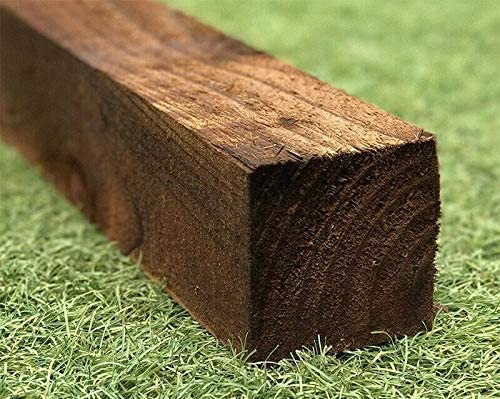
Before any excavation begins, careful attention must be given to the timber itself. To maximize the lifespan of both the posts and the attached panels, building specialists recommend sourcing pressure-treated softwood. For projects requiring the highest degree of longevity, heartwood—derived from the dense inner core of the tree—is considered the superior choice, though it generally commands a higher price point than sapwood alternatives.

Dimensions also play a critical role in structural stability. Standard residential fencing often reaches a height of six feet, or roughly 1.83 meters. To ensure the structure can withstand heavy winds and lateral pressure, industry guidelines dictate that the buried portion of the post must equal approximately 25 percent of the total length, necessitating posts of around eight feet, or 2.4 meters, in total length.
Regardless of the timber grade selected, preventative measures against rot are essential. Builders are advised to coat at least the lower section of the post—the portion that will be permanently subterranean—with a dedicated wood preservative and allow it to dry thoroughly before installation. Property owners frequently choose to treat the bottom edges of neighboring fence panels simultaneously to ensure comprehensive moisture protection across the entire boundary structure.
Digging The Fence Post Holes
Once the timber has been selected and treated, the layout phase commences with digging the post holes. The precise spacing between each hole is dictated primarily by the dimensions of the fence panels being installed, which standardly measure six feet in width. Careful and accurate measurement of the panels ensures that the gaps between excavated post holes match the manufactured requirements of the fencing system, preventing alignment issues during final assembly.
Mixing the Concrete for the Post Holes
When the time arrives to anchor the posts, builders face a choice regarding material preparation. For minor repairs or projects involving only one or two posts, ready-mix products—often marketed as post-mix—offer notable convenience and simplicity. These dry blends allow workers to position the post, pour the mix into the hole, and add water directly, simplifying the process for small-scale tasks.
Conversely, for extensive fencing projects requiring numerous holes, mixing raw components on-site is frequently more practical and cost-effective. Traditional site-mixed concrete utilizes a standard volumetric ratio of one part cement, two parts sand, and three parts aggregate. While a mechanical cement mixer provides optimal consistency for large volumes, mixing can also be performed manually on a clean mixing board or within a heavy-duty wheelbarrow.
Experts stress that the resulting concrete mixture should remain relatively dry rather than sloppy or overly wet. A drier consistency provides superior initial mechanical support, holding the wooden post firmly in place while the cement hardens, whereas a wet mixture can allow the post to shift out of alignment before curing takes place.
Setting the Fence Posts in Concrete
The final phase involves positioning the timber and pouring the concrete foundation. Having additional labor on hand to hold the post steady and shovel the material significantly streamlines the process. As the concrete is placed around the base of the timber, workers continuously check the alignment using a spirit level to guarantee the post remains perfectly plumb before the binding material sets. With proper execution, this method establishes a permanent, resilient boundary capable of withstanding years of environmental exposure.