As the global design industry looks toward the future of architecture and interior spaces, ceramic tile is taking on an increasingly expansive and transformative role in the built environment. Shaped by a sophisticated interplay of materiality, time-honored craftsmanship, and cutting-edge technology, the ceramic sector continues to redefine what surfaces can achieve. At Cersaie 2026—the International Exhibition of Ceramic Tile and Bathroom Furnishings held in Bologna, Italy—more than 70 ceramic tile manufacturers representing the Spanish sector gathered to introduce their latest collections and explore the powerful design forces that will shape residential and commercial interiors in the year ahead.
Spain’s robust presence at the exhibition reflected an industry successfully balancing advanced manufacturing capabilities with a renewed appreciation for craftsmanship, tactile expression, and material authenticity. As the second-largest exhibiting group at the international event, trailing only the host country of Italy, Spanish manufacturers showcased how modern technology can dramatically expand the creative potential of ceramic materials through innovative new surfaces, unconventional formats, and diverse architectural applications.
From warmer color palettes and deeply expressive textures to supersized formats and contemporary interpretations of historic design materials, the latest collections from exhibiting Spanish brands reveal a comprehensive design language that is simultaneously deeply rooted in tradition and boldly forward-looking. Curated insights and trend forecasting from Tile of Spain highlight the key ideas and technical innovations emerging from Spain’s dynamic ceramic industry, pointing the way toward the defining aesthetics of 2027.
Warmed-up Neutrals
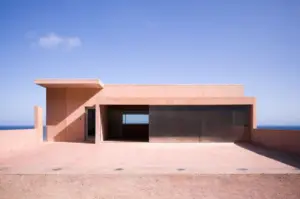
Warm, earthy hues are set to form the fundamental building blocks of ceramic color palettes in 2027, effectively stepping away from the cool whites and stark grays that have long defined contemporary and minimalist interiors. Spanish manufacturers are enthusiastically embracing deep creams, rich chestnut browns, and ruddy ochres. These welcoming tones introduce an immediate sense of comfort, spatial depth, and psychological warmth to interiors, while softened whites, muted grays, and deep blacks serve as sophisticated, layered accents rather than creating harsh, high-contrast boundaries.
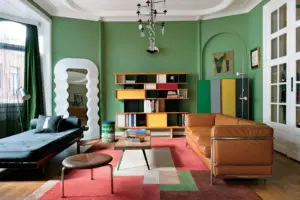
This overarching movement toward a warmer color spectrum is anything but subdued or monotonous. Instead, designers are pairing these grounded foundations with saturated moments of rich forest greens and deep ocean blues. The resulting environments feel deeply grounded, highly expressive, and exceptionally inviting, catering to a contemporary consumer desire for spaces that feel nurturing yet visually captivating.
Design Through the Ages
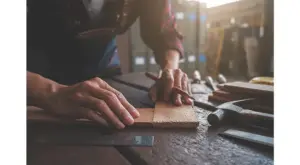
A profound sense of nostalgia, paired with a celebration of historic craftsmanship, is inspiring a widespread renewed interest in the defining design genres of the past. Mid-century modernism, seventies-inspired sculptural forms, Art Deco geometry, and the fluid, organic curves of Art Nouveau are all being reinterpreted through a distinctly contemporary lens. At the same time, handmade aesthetics continue to gather powerful momentum across the global market. Glazed ceramics, Mediterranean-inspired finishes, and Victorian-inspired subway tiles are working together to bring a distinct, artisanal character to sleek modern spaces.
References to natural materials are similarly evolving and maturing. Exhibiting brands introduced contemporary takes on cross-cut travertine, intricately veined limestone, and raw-finish wood looks heavily influenced by the clean, functional principles of Scandinavian and Japanese design. These historic and natural references demonstrate how modern ceramic production can honor the past while meeting the rigorous performance demands of modern living.
Supersized Formats
Large-format tile continues its rapid, unchecked expansion across both residential and commercial applications. Standard proportions are steadily shifting, with expansive 24-by-48-inch formats increasingly replacing traditional 12-by-24-inch tiles as the preferred choice for floors and walls. Furthermore, gauged porcelain slabs and oversized panels are gaining significant traction among architects and installers. As fabrication and installation expertise becomes more widespread globally, these massive panels are opening entirely new creative possibilities for continuous floors, expansive walls, striking architectural facades, and seamless custom countertops.
At the exact opposite end of the dimensional spectrum, small-format tile remains an enduring consumer and designer favorite. The ongoing resurgence of Zellige-inspired aesthetics continues to drive strong interest in compact square formats, intricate mosaic patterns, and rich artisanal compositions that celebrate individual tile variation.
The Tactile Surface
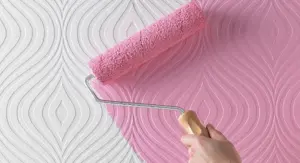
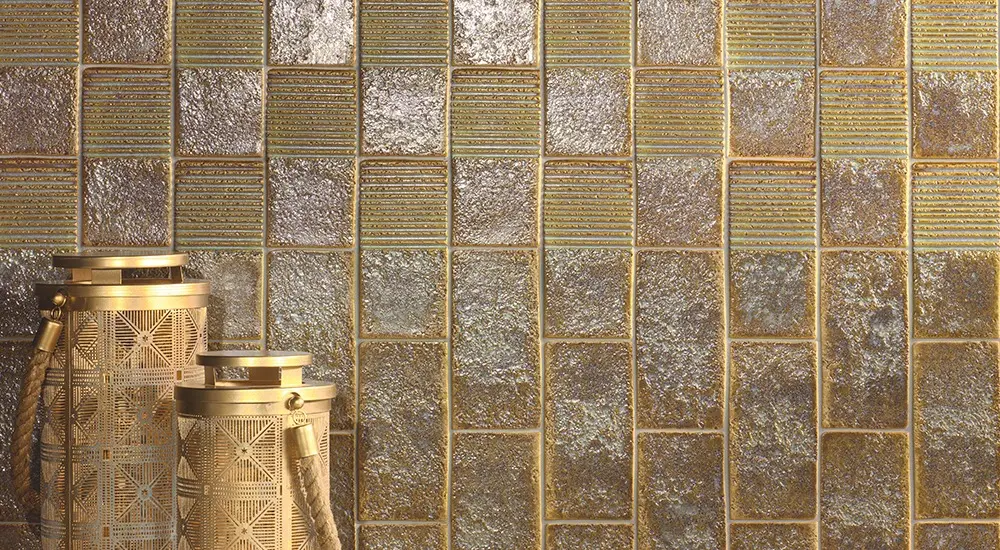
The physical surface of the tile is becoming an increasingly critical component of the overall sensory experience of interior architecture. High-gloss finishes are steadily giving way to sophisticated matte, honed, and satin surfaces that create a much softer, more nuanced visual language while actively inviting physical touch. Soft-touch glazes and complex three-dimensional reliefs—including precision fluting, deep carving, and subtle, undulating rippling—successfully transform tile from a flat architectural finish into a dynamic, multisensory element.
Advances in digital manufacturing technology are also allowing surface textures and intricate graphic details to work in absolute harmony. This technological leap has made it possible to produce wood and stone looks where the visual graphic pattern and the physical surface texture align with remarkable, lifelike precision. On floors, innovative micro-textured surfaces add another crucial layer of functional performance by significantly enhancing slip resistance without ever compromising the underlying aesthetic integrity of the design.
Soft Metallics
As interior ceramic palettes transition toward warmer tones, the companion architectural hardware and decorative metals are shifting right along with them. Burnished and brushed golds, as well as warm brass finishes, are rapidly emerging as the preferred design accents over cooler, industrial finishes like chrome and brushed nickel, making prominent appearances across plumbing fixtures, architectural lighting, and bespoke furniture.
Spanish ceramics are echoing this sophisticated shift through subtle golden details integrated directly into the tile bodies. These range from warm, golden veining embedded within marble-look slabs to shimmering metallic chips scattered across terrazzo designs and delicate golden grains woven into wood-inspired collections. Together, these complementary materials work to establish a cohesive, unified visual language, allowing ceramic surfaces and metallic accents to reinforce and elevate one another throughout an entire architectural space.