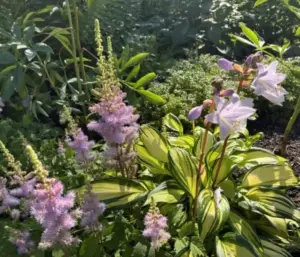
Welcome back to St. Paul, Minnesota, for Part 2 of Susan Warde’s vibrant garden tour within USDA Zone 5a. Earlier this week, Susan provided a gorgeous look at her landscape from late July straight through October, showcasing the rich textures and deep tones of the late season. Today, however, the journey rolls backward in time to explore spring and early summer, revealing what was growing, waking up, and blooming across her property from late May through July.
The transition from late spring into midsummer in Minnesota brings a dynamic shift in the landscape, characterized by emerging foliage, dramatic perennial flower shows, and, inevitably, a few unexpected gardening challenges. Taking a closer look at the progression of Susan’s back garden in late May reveals a tranquil, shaded sanctuary. At this early point in the season, wild cranesbill (Geranium maculatum, Zones 3–8) blooms in the upper left corner of the composition, standing out as one of the very few plants in active flower. Yet, even without a multitude of blossoms, the area boasts immense visual interest through its varied foliage. The dominant presence in this shady corner is the striking ‘Blue Ivory’ hosta (Hosta ‘Blue Ivory’, Zones 3–9), celebrated for its exceptional silver-blue and cream variegated leaves. Surrounded by a Japanese maple, delicate ferns, and the rich textures of the surrounding greenery, the space sets a cool, verdant tone for the season ahead.

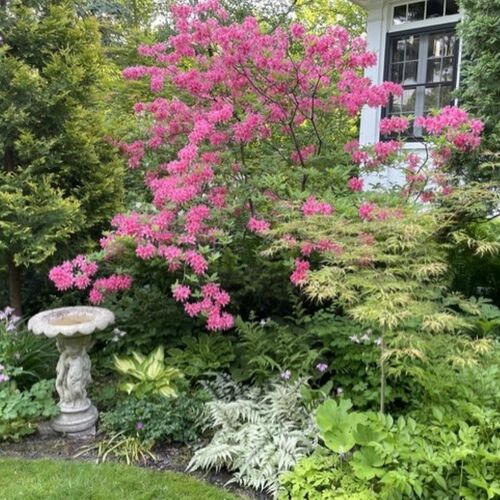
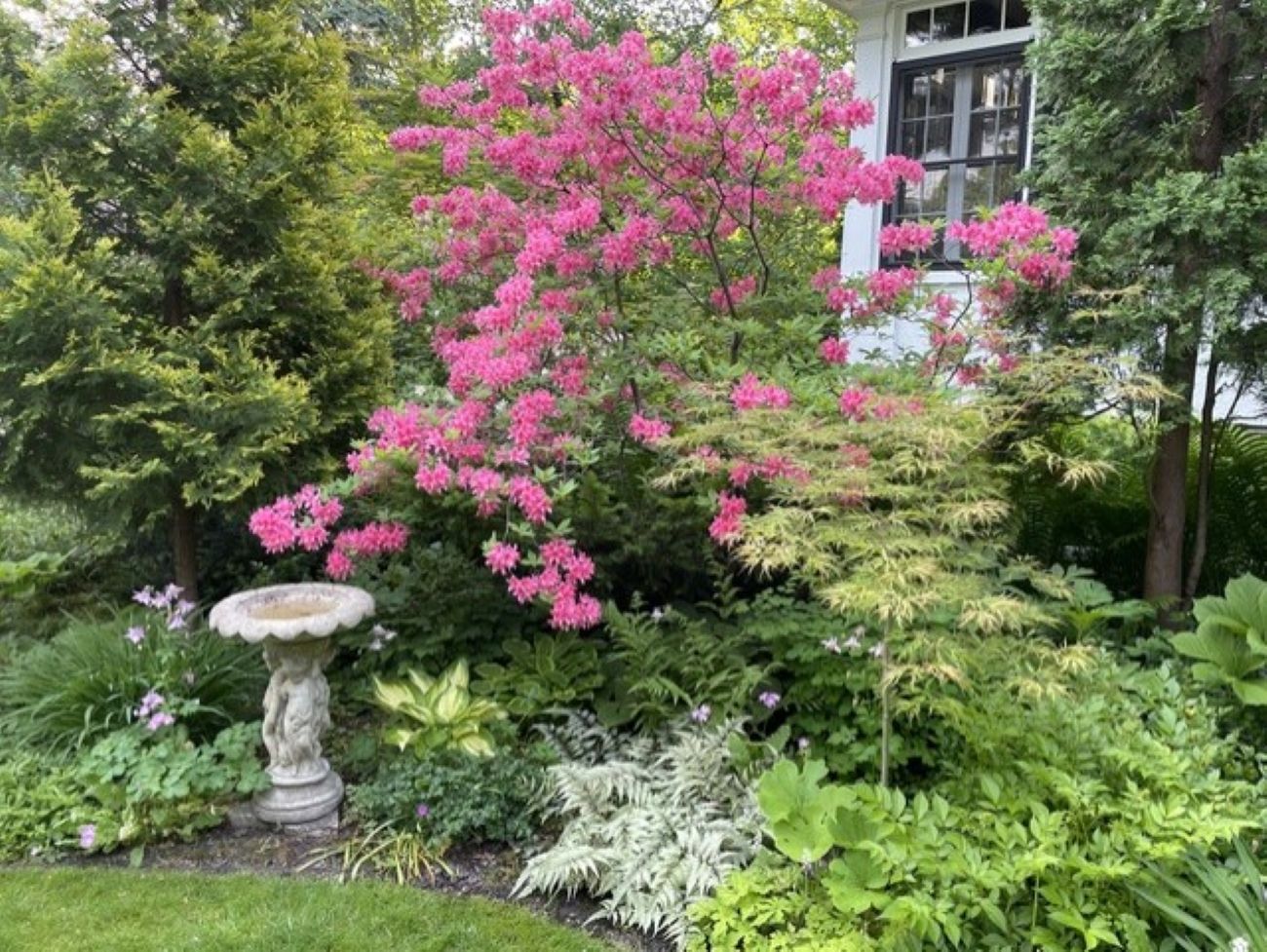
Moving to the front garden in late May, the color palette shifts dramatically as woody ornamentals take center stage. A prominent highlight is the pink-flowering ‘Rosy Lights’ azalea (Rhododendron ‘Rosy Lights’, Zones 3–7), a standout member of the renowned Northern Lights azalea series bred specifically to withstand harsh northern winters. Nestled within a layered front garden bed alongside a Japanese maple, additional hostas, ferns, and a welcoming stone birdbath, the blooming azalea introduces a burst of soft pink that anchors the springtime aesthetic.
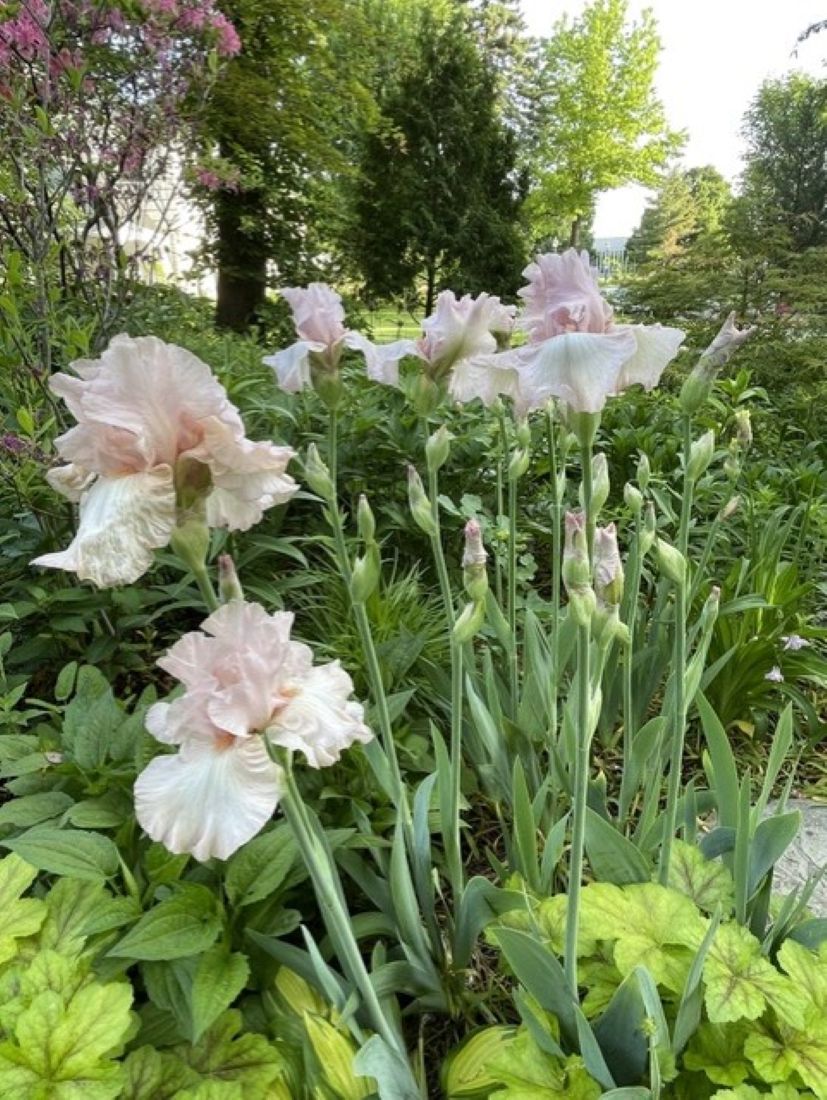
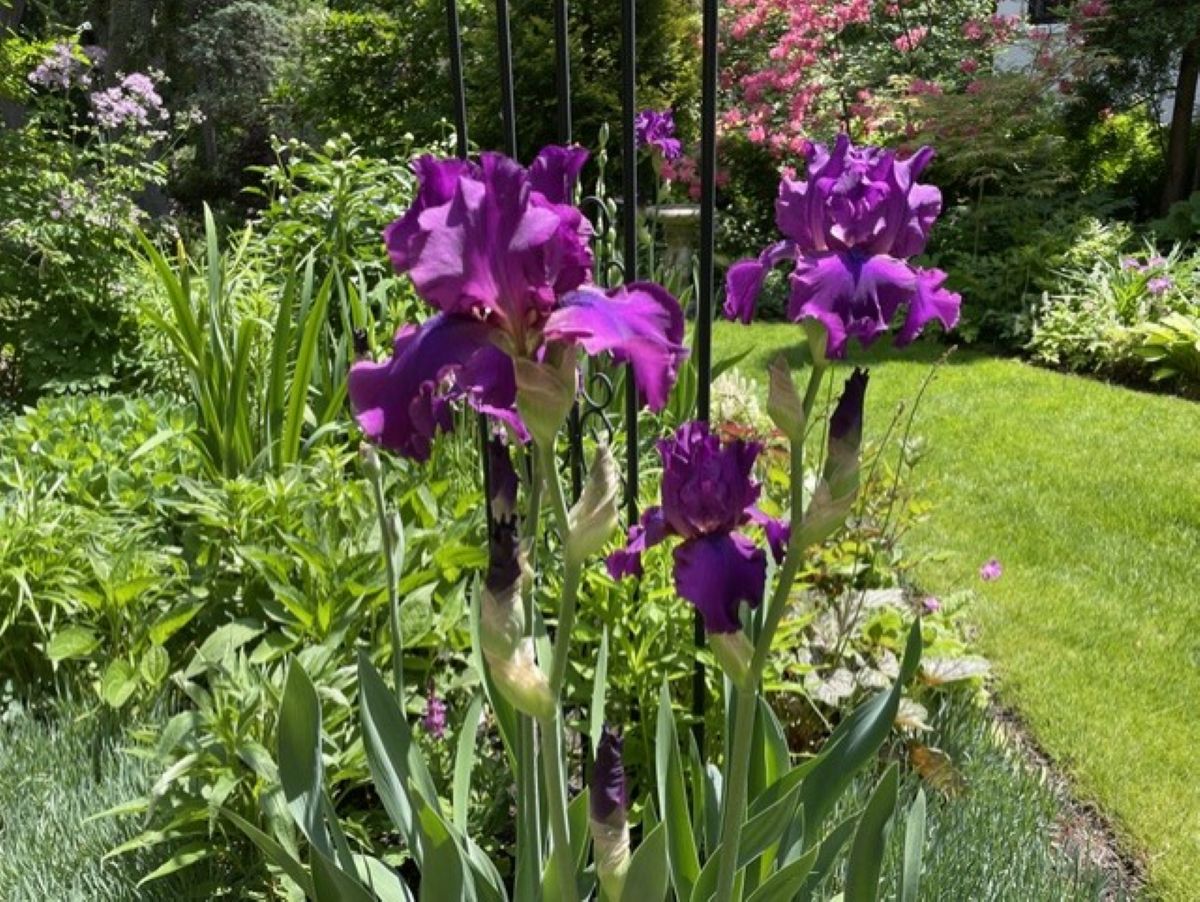
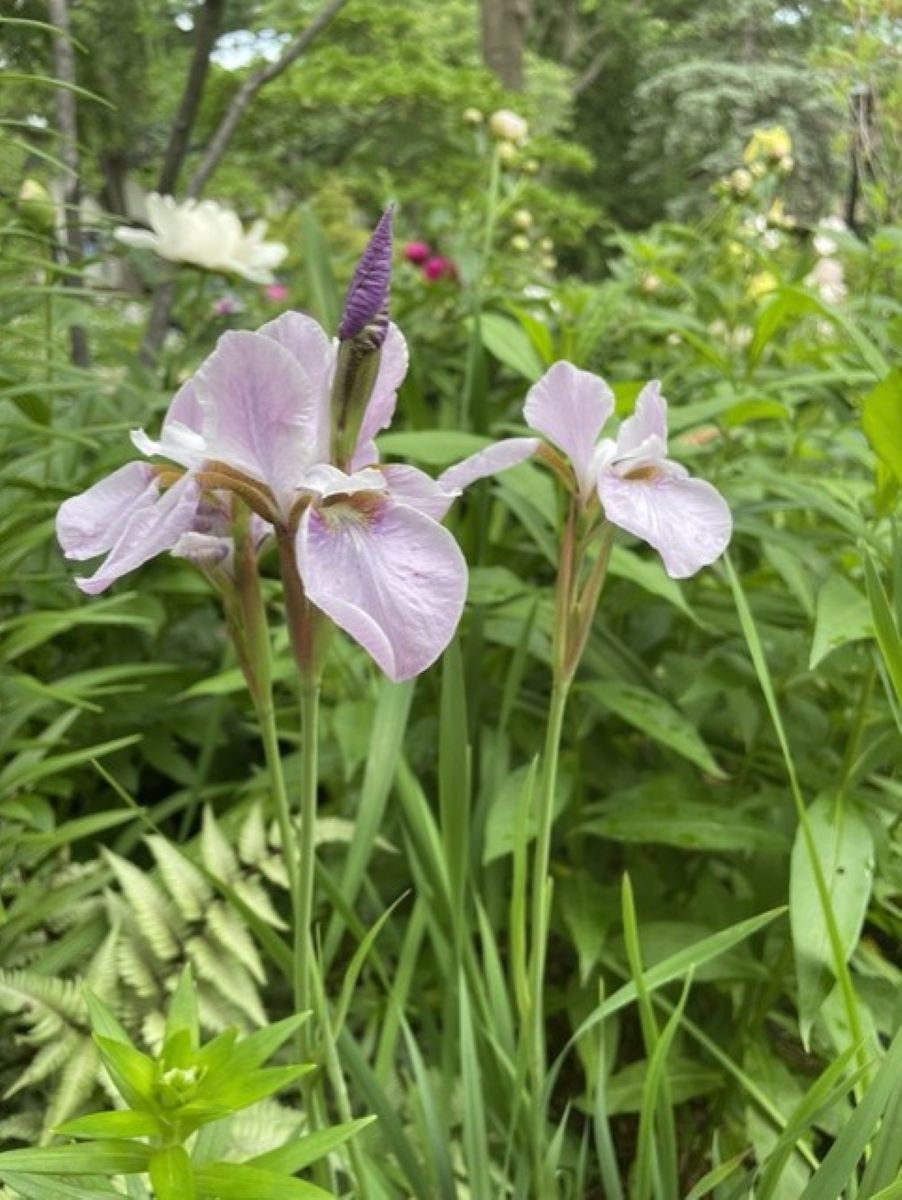
As late May deepens, the perennial beds experience a surge of activity from a cherished collection of irises. Among them is the tall bearded iris ‘Cherished’ (Iris ‘Cherished’, Zones 3–9), displaying pale cream and yellow ruffled flowers complemented by bright yellow beards against classic green foliage. Nearby, the tall bearded iris ‘Sultry Mood’ offers a striking contrast with its deep purple ruffled flowers and upright buds, capturing attention with its rich, moody saturation. Adding another layer of elegance to the late-spring lineup is a pale lavender Siberian iris (Iris sibirica cvs., Zones 3–9) featuring delicate purple-veined petals and slender, upright flower buds. While the exact cultivar name remains unknown, its graceful form and cool tones fit seamlessly into the evolving garden tapestry.
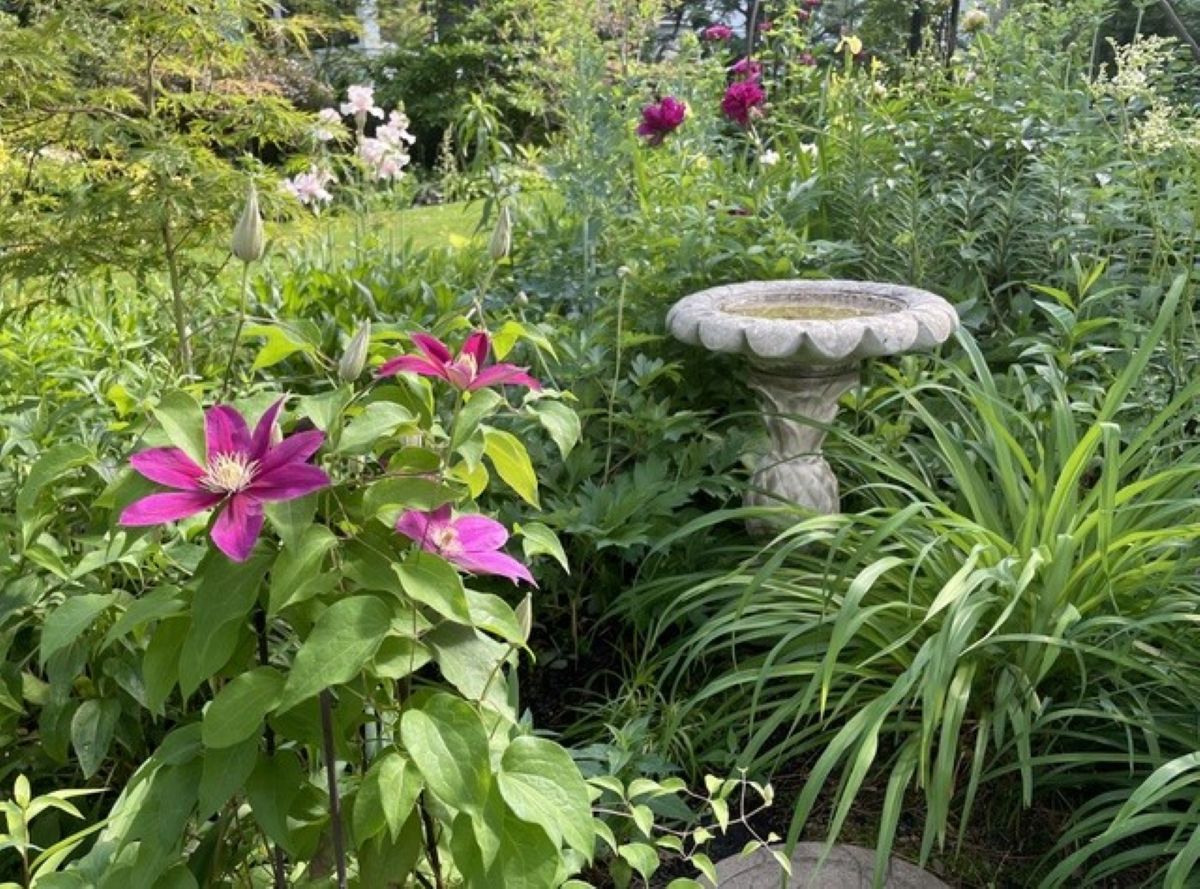
By early June, the vertical elements of the landscape begin to stretch and multiply. Susan’s earliest clematis, Clematis ‘Acropolis’ (Zones 4–9), displays deep magenta flowers that climb gracefully, framed in the background by the lush, classic blooms of the ‘Kansas’ peony (Paeonia lactiflora ‘Kansas’, Zones 3–8) and the nearby stone birdbath. This combination of structural vines and voluminous herbaceous perennials marks the true heart of the early summer transition.
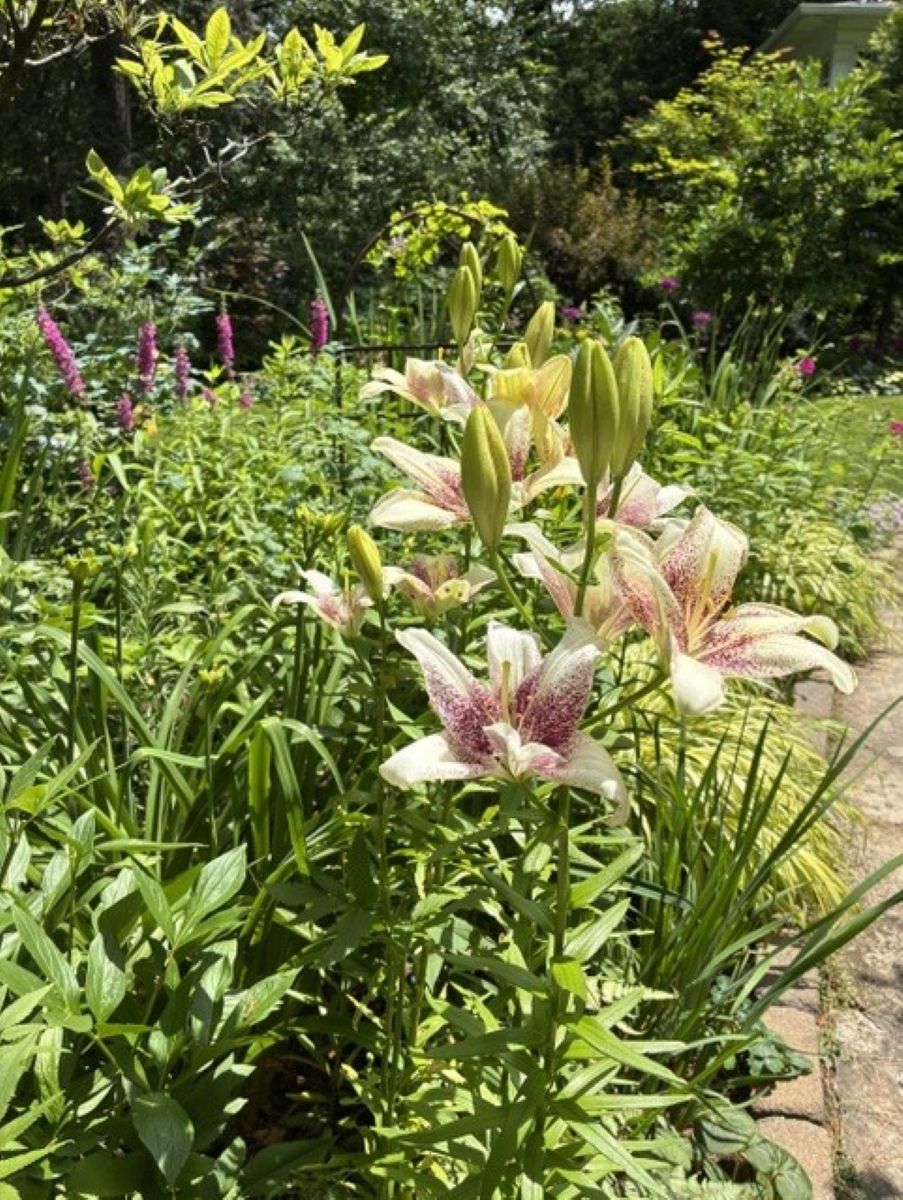
However, the path of a gardener is rarely without hurdles, and July brought both botanical triumphs and formidable pest challenges to the St. Paul property. An Asiatic lily (Lilium ‘Stracciatella Event’, Zones 3–8), photographed on July 6, presented intriguing cream petals speckled with burgundy. Unfortunately, its story took a swift and difficult turn. Within mere days of the photograph, the lily was heavily attacked by scarlet lily beetles, a notorious pest that ultimately decimated Susan’s entire lily collection. The resulting damage to the foliage was so severe that all the lilies had to be cut down to preserve the health of the remaining garden beds, serving as a stark reminder of the persistent vigilance required in managing garden pests.
Additional challenges arose from local wildlife. In mid-July, the daylily collection—usually a reliable summer staple—attracted unexpected visitors. While deer sightings are rare in an urban setting and years had passed since Susan last saw one in the neighborhood, two young bucks spent the summer roaming the area. Every night, they targeted the daylily buds and blossoms, showing a distinct fondness for ‘Lavender Moonchild’ (Hemerocallis ‘Lavender Moonchild’, Zones 3–9) with its pale lavender-pink flowers and yellow-green throats. Neither of the commercial deer repellent sprays Susan tried proved effective against the persistent visitors. Fortunately, ‘Marquee Moon’, another daylily situated farther back in the garden, was spared by the deer, allowing its pale cream ruffled flowers and yellow throats to shine undisturbed in mid-July.
Despite the hurdles posed by wildlife and insects, the midsummer garden reached a magnificent peak by July 25. A sweeping view of the side yard highlights a thriving, diverse community of plants in full swing. Daylilies mingle harmoniously with garden phlox (Phlox paniculata cvs., Zones 4–8), coneflowers (Echinacea cvs., Zones 3–9), black-eyed Susans (Rudbeckia cvs., Zones 3–9), and blazing stars (Liatris cvs., Zones 3–9), creating a rich tapestry of color that curves gracefully alongside the green lawn.
Reflecting on the tour, Susan’s St. Paul landscape demonstrates the resilience and enduring beauty of a northern garden through its shifting seasons. From the delicate, foliage-driven calm of late May to the vibrant, high-summer peak of July, the property showcases a thoughtful dedication to perennial collections and woodland layers, even in the face of seasonal adversity.