The Spring Break Art Show has returned to New York City for its latest edition, reclaiming its reputation for staging independent, curator-driven exhibitions in unconventional and sprawling spaces. True to its history of transforming vacant commercial real estate into temporary hubs for contemporary art, this year’s fair has taken over the ninth floor of 555 West 57th Street in the northern reaches of Hell’s Kitchen. The venue was, until earlier this year, the heavily outfitted corporate and broadcasting headquarters for CBS News, serving as the production home for iconic television programs such as 60 Minutes, CBS Sports, and Inside Edition.
Visitors navigating the labyrinthine corridors of the fair still encounter lingering traces of the building’s former life. Remnants of network branding, architectural fixtures, and functional studio spaces remain embedded throughout the floor plan. Yet, these corporate ghosts now share space with an eclectic array of contemporary artworks. True to form, the fair’s participants have seized upon the charged atmosphere of the former newsroom to engage directly with contemporary politics, current events, and media structures through their own distinct artistic lenses, inviting audiences to do the same.
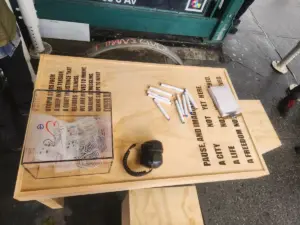
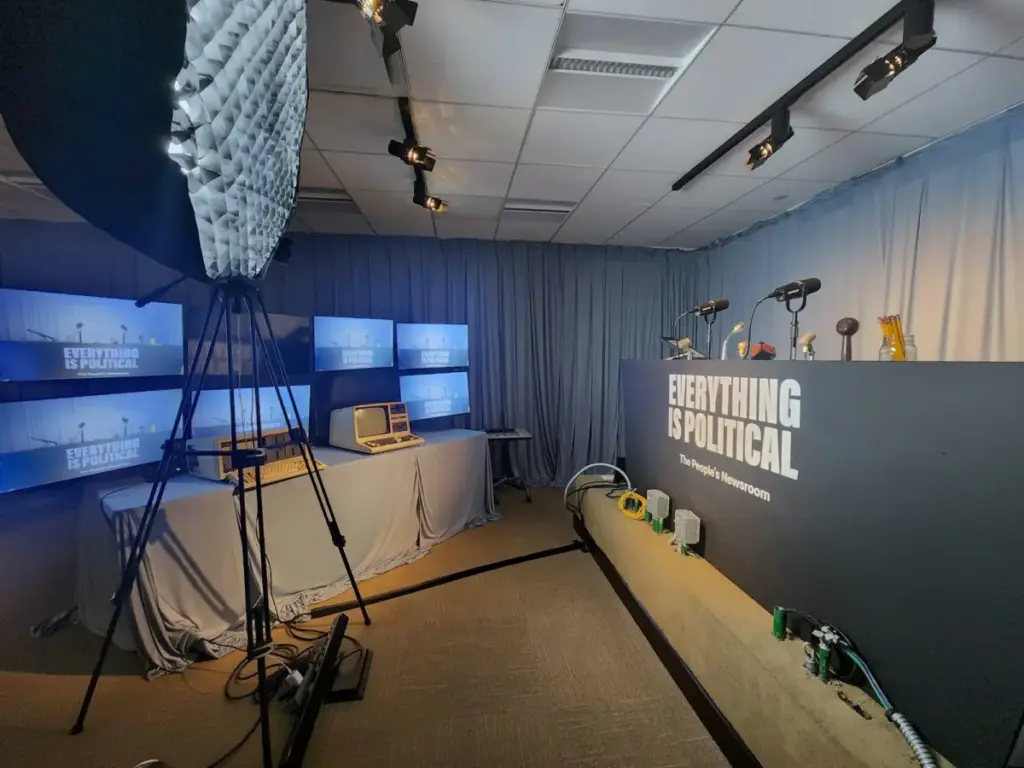
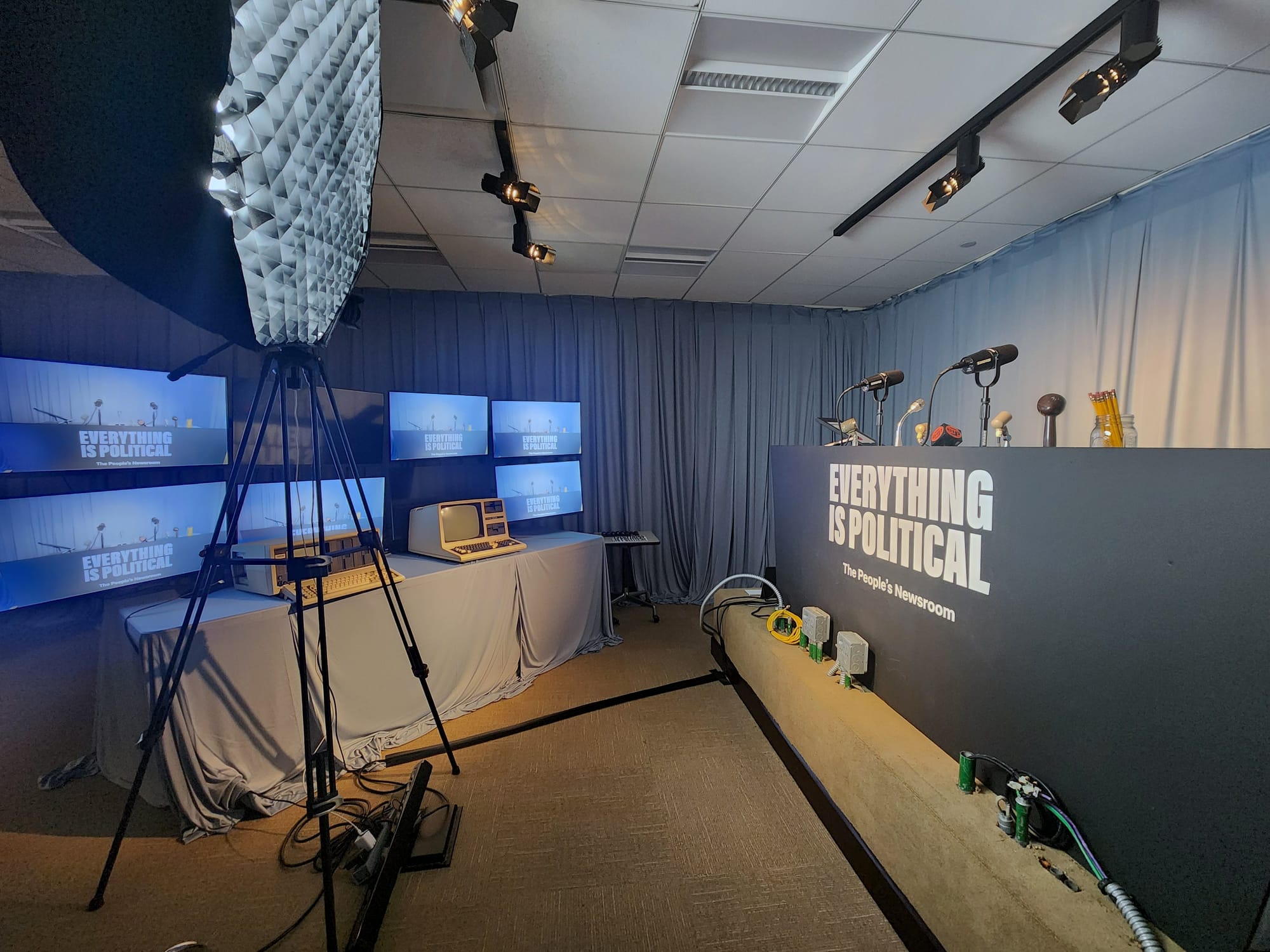
The intersection of media, politics, and physical space is perhaps nowhere more apparent than in one of the building’s former recording studios. Here, Everything Is Political, an independent media project launched by the climate justice nonprofit Slow Factory, has established The People’s Newsroom. This immersive installation actively invites fairgoers to step on the record, utilize the broadcasting infrastructure left behind by the network, and share their own news reports, political critiques, and perspectives on pressing global matters. By turning the tools of mainstream broadcast journalism back over to the public, the installation serves as a physical manifestation of the fair’s broader engagement with public discourse.
While Slow Factory’s installation encourages participants to lay their thoughts out in the open, the overarching curatorial theme for this year’s Spring Break Art Show is "Hide ‘n Seek." It is a fitting designation for a venue defined by its circuitous corridors, dead ends, hidden nooks, and unexpected architectural quirks that provide unconventional hiding spots for artworks. Andrew Gori, who co-founded the fair alongside Ambre Kelly, noted during a walkthrough that the unique topography of the former corporate headquarters dictated the event’s conceptual framework.
Reflecting on the choice of location, Gori explained that while organizers had the opportunity to host the fair in TriBeCa once again, the Hell’s Kitchen office building felt far better suited to the elusive, exploratory nature of this year’s theme. The resulting layout forces visitors to wander intentionally, stumbling upon booths and installations tucked away in corners that were once restricted to producers, editors, and network executives.
Equally playful and provocative, the works housed within these hidden pockets delve into a wide range of urgent contemporary issues. Participating artists and curators have brought forth conversations surrounding labor and equity, the boundaries between intimacy and privacy, intentionally obfuscated histories and their long-lasting societal domino effects, and the enduring politics of the human body.
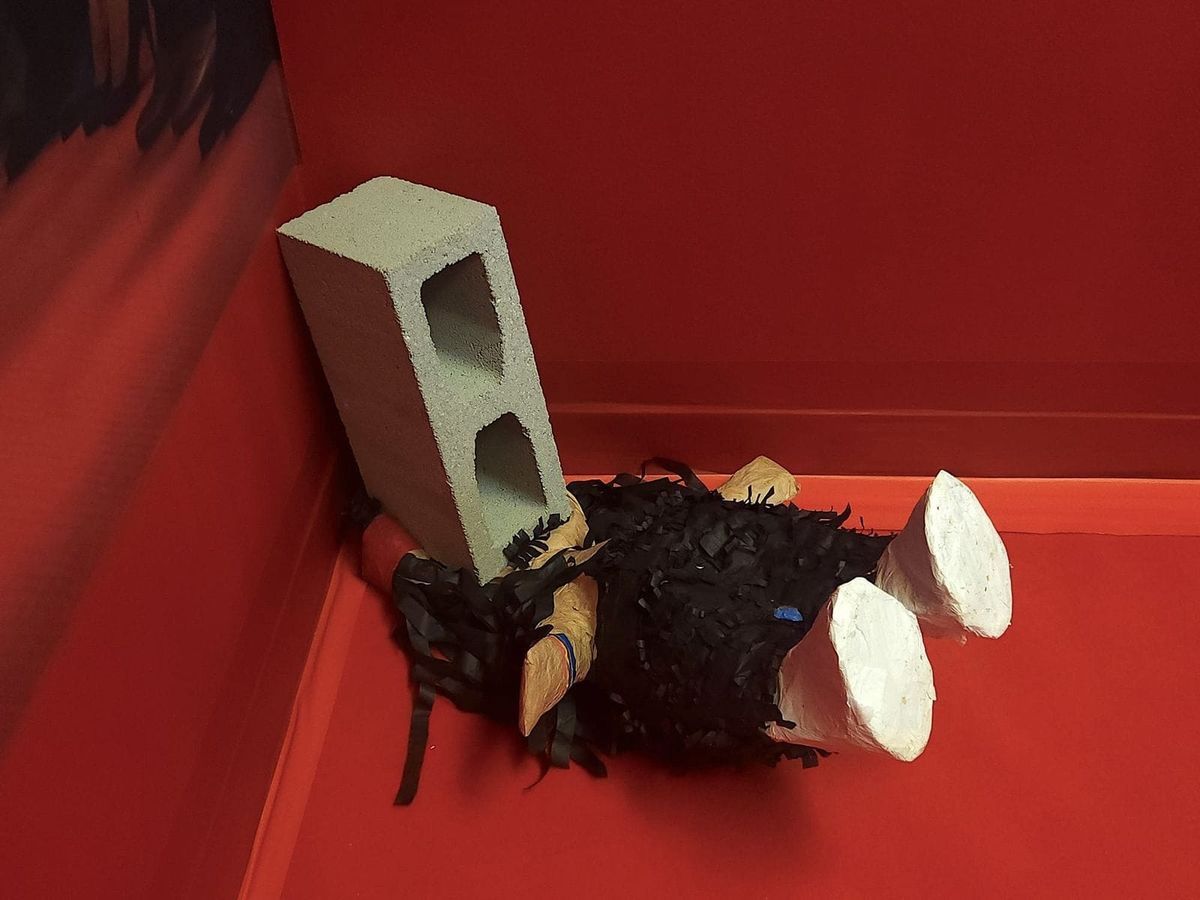
Among the standout presentations is Jesus Benavente’s ongoing Peso Pesado series. Through a collection of sculptural piñatas, Benavente captures the heavy, crushing burdens and contemporary pressures of modern life, translating psychological and economic weight into physical forms that resonate with the anxieties of the current political and social climate. The sculptures hang suspended in the space, offering a visceral commentary on endurance and resilience amidst structural strain.
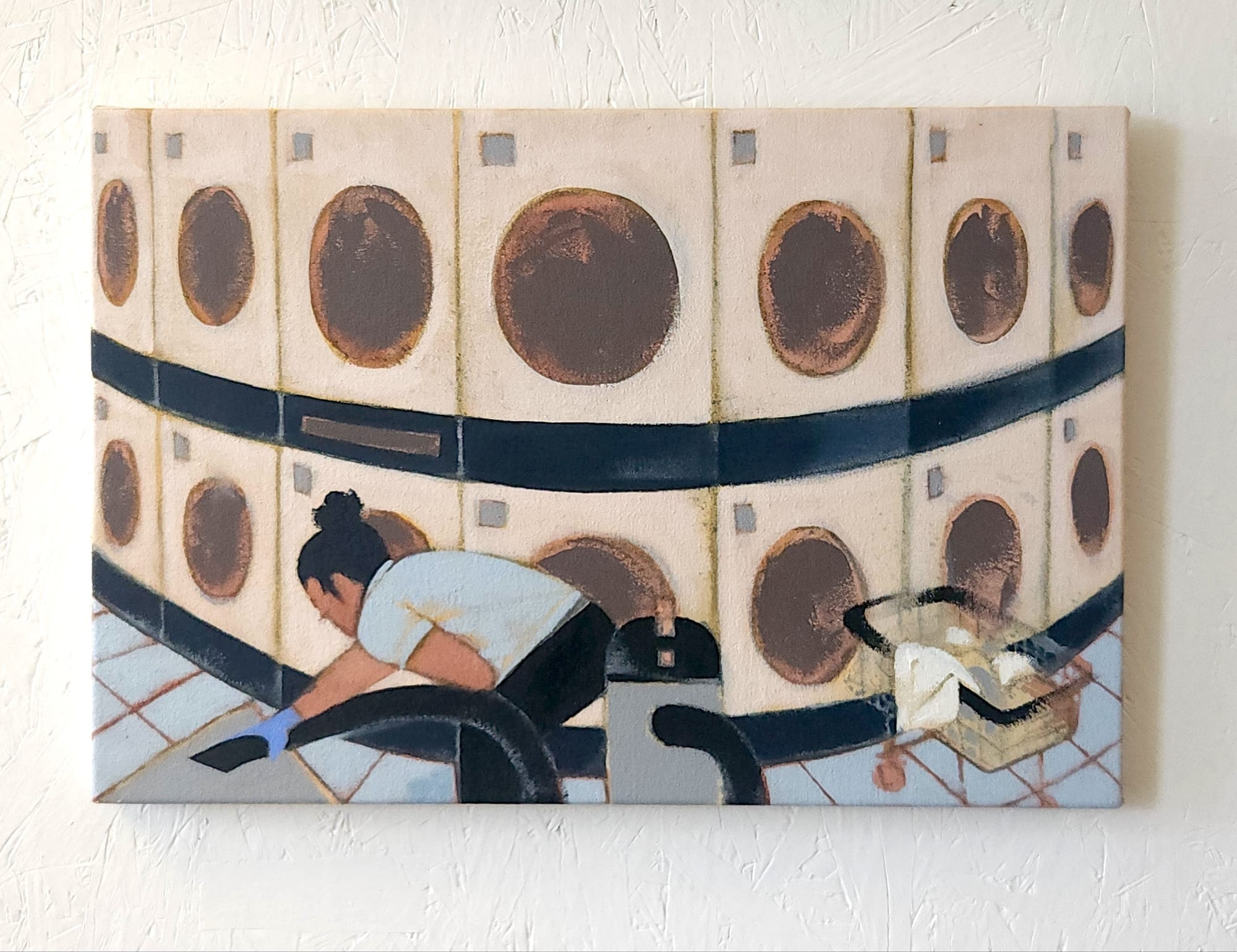
Elsewhere in the fair, artist Luke Ivy Price presents "Miss Wilma Cleans the Dryers," a work curated by Ryan Bock. Price’s artistic focus centers squarely on the unseen, quotidian, and maintenance labor that is fundamentally essential to keeping society functioning, yet remains wholly underappreciated or outright denigrated by mainstream economic structures. Through meticulous detail, the installation sheds light on the invisible hands that sustain daily urban life, drawing a sharp parallel between the hidden labor of the working class and the hidden architecture of the art fair itself.
The juxtaposition between the building’s corporate legacy and the radical, independent spirit of the art fair underscores the unique vitality that Spring Break continues to bring to New York’s cultural calendar. By embedding critical artistic dialogues within the very infrastructure where historical news and media narratives were once manufactured for mass consumption, the fair transforms a vacant monument of corporate media into a living, breathing site of public inquiry. As visitors weave through the dead ends and hidden nooks of West 57th Street, they are reminded of the power of art to uncover what institutions attempt to gloss over, inviting a deeper, more personal engagement with the world outside the gallery walls.