The global art market cycle spanning late 2025 and early 2026 has revealed a distinct shift in collector behavior, characterized by a growing divergence between the hyper-competitive secondary auction circuit and the stable, curated primary market. As high-profile auction results continue to generate record-setting headlines, providing benchmarks for institutional durability, a new class of mid-market collectors is recalibrating their strategy. Increasingly, these collectors are pivoting away from the volatility of the auction block to seek accessible, vetted entry points within the primary tier.
This transition is not merely a reaction to rising prices but a calculated effort to maintain institutional rigor and aesthetic pedigree. While major international auction houses report robust demand for foundational postwar movements—most notably South Asian Modernism and European Informalism—the secondary market’s often-erratic escalation leaves both seasoned and emerging art advisors in search of more predictable channels. By aligning secondary market signals with primary gallery availability, collectors are discovering a strategic advantage: the ability to acquire significant works by historically tethered artists without the unpredictability of speculative bidding wars.
The Resurgence of South Asian Modernism
The secondary market for South Asian Modernism has reached historic benchmarks, fueled by unprecedented momentum that shows little sign of waning. Central to this narrative is the legacy of the Bombay Progressive Artists’ Group. Francis Newton Souza, a co-founder whose influence continues to shape the discourse of modern Indian art, set consecutive auction records in late September 2025. His 1962 landscape, Houses in Hampstead, realized a staggering $7.5M at Sotheby’s London, while his 1955 drawing suite, Six Gentlemen of Our Times, achieved $2.3M at Saffronart—a figure that stands as a record for a South Asian work on paper.
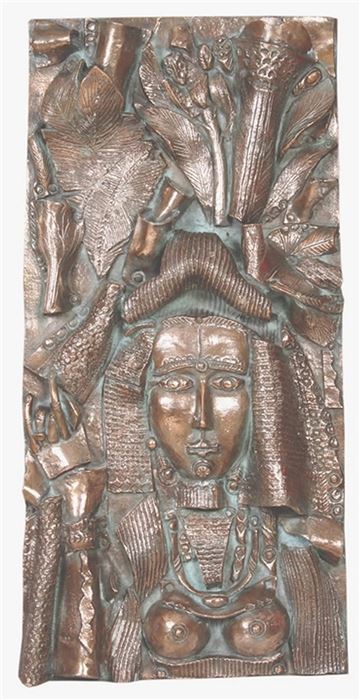
These figures serve as more than just individual successes; they represent a broader expansion of interest across the entire canon of modern Indian masters. As the market for blue-chip South Asian works matures, collector attention has naturally broadened to include living artists whose practices are deeply rooted in the traditions established by these pioneers. K. Laxma Goud, an artist whose training in rural Andhra Pradesh informs a highly distinct aesthetic, is currently one of India’s most celebrated figures. Goud’s work, which spans drawing, intricate etching, and bronze casting, is defined by narrative compositions that draw from pastoral traditions and local folklore.
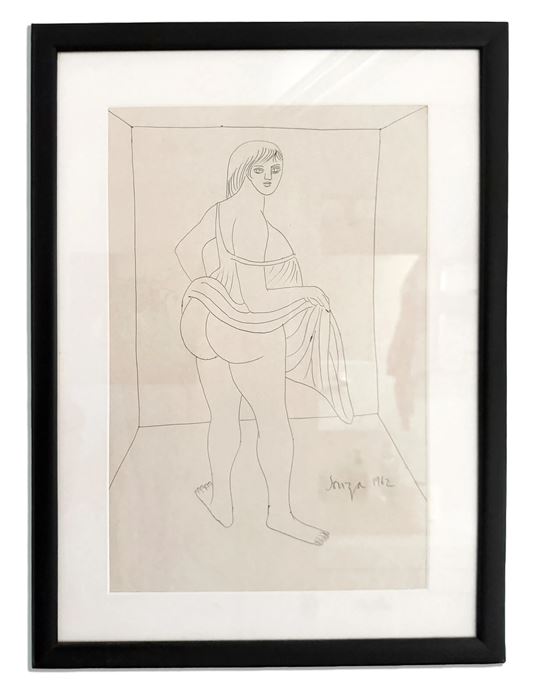
Goud’s technical proficiency and tactile sensibilities place him in direct aesthetic conversation with the mid-century modernists who redefined the subcontinent’s visual language. For collectors looking to engage with this movement, galleries like Sanchit Art provide a vital link. By offering primary access to Goud’s work, the gallery allows collectors to bypass the secondary market surge. With inventory ranging from approximately $1,500 for intimate works on paper to $18,000 for complex bronze sculptures, Sanchit Art offers an accessible pathway into a movement that remains both historically crucial and artistically relevant.
Continuity in European Informalism
While South Asian Modernism has captured the spotlight, European Informalism remains one of the most institutionally central pillars of postwar art history. The movement, which emphasizes the raw materiality of the creative act, finds its anchor in the work of the master painter Antoni Tàpies. His influence is currently being underscored by a major ongoing exhibition at MACBA in Barcelona, which continues to bring his legacy to new generations of scholars and collectors.
Tàpies’ market performance is reflective of his institutional status. His auction record, established by the sale of Gran ocra amb incisions (1961) for $2.8M, highlights the enduring appetite for his work. Since 1998, Tàpies has recorded $69.4M in cumulative turnover at auction, a testament to his sustained relevance. This demand is bolstered by the presence of his work in premier global collections, including the Guggenheim Bilbao.
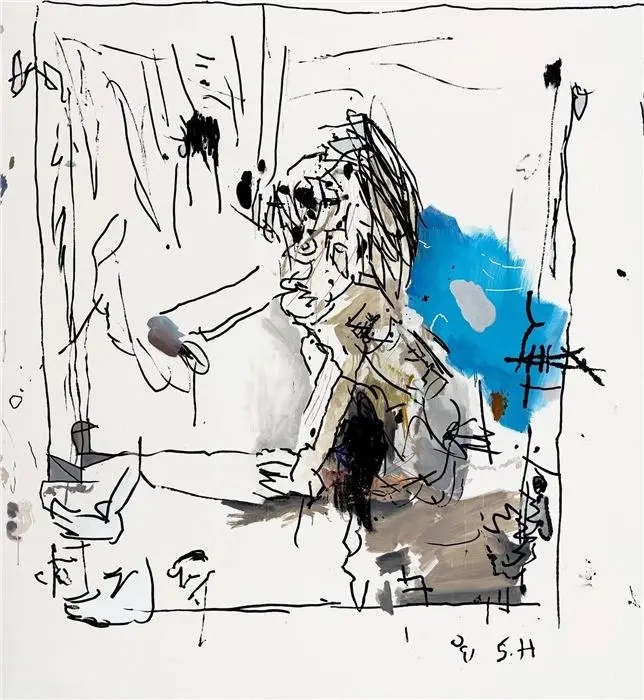
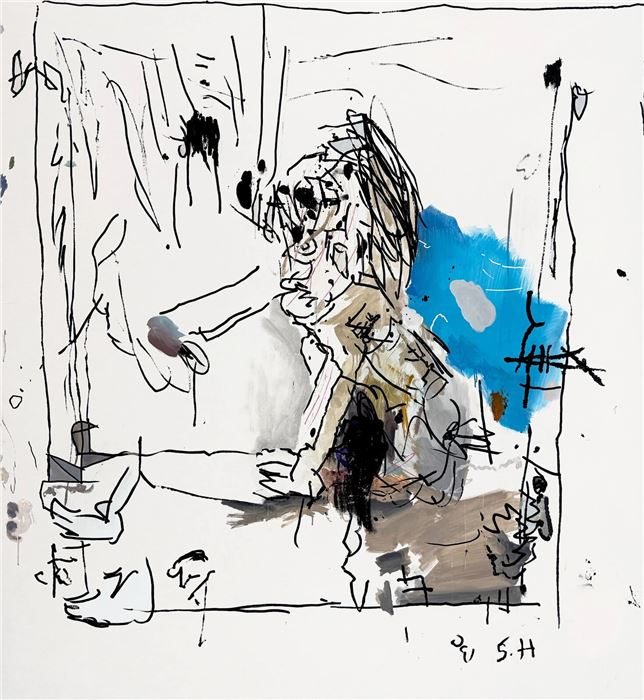
In the contemporary sphere, the spirit of this material-heavy, process-driven tradition is being carried forward by artists like Secundino Hernández. A Madrid-trained painter whose work is exhibited across Madrid, Berlin, and New York, Hernández builds surfaces characterized by intense layering, physical abrasion, and the visible trace of the painterly act. His work explores the delicate, often explosive, tension between linear drafting and visceral color, positioning him as a generational successor to the postwar masters.
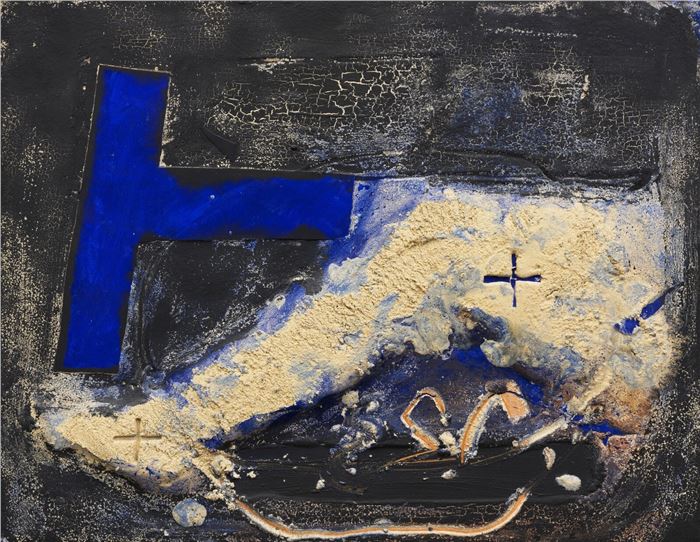
Through representation at Galeria Jordi Pascual, Hernández offers collectors a living, breathing counterpart to the postwar masters of European Informalism. The gallery’s program focuses on the process and physical movement inherent in his paintings, providing a clear trajectory from the material traditions of the past to the contemporary concerns of the present. With primary inventory currently structured between $12,000 and $60,000, the gallery provides a stable, transparent channel for those seeking to invest in the evolution of gestural abstraction.
Momentum and Provenance in the Street Art Market
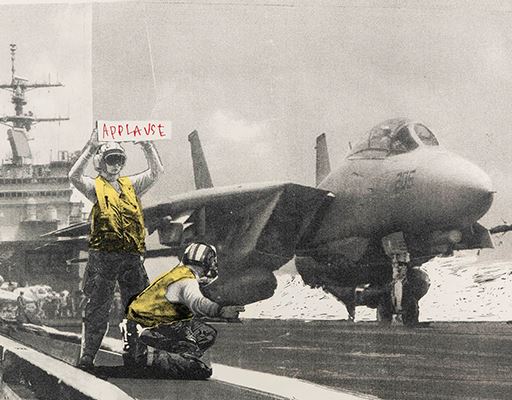
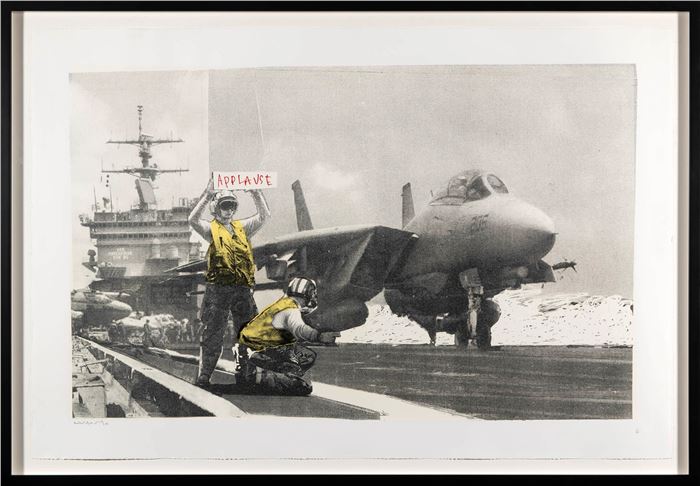
The print and editions market frequently functions as a microcosm for the broader art market, often exhibiting the sharpest short-term momentum signals. The Sotheby’s March 2026 "Prints & Multiples" sale served as a case study for this phenomenon. During the auction, Banksy’s screenprint Applause fetched £96,000 ($127,885)—a figure three to four times higher than its historical trading range of £20,000 to £30,000. Similarly, a screenprint of Girl with Balloon reached £115,200 ($153,462), well above its typical £50,000 to £65,000 range.
Market analysts have cautioned that this recent cluster of high prices should be viewed as a signal of temporary momentum rather than a confirmed, durable shift in valuation. While the results underscore a renewed collector appetite for iconographic street-art editions, they also highlight the inherent risks of participating in public sales during periods of high volatility. For collectors prioritizing long-term value and, more importantly, "bulletproof" provenance, navigating the peaks of these auction spikes can be fraught with difficulty.
For those seeking to bypass this volatility, galleries like Andipa—one of the longest-established authenticators of Banksy prints—provide a necessary alternative. Operating as Andipa Editions since 2006, the gallery offers direct access to fully authenticated screenprints and multiples. By acquiring through such a specialized, established channel, collectors can secure works that are backed by rigorous expertise and clear, documented histories, effectively sidestepping the sharpest edges of auction-driven price surges. With inventory spanning from £11,500 to £500,000, depending on the edition size and historical significance of the piece, Andipa provides a sophisticated environment for navigating the often-complex market for modern multiples.
Ultimately, understanding the structural relationship between secondary market momentum and primary gallery availability is essential for any collector looking to build a rigorous and sustainable contemporary collection. Whether one is drawn to the pastoral modernism of K. Laxma Goud, the gestural abstraction of Secundino Hernández, or the iconic, authenticated editions of Banksy, the ability to leverage auction data to inform primary acquisitions is a distinct advantage. As the market continues to evolve, we encourage collectors to engage directly with representing partner galleries through MutualArt to request current pricing, full provenance documentation, and information on upcoming inventory. By fostering these direct relationships, collectors can ensure that their acquisitions remain rooted in both artistic significance and long-term market stability.