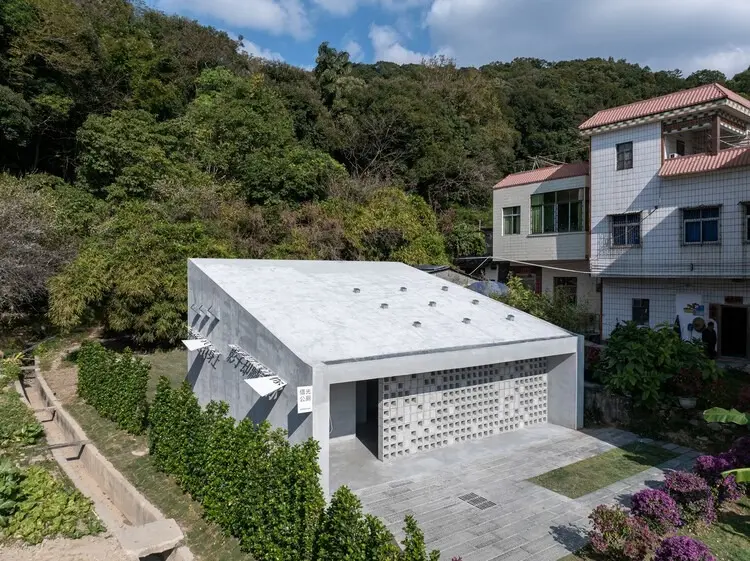
Architectural intervention in rural spaces continues to evolve beyond mere functionality, as demonstrated by Studio 10 with their latest project, "The iLOOminate Public Toilet." Situated in Zhongxin Village, the newly completed public restroom serves as a pivotal supporting facility for the South Kunlun–Luofu Mountain Architectural Art Programme. By carefully balancing modern design sensibilities with the deep-rooted social habits of the local community, the project successfully breathes new life into a mundane civic necessity while respecting the original spatial context of the site.
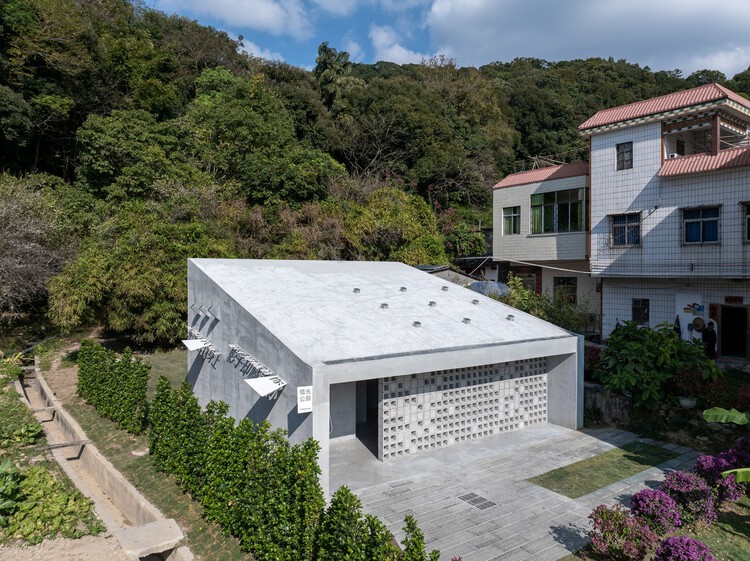
The project began as a renovation and upgrading initiative aimed at modernizing the village’s original public toilet. Before pencils hit paper, the architectural team conducted rigorous field research to understand how the villagers actually interacted with the existing infrastructure. Interestingly, the investigation uncovered a distinct social phenomenon: while a significant number of local residents now enjoy the convenience of private bathrooms inside their own homes, they continue to frequent and prefer the village’s sole public toilet. This enduring reliance highlighted the public restroom’s role not just as a sanitary facility, but as an active touchpoint in the communal daily life of Zhongxin Village.
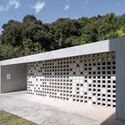
Rather than imposing an alien structure that disregarded local customs, Studio 10 chose to preserve the inherent spatial context of the site, using architecture to enhance rather than replace the familiar rhythm of village life. A defining feature of the architectural strategy is the thoughtful integration of light and ventilation, which earned the facility its fitting name. The design employs locally sourced hollow bricks that serve a dual purpose, acting as both structural elements and artistic screens. These porous bricks draw natural light deep into the interior while facilitating cross-ventilation, ensuring that the space remains fresh, airy, and illuminated without relying entirely on mechanical intervention.
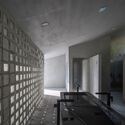
Further enhancing the sensory experience of the interior is a sophisticated approach to illumination. The design incorporates multi-dimensionally borrowed light, casting shifting shadows and soft glows across the surfaces throughout the day. Above, a striking single-slope roof tilts upward, thoughtfully opening the structure’s perspective to the lush, verdant northern mountains that frame Zhongxin Village. This architectural gesture connects the utilitarian interior directly with the surrounding natural landscape, allowing visitors to catch glimpses of the scenic mountain views and grounding the building firmly within its geographic context.
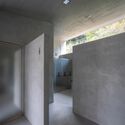
As part of the broader South Kunlun–Luofu Mountain Architectural Art Programme, the iLOOminate Public Toilet demonstrates how small-scale rural interventions can achieve profound architectural significance. By combining thoughtful material choices, such as locally sourced hollow bricks, with an empathetic understanding of community habits, Studio 10 has transformed an ordinary village rest stop into an inspiring piece of functional public art. The project stands as a testament to the power of contextual design, proving that even the most utilitarian spaces can be elevated through creativity, cultural sensitivity, and a careful dialogue with nature.