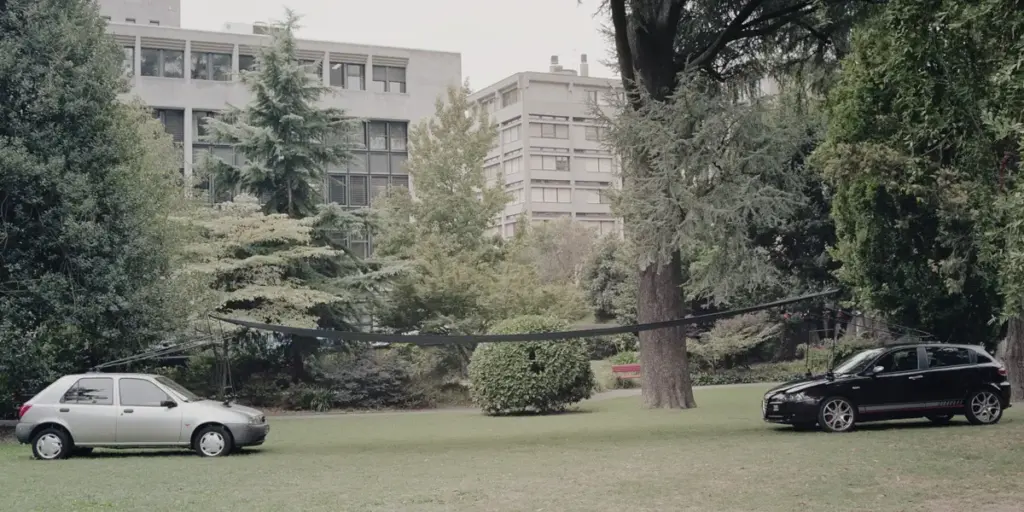
Switzerland’s complex relationship with modern mobility and environmental responsibility has been brought into sharp focus by a new art and architectural installation titled It all remains. Conceived and designed by Giona Bierens de Haan, the project offers a compelling critique of how the country manages its end-of-life automotive resources, challenging the current norms of material reuse, waste management, and sustainable architecture within the alpine nation.
At the heart of the installation lies a stark numerical reality regarding vehicle circulation and disposal in Switzerland. With nearly five million registered vehicles currently navigating the nation’s roads, translating to an average of roughly 0.5 cars for every individual inhabitant, the sheer volume of metal, glass, rubber, and synthetic materials is staggering. Every single year, approximately 200,000 of these vehicles are officially removed from service, marking the end of their operational lifespans on Swiss asphalt.
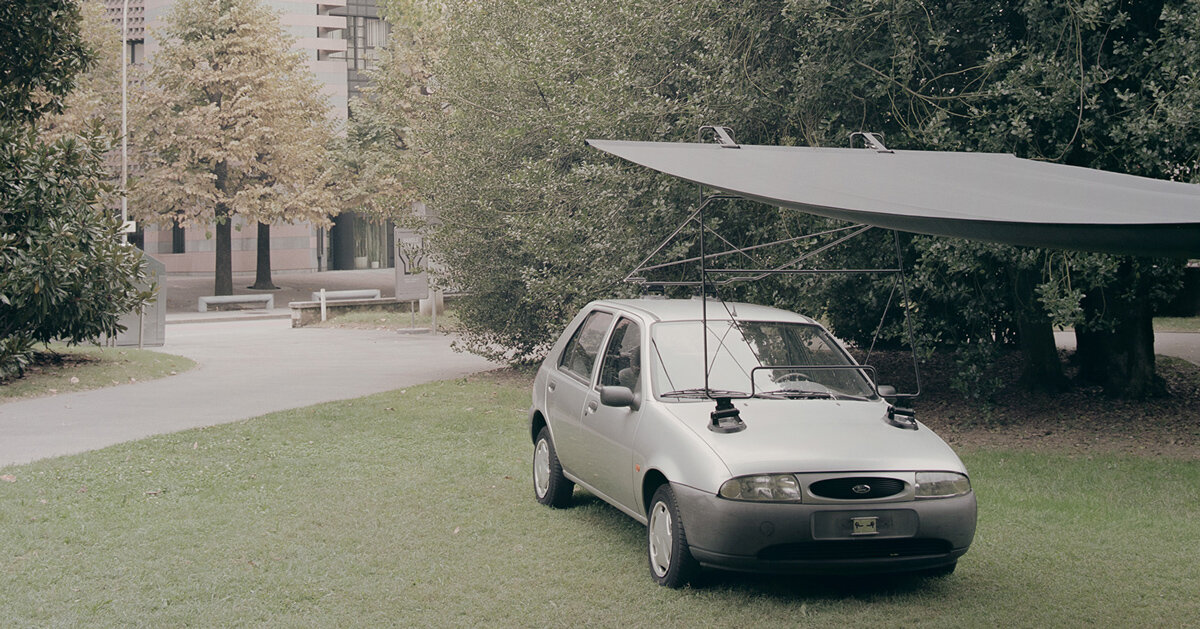
However, the journey of a decommissioned Swiss automobile rarely ends within national borders. According to data highlighted by the project, an overwhelming two-thirds of these retired vehicles are systematically exported abroad. They are shipped to foreign markets and developing nations often characterized by significantly less stringent environmental regulations and recycling frameworks. This practice effectively outsources the environmental burden of Swiss consumption, allowing the nation to maintain pristine domestic landscapes while displacing the complex industrial challenge of heavy waste disposal onto other territories.
It all remains serves as both a visual provocation and a conceptual blueprint, urging viewers to reconsider the environmental footprint of national consumption habits. By interrogating the ethics and logistics of exporting automotive waste, Bierens de Haan’s work brings a hidden industrial pipeline into public view, forcing a confrontation with the systemic inefficiencies embedded in modern consumer societies.
CONVERTING OBSOLETE VEHICLES INTO STRUCTURAL BUILDING BLOCKS
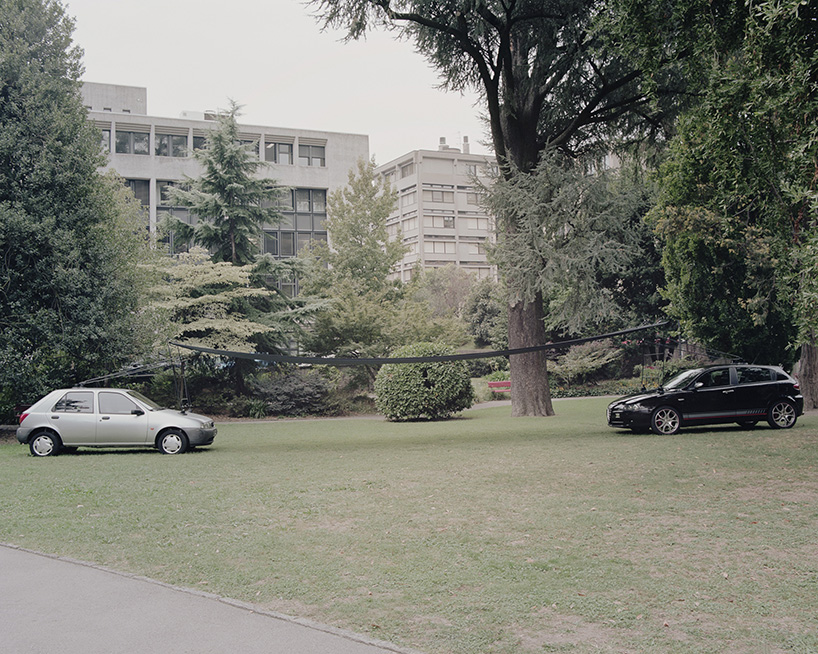
Moving beyond mere critique, Giona Bierens de Haan’s architectural intervention proposes a radical, localized alternative to the prevailing export-driven model of waste management. Titled It all remains, the conceptual project actively responds to Switzerland’s heavy reliance on foreign markets by mapping out a future where decommissioned vehicles are revalorized directly within domestic borders.
The installation looks forward to a profound economic and social shift—the anticipated transition toward a post-fossil-fuel society. In this foreseeable future, the internal combustion engine and traditional automobile models as we know them will become entirely obsolete. Rather than viewing this massive fleet of retiring vehicles as an insurmountable environmental hazard or systemic waste to be swept away across international borders, the project reimagines cars as rich mines of raw material.
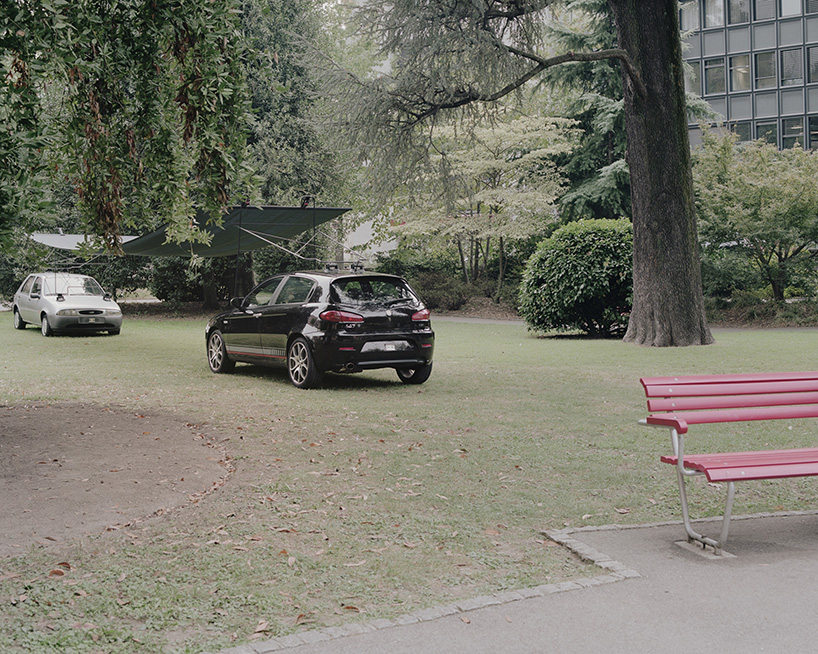
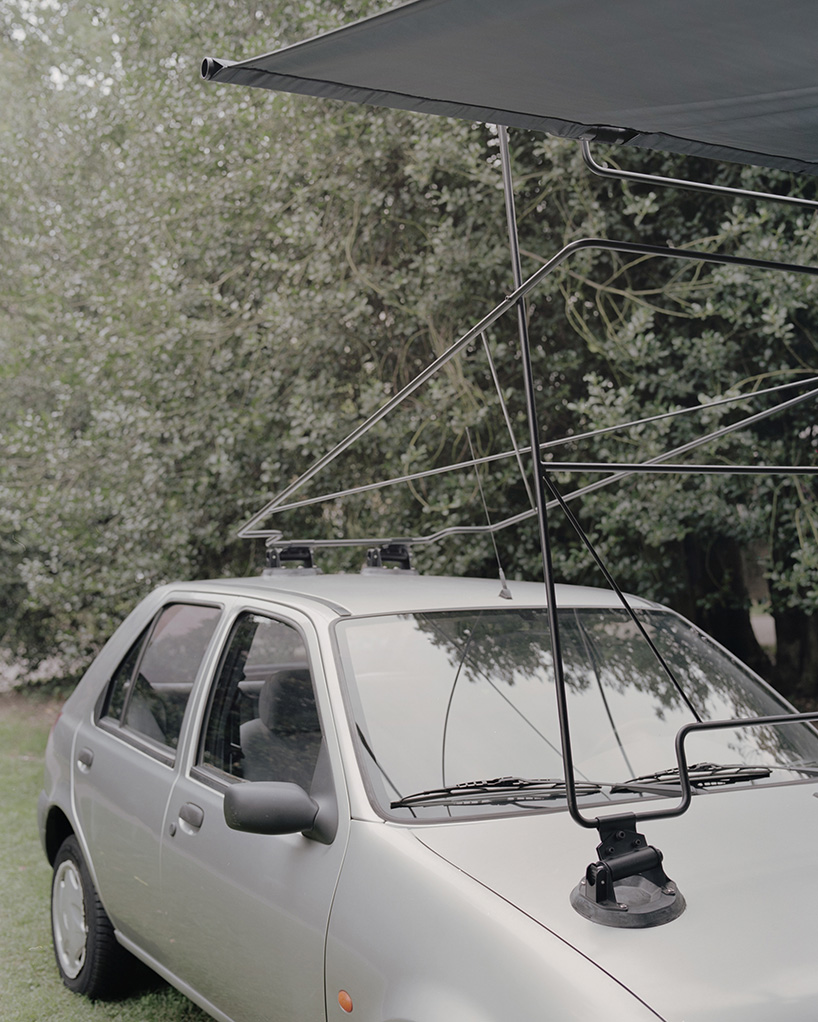
Through the lens of this conceptual architecture, retired automobiles are stripped of their traditional identity as consumer goods and reconceived as foundational building blocks. The project explores how heavy structural components, metal frames, and durable car parts can be directly harvested, adapted, and integrated into future architectural construction. By shifting the perception of automotive components from disposable debris to valuable structural resources, the installation blurs the line between industrial design and civil engineering.
Photographed expertly by Simone Bossi, the installation materializes these bold theoretical concepts into tangible forms. The resulting images showcase a fascinating dialogue between the sleek, engineered curves of automotive bodies and the rigid, utilitarian demands of architectural structures. Steel chassis, panels, and mechanical elements are presented not as junk, but as modular elements capable of shaping the built environment of tomorrow.
Ultimately, It all remains challenges architects, policymakers, and the public to rethink the life cycle of industrial products. By demonstrating that domestic waste can be transformed into local structural wealth, Giona Bierens de Haan’s work points toward a more self-reliant and environmentally accountable future for Swiss design and resource management.