Tiny, high-speed particles from the far reaches of the universe are streaming through Earth at this very second. They pass completely unnoticed through our bodies, our buildings, and the ground beneath our feet, completely invisible to the naked human eye and leaving no sensation of touch, sound, taste, or smell in their wake.
Many of these mysterious particles are directly linked to cosmic rays—exceedingly energetic fragments originating from exploding stars, distant supernovae, violent gamma-ray bursts, and other cataclysmic events far beyond the boundaries of our solar system. When these rampaging cosmic rays collide with atoms high up in Earth’s upper atmosphere, they trigger massive cascades of secondary particles. Among the most common survivors of these high-altitude collisions are muons, heavy subatomic cousins of electrons that possess enough momentum to travel all the way through the atmosphere and plunge deep underground.
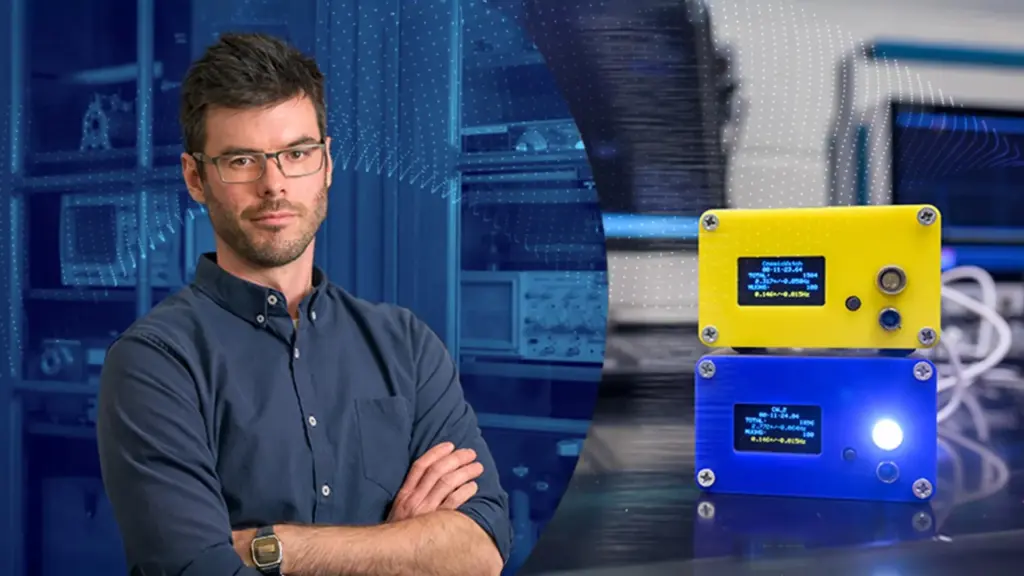
For decades, capturing and studying these elusive particles required bulky, expensive laboratory equipment. But that paradigm is shifting dramatically thanks to a device developed by University of Delaware physics professor Spencer Axani. Known as CosmicWatch, the portable technology makes it remarkably easy to detect these otherwise invisible particles. The compact device has quickly found a home in settings ranging from introductory high-school physics classrooms to sophisticated professional research laboratories around the world.
A $100 Detector for Invisible Cosmic Particles
Roughly the size of a standard box of animal crackers, a CosmicWatch detector is built from commercial electronic components that cost around $100 in total materials. Despite its modest budget and diminutive footprint, the device performs a vital function: it flashes brightly and records an internal count every single time a high-energy muon passes straight through its sensing medium. The device securely stores this incoming information, allowing users to conveniently download, visualize, and analyze the data at a later time.
The instrument was originally conceived as an inexpensive, accessible way to introduce students to the complex world of particle physics without requiring million-dollar university budgets. Since those early days, however, CosmicWatch has expanded far beyond the classroom, finding a vital niche in international astrophysics research.
"CosmicWatch detectors allow us to do far more physics at a dramatically lower cost, in a compact and portable form, opening the door to many new kinds of experiments and outreach opportunities," Professor Axani noted, highlighting the unexpected versatility of his creation.
What Muons Can Reveal About the Universe
Physicists and astrophysicists study muons with intense interest because these particles carry invaluable clues regarding some of the most powerful and violent phenomena in the cosmos, including supernovae, gamma-ray bursts, and distant blazars. By carefully measuring the properties of incoming muons, researchers can reverse-engineer vital characteristics of the original cosmic ray that generated them, including its initial energy, mass, and precise direction of travel.
Furthermore, the flux of atmospheric muons has played a genuinely historic role in the development of modern physics. Back in the early 1940s, early measurements of these exact particles provided one of the very first experimental confirmations of Albert Einstein’s revolutionary theory of special relativity, proving that high-speed particles experience time dilation as they streak through space.
Beyond deep space, muons are exceptionally useful for studying solid objects right here on Earth. Because the particles can travel cleanly through dense matter—such as thick stone walls, massive rock formations, or even human bodies—without causing destructive structural damage, they act like a natural, benevolent X-ray beam. As they pass through matter, they leave behind a detectable energy trail, enabling scientists to peer inside structures hidden behind massive amounts of obstruction. A striking example of this occurred in 2016, when advanced muon imaging technology successfully uncovered a previously unknown, massive hidden corridor inside the Great Pyramid of Giza.
The primary obstacle to widespread adoption has always been the equipment itself. Conventional muon detectors are notoriously bulky, fragile, and prohibitively expensive. That traditional limitation heavily restricted the types of experiments researchers could perform in the field and severely limited the number of schools that could offer students hands-on access to particle physics instrumentation.
"A typical undergraduate physics lab course uses a rack of electronics about the size of a small bookshelf to measure muons," Axani explained, emphasizing the stark contrast between traditional lab setups and his portable alternative.
How CosmicWatch Began
The story of CosmicWatch dates back to 2017, when Axani was working as a graduate student at the Massachusetts Institute of Technology (MIT). His initial goal was purely utilitarian: he needed to design a compact, highly energy-efficient muon detector that could be deployed at the IceCube Neutrino Observatory, a massive, deep-ice detector buried thousands of meters beneath the frozen surface of Antarctica.
The IceCube facility searches tirelessly for neutrinos, which are ghostly, nearly massless subatomic particles that pass through the universe almost entirely unhindered. Having a reliable auxiliary muon detector is crucial for researchers at the station because it helps them accurately distinguish background atmospheric muons from the elusive neutrinos they are actually trying to detect and isolate.
As the engineering project progressed, however, Axani recognized that the underlying technology could be modified, made entirely portable, and produced cheaply enough to serve as an educational platform. CosmicWatch gradually evolved from an isolated engineering fix into a powerful outreach tool designed to teach students the fundamentals of particle physics.
After transitioning to the University of Delaware faculty in 2022, Axani continued refining and improving the design. He recently released the third major iteration of CosmicWatch. The hardware upgrades—detailed in an article published in the Journal of Instrumentation in October—allow this latest model to actively monitor its surrounding environment, withstand elevated radiation thresholds, and harvest data at a significantly faster rate.
"Even though I had studied cosmic rays, I didn’t fully appreciate the rich physics behind the working of these detectors to actually ‘see’ the world and atmospheric particle production," reflected Masooma Sarfraz, a doctoral student in Axani’s laboratory and the primary author of the recent journal article. "For a student like me who has been working on theoretical ideas, this was a perfect opportunity to dive into the experimental side. It also connects beautifully to my current broader research work with particle physics."
From Dark Matter Research to Spaceflight
The capabilities of the latest CosmicWatch hardware extend well beyond introductory classrooms, making it exceptionally well-suited for calibrating large-scale physics detectors. The devices are currently deployed in the NuDot experiment at the University of Delaware and at the Coherent CAPTAIN-Mills (CCM) dark matter detector located in Los Alamos, New Mexico.
Looking ahead, researchers are actively developing yet another specialized version of the technology capable of measuring primary cosmic rays directly aboard sounding rockets and orbital spacecraft, where atmospheric interference is absent.
Despite its rapidly expanding role in cutting-edge research, education remains a foundational pillar of the CosmicWatch initiative. At the University of Delaware, Axani routinely uses the detectors to instruct students in particle, nuclear, and astrophysics. Under his supervision, students assemble the circuit boards and housings themselves, gaining crucial, hands-on experience with high-speed electronics before deploying their completed detectors in custom experiments they design from scratch.
Musarate Shams, a doctoral student in the university’s quantum science and engineering program, took the project a step further by modifying his own CosmicWatch unit to incorporate dedicated temperature and pressure sensors. His overarching objective was to study how cosmic rays behave in Earth’s upper atmosphere.
In May, that customized detector embarked on a remarkable journey aboard a high-altitude scientific balloon, ascending to an astonishing 100,000 feet near the absolute edge of space. After retrieving the hardware and examining the captured telemetry, Shams was able to clearly demonstrate how the flux and intensity of incoming cosmic rays shift dramatically as altitude increases.
"It’s a very cool thing to build something in the lab in a couple of days that’s able to detect these cool particles from hundreds of light-years away," Shams remarked.
Giving Students a Taste of Real Particle Physics
The reach of CosmicWatch extends far beyond Delaware. Natasha Holmes, the Ann S. Bowers Associate Professor of Physics at Cornell University, incorporates the detectors directly into her introductory physics courses, having her students assemble the hardware and execute original experiments.
According to Holmes, working directly with tangible, operational technology gives undergraduates an educational experience that closely mirrors the realities of professional experimental physics.
"The students seem really excited about doing this thing that is more like what particle physicists and experimental physicists actually do," Holmes said. "They get to learn some coding with it, and sometimes they break the devices, and then we have to talk to them about being careful with your equipment. It’s very different from a typical physics lab. We’ve had students say they’re doing ‘real science’ after using it."
A Possible Global Network of Cosmic Ray Detectors
Axani estimates that thousands of individual CosmicWatch detectors have been successfully built and deployed across the globe since the very first prototype emerged eight years ago. He harbors a grand vision that this number could eventually multiply exponentially through a massive, worldwide "citizen science" initiative.
Under this proposed framework, everyday people situated in every corner of the world could measure local muon rates using their own inexpensive devices and upload their raw observations to a centralized online database. Combined together, these decentralized measurements could generate an unprecedentedly rich, global picture of high-energy particle activity interacting with our planet.
Beyond Earth-bound citizen science, Axani is also collaborating on related detector systems that could eventually help constellations of satellites respond intelligently to volatile changes in their space environment. Such technology could permit satellites to communicate autonomously about sudden shifts in cosmic radiation. If a severe solar flare were detected, for instance, the integrated system could instantly alert neighboring satellites, allowing them to temporarily power down sensitive components and protect their electronics from catastrophic damage.
What began humbly as an inexpensive, highly localized educational project has steadily branched out into numerous disciplines of advanced physics—an evolution that its creator admits surpassed his initial expectations.
"Although it started as an educational program, it’s found a use in a lot of different areas of physics," Axani said. "It’s pretty cool."