For the better part of a century, the Western world has been operating under a silent, pervasive decree: functionality is king, and anything else is a distraction. When we hear of "new construction" coming to our cities or towns, few of us imagine a project that will enrich our civic life or stir our souls. Instead, our minds default to the inevitable: an uninspired metal high-rise, a hyper-optimized grocery store, or a sterile, windowless data center. We have become conditioned to expect the architecture of efficiency—structures designed to house people, process data, or facilitate commerce, but rarely to foster a sense of belonging.
In the Chicagoland area, this ongoing shift in our relationship with the built environment has been thrown into sharp relief by the long-delayed completion of the Obama Presidential Center. Billed as a transformative resource for the local community, the project has instead arrived as a gray, hulking monolith. Its design, characterized by awkward, imposing angles, looms over the historic Hyde Park neighborhood. To many residents and observers, the structure feels less like a welcoming public forum and more like a fortress. It is a striking example of a modern tendency to prioritize architectural "statement-making" over the human experience, leaving citizens to feel like intruders in their own communal spaces.
The erosion of beauty in our public sphere has been so gradual that we have lost our ability to even recognize the deficit. When a rare effort is made to beautify a space, our default reaction is now one of skepticism. We ask, "Is this a sales tactic?" or "What is the political diversion?" We suspect manipulation behind every aesthetic flourish. At best, we view the restoration of ornate architecture as a quaint, nostalgic hobby—a loose thread from a tapestry that has already unraveled. In our current cultural climate, beauty has been relegated to the realm of novelty or personal expression; the idea that it could be a fundamental requirement for large-scale public architecture is treated as an absurdity.
We are, perhaps, not the first civilization to prioritize shelter over spirit. However, we are almost certainly the first to do so while possessing the full technological and financial capacity to do otherwise. We are the generation that treks through endless aisles of fluorescent-lit big-box stores, surrounded by overstimulating packaging designed by behavioral scientists to extract every last cent from our pockets. We have become so accustomed to this environment that we spend more time cultivating an online aesthetic—a curated, digital version of our lives—than we do considering the physical reality of the streets, offices, and homes we inhabit.
The Loss of Architectural Ornament
In a society that bows to the altar of economic efficiency, it has become a self-evident truth that anything not directly serving a profit motive is a waste of resources. Yet, for most of human history, this was not the case. Throughout the rise of great civilizations, advancements in science and engineering were pursued in tandem with advancements in aesthetic complexity. The pyramids of Egypt, the intricate temples of Mesoamerica, the enduring majesty of the Colosseum, and the soaring heights of St. Peter’s Basilica or the Hagia Sophia were not merely functional machines; they were testaments to human ambition and community identity.
In these historical eras, decoration was never incidental. It was an essential pillar of craftsmanship. On a practical level, ornamentation projected wealth and consolidated power, serving to reinforce social cohesion through shared stories and motifs carved into stone or cast in bronze. On a deeper, more human level, these beautiful spaces reflected the collective heart and mind of the people they served. They functioned as a tangible indication of quality construction and an explicit declaration that the space was built for the benefit of those who would walk its halls.
Consider the small American church of the 19th or early 20th century. Local congregations would often hold special collections, scraping together modest funds to commission stained-glass windows from Munich. This was not a move for efficiency or profit; it was a move for the soul, ensuring that every member of the community, regardless of status, had something lovely to behold while they prayed. Similarly, town squares were often adorned with elaborately carved fountains—structures that provided both water and a place to sit, chat, and linger. Cities invested heavily in their train stations, recognizing them as the gateways to the community, designed to impress visitors and instill a sense of pride in those returning home.
Today, there is a nascent pushback. Grassroots movements in cities across the United States are beginning to demand more from their developers and city planners. These advocates emphasize walkability, the restoration of green spaces, and architecture that facilitates human connection rather than hindering it. Some firms are beginning to take note, acknowledging that the "intentional community" atmosphere is becoming a hot commodity. While there is reason for hope, reclaiming our environments from the reign of cars and corporate minimalism requires more than just adding a few planters to a concrete plaza. It requires us to remember what the world looked like before we decided that "functional" was the only thing a building needed to be.
The Evolution of Style: From Victorians to Art Nouveau
The century leading up to World War II was a period of frantic, productive design evolution. As the industrial revolution accelerated, the world felt as though it were spinning faster, leading to a pervasive sense of social alienation. In response, people looked to the past for inspiration, resulting in a series of design movements that managed to balance historical longing with the realities of modern life.
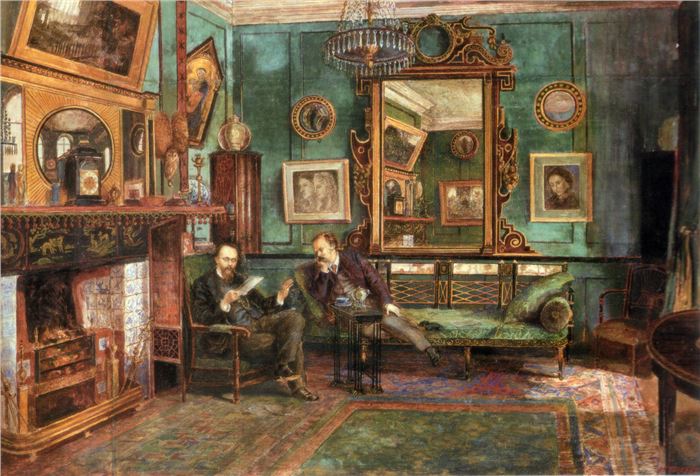
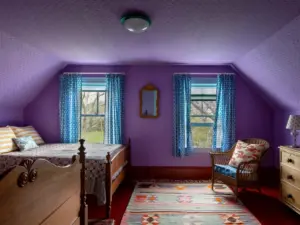
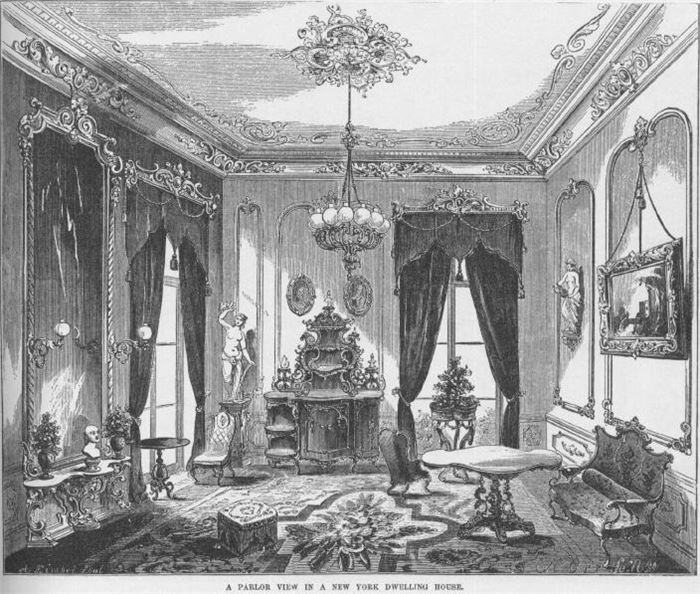
The Victorian period is perhaps the most famous example of this "reactionary comfort." It was an era defined by heavy luxury, sentimentality, and an embrace of the domestic. Parlors were filled with rich, layered drapery, and every surface was occupied by knickknacks and mementos. Larger construction projects drew from the Gothic Revival, featuring asymmetrical towers and elaborate, often mass-produced, decorative elements. While these designs were sometimes criticized as cluttered, they reflected a genuine, romanticized optimism. The Victorians believed that the individual—or the family unit—could curate a charmed, medieval-inspired world that served as a sanctuary against the rapidly changing industrial landscape.
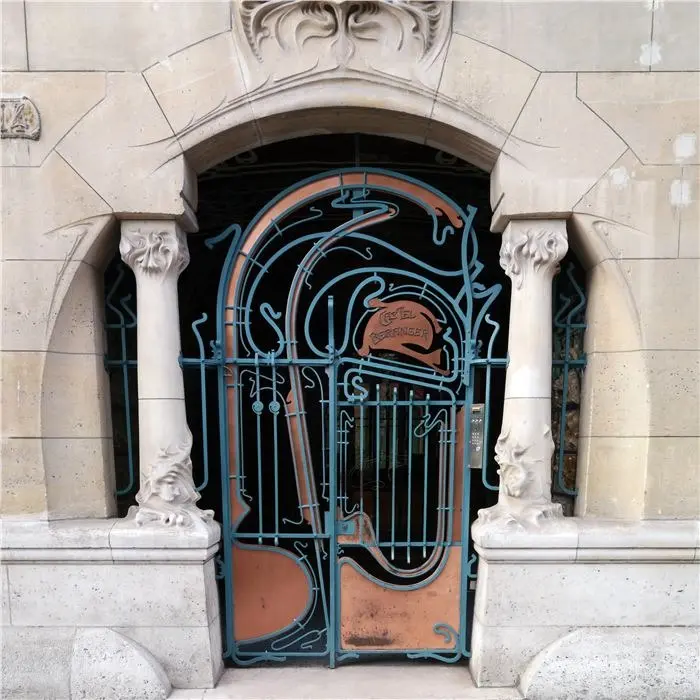
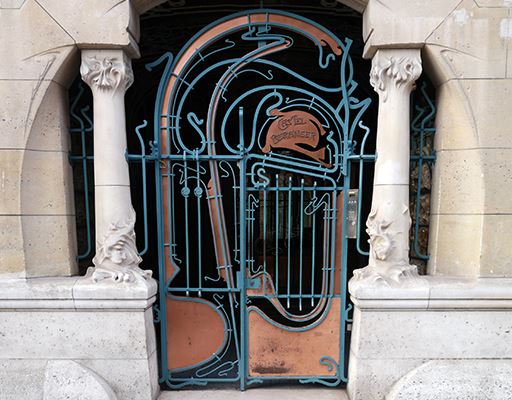
As the political landscape of Europe began to fracture and the aristocracy faced inevitable decline, a new movement emerged: Art Nouveau. If the Victorian era was about holding onto the past, Art Nouveau was about blooming into a uncertain future. Sprouting across Europe like wildflowers at the turn of the 20th century, the style eschewed the distinction between "high art" and "low art." It took the stolid, rigid geometry of the Victorian era and contorted it into a style defined by fluid, organic lines and bewilderingly complex compositions.
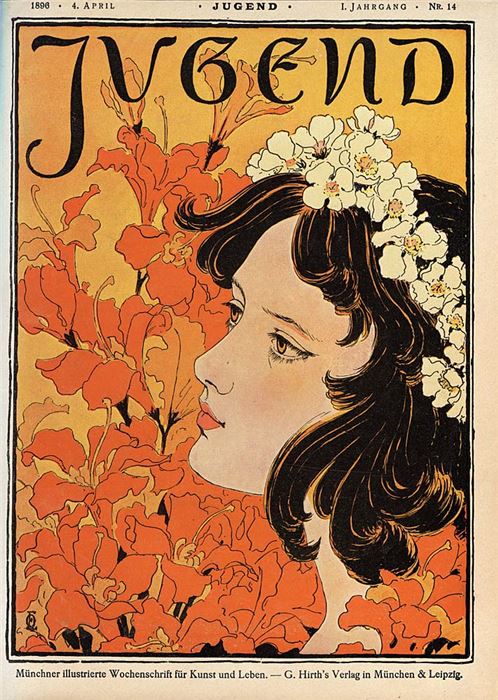
In Germany, it was known as Jugendstil, or "Youth Style." It was bright, hopeful, and daringly modern. It was a conscious rebellion against the growing political and economic machinery that threatened to crush individuality. By introducing nature-inspired motifs into the very bones of buildings and furniture, designers sought to remind the public that human life was something that grew, flowed, and changed, rather than something that could be simply manufactured.

The Art Deco Pivot and the Modern Malaise
Following the trauma of World War I, the youthful optimism of the early 1900s became difficult to sustain. The generation that had endured the trenches, and those who had supported them, required a new visual language. Beginning in Paris in 1925, the Art Deco movement emerged, signaling a dramatic shift in tactics. Rather than rejecting the industrial machine, Art Deco sought to harness it.
Through bold geometry, sharp symmetry, and a fascination with sleek, modern materials, Art Deco co-opted ancient design principles to create a visual language of upward mobility. Technology, in the eyes of the Art Deco architect, was not a cold tool of production; it was a force that could sweep humanity toward a heavenly, progress-driven future. The Chrysler Building in New York remains the quintessential icon of this era, its spire a testament to the belief that human innovation could reach for the stars.
But this period of idealism was short-lived, punctured by the Great Depression and eventually the horrors of World War II. In the decades since, our architectural trajectory has stayed firmly—and often uncomfortably—"closer to the earth." Even as we have developed the engineering prowess to build taller than ever before, the soul of our architecture has seemingly withered. Corporate modernism, Brutalism, and the various iterations of "sterile" design have left us with a built environment that often feels fundamentally hostile to the human spirit.
As we continue to navigate the social fallout of the 20th century, it is as if our collective capacity for creative, welcoming design has abandoned us. The results are visible everywhere: in our profound social disconnection, in our lack of shared aspirations beyond mere material accumulation, and in our increasing radicalization. We live in an era where we have more access to one another than at any point in history, yet our physical spaces seem designed to keep us apart, focused on our own isolated tracks.
If we wish to heal our communities and make them feel "human" again, we must rediscover the lost art of decoration. This is not a call to merely replicate the past, but to recognize that quality decoration is a signal of pride, craftsmanship, and service to the public. When a structure is decorated, it communicates to every passerby that the work was completed with care and with the intent to provide a gift to the viewer. A functional space can be convenient, but a beautiful one is always a contribution to the common good. In a world of cold, efficient monoliths, the act of making a space beautiful is not an extraneous luxury—it is a vital, necessary act of humanity.