While the United States has long been celebrated for producing some of the world’s finest sparkling wines, a significant new development is quietly reshaping the American wine landscape. Wineries across California and Oregon are increasingly releasing long-aged bubbly crafted in the meticulous style of the finest Champagnes. Bottles from a single vintage that spend at least five years resting on their lees—and in some cases nearly two decades—offer a level of complexity and profundity that far outstrips their much younger counterparts. No longer treated as occasional experiments by houses with deep French roots, ultra-aged American sparkling wine has evolved into a small but rapidly growing category. It is a movement increasingly embraced by connoisseurs who appreciate traditional French winemaking techniques paired with a distinct American pedigree.
Among the pioneers leading this field is Domaine Carneros, whose stately château at the southern entrance of the Napa Valley has long served as a familiar landmark for frequent wine country travelers. Established in 1987 by Champagne’s renowned Taittinger family, the winery produces Le Rêve, a Napa sibling to the celebrated Taittinger Blanc de Blancs Comtes de Champagne, crafted exclusively from Carneros Chardonnay. The current vintage of Domaine Carneros Le Rêve Blanc de Blancs, the 2018 edition, spent an impressive seven years en tirage, resting on its spent yeast cells following secondary fermentation in the bottle.
“Extended lees aging is a major contributor to the quality of traditional method sparkling wine,” explains Domaine Carneros CEO Remi Cohen. “As the wine ages on the lees, yeast cells gradually break down, releasing compounds that enhance flavor and texture.”
This slow transformation aids in the development of classic sparkling wine characteristics, such as shortbread, brioche, and crème fraîche, while imparting a smooth, creamy mouthfeel and an undeniable sense of opulence. The cool, consistent temperatures of the 2018 growing season allowed for slow fruit maturation, complex flavor development, and beautiful natural tension and acidity in the sparkling wines. Consequently, this specific edition of Le Rêve also offers delicate notes of citrus, lychee, and Bartlett pear.
Farther north in the valley, Schramsberg Vineyards has forged a legacy in sparkling wine production stretching back to 1965, when Jack and Jamie Davies purchased the historic, abandoned estate. Their son Hugh, who was born that same year and has dedicated three decades to working at Schramsberg before taking the helm in 2005, reflects on the winery’s continuous evolution.
“We have been pushing our envelope of quality as hard as possible for 62 vintages,” Hugh Davies says.
The winery’s latest long-aged release, the Schramsberg Vineyards 2007 Late Disgorged J. Schram, is an exceptional cuvée of Chardonnay and Pinot Noir sourced from some of Napa’s finest vineyard sites, grown during a season widely regarded as one of the best of the decade.
“There certainly aren’t as many examples of 19-year-old sparkling wines produced in the United States as there are in Champagne,” Davies notes. He explains that utilizing barrel and malolactic fermentation in the initial base blend gives this particular bottling a rich profile more reminiscent of its French cousins.

However, Davies is quick to point out that certain defining qualities remain distinctly Californian.
“The elevated natural acidity in the wine is reflective of the cool North Coast vineyard set that we work with, lending us exceptional crispness upon entry and length to the finish,” he says. “Additionally, I would think that the wine’s layered fruitful core, albeit nearly 20 years in, is also reflective of our Pacific terroir.”
Oregon is also proving its prowess in sparkling wine, a natural extension of the state’s preeminent reputation for world-class Chardonnay and Pinot Noir. Domaine Willamette stands out as a prime example of this regional capability. The Domaine Willamette 2017 Extended Tirage Brut, the winery’s very first long-aged release, is the direct result of a deliberate quest to discover how patient cellaring could yield a richer, more deeply developed sparkling wine.
“While shorter aging highlights bright fruit and freshness, seven years in tirage gives the wine room to build texture, depth, and integration naturally,” says Terry Culton, director of winemaking and vineyards. “The result is a more evolved expression of méthode traditionnelle, with greater richness and a broader range of character alongside the wine’s fruit profile.”
Domaine Willamette does not aim to directly replicate Champagne, but Culton emphasizes an unwavering commitment to upholding the exact same standards of quality and craftsmanship developed in the French region over centuries.
“Our goal is to create a sparkling wine of distinction that reflects the unique character of our estate vineyards, our Willamette Valley terroir, and the cool-climate conditions that make Oregon such a compelling place to craft sparkling wine,” he explains.
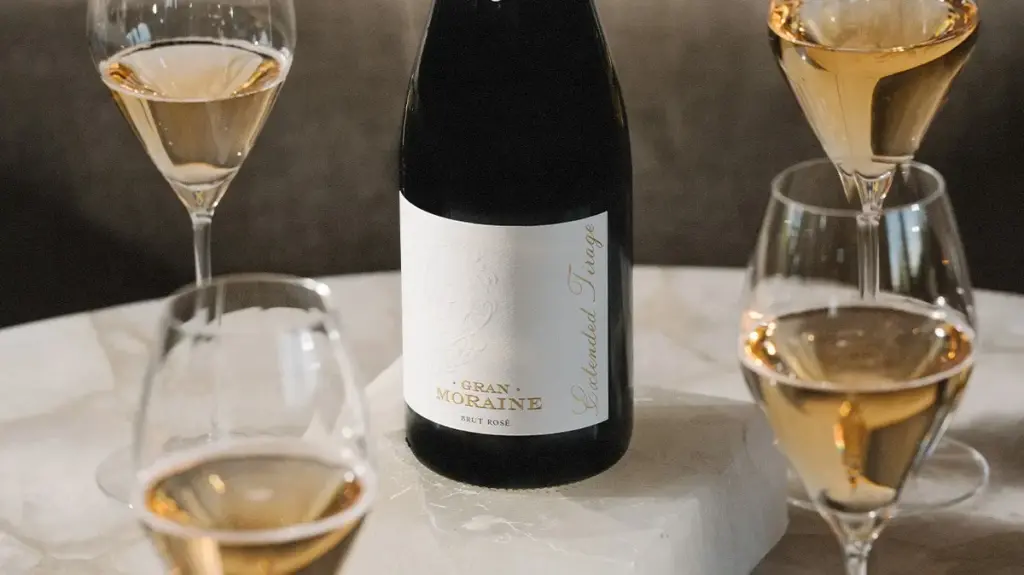
Fans of pink bubbles have similarly compelling options, such as the Gran Moraine Yamhill-Carlton Extended Tirage Brut Rosé NV, which spends six patient years resting on its lees.
“We pick to preserve bright acidity and freshness, giving the wine the structure it needs to benefit from extended aging on its lees,” explains winemaker Shane Moore. “Over time, that freshness allows richness and layers of character to develop.”

Describing the subtle chemical and sensory shifts that occur during this prolonged rest, Moore compares the process to culinary arts: “It’s a bit like letting a soup simmer longer; the fruit recedes, and other layers come forward.” He points to the shift in the wine’s character, marked by a softening of immediate fruit notes in favor of finer bubbles and increasingly intricate flavors.
The extended lees aging process imparts a structural depth that makes these American sparkling wines exceptionally food-friendly, transforming them from celebratory aperitifs into versatile table wines. Arthur Hon, sommelier at New York City wine bar Lei, finds distinct charm in the Domaine Carneros 2000 Le Rêve Late Disgorged Blanc de Blancs, praising its seductive velvety texture, flavors of salted taffy apple and toasted almond, and gentle yet lively citrus notes. He recommends pairing the mature bubbly with simple yet savory dishes like roast chicken or pork Milanese featuring parmesan breadcrumbs.
“The gentle umami flavors of roast chicken or a classic Milanese in a crispy cheese coating pair lovely with the fruity and savory notes of the wine,” Hon says.
Further down the West Coast at Jory, located within The Allison Inn & Spa in Newberg, Oregon, wine director Elaine Kim enjoys pouring the Gran Moraine Extended Tirage Brut Rosé NV alongside a rich wagyu steak frites.
“The wine’s acidity and elegant flavors both stand up perfectly to this dish in a way that feels light, refreshing, and really satisfying,” she notes. “Both the dish and the wine give you decadence that’s delicious and approachable.”
Ultimately, these releases demonstrate that patience is not merely a virtue in the cellar, but the essential ingredient defining the upper echelon of American sparkling wine.