This fall, the Ogunquit Museum of American Art (OMAA) and the Bates College Museum of Art are joining forces to present a comprehensive, long-overdue reassessment of the life and work of Carl Sprinchorn, an under-recognized figure in the landscape of American modernism. Through two distinct yet complementary exhibitions, the institutions are shedding light on an artist whose vibrant career spanned decades, continents, and a vast array of subjects, bridging the gap between European immigrant experiences and the rugged wilderness of rural Maine.

Running through November 1, the Ogunquit Museum of American Art is presenting Carl Sprinchorn: All the World is a Painting, serving as a cornerstone for this seasonal reappraisal. Born in Sweden in 1887, Sprinchorn immigrated to New York in 1903, a decisive move that immersed him directly into the burgeoning American avant-garde. Upon arriving in the United States, he pursued formal artistic training under the tutelage of the influential Ashcan School leader Robert Henri. This foundational education equipped Sprinchorn with an eye for dynamic movement, expressive brushwork, and a profound appreciation for working-class subjects.
Over the course of his life, Sprinchorn cultivated a rich network of artistic peers and close friendships. His social and professional circles included legendary figures of twentieth-century American art such as Marsden Hartley, Charles Demuth, Marguerite and William Zorach, B.J.O. Nordfeldt, and Florine Stettheimer. These associations placed him squarely at the center of the vibrant, interconnected networks that defined the trajectory of early modernism in the United States. Yet, despite these prominent associations and his own considerable output, Sprinchorn’s contributions have historically remained on the periphery of mainstream art history, a narrative that these new exhibitions aim to correct.

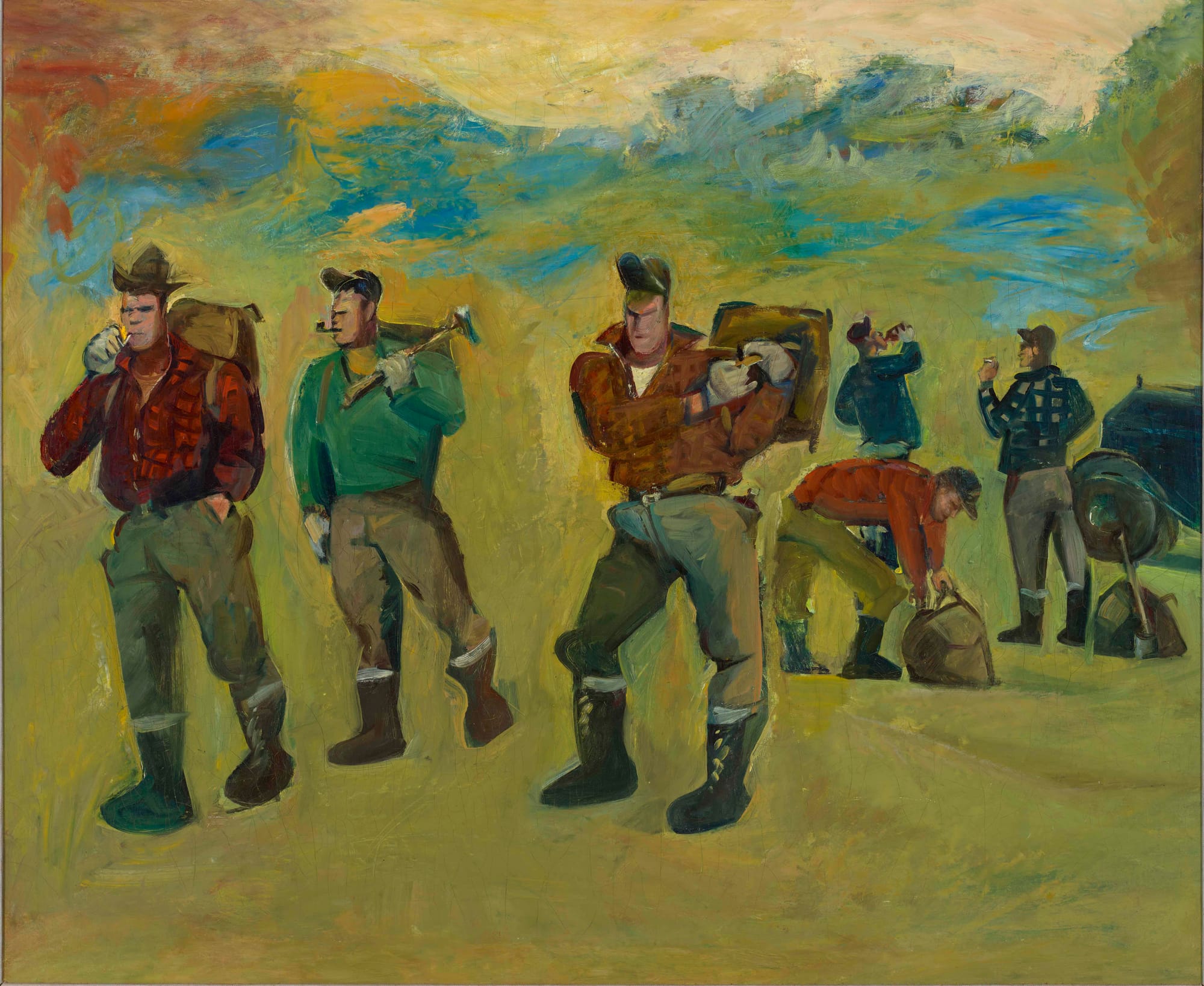
The OMAA exhibition delves deeply into Sprinchorn’s versatile practice, showcasing his fluid ability to transition between working-class subjects and scenes of leisurely recreation. Visitors to the Ogunquit presentation will encounter an energetic mix of intimate portraits alongside sweeping, expressive compositions depicting lumberjacks, hunters, dancers, and swimmers. Collectively, these works illuminate the complex ways in which Sprinchorn negotiated his identity. As a Swedish immigrant navigating a new homeland, a gay man living in an era of strict societal constraints, and a fiercely independent modern painter, Sprinchorn possessed a unique vantage point on shifting ideas regarding region, nation, labor, and the natural world. His canvas was broad, taking in both the urban vitality of his early years and the raw, untamed majesty of the American landscape.
Complementing the Ogunquit presentation, the Bates College Museum of Art in Lewiston, Maine, is hosting Carl Sprinchorn: Points of View through December 19. Comprising more than seventy drawings, pastels, watercolors, and paintings, this expansive exhibition offers a detailed chronological journey through the artist’s evolving practice from the 1900s well into the 1960s. The exhibition places a particular emphasis on Sprinchorn’s remarkable gift for capturing the immediate action, mood, and raw emotion of a given moment, demonstrating his technical mastery across multiple mediums on paper and canvas.

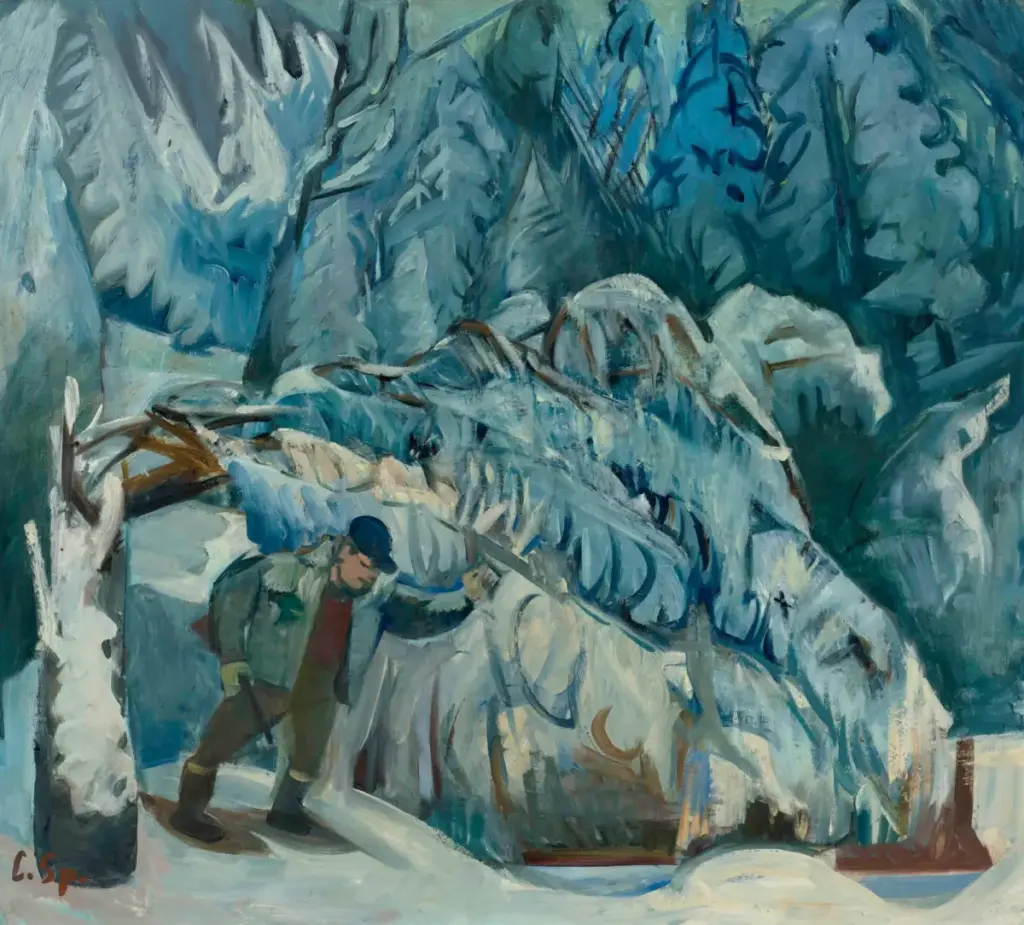
Sprinchorn’s enduring artistic romance with Maine began in earnest during the 1910s and 1920s in the town of Monson, where he spent a prolific period producing moody, atmospheric landscapes and enigmatic, mysterious figures. After spending time traveling and working elsewhere, including significant trips to the Caribbean, he returned to Maine at the close of the 1930s. This later chapter of his career was defined by his evocative portrayals of rural life around Shin Pond. During this time, he captured sweeping seasonal transformations in the northern woods, striking and empathetic portraits of male laborers, and lively, on-the-spot sketches documenting the daily realities of hunting and logging in the Maine wilderness.
To coincide with these concurrent exhibitions, the University of Maine Press has published a major joint catalogue titled Carl Sprinchorn: A Rediscovery. This accompanying publication provides critical scholarly framework, contextualizing Sprinchorn’s body of work within wider contemporary discussions surrounding American modernism, queer history, environmental concerns, and transnational artistic exchange. Together, the catalogue and the two museum exhibitions position Sprinchorn firmly on the national stage alongside his celebrated peers—a recognition that curators and scholars argue is long overdue.
The Ogunquit Museum of American Art, situated along the scenic coast in Ogunquit, Maine, is open daily from 10:00 a.m. to 5:00 p.m. through the conclusion of the exhibition on November 1. Meanwhile, the Bates College Museum of Art, located on the college campus in Lewiston, Maine, welcomes visitors Tuesday through Saturday from 10:00 a.m. to 5:00 p.m. Additional information regarding visiting hours, special programming, and ticketing can be found by visiting the official websites of both institutions at bates.edu and ogunquitmuseum.org.