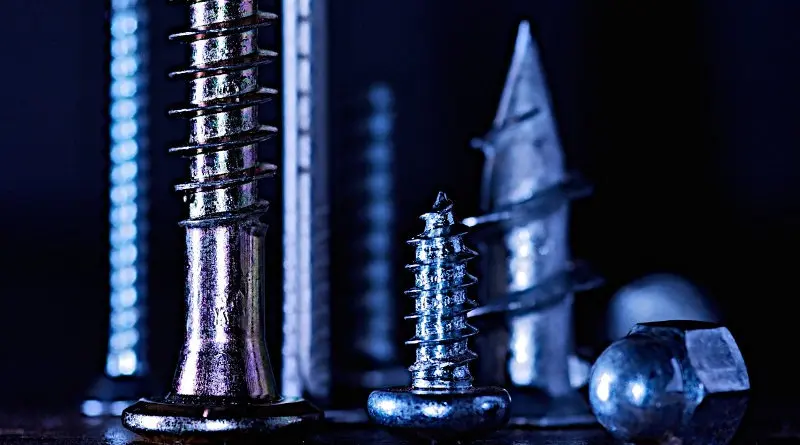
Selecting the correct fastener remains one of the most critical yet frequently misunderstood aspects of any construction, renovation, or do-it-yourself project. While hardware stores offer dozens of different screw sizes and types, working out exactly which screw or bolt is required can easily become confusing for those unaccustomed to navigating the vast array of available hardware. Certain fasteners are versatile enough to handle multiple applications across various materials, whereas others are engineered with precision for specific building, construction, or home improvement tasks. Industry professionals and seasoned builders continually emphasize that choosing the appropriate hardware makes a monumental difference in how smoothly a project proceeds and how polished the final result appears.
To demystify the hardware aisle, this overview examines the many different types of screws typically needed for general and specialized jobs, ranging from standard wood screws to specialized self-tapping mechanisms and heavy-duty structural fixings.
Wood Screws
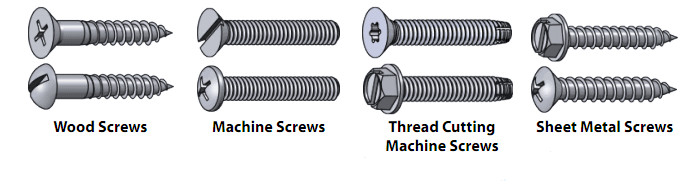
As their name explicitly suggests, wood screws are engineered specifically to join pieces of timber together securely. Compared to their counterparts designed for metal or masonry, wood screws are generally manufactured to be thinner and more flexible. This deliberate flexibility allows the fastener to bend slightly in response to the natural expansion and contraction of timber as humidity and temperature fluctuate throughout the seasons. Furthermore, wood screws typically feature deep, aggressive threads designed to bite deeply into timber fibers, effectively preventing the fastener from being easily ripped out under load. For projects involving particularly dense hardwoods, screws often incorporate a double or twin thread design, which aids the fastener in slicing cleanly into the harder material without splitting the wood.
Metal Screws
Fasteners intended for metal applications generally feature a tighter, finer thread profile than wood screws, allowing them to cut into metal substrates slowly and with high precision. When working with sheet metal applications—such as corrugated iron roofing or metal cladding—contractors almost always rely on self-tapping variants. These specialized fasteners feature blade-like cutting edges incorporated into the screw tip, enabling the fastener to cut its own mating hole directly into the metal without the necessity of a pre-drilled pilot hole. While self-tapping metal screws frequently utilize hex washer heads designed to be driven with a socket driver, they are also manufactured with traditional slotted and Phillips heads to accommodate standard tools.

Masonry Screws
Standard masonry screws share a general silhouette with wood screws, though they are distinguished by a noticeably thicker shaft and a slightly tighter thread pitch. For more demanding applications where fasteners must be driven directly into solid concrete, builders deploy frame fixings or heavy-duty anchor bolts. These structural fasteners feature exceptionally thick shafts relative to their relatively small, widely spaced threads, providing the immense shear strength required to secure fixtures to concrete and brickwork.
Security Screws
Security screws, frequently referred to as clutch screws or one-way screws, are deliberately engineered to resist or outright prevent removal using standard screwdrivers. The unique geometry of a security screw head ensures that the drive mechanism can only engage in the tightening direction, rendering standard extraction methods useless once the fastener is seated. This characteristic makes them the premier choice for anchoring high-value exterior installations, such as surveillance cameras, to public or vulnerable walls. They are similarly deployed to secure window security grills, frustrating unauthorized attempts by intruders to dismantle architectural barriers and gain entry.
Coach Screws
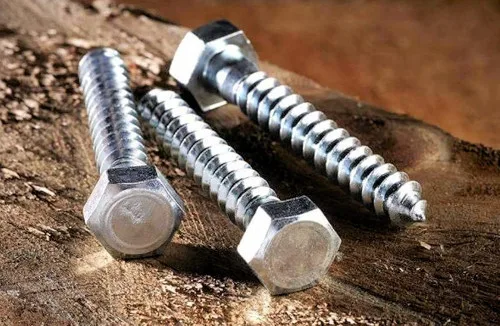
Heavy-duty construction and landscaping tasks frequently demand robust hardware, such as coach screws, which are also widely known as lag screws or coach bolts. These substantial fixings exhibit remarkable structural strength, featuring a wide and thick thread profile that makes them ideal for binding heavy timbers together. Industry guidelines for building retaining walls using railway sleepers, for instance, routinely specify the use of coach bolts to withstand immense lateral earth pressures. Coach screws almost exclusively feature large hexagonal heads, necessitating the use of a spanner or socket driver to deliver the necessary torque during installation.
Machine Screws
Machine screws bear a visual resemblance to bolts due to their uniform, narrow shafts and lack of a tapered tip. They are fundamentally designed to function either alongside a matching nut or within a pre-tapped hole—a receiving aperture that has had a complementary internal thread cut into it beforehand. These fasteners are predominantly utilized for fastening metal components together within machinery, appliances, and fixtures. For instance, toggle fixings designed for plasterboard installations commonly incorporate machine screws to achieve a secure hold. In specialized environments, builders can also source self-tapping machine screws, which are typically fabricated from corrosion-resistant stainless steel.
The Difference Between Twin and Single Threaded Screws
Wood screws and several other categories of fasteners are frequently classified by whether they feature single or twin threads. Understanding the distinction between these two configurations helps determine their suitability for particular materials.
The thread on a single-thread screw comprises a single continuous spiral winding around the fastener shaft. Single-threaded screws are generally more economical to manufacture and purchase, making them exceptionally well-suited for general joinery work involving softer timbers.
Conversely, twin thread screws incorporate two independent thread spirals that wind around the shaft in parallel opposition to one another. Because each individual thread spiral maintains a wider spacing along the shaft, twin-threaded screws drive into the material and tighten significantly faster than their single-thread equivalents. Additionally, they tend to provide a much more secure, high-integrity hold once fully driven into the substrate.
Types of Screw Head
The hardware market features an extensive array of screw head geometries, some of which serve highly specialized functions that are rarely required for everyday home improvement tasks.
Countersunk heads are the standard choice for general joinery where the finished surface must remain completely flush with the surrounding material. For ironmongery or applications where aesthetic screw caps will be applied to achieve a clean, polished finish, raised countersunk heads are frequently preferred.
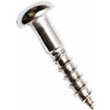
Dome heads are traditionally utilized when mounting delicate or sensitive items, such as mirrors, plastic sheets, or protective panels, and can be finished with a decorative dome or a plastic clip-on cover to conceal the metal underneath.
Round or button head screws are generally selected when fastening sheet materials that are simply too thin to accommodate a countersunk recess.
Meanwhile, bugle head screws are engineered specifically for drywall installations involving plasterboard and fibreboard. The extended, gradual taper of a bugle head allows it to distribute clamping pressure over a much broader surface area, preventing the fastener from tearing through the paper face of the plasterboard.
Types of Drive
Beyond the external geometry of the screw head, fasteners are categorized by their drive style—the specific shape of the recess or slot designed to receive the tightening tool.
The standard cross-head design, universally known as the Phillips drive, remains the most common interface for general-purpose screws. The Frearson drive shares a striking visual similarity to the Phillips system but requires a dedicated Frearson driver for proper installation without cam-out.
Traditional slotted drives feature a single linear groove across the diameter of the head, while combination drives integrate both a slotted and a Phillips configuration to accommodate multiple tool types.
Socket or hex drives utilize a hexagonal internal recess designed for use with an Allen key or hex bit, offering high torque transfer. One-way security drives accept standard slotted tools during insertion but prohibit removal.
Square drives, alternatively known as Robertson drives, feature a simple square internal aperture requiring a specialized square driver. Finally, star drives—commonly referred to as Torx screws—utilize a distinctive six-pointed star pattern specifically engineered to virtually eliminate cam-out and prevent the stripping of screw heads under high-torque driving conditions.