Published on September 20, 2026
By Moises Carrasco
Every evening when we return home, without ceremony or conscious thought, we perform a small and profound rite. We arrive at a physical door, we open it, and we step through into a space that belongs to us in a way no other space on earth does. It is an act so intensely mundane that we rarely pause to notice it possesses a distinct psychological and spatial structure. Yet, philosophers, architects, and anthropologists have dedicated entire volumes to describing the hidden mechanics of these transitions. Interestingly, visual works of art—most notably the meticulously crafted animated worlds of Studio Ghibli—reflect this exact dynamic, creating spaces and layouts that offer a pathway to psychological escape by tapping into our collective memories in a legible yet deeply enchanted form.
To understand the profound psychological weight of domestic space, one can look to the pioneering work of philosopher Gaston Bachelard, who coined the discipline of "topoanalysis." Bachelard proposed that the physical corners, creaking stairs, and dusty attics of the home we grew up in are never mere neutral backdrops for our lives. Instead, they are physically inscribed into our very neurology. The stair riser that was fractionally too high, or the specific, amber quality of light filtering through a childhood bedroom window, becomes a part of our bodily memory, carried forward unconsciously into every subsequent space we inhabit in later stages of our lives.

This space, which has been deeply "loved" and provides a protective psychological anchor, assumes an almost sacred status. Bachelard termed this phenomenon a "felicitous space." In his theoretical framework, the felicitous space is invariably shadowed by a bittersweet nostalgia, meaning that every subsequent house we inhabit as adults functions as an unconscious attempt to recover that original, primary home to which we can never truly return. Within this context, the house is never just a cold physical shelter. Rather, it represents the exact convergence point between physical reality and what Bachelard described as the virtuality of imagination and dream—a miniature cosmos built from the accumulated layers of our past experiences and the subtle traces of everyone who has lived there before.
This interweaving of physical and mental dimensions is further illuminated by the writings of Finnish architect Juhani Pallasmaa. For Pallasmaa, human beings do not inhabit material and mental realms as separate entities; rather, these dimensions are fundamentally intertwined. As Pallasmaa famously observed, architectural constructions are built in the world of matter and Euclidean geometry, but lived space always transcends the strict rules of physics and Euclidean geometry.

This profound concept—that a house holds an imagined mental world right alongside its physical timber and stone—is vividly brought to life in Studio Ghibli’s cinematic masterpiece My Neighbor Totoro. When the two protagonist sisters arrive at their new, rustic, yet wonderfully lived-in countryside home, they are told by local villagers that the vacant rooms are full of small soot spirits that instinctively scatter whenever a room is disturbed or newly occupied. The spirits in this narrative are not menacing intruders; instead, they represent what an empty house is already imagined to contain before human memories have had sufficient time to accumulate there. The film dramatizes, almost literally, the exact concept Bachelard described: a house is never merely a blank physical space waiting to be filled. Instead, it arrives already half-inhabited by what we anticipate, expect, and hope to find within it.
Recognizing the house as the convergence point of interior life and physical architecture means acknowledging that the act of crossing its threshold is far from architecturally neutral. Instead, it mirrors what anthropologist Arnold van Gennep famously classified as a classic rite of passage. According to van Gennep’s foundational ethnographic writings, rites of passage unfold in three distinct stages: separation from a prior state, a liminal or threshold stage of transition, and final incorporation into the new state. While van Gennep was not originally writing about the daily commute from work to home, his structural framework maps onto the modern urban routine with startling clarity.
Standing at your own front door serves as a micro-rite of separation, a definitive point where the relentless demands of the outside world are forced to halt. Opening that door and stepping physically across the threshold constitutes the liminal moment itself—that brief, rarely consciously noted phase where a person transitions from the profane world into the sacred sanctuary of home. Finally, settling into the core of the domestic environment, whether through the familiar act of sinking into a favorite chair, shedding one’s shoes, or setting down a heavy bag, represents incorporation: the psychological return to the self and to that miniature cosmos which exists exclusively within those four walls.
The domestic door, viewed through this analytical lens, transcends its mechanical function as a mere architectural feature to become a true portal. However esoteric this concept may appear in contemporary urban discourse, human cultures have marked such portals with symbolic significance for centuries. In Japan, for instance, a traditional Shinto Torii gate visually announces to anyone approaching it that the space lying beyond is no longer profane. The physical threshold begins doing its symbolic psychological work the exact moment it enters a person’s field of view.

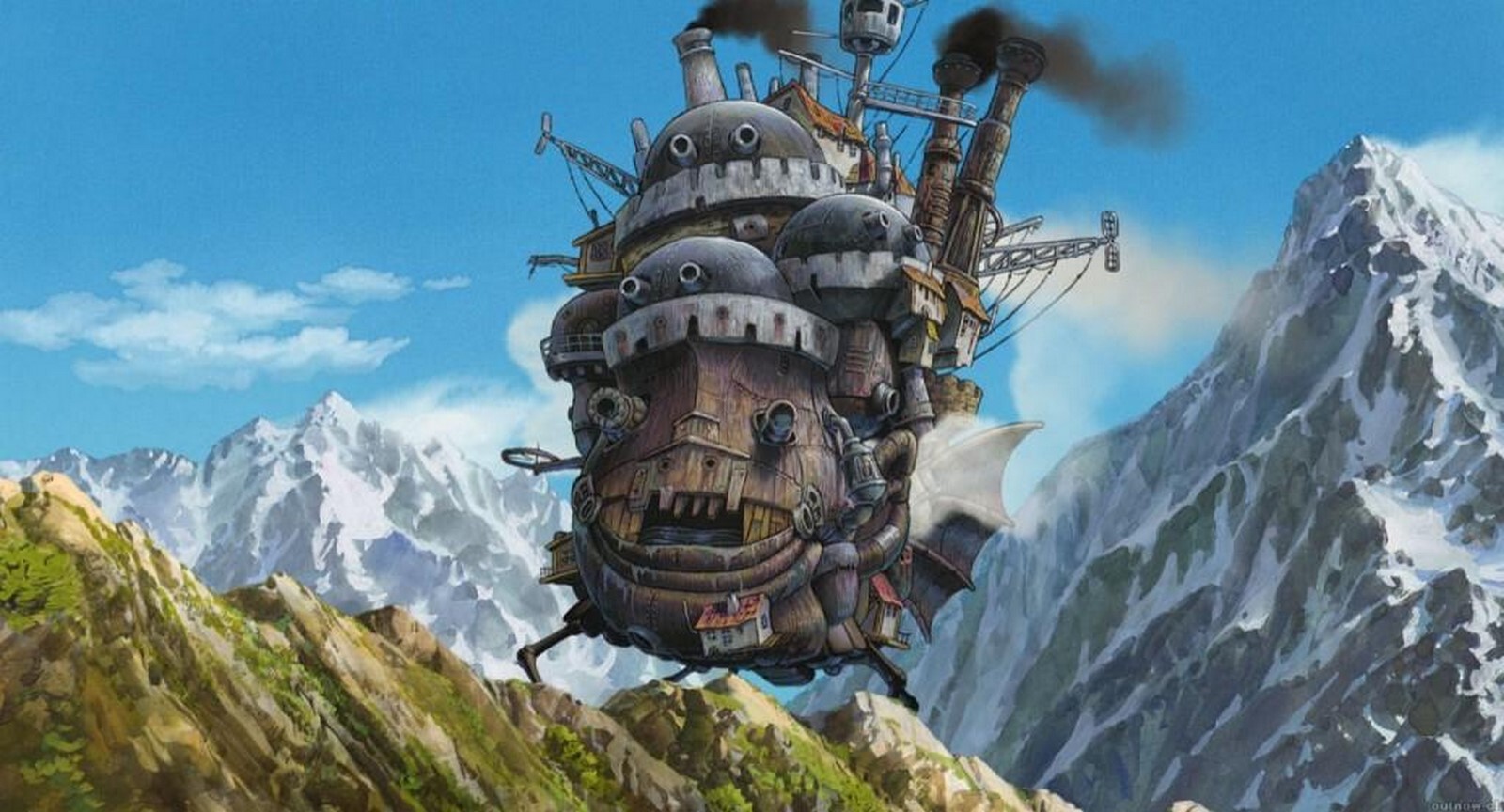
Studio Ghibli’s films do not merely gesture toward this ritualistic architectural structure; they frequently construct entire narrative plots around it. In Spirited Away, the young protagonist Chihiro must physically cross a bridge to transition from the ordinary human world into a vast realm of spirits dominated by a sprawling traditional bathhouse, with the narrative tracking her psychological growth as the building’s interior spaces gradually open up to her. Similarly, in Howl’s Moving Castle, the protagonist Sophie enters through a magical threshold into a shifting, chaotic castle. The interior of this mobile structure serves as a direct representation of the psychological inner world of the wizard Howl, and Sophie gradually brings order to the space as she becomes incorporated into this strange new reality. In both cinematic examples, the characters linger in an extended, transformative liminal condition—no longer fully anchored to their old reality, yet not entirely settled into their new one.
However, the architecture of contemporary living often works directly against these psychological needs. Modern apartments featuring open-plan layouts or monospaces frequently create undifferentiated rooms, causing the traditional rite of entry to dissolve entirely. The rise of hybrid work models further erodes these boundaries, dragging the stressful demands of the professional exterior world directly across the domestic threshold that once definitively ended them. Furthermore, homes heavily featured and curated on social media tend to be staged specifically for the gaze of strangers, prioritizing visual legibility over the messy, accumulated personal memory that makes a space truly felicitous in the first place. Interestingly, Gaston Bachelard was already lamenting this trend as early as 1958, warning that in the modern industrial city, "there are no houses," but rather populations of inhabitants living in isolated "superimposed boxes."
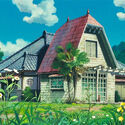
Beyond capturing the ritual of arrival, Ghibli’s films offer a vital opportunity to escape the hyper-accelerated pace of contemporary life by immersing viewers in moments of profound stillness within spaces that feel simultaneously magical and hyper-realistic. Once viewers are fully incorporated into these animated worlds, directors like Hayao Miyazaki deliberately slow down the pacing. In Spirited Away, a famous sequence lingers for nearly four uninterrupted minutes on Chihiro sitting quietly on a moving train with absolutely no dialogue. In Howl’s Moving Castle, the film dedicates a full minute to Sophie sitting in front of an open hearth, with the camera emphasizing the tactile architectural details of the massive stone fireplace and the soft, half-lit room surrounding her.
Renowned film scholar Susan Napier, in her authoritative study Miyazakiworld: A Life in Art, identifies this recurring stylistic choice as a cinematic reflection of the traditional Japanese aesthetic concept mono no aware—a gentle, empathetic awareness of the transience of ordinary moments, which are valued precisely because they are fleeting and ephemeral.
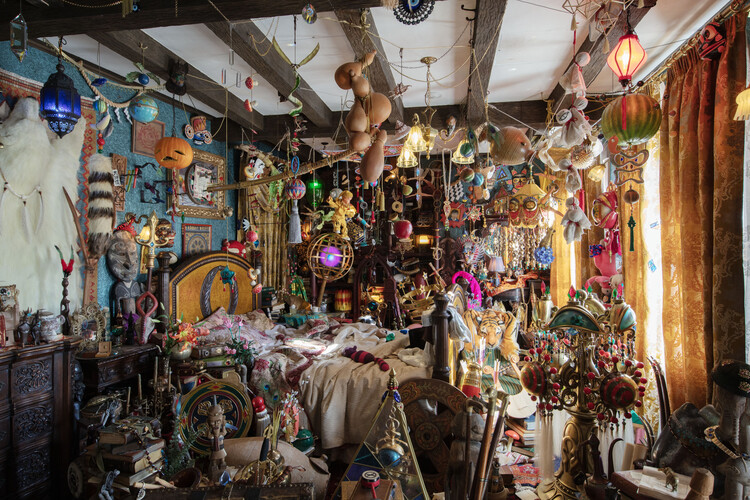
Living as we do in an era that aggressively prioritizes productivity, efficiency, and constant connectivity, these quiet cinematic moments and the rich architectural representations of domestic rites offer a much-needed psychological refuge. They allow modern audiences to temporarily escape into spatial dynamics that contemporary life rarely affords the time to experience. In doing so, these works help modern viewers reconnect with their own forgotten felicitous spaces. The powerful nostalgia evoked by Studio Ghibli films is no mere sentimental coincidence; it serves as a timely reminder for contemporary architects and designers that the built environment can—and should—create spaces that are genuinely worth loving and returning to at the end of every day. While a house cannot magically grant anyone extra hours in a day, it can be deliberately planned, built, and arranged to hold and honor that essential stillness.
This article is part of the ArchDaily Topic: The Lure of Escapism in Architecture and Alternative Worlds. Every month ArchDaily explores a central theme in-depth through original articles, interviews, news features, and architectural projects from around the globe.