After a long day zigzagging through Venice’s narrow streets, elbowing past crowds at every turn, arriving back in the historic Cannaregio district feels like a genuine relief. More than that, it feels like a reward. Once travelers move past the Strada Nova, the main pedestrian artery that cuts through the neighborhood, the dense crowds begin to thin out significantly. By the time one steps into the lobby of the newly opened Orient Express Venezia—greeted by cool stone floors, plush velvet sofas, and soaring ceilings—the bustling hordes of the city center become a distant memory. Out back, the sun-dappled courtyard feels like a quiet sanctuary, where striped banquettes line walls of lush greenery and fringed umbrellas shade the tables from the Mediterranean sun.
No one needs to be told about the striking appeal of Venice. In fact, as overtourism continues to strain the historic municipality, some locals and urban planners might argue that the destination would benefit from fewer people knowing about it. As a destination, Venice is as deeply appealing as it is frequently off-putting for those navigating its peaks. Travelers who have experienced the city know how shockingly beautiful it can be, starting from the very moment of arrival. The journey from the airport via a sleek wooden motorboat remains one of the most spectacular transfers in the world. Whizzing across the open lagoon before slowing down as one nears the island of Venice, cruising quietly under arched bridges and past grand pink- and apricot-colored palazzos that plunge straight into the water, offers a cinematic introduction.
Yet, stepping onto land, especially during the high season stretching from June through September, changes the dynamic drastically. Visitors are almost immediately swept up in dense crowds. Selfie sticks dangle off nearly every footbridge, and tightly packed tour groups shuffle obediently behind guides waving flags in the air. Under these conditions, the legendary romance of the floating city is easily lost.
Still, this is Venice—a city so singular, historic, and visually arresting that it remains exceptionally hard to resist. "Venice will always be Venice," says Fulvio De Bonis, CEO and founder of Italy-based travel company Imago Artis. "It’s one of those places our clients want to come back to again and again. There really is no other city in the world like it."

As visitor numbers continue to climb—Venice logged nearly 5.9 million tourist arrivals in 2024, representing its highest ever recorded volume and a 2.5 percent increase over 2023—some major hospitality brands are looking for solutions away from the epicenter. Rather than compounding congestion around San Marco, hotels are opening up in quieter corners of the city and across the surrounding lagoon.
"We are seeing more luxury hotels looking at neighborhoods such as Cannaregio, which gives them the opportunity to offer something a little different—and, importantly, to become a starting point for discovering other parts of the city and the lagoon," De Bonis explains.
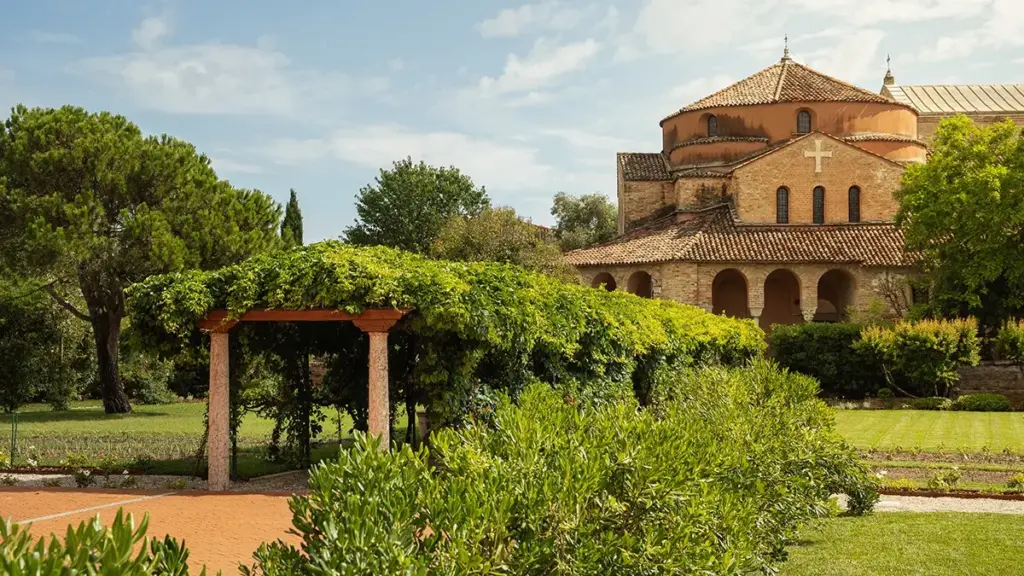
Over the past few months, several high-profile properties have opened their doors far from the heavy foot traffic of St. Mark’s Square. In May, the Orient Express brand officially launched its Venice property in Cannaregio. Across the Giudecca Canal on the neighboring island of Giudecca, French hospitality group Airelles opened its first hotel outside of France, occupying a meticulously restored 16th-century palace just a five-minute boat ride from St. Mark’s. Meanwhile, on Torcello island—situated about six miles northeast of central Venice, just beyond Burano—the famed Cipriani family reopened the historic Locanda Cipriani. The legendary inn, which first welcomed guests in 1947, reopened following an extensive two-year restoration. All of these strategic openings are unlocking parts of the wider Venetian ecosystem that many traditional daytrippers never venture out to see.
Naturally, these developments do not come without local debate. Some residents have expressed frustration as private islands and historic buildings are increasingly acquired by international luxury groups, a trend critics argue continues to squeeze permanent residents out of the lagoon. However, De Bonis notes that if these new luxury hotels succeed in exposing visitors to cultural sites and neighborhoods far beyond the standard tourist hot spots, the broader impact could prove beneficial.

"I don’t think the answer is to avoid Venice," De Bonis says. "Rather, we should embrace it in the right way." He also points out that private investment can play a vital role in salvaging crumbling urban infrastructure. "There is also a positive side to restoring and preserving some of Venice’s beautiful historic palazzi, giving them a new life while protecting an important part of the city’s heritage."
The Orient Express Venezia serves as a prime example of this preservationist approach. Set within the 15th-century Palazzo Donà Giovannelli, the hotel reopened this spring following an ambitious eight-year restoration led by architect and interior designer Aline Asmar d’Amman. Known for steering the art direction of the Hôtel de Crillon’s prominent reopening in Paris and for developing Karl Lagerfeld’s exclusive marble furniture collection, Asmar d’Amman worked carefully to preserve the palazzo’s original frescoes, structural pillars, and mosaic floors.
Alongside these historic elements, she introduced subtle design touches inspired by the legendary railway carriages associated with the Orient Express brand. Among them is the Wagon Bar, a small Art Deco space styled to evoke a classic train carriage while seating just 20 guests. The property projects the feel of a quintessential Italian palazzo, complete with glitzy chandeliers dangling from beamed ceilings, intricate tapestries, and decorative plinths topped with classical sculptures.
The building’s entrance offers a quiet, cavernous space defined by a magnificent spiral staircase carved from stone and fitted with wrought-iron railings. Stepping out onto the street in the morning yields a stark contrast to the chaos of San Marco: visitors encounter only a quiet alleyway and neighborhood residents going about their daily routines. Guests arriving by boat from the railway station or airport glide smoothly up an empty canal, approaching a water entrance where a grand, rosy Gothic facade rises directly out of the lagoon.

Despite the serene seclusion of its Cannaregio setting, the attractions that have made Venice a global icon are not far away. The bustling Rialto Bridge is a mere 15-minute walk from the property. Furthermore, Cannaregio itself boasts a rich and complex history. Once home to grand Gothic palaces and traditional artisans’ workshops, the district became the site of the city’s historic ghetto in 1516, an enclosed area where Venice’s Jewish community was forced to live. Today, Cannaregio stands as the city’s most populous residential district, maintaining a vibrant everyday neighborhood character.
While visitors may still need to brave the crowds to reach cultural institutions like the Peggy Guggenheim Museum or the newly opened Fondazione Dries Van Noten, navigating dense tourist corridors is entirely unnecessary when searching for an exceptional meal. Just a five-minute walk from the Orient Express property lies the Rio della Misericordia, a historic canal flanked by lively neighborhood restaurants and watering holes that provide an ideal setting for an evening out.
A strong starting point is Vino Vero, a laid-back natural wine bar distinguished by its green awning. Patrons can order a glass of chenin blanc alongside a selection of cicchetti—Venice’s local answer to tapas, featuring slices of fresh baguette topped with ingredients like mortadella, artichoke, or savory pâté—before finding a seat right by the water. When the tables are fully occupied, locals and visitors alike simply perch on the edge of the fondamenta, letting their legs dangle over the canal while watching water traffic drift by.
For dinner, a short walk leads one canal over to Anice Stellato, an acclaimed establishment run by chef Mattia Cantonetti. The culinary program here is hyper-local, built around fresh ingredients sourced directly from the lagoon, offering dishes such as simple zucchini salad, classic pasta with tomatoes and mussels, and crispy fried sardines. As the sun sinks lower in the sky, the surrounding brick and terracotta facades take on a warm, golden glow. Afterward, visitors can wander through the neighborhood’s quiet alleys, passing beneath windows strung with laundry down to the local ferry stop, where the open lagoon turns a soft shade of pink in near-total tranquility.