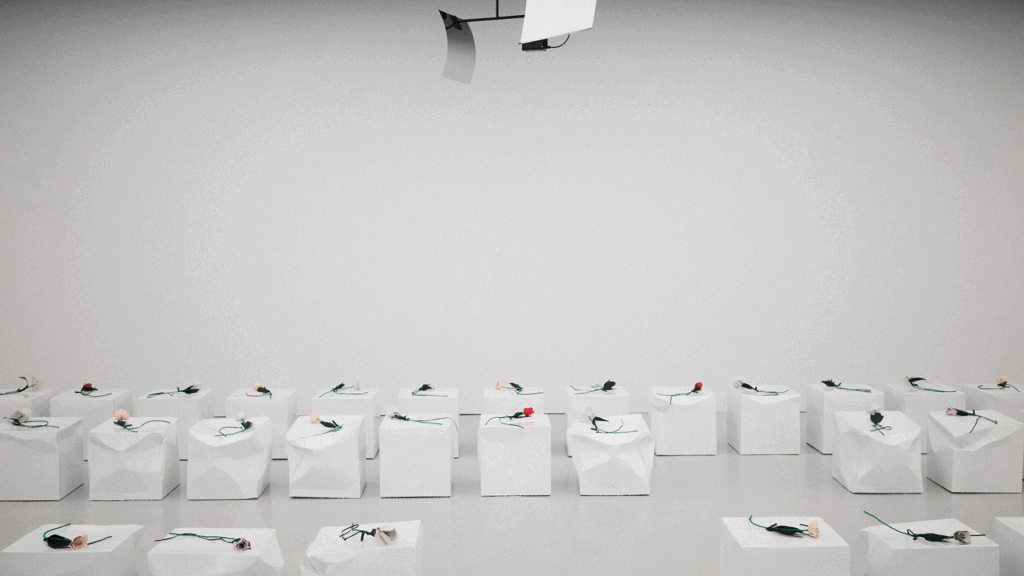
As the worlds of high fashion and contemporary art continue to find profound intersections on the runway, Italian luxury house Bottega Veneta has once again pushed the boundaries of spatial design and material exploration. For its anticipated Summer 2027 fashion show, the brand has commissioned Ukrainian artist Illya Goldman Gubin to create a striking series of sculptural stools. Rather than relying on traditional industrial furniture design, Goldman Gubin has turned ordinary, utilitarian cardboard boxes into unique seating arrangements through an intensely physical, performative process—embracing, folding, and crumpling each box with his own body before hardening them into permanent architectural objects.
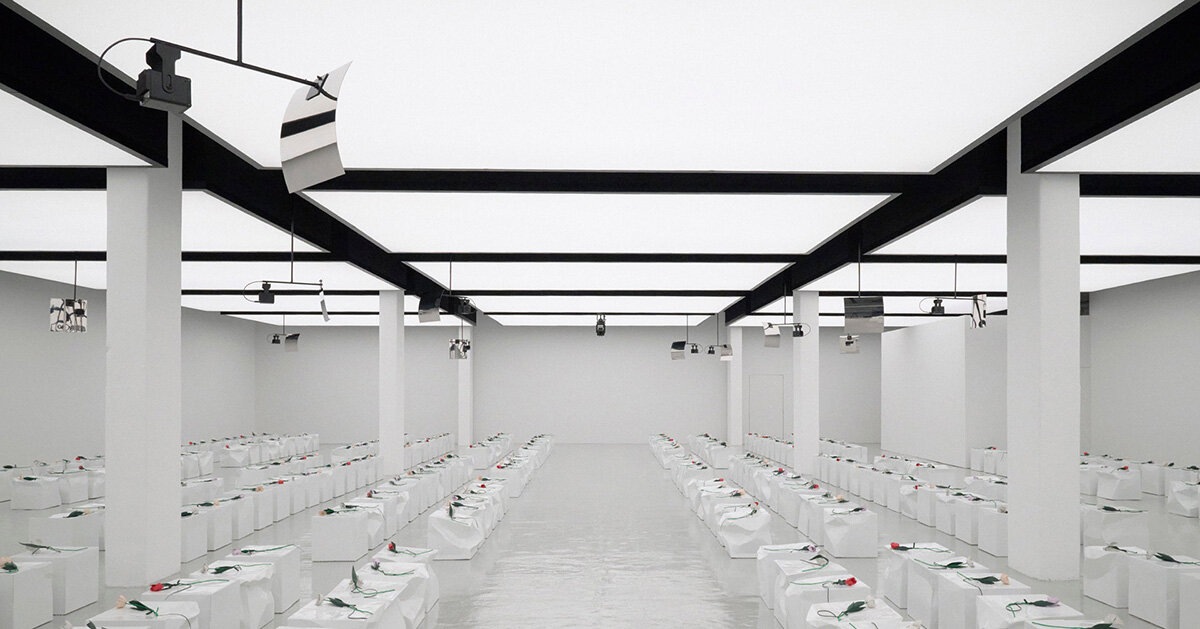
The collaboration brings a distinct tactile philosophy to the runway environment. Known for his experimental approach to everyday materials—ranging from sculptures and installations to functional furniture—Goldman Gubin treats cardboard not merely as a medium, but as a vessel of memory and physical interaction. For this special commission, each stool begins its life as a standard, unassuming cardboard box: an industrial object designed exclusively to transport goods from one destination to another before being discarded. By redirecting the lifecycle of these boxes, the artist grants them a surprising second purpose, transforming containers meant to carry objects into architectural forms capable of supporting the human body.
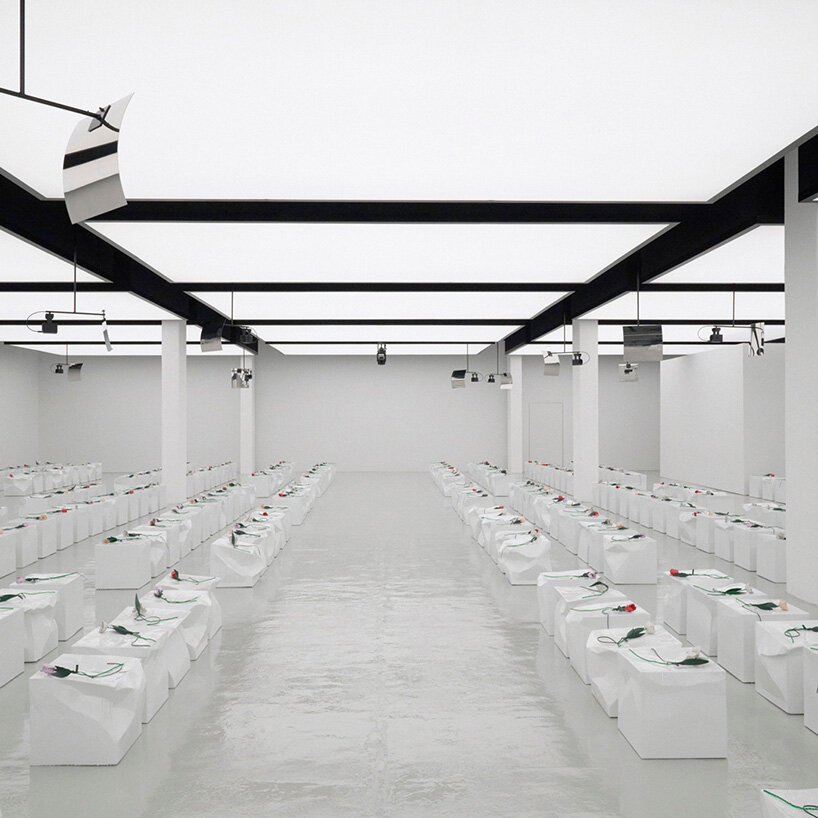
Illya Goldman Gubin Shapes Cardboard Through an Embrace
The creation process behind the Bottega Veneta seating is defined by direct physical contact. Instead of utilizing mechanical presses, molds, or digital fabrication tools, Goldman Gubin relies entirely on his own physique to dictate the geometry of each piece. He physically embraces, twists, and compresses individual cardboard boxes, applying body weight and muscular force to fracture the rigid planes of the material. This intimate, energetic engagement results in an unpredictable series of organic folds, deep creases, and subtle surface irregularities that remain entirely unique to every single stool produced for the collection.
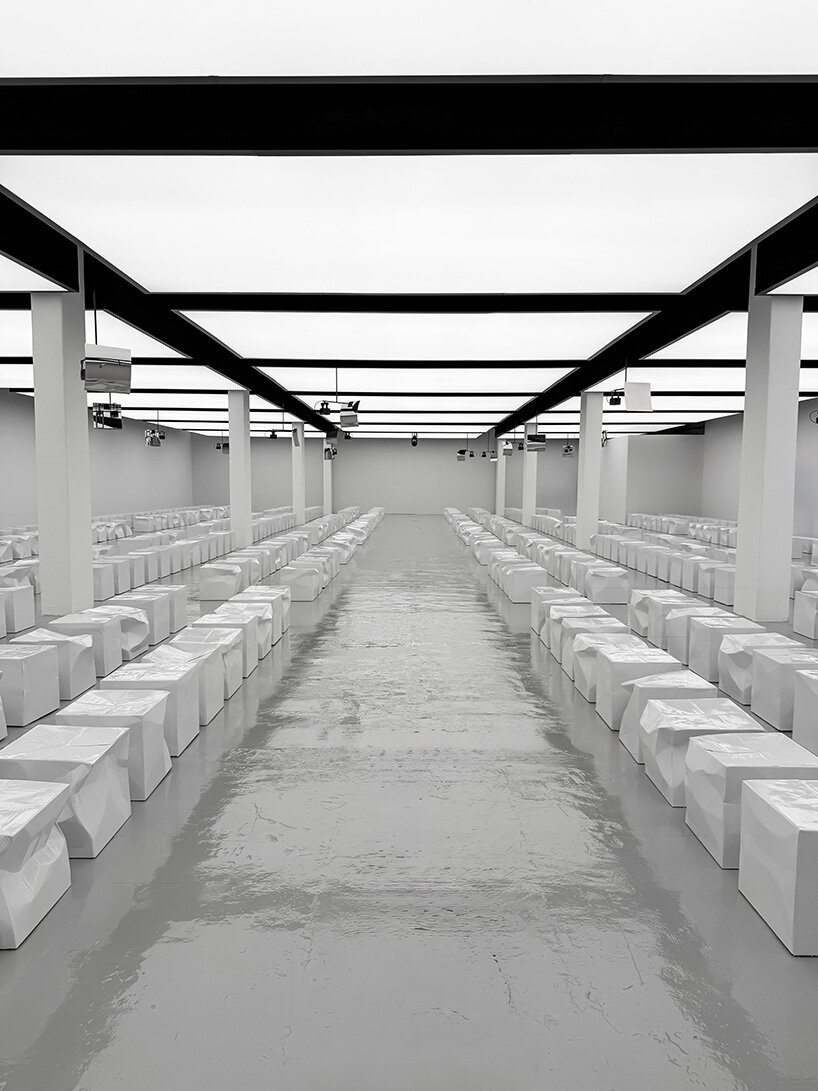
Once the primary form is achieved through this bodily dialogue, Goldman Gubin stabilizes and transforms the fragile paper structures by reinforcing them with layers of resin and fiberglass. This crucial technical intervention freezes the ephemeral gesture in time, converting flexible, perishable cardboard into a rigid, durable composite material. Despite the heavy-duty coating of resin and fiberglass, the original character of the box is never erased. The foundational creases, dents, and overlapping seams remain fully legible beneath the hardened outer shell. Because every box reacts differently to the artist’s physical embrace, no two stools are identical, resulting in a diverse family of seating elements where the distinct signature of the maker’s body is permanently inscribed into the furniture.
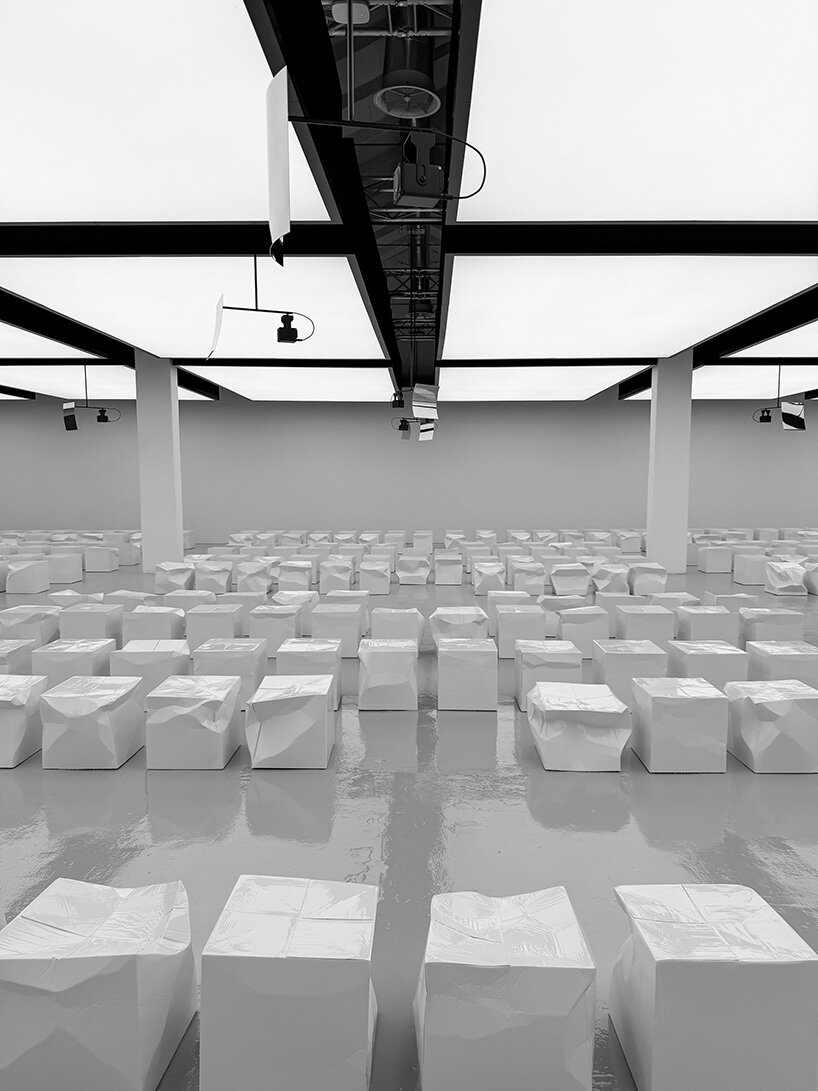
Bottega Veneta’s Intreccio Inspires the Folded Structure
Beyond the raw physicality of the manufacturing process, the design of the stools draws a conceptual bridge to Bottega Veneta’s iconic design heritage. The fashion house is globally renowned for its signature Intreccio technique—an intricate method of weaving thin strips of leather, known as fettucce, to create supple, durable, and highly textured surfaces for handbags, accessories, and garments. Goldman Gubin subtly echoes this celebrated artisanal tradition through the clever manipulation of the cardboard boxes’ structural geometry.
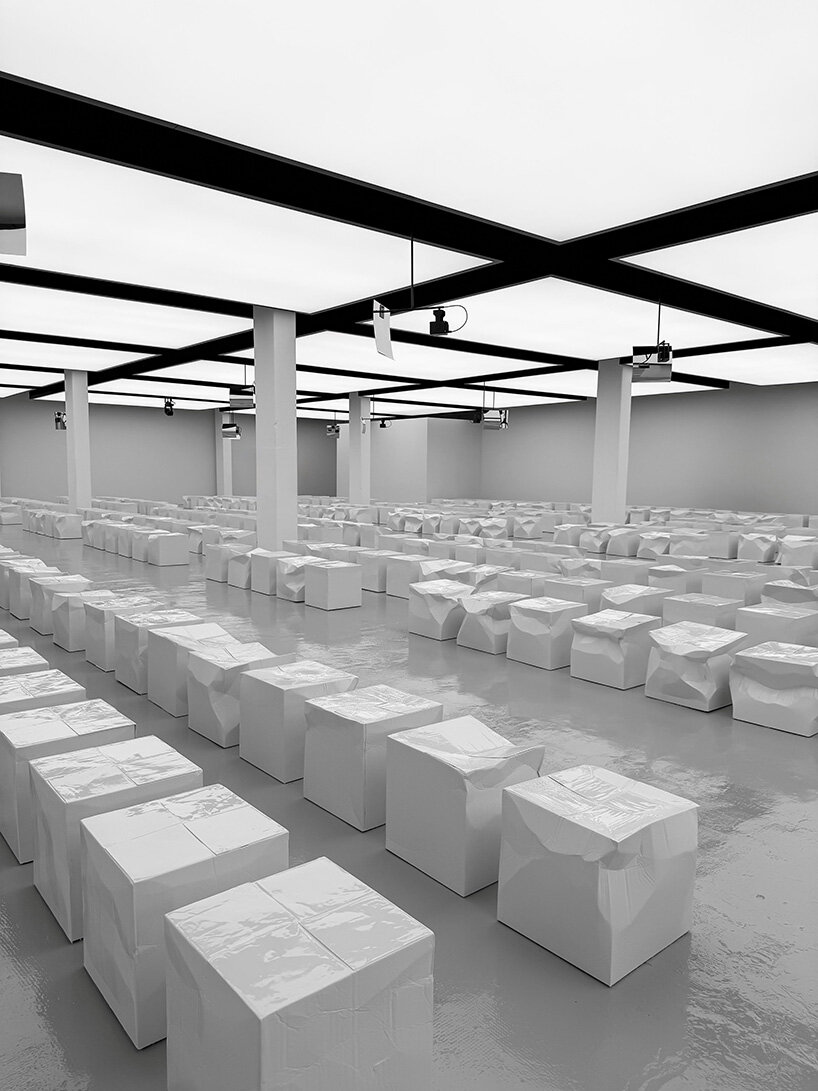
Rather than cutting away or discarding the container’s original packaging flaps, the artist works them into one another, interlocking the structural tabs to establish a complex, overlapping grid. This folding technique mirrors the visual rhythm of interwoven leather ribbons, creating a sophisticated dialogue between high-craft luxury fashion and industrial discard. The box’s natural flaps and seams are purposefully woven together, establishing an architectural surface that pays silent homage to the meticulous hand-weaving practiced in Bottega Veneta’s leather-working ateliers.
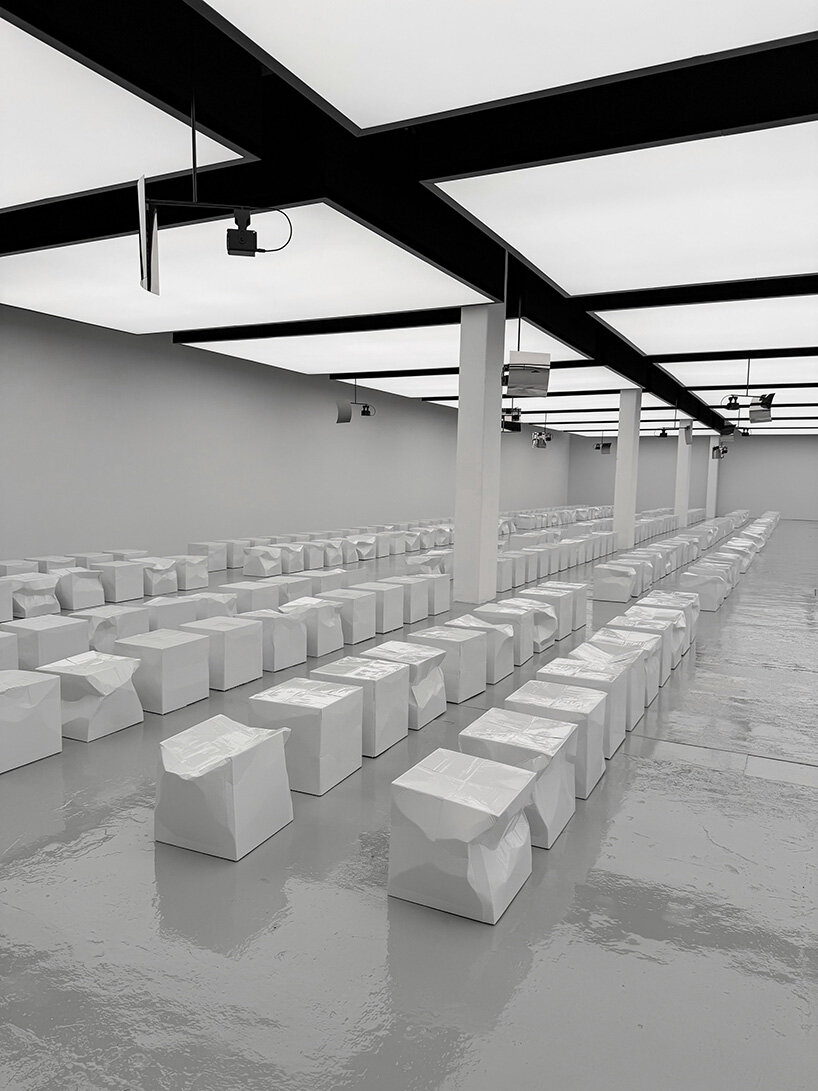
Through this collaborative endeavor, the ordinary becomes extraordinary. A material typically associated with shipping logistics, waste, and ephemera is elevated into collectible sculptural design. By preserving the visible history of folding, crushing, and human contact beneath a protective skin of resin and fiberglass, Illya Goldman Gubin has successfully bridged the gap between raw artistic performance and refined fashion presentation. The resulting stools for Bottega Veneta’s Summer 2027 show stand as a testament to the power of tactile craftsmanship, transforming fleeting physical gestures into lasting architectural statements for the runway.