For anyone who grew up around the turn of the millennium, the default Windows XP background—known officially as “Bliss”—is an inescapable cultural artifact. Featuring crisp white cumulus clouds drifting across an impossibly vibrant blue sky over rolling green hills, it holds the title of the most viewed photograph in history. Images of fluffy, atmospheric clouds are so ubiquitous in modern visual culture, appearing everywhere from smartphone weather apps to corporate slide decks, that it is almost impossible to imagine a time when capturing them posed one of the greatest technological hurdles in the history of photography.
This fascinating historical paradox is at the heart of Chasing Clouds, a captivating and visually rich exhibition currently on view at the Metropolitan Museum of Art. Curated as a pleasing romp through the awkward adolescent phase of photographic technology, the exhibition explores how early practitioners grappled with the atmospheric elements during photography’s first century, spanning from the early 1800s up to 1929. By bringing together a unique union of art and science, the museum traces how generations of artists and technicians attempted to solve a fundamental chemical flaw that threatened to render the sky an eternal blank void.
When photography was first introduced to the world, it was celebrated as “the pencil of nature,” a miraculous scientific breakthrough capable of rendering the physical world with unprecedented precision. However, the earliest photographic processes—such as the calotype and early paper negatives—came with significant limitations. Chief among them was an extreme chemical sensitivity to blue light. Because the sky is naturally saturated with blue wavelengths, these early emulsions reacted far too quickly to the atmosphere above. By the time the landscape, architecture, or human subjects on the ground were properly exposed, the sky had already become overwhelmingly overexposed, registering on the final print as a flat, featureless, and glaring white space.
This technical deficiency forced early photographers to adopt various creative workarounds. In some instances, the stark, blinding white skies lent images an accidental minimalist mystique. A prime example can be seen in John Beasley Greene’s 1853–54 photograph, “The Nile in Front of the Theban Hills.” In Greene’s work, the vast, empty white void above the ancient landscape creates a haunting, almost surreal aesthetic that modern viewers might mistake for a deliberate artistic choice rather than a chemical necessity.
Other photographers, however, found the stark white expanse unacceptable and sought more direct interventions. Unwilling to accept a blank sheet of paper where a dynamic sky should be, many nineteenth-century practitioners resorted to painting clouds directly into their photographic landscapes by hand, blurring the lines between painting and photography long before the advent of digital manipulation. As the exhibition demonstrates, photographic fakery is just as old as the medium itself.

A major technical breakthrough eventually arrived thanks to French photographer Gustave Le Gray. Faced with the persistent challenge of balancing the exposure between the bright sky and the darker earth, Le Gray figured out a remarkably inventive solution: he began stitching together two separate pictures for a single final image. One negative was meticulously calibrated to capture the delicate details and cloud formations of the sky, while a second negative was exposed for the land or sea below. By carefully combining these elements during the printing process, Le Gray produced dramatic, breathtaking seascapes that captured the imagination of the Victorian public, proving that art and technical ingenuity could overcome the rigid limitations of early chemistry.
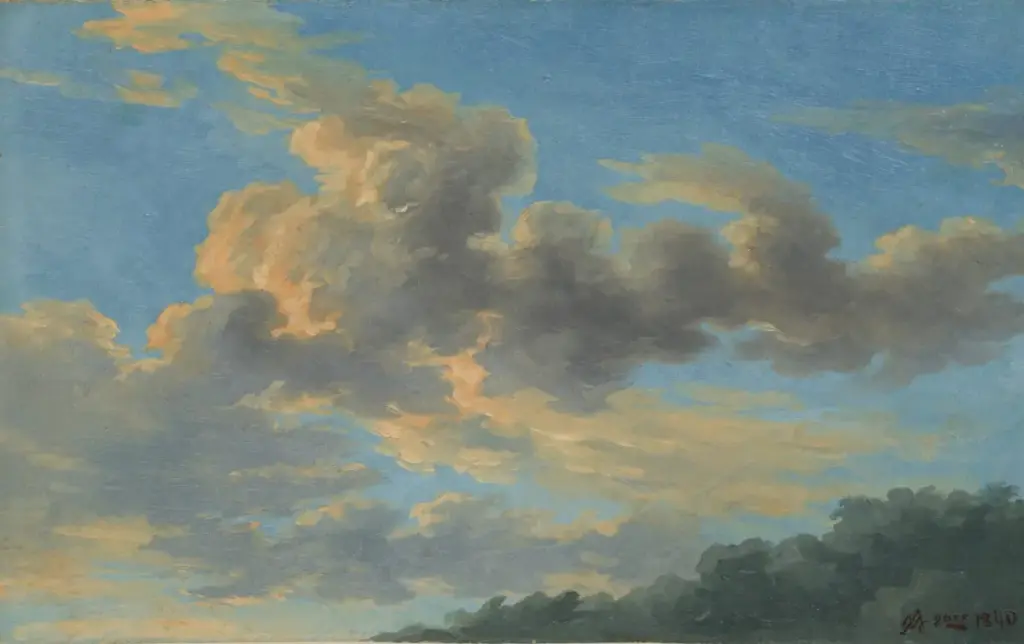
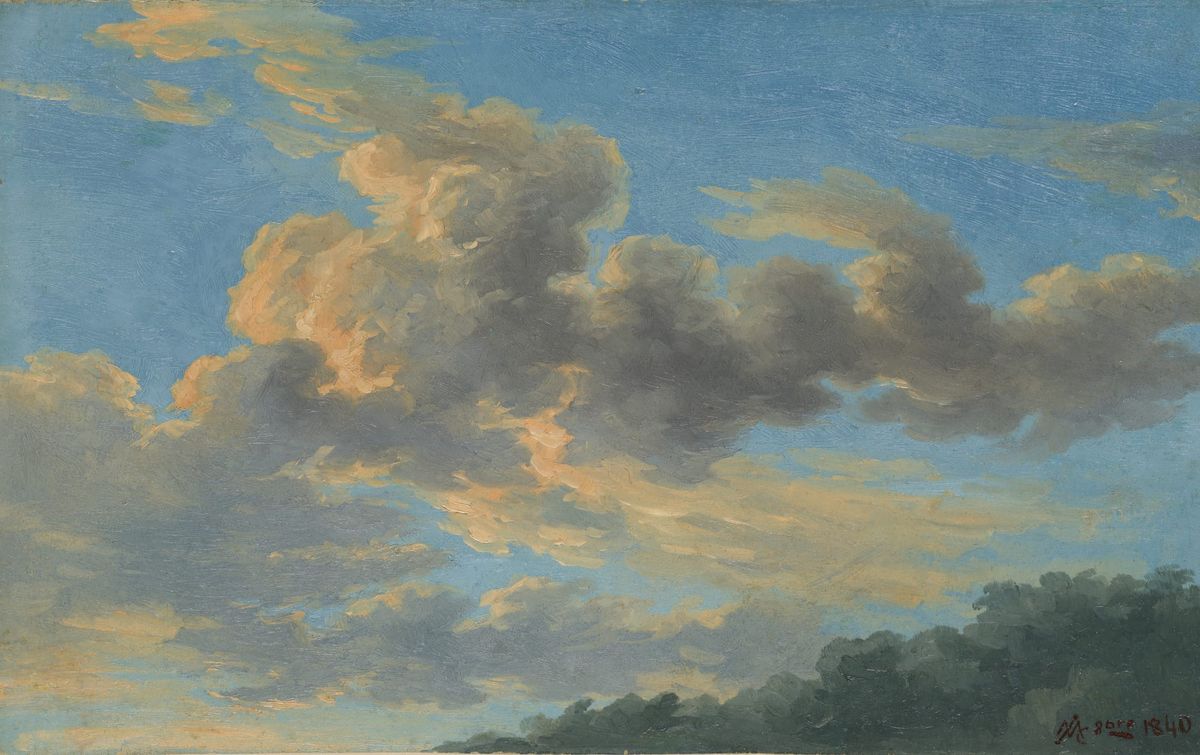
Visitors walking through Chasing Clouds will notice that the exhibition is structured as an ongoing dialogue between painting and technology rather than a rigid, linear march of scientific progress. The display begins appropriately with painted cloud studies—such as Jean-Michel Cels’s evocative 1840 oil-on-paper work “Cloud Study in the Late Afternoon”—and concludes with the sleek experiments of photographic modernism. By tracing the medium’s evolution through this artistic exchange, the Met avoids treating early techniques as mere stepping stones to be discarded. Instead, the exhibition highlights how artists constantly negotiated with the tools at hand, reminding viewers that the notion of technological obsolescence is often just a capitalist public relations trick designed to favor the newest gadget over older, deeply expressive ways of seeing.