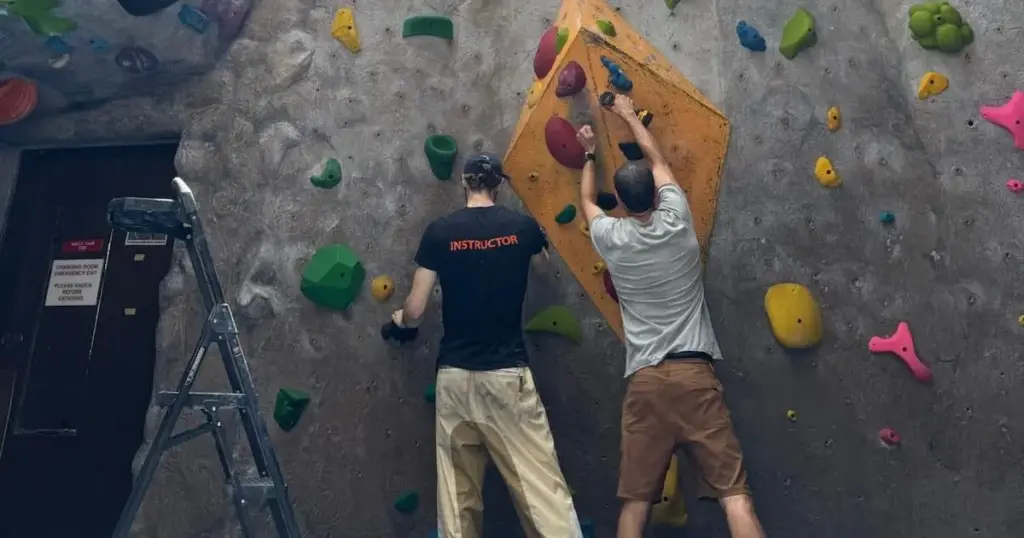
For 34 years, it has stood as a bastion of unpretentious community tucked away in a corner of Hell’s Kitchen. But after more than three decades of operation, New York City’s oldest indoor rock-climbing gym—housed within the Manhattan Plaza Health Club—is scheduled to close its doors permanently on September 30.
To the uninitiated, the facility might have looked a bit rough around the edges. Spanning a cramped 5,000 square feet inside a space that was formerly a racquetball court, the gym offered a stark contrast to the sprawling, high-tech mega-facilities that have proliferated across New York in recent years. There were no speed-climbing walls, no dedicated high-end training rooms, and no sleek architectural finishes. Instead, visitors encountered a tight-knit, fiercely loyal ecosystem where every square inch was maximized, and where the prevailing ethos was defined less by corporate fitness culture and more by a distinct, countercultural charm.
On the climbing walls, handwritten duct-tape labels marked difficult holds with idiosyncratic and humorous monikers like “Picante,” “Spicy,” or “You Don’t Really Need Me.” In a quirk that occasionally startled outsiders, climbing holds were installed right across a window, leading to moments of awkward, unplanned eye contact with passersby on the street outside. The subculture of the gym was wonderfully eccentric. Members regularly brought their cats, their infants, or their mothers. It was common to spot Mika, a diminutive husky-Chihuahua blend wearing a vest, cowering quietly in the corner while his talkative Australian owner chatted nearby.
For many local climbers, the gym’s primary appeal—aside from its welcoming atmosphere—was its affordability. Long before commercial gym memberships skyrocketed, the Manhattan Plaza Health Club climbing space gained legendary status among New Yorkers who found it by simply Googling the phrase “cheapest climbing gym in NYC.” At $49 a month, the membership fee included all the essentials: chalk, harnesses, shoe rentals, and bandages. By comparison, the city’s newer climbing facilities, many of them operated by massive national chains, charge upwards of three times that amount, often without including basic perks in the baseline price.
The megagyms certainly offered advantages. Facilities like Movement’s Gowanus location occupy vast footprints—spanning 36,000 square feet—alongside yoga classes, private trainers, and specialized amenities. Yet the tiny Hell’s Kitchen gym offered something money could rarely buy elsewhere in the modern fitness landscape: a deeply personal, unhurried community rooted in the early days of indoor climbing.
Opened in 1992, at a time when indoor climbing was still very much a fringe pursuit, the gym was a foundational component of Manhattan Plaza itself. Built in the postwar era, the Hell’s Kitchen complex was originally created to provide subsidized housing for performing artists, serving as a historic home to an illustrious roster of creative residents over the decades, including Al Pacino, Alicia Keys, Timothée Chalamet, and Colman Domingo. While the residential portion was dedicated to artists, the complex’s massive fitness center—complete with a swimming pool and the climbing gym—remained open to nonresidents for a fee. This unique arrangement meant that casual visitors might find themselves sharing a swim lane with a Tony-nominated septuagenarian or running into comedian Lewis Black at the weekly farmers’ market outside.
Inside the climbing gym, the atmosphere remained remarkably ad hoc and informal. Rachel Michelson, a UX designer who joined the staff in 2023, noted that the tight quarters naturally forced people to interact. Wearing headphones was a rarity; instead, climbers working on the same difficult route would naturally strike up a conversation, or a stranger resting on the mats below would shout words of encouragement. As Michelson put it, it was almost impossible not to make friends within those walls.
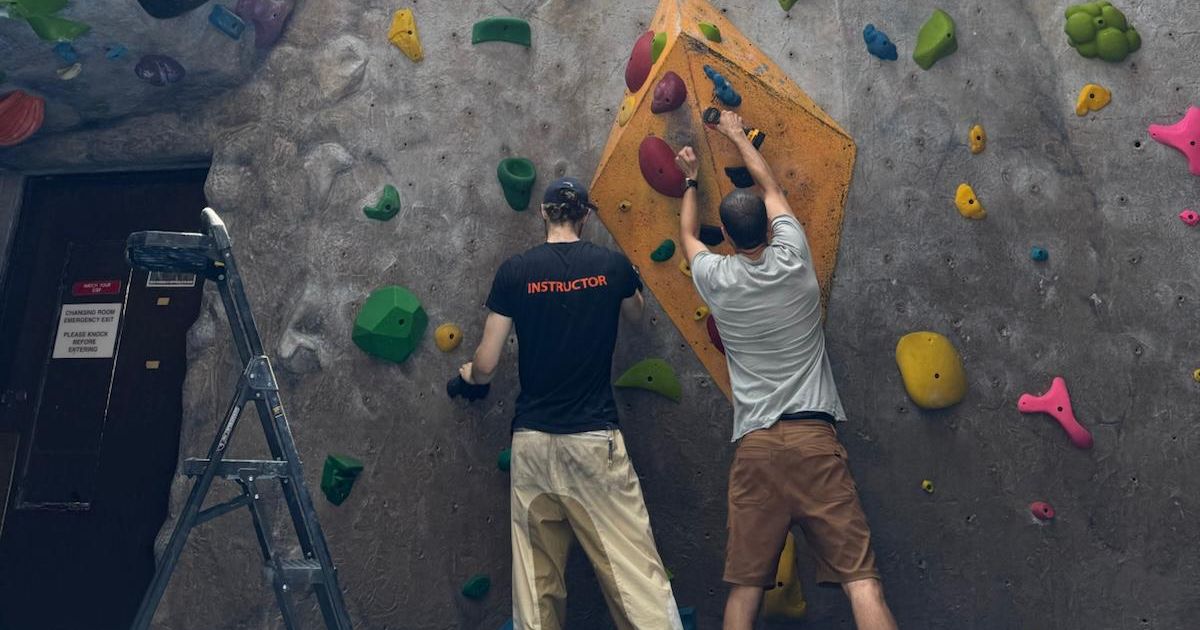
Presiding over the contained chaos in recent years was 36-year-old Ryan Shaefer, who managed the gym starting in 2021. With his signature style—sandals patched with duct tape, a hot-pink softball jersey, and toenails painted a fading metallic purple—Shaefer embodied a relaxed, surfer-adjacent energy. He firmly believed that rock climbing was fundamentally countercultural, even as its broader cultural footprint evolved into something mainstream and heavily competition-oriented.
That philosophy directly influenced how Shaefer managed the space and designed its routes. In a deliberate break from convention, he left anything above level two ungraded, wanting to prevent climbers from psyching themselves out or becoming intimidated by arbitrary numbers. He understood the psychological barrier firsthand, having once spent two years convinced he was incapable of climbing a V6 simply because a numerical label suggested it was beyond his reach. While route grades were kept on a sheet behind the front desk for those who specifically requested them, Shaefer always insisted that members look at a problem, evaluate it visually, and simply try it first.
His creative approach to route-setting extended to accommodating climbers with unique physical challenges. When a regular climber named Ed suffered an ACL injury and was forced to wear a heavy recovery boot, Shaefer constructed a custom route so the injured athlete didn’t have to stop climbing. Ed—affectionately dubbed “the resident silverback” by the manager—was also quick to point out one of the gym’s most unusual historical features: actual rock holds. While modern climbing facilities rely almost exclusively on manufactured synthetic holds, the Manhattan Plaza gym still featured real rocks bolted directly into the walls, offering climbers a tactile connection to outdoor rock climbing that had grown increasingly rare.
The gym’s low-key, adaptable nature also made it a refuge for members who didn’t fit the mold of the typical hardcore climber. Six years ago, Kathleen O’Brien and her son, Heath, stumbled upon the facility almost by accident after an outdoor pool was closed due to lightning and someone suggested they try climbing instead. Heath, who was roughly 10 or 11 years old at the time, is profoundly autistic, with limited language capabilities and significant sensory sensitivities. Though O’Brien initially doubted whether her son could participate, Shaefer welcomed him, starting him on the easiest wall and allowing him to progress entirely at his own pace. O’Brien later noted that Heath rarely had opportunities to experience being the “cool kid,” but the climbing gym gave him those rare, meaningful moments.
It is precisely this informal, community-first ethos that members say they will mourn most now that the facility is closing. In the weeks leading up to the closure, a grassroots campaign emerged to save the space. Rachel Burns, a member who commutes regularly from Crown Heights in Brooklyn, spearheaded efforts to organize the community. Members who had previously crossed paths only briefly on different climbing days quickly established communication channels via WhatsApp, launching an online petition and attempting to rally longtime residents of Manhattan Plaza to their cause.
The petition quickly gained momentum, surpassing 8,000 signatures as word spread across the city’s broader climbing community. Despite their passionate advocacy, the ultimate fate of the gym remained uncertain as the final days ticked down. Employees indicated that the neighboring Manhattan Plaza Racquet Club likely planned to convert the space into a tennis simulator, though neither the Manhattan Plaza Health Club nor the complex’s owner, the Related Companies, officially confirmed the plans or provided a public rationale for the closure.
Even as the deadline approached, members continued holding strategy sessions, surveying fellow climbers about potential price increases, exploring fundraising options, and searching for alternative operators willing to take over the space. For Burns and her fellow organizers, the fight was as much about making a statement as it was about preserving a physical location. As she reflected on the mobilization, even if the effort ultimately fell short, the process successfully raised awareness and galvanized a diverse, eccentric community that proved New York City’s climbing culture still holds space for the unorthodox.