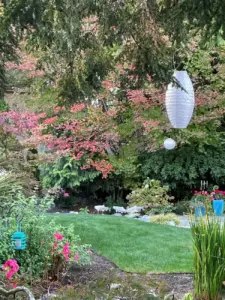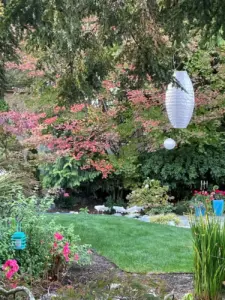
As the growing season begins its gentle descent into cooler weather, many gardeners assume the vibrant colors of the landscape have packed their bags until next spring. However, a visit to Rhonda’s enchanting garden in West Grove, Pennsylvania, proves that late-season landscapes can still offer plenty of visual drama. Situated in USDA Hardiness Zone 7a, Rhonda’s property is currently transitioning into its waning phase, yet it continues to showcase an unexpected palette dominated not by the traditional fiery oranges and yellows of autumn, but by soft pinks, deep magentas, and rich textures.
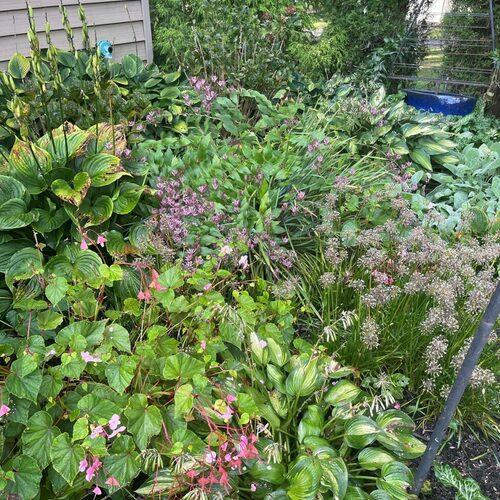
For gardening enthusiasts following the Fine Gardening Garden Photo of the Day (GPOD) series, Rhonda’s late-season display offers a masterclass in extending interest deep into the autumn months. Her landscape relies heavily on a thoughtful selection of shade-loving perennials and annuals that thrive as the canopy shifts and temperatures drop. Among the stars of her closing act are delicate Japanese anemones, hardy begonias, striking colchicums, vibrant tradescantias, unique toad lilies, and the fading, yet still majestic, foliage of hostas.
Embracing the Power of Plant Communities
One of the most notable aspects of Rhonda’s garden management philosophy is her strategic approach to reducing maintenance through natural density. Rather than battling persistent weeds across vast expanses of bare mulch, she has intentionally allowed certain robust plants to take over specific beds. This method aligns closely with modern ecological landscaping concepts, where dense plant communities naturally suppress unwanted weeds by eliminating open space and sunlight at the soil level.
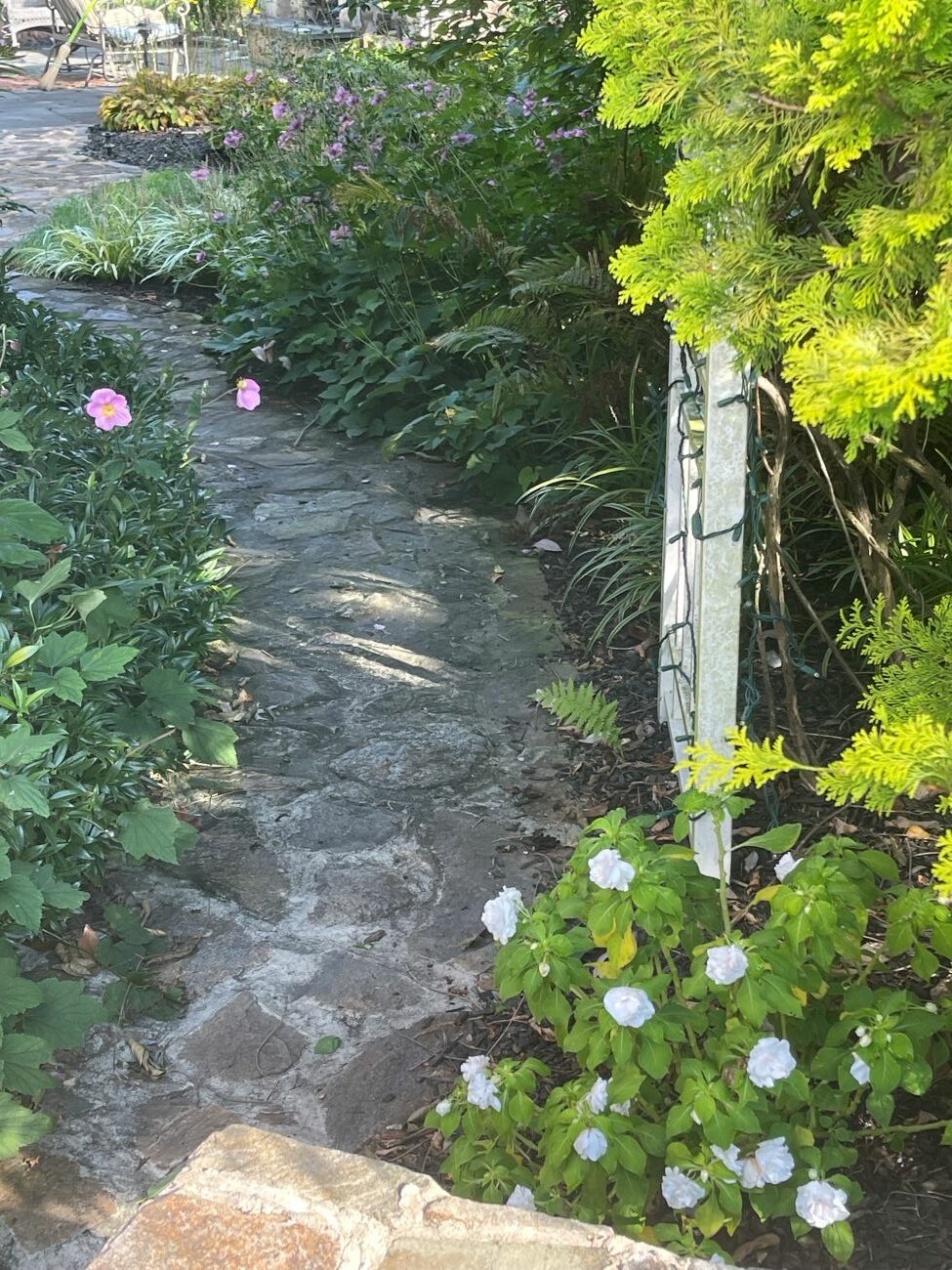
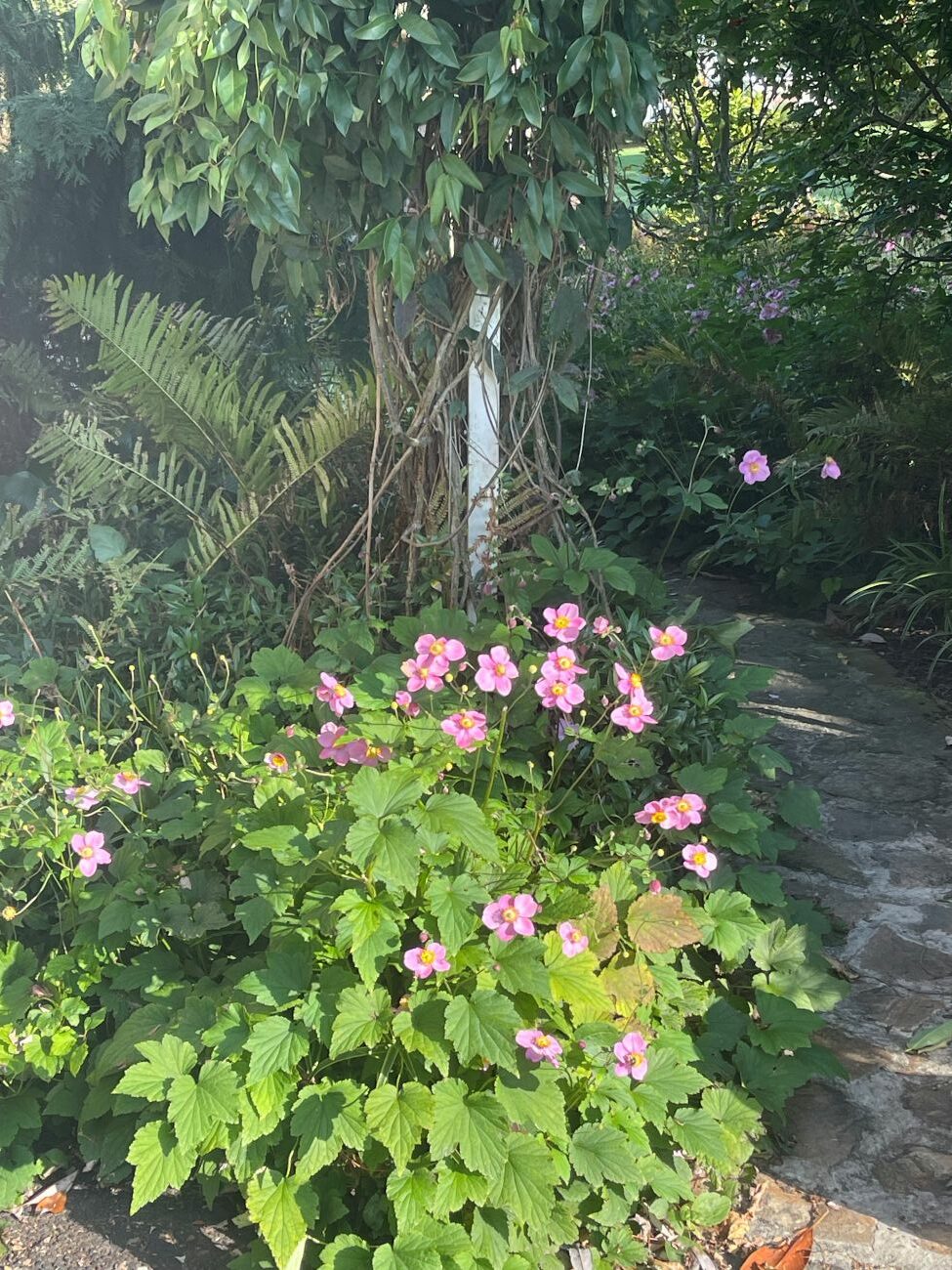
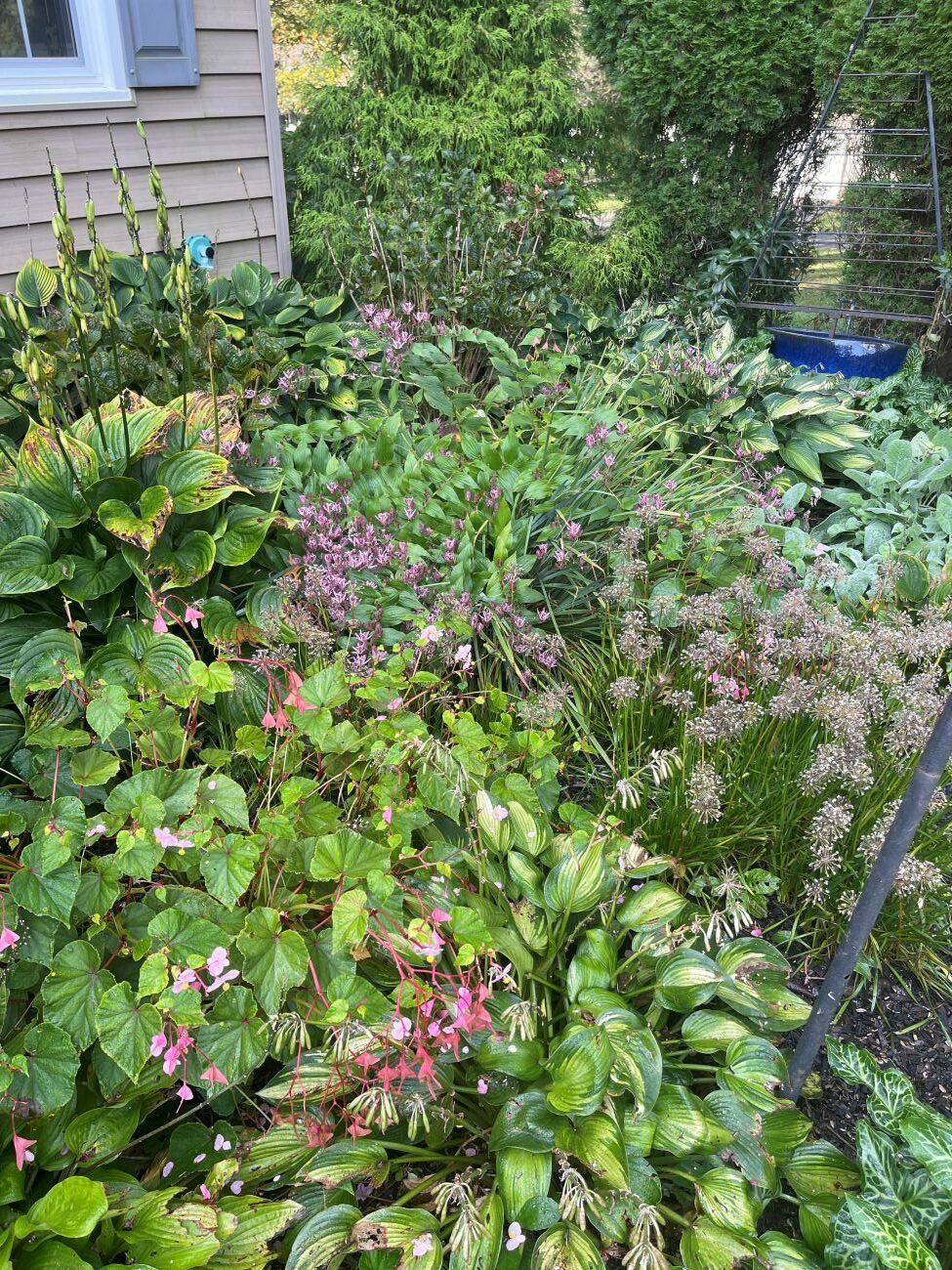
For instance, the garden beds dedicated to her anemones and hardy begonias are virtually weed-free simply because there is no room left for unwanted invaders. This dense planting style not only minimizes the labor-intensive chore of weeding but also creates a lush, naturalistic aesthetic that mimics the undisturbed floor of a woodland ecosystem. Winding natural stone garden paths and weathered brick patios weave through these overflowing borders, inviting visitors to take a closer look at the intricate details of the late-season flora.
A Symphony of Pinks and Shady Textures
While autumn is universally celebrated for its warm palette of rusts and golds, Rhonda’s garden takes a delightfully unexpected detour into cooler hues. Pink Japanese anemones stand out prominently against a backdrop of deep fern foliage and dense shade garden plantings, bringing an ethereal lightness to the landscape. These tall, elegant perennials sway gracefully in the autumn breeze, providing vertical interest just as many summer blooms are giving up the ghost.
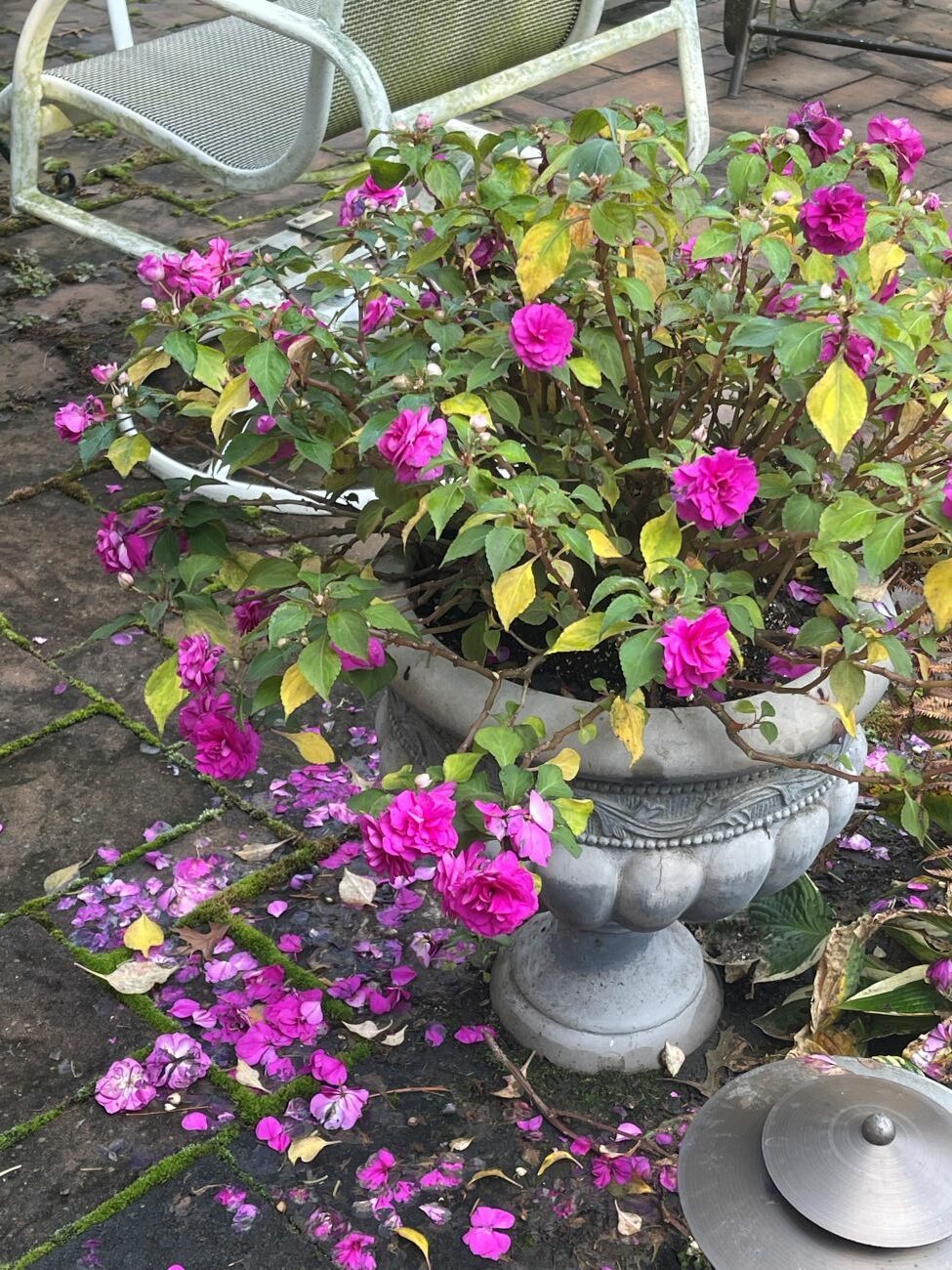
Equally captivating are Rhonda’s bright magenta double begonias. Grown as annuals in her Zone 7a climate, these cheerful blooms are still putting on a remarkable show as the season winds down. Positioned artfully in a weathered ornamental stone urn planter on a rustic brick patio, the plants create a striking focal point. Even the scattered petals accumulating on the brick surface below add a touch of romantic charm to the scene.
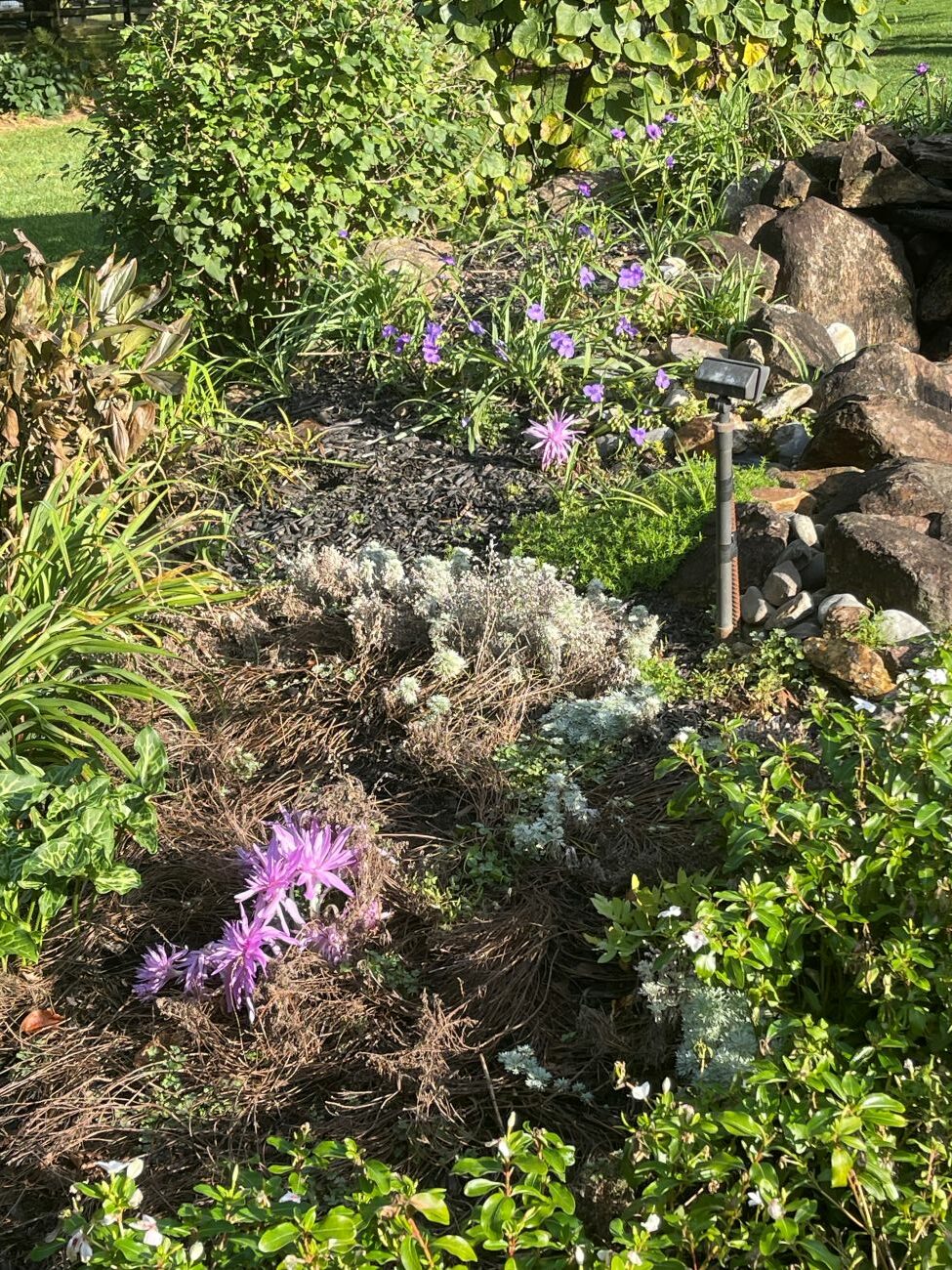
Adding to the seasonal surprise are the colchicums, often referred to as autumn crocuses. These fascinating bulbs emerge as a welcome shock to the senses in the fall, sending up their lavender-pink flowers long after their spring foliage has completely disappeared and faded from memory. Tucked neatly near natural rock garden borders, they serve as a reminder of nature’s cyclical surprises.
The Undisputed Favorite: Hardy Begonias
Among the diverse collection of plants waning in the West Grove garden, Rhonda’s absolute favorite remains the hardy begonia (Begonia grandis, Zones 6–9). These dependable perennials offer a masterclass in resilience and subtle beauty, featuring delicate pink flowers that mingle effortlessly with large green hosta leaves and other shade-tolerant companions. Unlike their tender annual counterparts, hardy begonias return reliably year after year, establishing themselves firmly in the garden’s permanent framework and providing dependable late-season color when other plants have already faded.
As the gardening community continues to share its seasonal triumphs and transitional landscapes through platforms like the GPOD series, contributions like Rhonda’s offer fresh inspiration for anyone looking to maximize their outdoor space. By leaning into shade-loving varieties, embracing natural density to control weeds, and welcoming unconventional autumn color palettes, gardeners in Pennsylvania and beyond can ensure their landscapes remain engaging from the first thaw to the final frost.