Welcome back to another edition of the Garden Photo of the Day, where gardening enthusiasts from all over share the vibrant beauty of their personal landscapes. Today’s destination takes us to the picturesque mountain community of Bozeman, Montana, situated firmly within USDA Hardiness Zone 5a. Here, a local gardener named Elizabeth is offering fellow enthusiasts a delightful glimpse back at the peak of her peony season earlier this year, showcasing a stunning floral display that captures the resilient spirit of high-elevation gardening.
While Elizabeth’s diverse landscape is home to an impressive collection of hydrangeas, elegant roses, towering delphiniums, and a wide array of other cherished perennials, it is the magnificent peonies that have earned the right to step into the spotlight today. Peonies, scientifically classified primarily as Paeonia hybrids and generally thriving across Zones 3 through 8, are renowned for their ability to withstand challenging winter climates before bursting forth with some of the most opulent and fragrant blossoms of the entire growing season. In Elizabeth’s Bozeman garden, these robust plants were putting on quite a show, commanding attention and transforming ordinary roadside and foundation beds into breathtaking visual masterpieces.
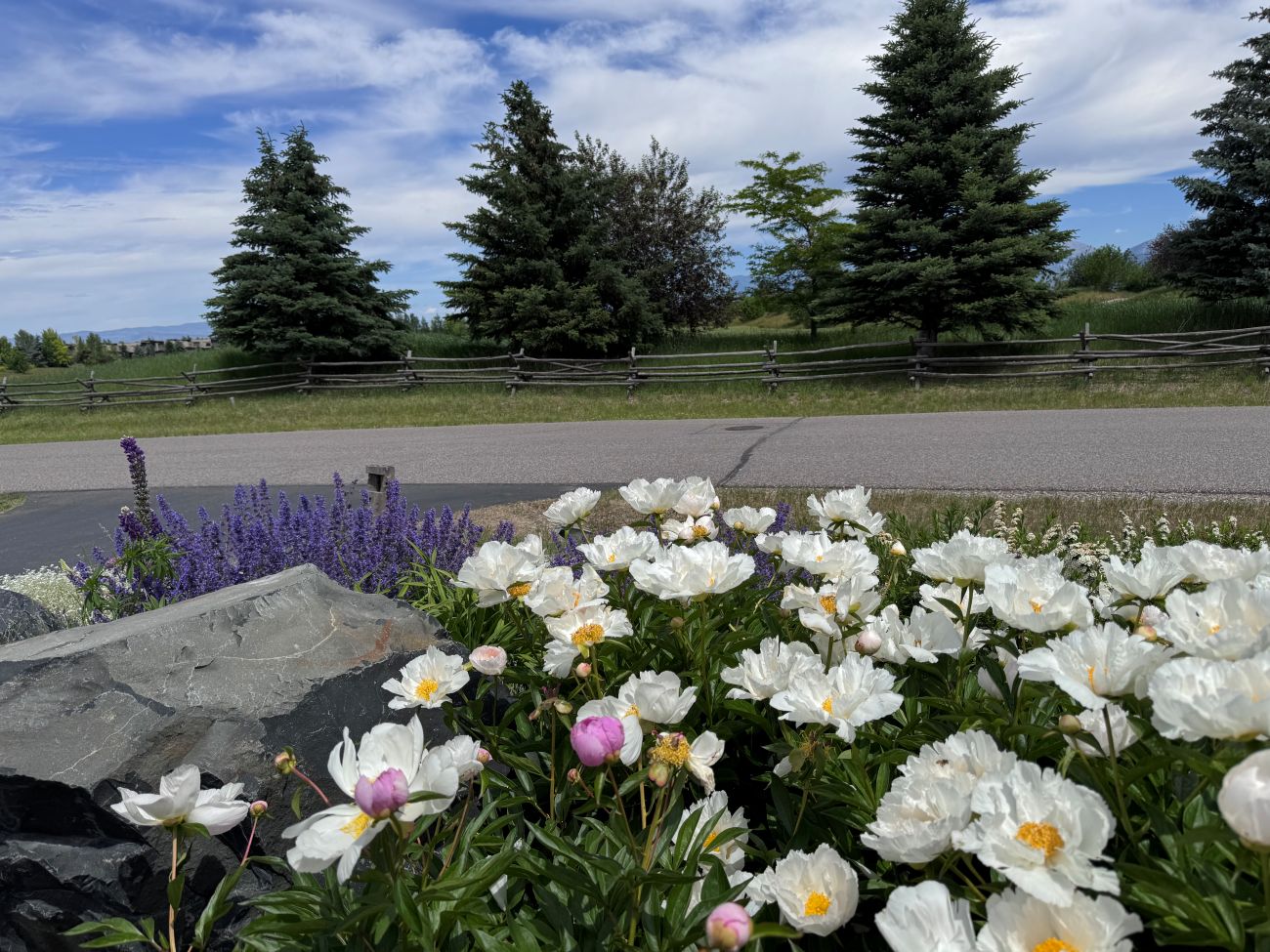
A closer look at the garden reveals the striking versatility and timeless appeal of these beloved perennials. In one prominent roadside garden bed, large white peonies featuring luminous, sunny yellow centers provide a brilliant jolt of brightness against the rustic backdrop of a weathered wooden fence and a carefully laid stone garden border. The crisp, clean whites contrast sharply with surrounding purple flowering perennials, creating a harmonious color palette that instantly elevates the street-facing view of the property. These classic blooms demonstrate how well adapted hardy perennials can be when integrated into structured landscape designs that respect both natural materials and local climate conditions.
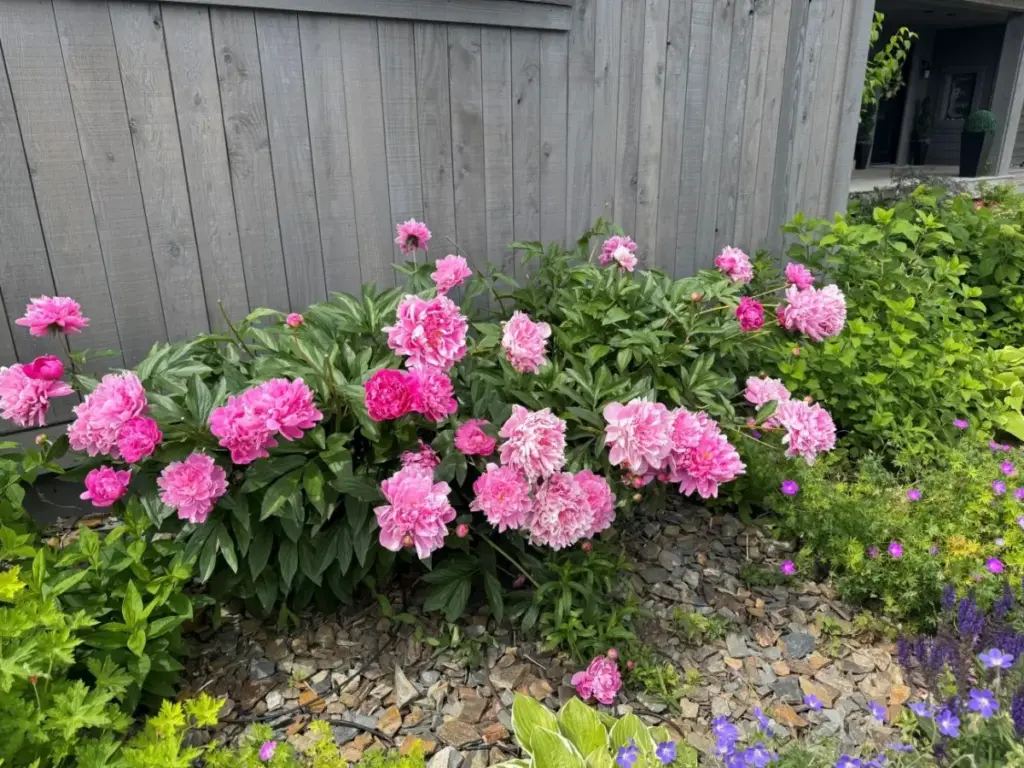
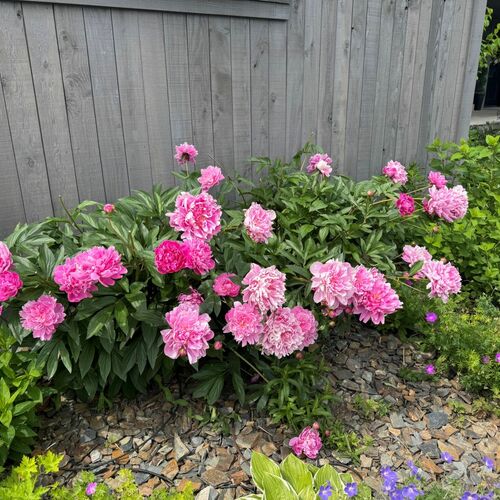
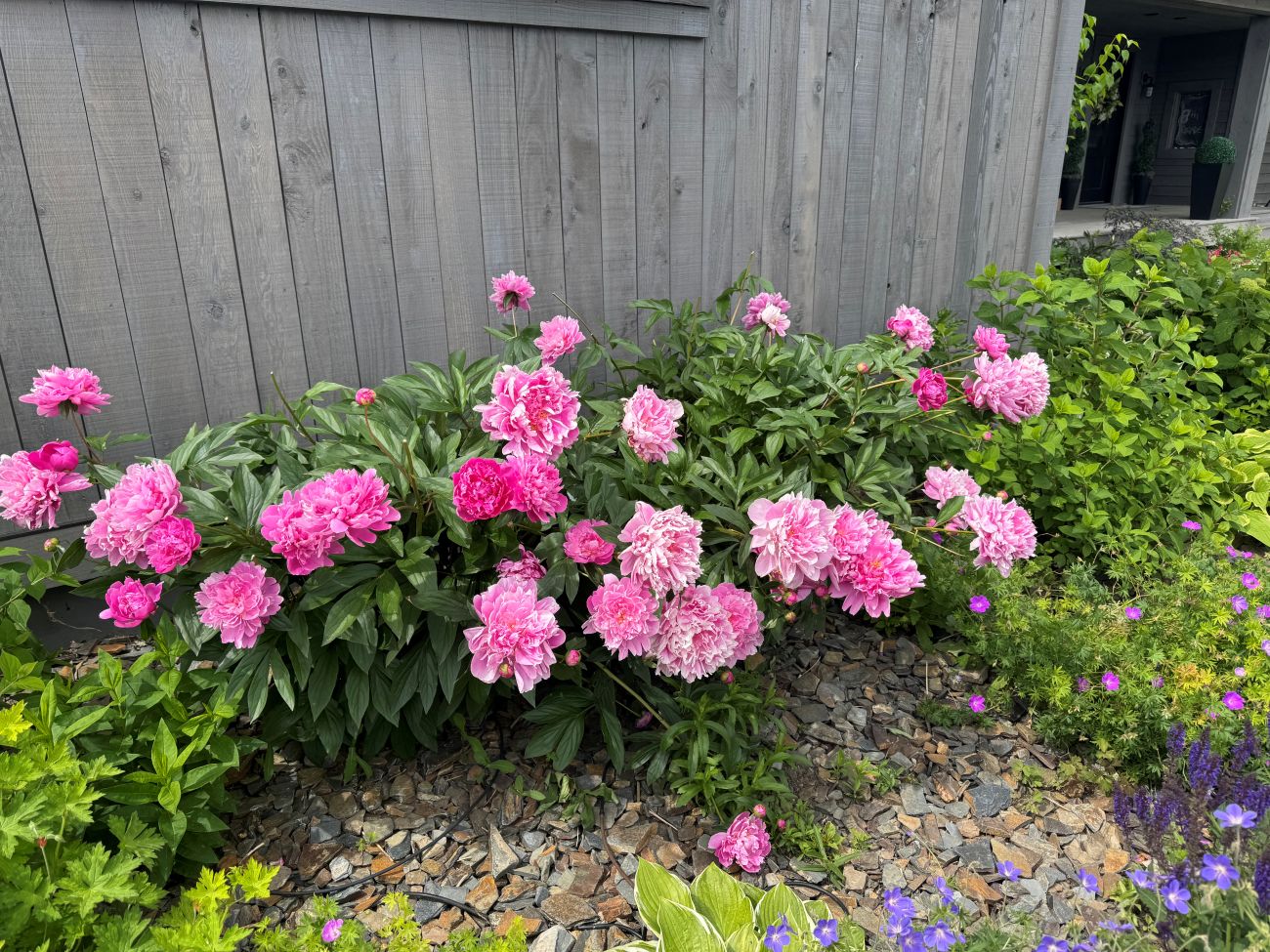
Moving closer to the residence itself, the visual impact multiplies. Masses of bright pink double blooms fill the garden beds running directly along the house foundation, creating a lush, overflowing perennial border that softens the architectural lines of the home. These heavy, ruffled double blossoms are a testament to careful plant selection and attentive seasonal care, thriving in the crisp mountain air and cool nights typical of southwestern Montana springtimes. The abundance of these pink giants reflects years of patient cultivation, turning a standard foundation planting into an immersive floral experience that greets anyone approaching the home.
The fleeting yet unforgettable nature of peony season has long captivated gardeners worldwide, and Elizabeth’s stunning display in Bozeman is a wonderful reminder of why these plants remain a cornerstone of temperate-climate horticulture. Their arrival signals the true peak of spring, filling the surrounding air with one of the most beloved and evocative scents of the growing season. For those looking to replicate even a fraction of this success in their own yards, understanding the foundational principles of how to grow and maintain healthy peonies is an essential first step, ensuring these long-lived plants return faithfully year after year.
We want to see YOUR garden!
For readers inspired by Elizabeth’s stunning Montana display, the opportunity to share personal horticultural achievements is always open. The editorial team is actively seeking submissions from gardeners who want to show off their own outdoor spaces, highlight a particular collection of plants they hold dear, or document a wonderful public or private garden they had the privilege of visiting during their travels.
Participating is straightforward for anyone interested in sharing their green thumb with a broader community of fellow plant lovers. Gardeners can submit their photos and stories by filling out the official Garden Photo of the Day Submission Form online, providing a convenient portal for image uploads and brief descriptive details about the featured landscapes.
Alternatively, enthusiasts can submit between five and ten high-resolution photographs directly via email, accompanied by descriptive information regarding the plants captured in the images and the specific geographic location of the garden. Submissions are greatly enhanced when contributors share a bit of their personal gardening journey, including how long they have been tending the earth, proud successes they have achieved over the seasons, valuable lessons learned from past failures, future hopes for their landscape designs, favorite plant varieties that always perform reliably, or even amusing anecdotes and funny stories born out of the unpredictable nature of working outdoors.
For those who wish to stay connected with daily doses of horticultural inspiration, signing up for the regular email newsletter delivers fresh garden photography, expert advice, and seasonal tips directly to the inbox.
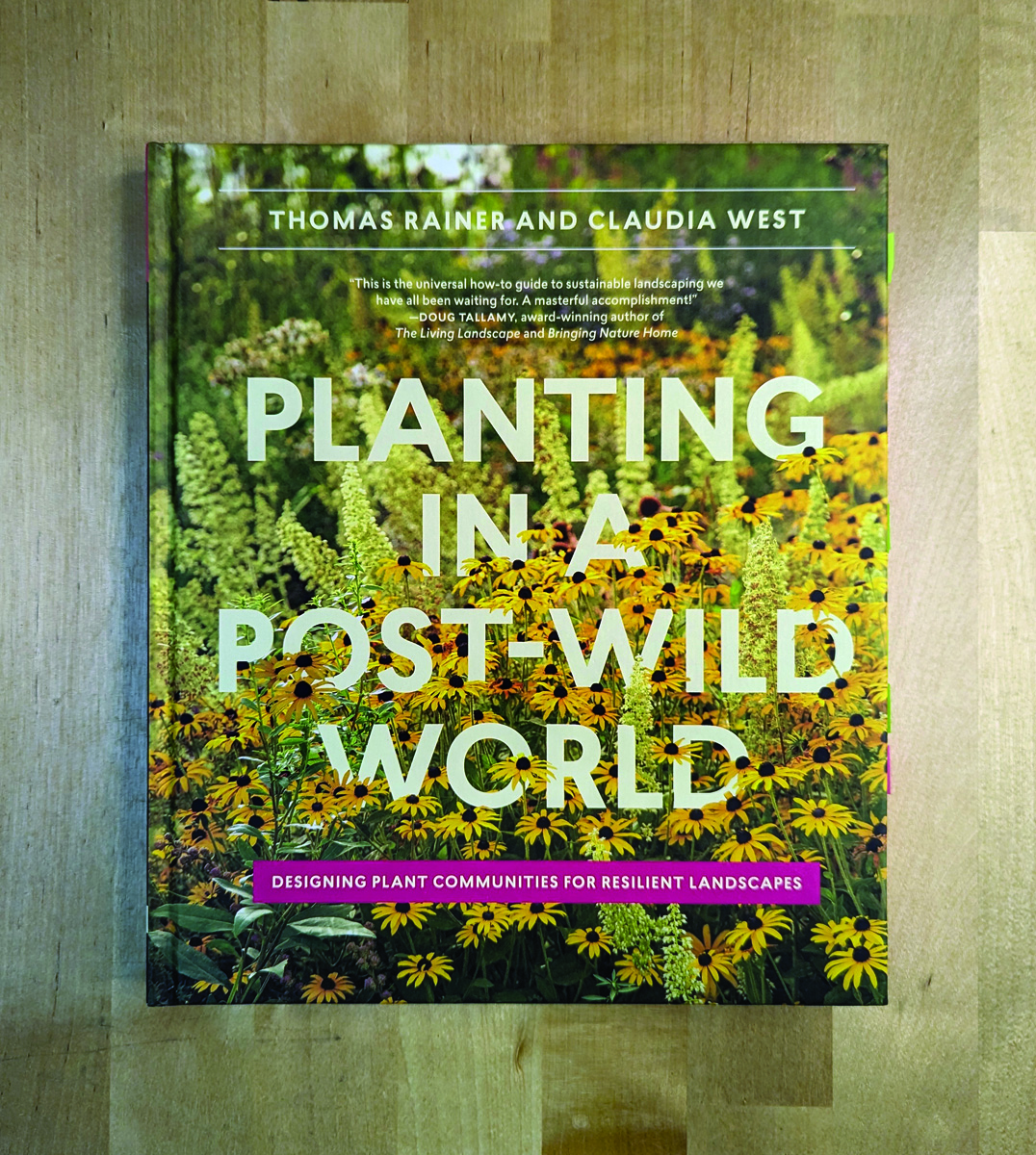
As gardeners continually look for ways to improve, structure, and nurture their landscapes, foundational resources remain invaluable tools for both novice and experienced growers. Comprehensive guides such as Planting in a Post-Wild World: Designing Plant Communities for Resilient Landscapes by Thomas Rainer and Claudia West offer fresh perspectives on blending wild and cultivated aesthetics to create sustainable, resilient plant communities that thrive in urban and suburban environments alike.

Equally important for the ongoing maintenance of robust perennial beds, flowering shrubs, and complex garden structures are the right tools and knowledge. High-quality equipment, such as telescoping long-reach pruners equipped with precision drop-forged blades, helps gardeners manage hard-to-reach branches and heavy seasonal growth with minimal physical strain. When paired with expert pruning literature like Pruning Simplified: A Step-by-Step Guide to 50 Popular Trees and Shrubs, growers are equipped with the exact timing, techniques, and tool recommendations needed to make the right cuts the first time, ensuring that beloved landscape favorites—from azaleas and hydrangeas to delicate clematis vines—remain healthy, vigorous, and ready to put on their best possible performance season after season.