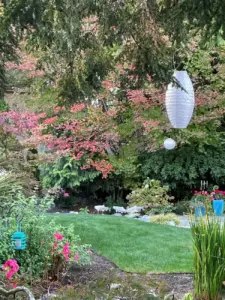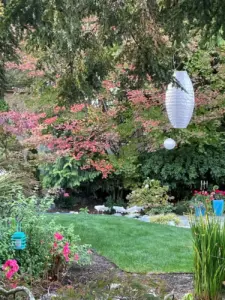
Welcome back, GPODers, to another inspiring look into private landscapes shared by dedicated home horticulturists. Today, our horticultural journey takes us to West Grove, Pennsylvania, situated firmly in USDA Hardiness Zone 7a. Here, as autumn settles across the mid-Atlantic region, the growing season is officially beginning its graceful descent toward dormancy. Yet, despite the crisp air and the shifting rhythms of nature, Rhonda’s suburban garden remains a vibrant sanctuary brimming with late-season interest, defying the notion that autumn landscapes must rely exclusively on a palette of fiery reds, deep oranges, and bright yellows.
Instead of the traditional autumnal spectrum, Rhonda’s landscape embraces a sophisticated, unexpected array of soft pinks, vivid magentas, and delicate lavenders. As the garden winds down, a carefully curated collection of shade-loving perennials and annuals takes center stage, offering a final, breathtaking burst of color before winter takes hold. Rhonda recently opened her garden gates to share a glimpse of her waning landscape, highlighting the resilience and beauty of plants that thrive when the scorching heat of summer finally yields to cooler autumn days.
A Tapestry of Late-Season Blooms
"Here are some photos of my waning garden," Rhonda shares, walking us through beds that showcase an impressive variety of resilient flora. Among her prized specimens are begonias, hardy begonias (Begonia grandis, Zones 6–9)—which she proudly names her absolute favorite—colchicums (Colchicum cvs., Zones 4–8), tradescantias (Tradescantia cvs., Zones 4–9), toad lilies (Tricyrtis cvs., Zones 4–9), anemones (Anemone hybrids, Zones 4–8), and hostas (Hosta cvs., Zones 3–9) that are currently on their last legs.
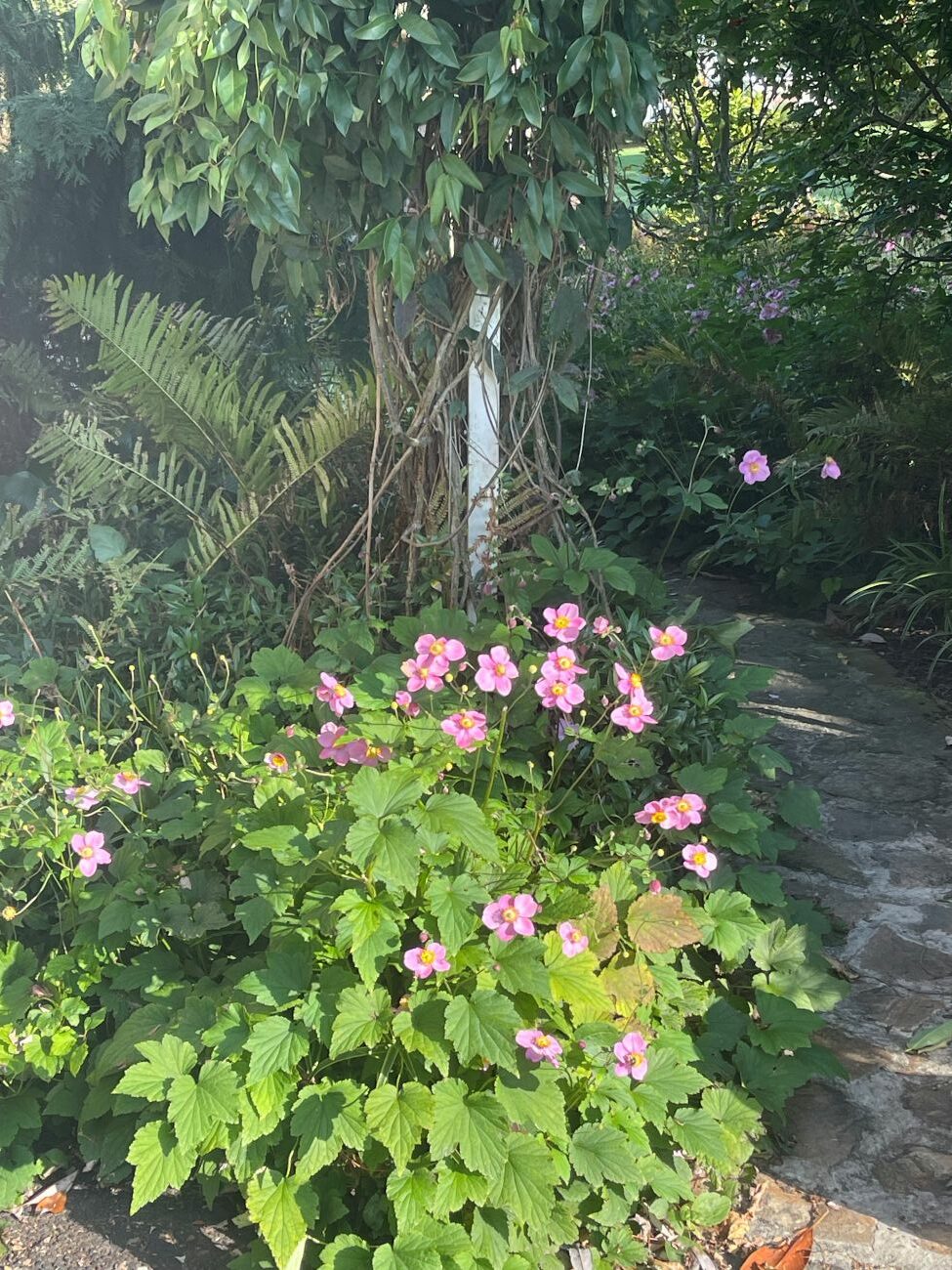
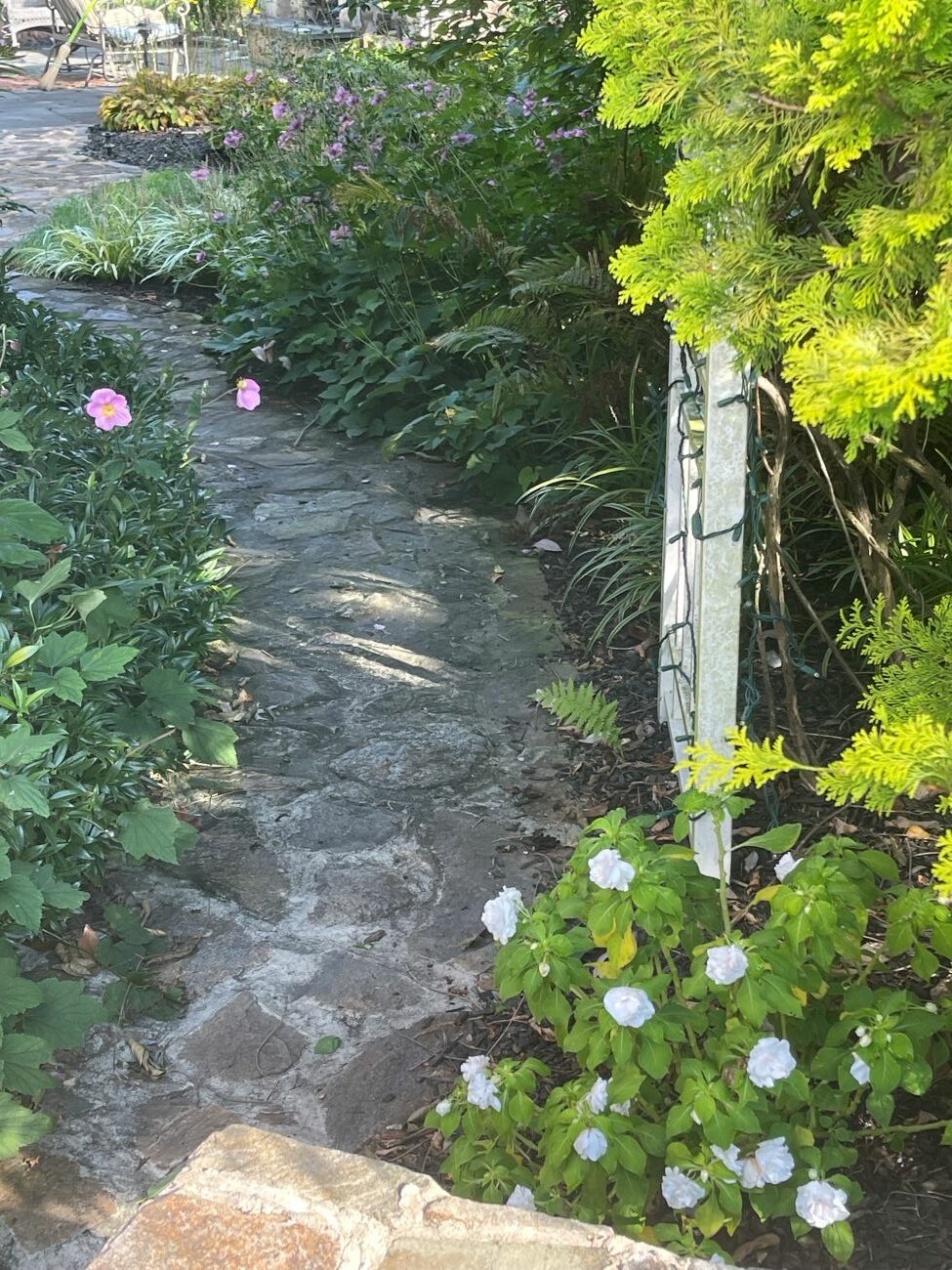
Each of these plants plays a specific role in maintaining visual momentum as the calendar pages turn. Japanese anemones, with their elegant, saucer-shaped blossoms held aloft on sturdy stems, create a swaying sea of soft pink against a backdrop of deep green foliage and natural stone pathways. These dependable perennials are a cornerstone of the late-season shade garden, tolerating dappled sunlight and rich, moisture-retentive soils with remarkable grace. As visitors wander along the winding stone paths that weave through the property, they are greeted by dense, lush perennial borders where white double begonias, evergreen shrubs, and ferns create a cool, tranquil atmosphere.
Rhonda’s landscape philosophy extends beyond merely collecting attractive plants; she has actively worked to make her extensive shade gardens more manageable through thoughtful ecological design. Rather than fighting a constant battle against invasive weeds in expansive beds, she has embraced a naturalistic approach by allowing select powerhouse plants to take up maximum space.
"I’ve been trying to make my gardens more manageable by allowing some plants to take over," Rhonda explains, pointing out how her dense plantings function as a living mulch. "The beds with the anemones and hardy begonias don’t have any weeds because there isn’t any room!" This dense-planting strategy not only reduces maintenance hours for the gardener by choking out unwanted opportunistic weeds, but it also creates a rich, organic aesthetic that mimics natural woodland communities, where plants naturally carpet the forest floor in tightly knit colonies.
Containers, Bulbs, and Favourites
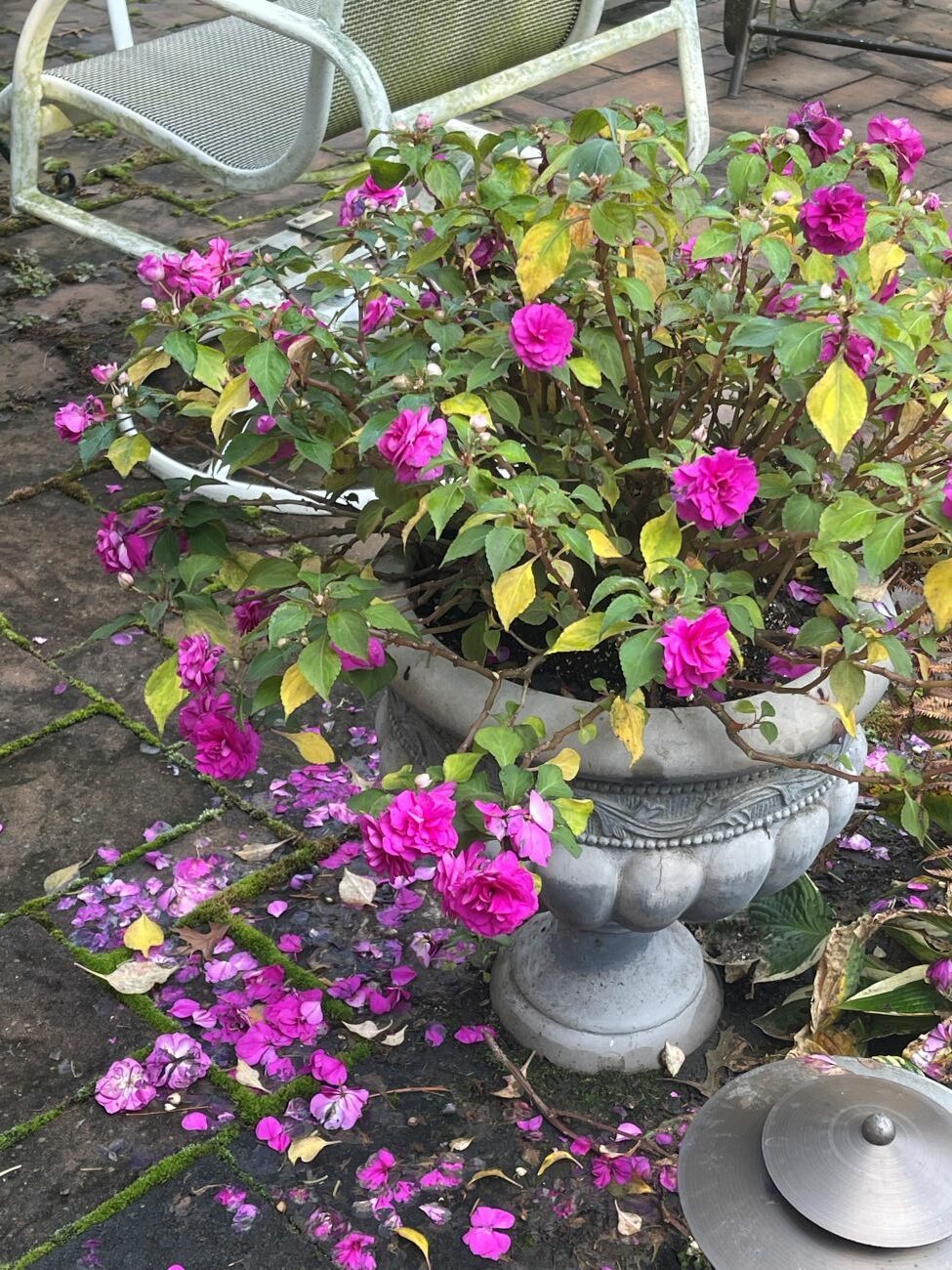
While much of the permanent garden relies on hardy perennials, containers also play a vital role in extending the season near the home. On a weathered brick patio, a classic ornamental stone urn overflows with bright magenta double begonias (Begonia cvs., grown as annuals). Even as the season peaks and individual blooms begin to fade, the container continues to captivate the eye. Fallen pink flower petals scatter across the aged brick surface below, creating a charming, lived-in vignette that underscores the gentle melancholy and romance of an autumn afternoon.
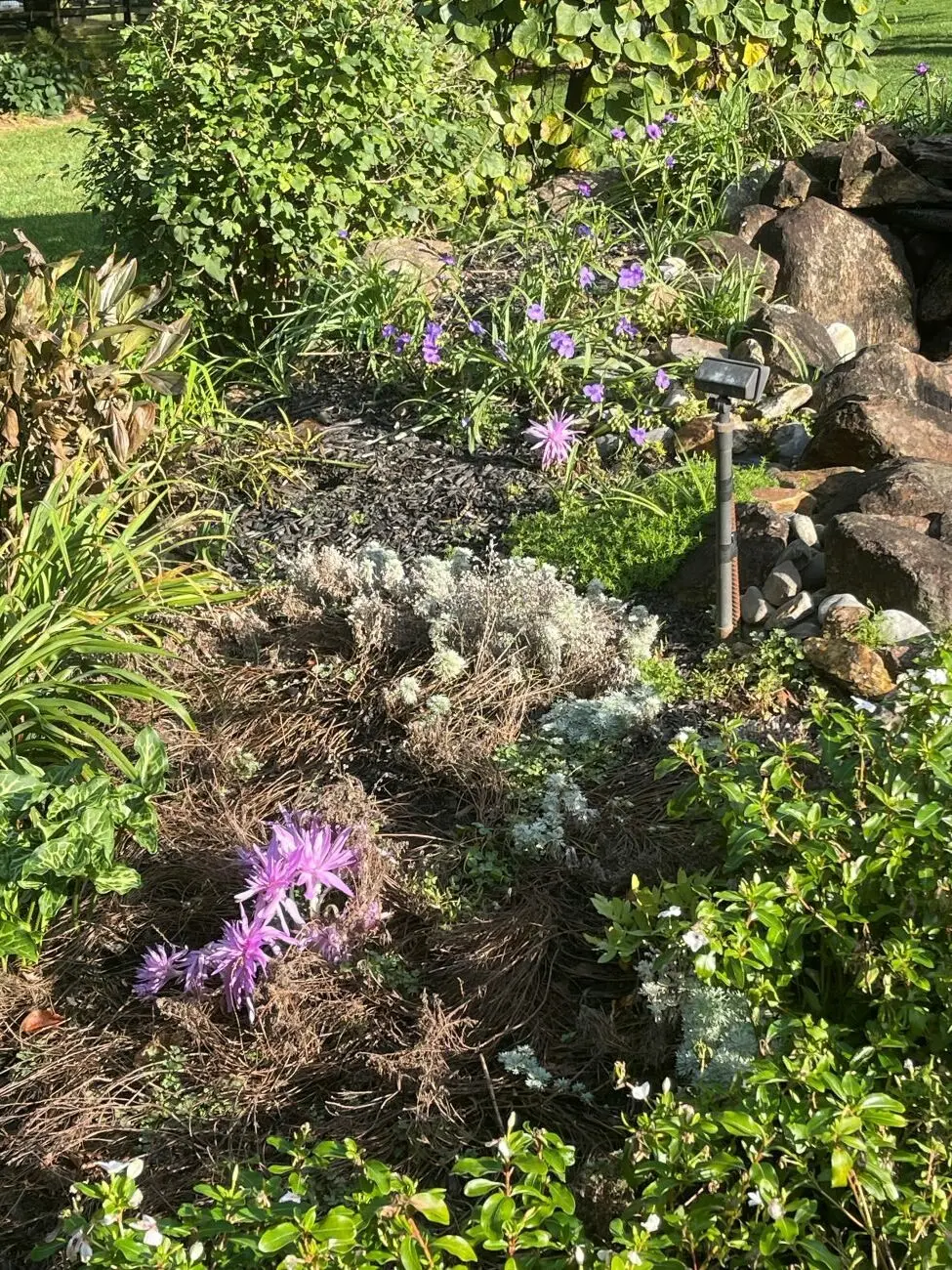
Nearby, a welcome surprise emerges from the soil: colchicums. Often referred to colloquially as "autumn crocuses," though botanically distinct from true crocuses, these fascinating autumn-blooming bulbs stage their floral show long after their spring foliage has completely withered and disappeared. Their delicate lavender-pink chalices push directly up through the bare earth or low-growing ground covers, providing an unexpected splash of color at a time when most other bulbs are fast asleep underground. They serve as a delightful botanical magic trick, reminding observant gardeners of nature’s capacity for unexpected timing.
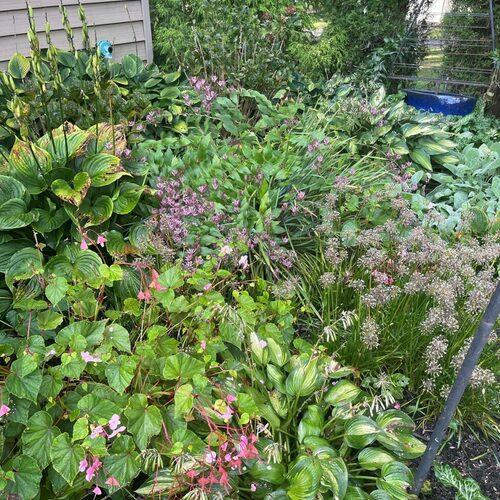
At the heart of Rhonda’s late-season collection are her beloved hardy begonias (Begonia grandis). Unlike their tender annual cousins, these resilient perennials return reliably year after year in Zone 7, bringing a refined tropical look to temperate woodland gardens. Their nodding, delicate pink flowers mingle harmoniously with the broad, substantial leaves of hostas and other shade-loving companions. This textural interplay between the fine, airy blossoms of the begonias and the bold, architectural foliage of the hostas demonstrates an expert eye for garden composition, proving that shade gardens can offer just as much textural and tonal diversity as their sun-drenched counterparts.
Rhonda’s Pennsylvania garden serves as a timely reminder that the gardening year does not end with the first hint of frost. By thoughtfully combining shade-tolerant perennials, strategic dense planting methods, and unexpected color palettes, she has crafted a resilient landscape that remains engaging well into the autumn months. As we thank Rhonda for sharing her peaceful sanctuary with the GPOD community, her garden leaves us re-evaluating the traditional definitions of fall color, proving that soft pinks and lush greens deserve an equally celebrated place in the seasonal landscape.