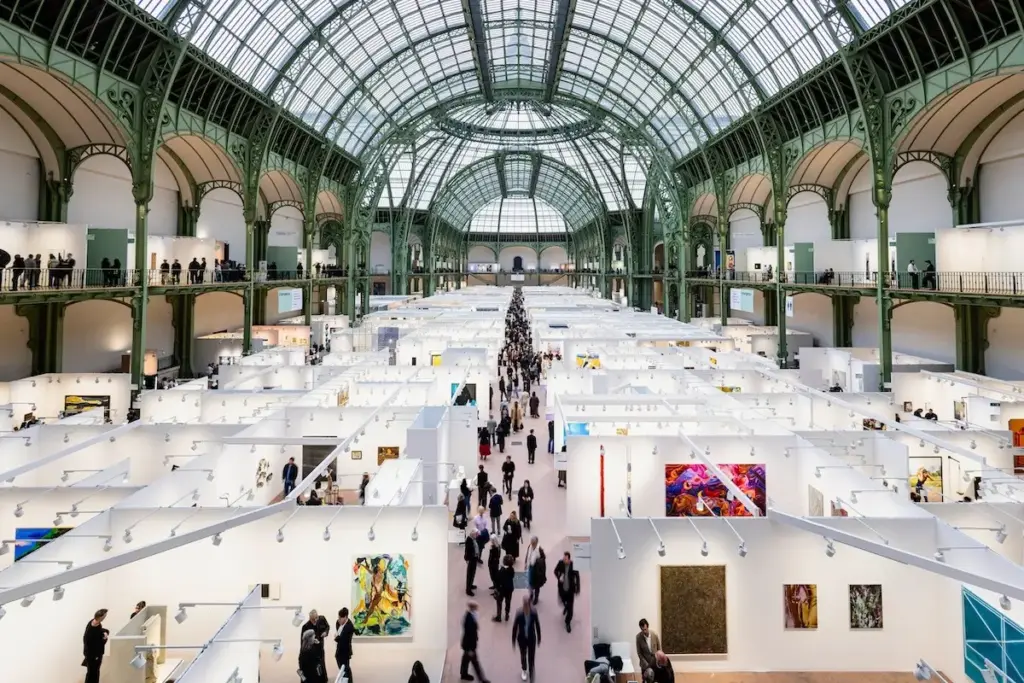
For Art Basel Paris, the security concerns have forced an abrupt and premature end to the fair. Originally slated to welcome the public through Sunday, organizers announced that the massive international event will instead shut its doors for good on Friday evening at 7 p.m. The decision means the fair will effectively be cut short midway through its expected run, disrupting travel plans, gallery operations, and the itineraries of countless international art professionals who had anchored their autumn schedules around the prestigious gathering.
The breaking news rippled through the French capital during the final, high-stakes weekend of a heavily packed calendar of satellite events, exhibitions, and social gatherings that traditionally accompany the fair. In an official email dispatched to participating exhibitors, Vincenzo de Bellis and Karim Crippa—serving respectively as Art Basel’s chief artistic officer and its Paris director—outlined the harsh reality facing the event. They informed galleries that the fair would close early "in light of potential demonstrations across Paris this weekend, and in the interest of safeguarding our visitors."
While much of the global jet-setting elite and high-powered art-collecting public typically begin thinning out by the final weekend, a vast contingent of gallery employees, logistics workers, technicians, and international art workers had planned to remain embedded in Paris through Sunday to wrap up sales and manage the complex dismantling of booths. For these industry professionals, the sudden curtailment of the event represents a significant operational hurdle, cutting short crucial face-to-face networking and commercial opportunities that galleries spend months preparing for.
In a follow-up statement published on social media, the fair administration addressed the disappointing turn of events head-on. "We deeply regret that we will not be able to welcome visitors this weekend, and extend our sincere appreciation to our galleries, artists, partners, visitors, and wider community around our fair," the message read, acknowledging the widespread dismay among participants who had hoped for a seamless conclusion to the week.
The ripple effects of the security warnings extended far beyond the main venue at the Grand Palais. The Fondation Louis Vuitton, which is currently drawing massive crowds with a highly publicized, blockbuster exhibition dedicated to collector Gustave Fayet, confirmed that it too would shutter its doors on Saturday as an essential precautionary measure. Similarly, mega-gallery Gagosian announced that its various Paris spaces would remain closed for the day, though representatives declined to offer further commentary on the developing situation.
Other commercial galleries across the city were left weighing their options in real time. Several independent Paris galleries informed reporters that they would make a final determination regarding weekend operations by the close of business, balancing commercial desires against the physical safety of their staff and inventory. Meanwhile, alternative art events were forced to adapt on the fly. The satellite Post-Fair, located in the historic Marais district, announced it would implement a heavily truncated schedule, opening its doors early on Saturday but shutting down entirely by 1 p.m.
"We are doing this largely because we want our exhibitors to feel like they and their work are safe," explained Post-Fair founder Chris Sharp, highlighting the acute anxiety currently gripping the local arts community as the threat of street violence looms large.
Up until the late-week announcements, Art Basel management had maintained a steady course, offering little public indication that the marquee fair would ultimately be derailed by the brewing social unrest. Dealers operating inside the venue noted that while security had been visibly tightened and a small number of visitor cancellations had trickled in, the fair had managed to proceed largely according to plan through Thursday.
Yet, the juxtaposition between the high-gloss atmosphere inside the exhibition halls and the harsh economic realities unfolding on the streets outside has not gone unnoticed. As the French daily Le Monde recently reported, a palpable sense of bitterness has settled over certain segments of the local populace, who have pointed to the jarring contrast between the glittering, champagne-soaked corridors of Art Basel and the broader social and economic turmoil gripping the nation.
That simmering public frustration has occasionally threatened to boil over into direct action. In the days leading up to the weekend, an online presence known as the Documentations Art Instagram account circulated a call to action, urging followers to "take the Grand Palais" as a form of protest against what it termed "Art Basel, the fair of plunder." According to Le Monde, the post was heavy with populist rhetoric and generalized complaints regarding how wealthy individuals utilize the art market as a vehicle for wealth preservation, tax mitigation, and investment. Critics of the online call, however, noted the logistical absurdity and timing of the proposed protest, pointing out that by the time the weekend arrived, the wealthy billionaires and high-net-worth collectors would long since have departed, leaving middle-class art enthusiasts and local workers to navigate the fallout.
The threat of disruption is rooted in a volatile wave of mass demonstrations that struck France just days prior. On Saturday, October 17, more than half a million people poured into the streets to protest mounting social and economic inequalities, directing particular anger at the crumbling infrastructure and chronic underfunding of public schools across the country. While the overwhelming majority of the mobilization began as peaceful demonstrations, pockets of the marches spiraled out of control, giving way to destructive rioting, clashes with law enforcement, and widespread looting that persisted to a lesser degree through Sunday. In the days since, the energy behind the movement has begun spilling across borders, inspiring similar demonstrations in other major European capitals.
The fallout from these protests has already claimed high-profile casualties within the art world itself. Alicja Kwade, a renowned contemporary artist whose monumental stone sculpture was installed outside the Grand Palais as part of Art Basel’s prestigious Public Program for large-scale works, took the extraordinary step of voluntarily removing her art ahead of schedule. Writing on Instagram, Kwade expressed her profound frustration with the destructive turn taken by the demonstrations, denouncing the physical violence that has accompanied the social movement. "Protest is good, but why everything has to be smashed and destroyed is beyond… It certainly doesn’t help the cause," she wrote, reflecting the widespread anxiety felt by creators whose works are left exposed in public spaces during times of civil unrest.
In response to the mounting intelligence regarding potential violence, Paris City Hall issued an urgent public safety advisory, calling on residents and business owners "to exercise the utmost vigilance" throughout Saturday. Municipal authorities explicitly warned of "the risk of further violence by rioters unconnected to the social movement," noting that opportunistic agitators often hijack legitimate protests to sow chaos. In an official press release, the city recommended that residents and local businesses take immediate precautions, advising them to bring indoors any loose street furniture, including garbage cans, bicycles, and outdoor café tables, starting at noon on Saturday to prevent them from being utilized as projectiles or fuel for street fires.
As the city braces for another tense weekend, the local arts sector remains on edge. Art Basel’s decision to cut its multi-day run short serves as a stark reminder of how fragile large-scale cultural events can be when geopolitical and domestic social pressures boil over into the public sphere. With institutional closures rippling outward and galleries shuttering their doors early to protect their people and property, Paris’s vibrant autumn art season has been brought to a premature and sobering halt.